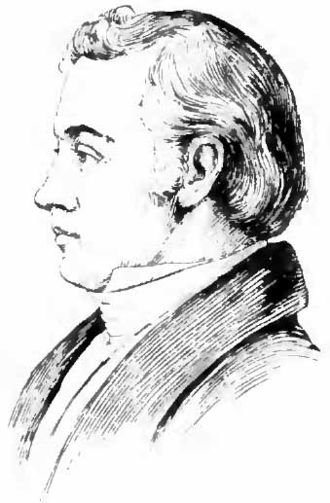
At a Glance
Maine, Ministry, and a Conscience Sharpened by Proximity to Slavery
Elijah Lovejoy's formation as a moral thinker took place in the world of New England Protestant Christianity — a world in which religious conviction was understood to have direct implications for how one lived and acted in society, and in which the reform movements of the 1820s and 1830s were deeply intertwined with evangelical Protestant faith. His father was a Congregationalist minister in rural Maine, and the household in which Lovejoy grew up was one in which the Bible was the ultimate authority on questions of ethics and justice, and in which that authority was taken seriously enough to produce not merely personal piety but a sense of social obligation.
He attended Waterville College in Maine, where he received a solid classical education, and then Princeton Theological Seminary in New Jersey, where he was trained for the Presbyterian ministry. His decision to go west after completing his theological education — to St. Louis, Missouri, which was in the early 1830s a booming commercial city at the confluence of the Missouri and Mississippi rivers — was in part an economic choice and in part a reflection of the expansive ambitions that characterised his generation's understanding of America's future. The Presbyterian Church had a significant presence in the border states and the Northwest, and a young minister and editor with Lovejoy's talents could expect to find opportunities in the West that the more settled East could not offer.
What he did not fully anticipate was that going to Missouri meant going to a slave state — and that living in a slave state, even as a free white man of education and professional standing, meant confronting the reality of slavery in ways that no amount of theoretical opposition could substitute for. St. Louis in the 1830s was a city where slavery was visible in the streets, where enslaved people were bought and sold at public auctions, where the slave trade was part of the ordinary commercial life of the city, and where the violence that sustained slavery — the beatings, the brandings, the sale of families — was not hidden but normalised. Lovejoy observed this and wrote about it with increasing frankness and increasing moral urgency in the pages of the St. Louis Observer.
Francis McIntosh and the Moment of No Return
The event that transformed Lovejoy from a cautious Christian critic of slavery into an uncompromising abolitionist was the burning alive of Francis McIntosh in April 1836. McIntosh was a free Black man — a boat steward on a Mississippi riverboat — who was arrested by St. Louis officers in a confrontation that escalated when he killed one of them trying to escape. A mob seized him from police custody, chained him to a tree, and burned him alive. A crowd watched. Nobody was prosecuted. The judge who instructed the subsequent grand jury delivered a charge from the bench that essentially justified the mob's action and told the jurors that those who had participated in the burning could not be held legally responsible for what they had done.
Lovejoy covered the McIntosh killing in the Observer and published a response to the judge's charge that pulled no punches — describing the judge's reasoning as an invitation to lawlessness and the killing as a barbaric atrocity that disgraced the city. The response in St. Louis was immediate and hostile. Leading citizens and businesses withdrew their support from the Observer; his office was threatened. The message was clear: a man who called the burning alive of a Black man by its proper name and criticised the judge who had effectively exonerated the killers had no future in St. Louis.
He moved across the Mississippi to Alton, Illinois, in July 1836, hoping that the free-state jurisdiction would provide at least the minimal protection for press freedom that Missouri had denied him. What he found in Alton was a community that was deeply ambivalent about antislavery agitation — a river town whose commercial connections to the slave economy of the South made its business class hostile to the kind of journalism that might threaten those connections, and whose population included many recent immigrants from slave states who brought with them the assumptions and the reflexes of the world they had left. The hostility that met him in Alton was less intense than what he had faced in St. Louis, but it was real, and it grew as his journalism became more explicitly abolitionist over the following year.
Three Presses, One Stand, and the Logic of Martyrdom
The destruction of Lovejoy's first Alton press in August 1836 — rolled into the Mississippi River before it had even been set up — established the pattern that would repeat itself three more times over the following fifteen months. Each time the press was destroyed, antislavery supporters in Alton and across the North provided funds for a replacement; each time, Lovejoy resumed publication; each time, the cycle of escalating harassment, threats, and eventually mob action began again. The pattern had a logic that was apparent to everyone involved — the question was not whether the mob would act again but when, and what the consequences would be when it did.
Lovejoy's refusal to leave Alton or to moderate his journalism in the face of mob violence was a matter of principle that he articulated with great clarity in the period before his death. He understood that what was at stake was not merely his personal safety or the survival of his particular newspaper but the principle of press freedom itself — the question of whether citizens of a free republic had the right to publish their opinions on matters of public importance without being subject to mob censorship enforced by violence. He made this argument explicitly at a public meeting in Alton on 3 November 1837, four days before his death, in a speech that is one of the most powerful statements of the connection between press freedom and the fight against slavery in American history.
At that meeting, he told the assembled citizens of Alton that he would not leave, would not be silenced, and would continue to publish as long as he had a press and his life. He acknowledged that he might be killed; he said that he was prepared to die rather than surrender the principle of press freedom. The audience at the meeting was divided — some supported him, many did not — but the clarity of his position, and the dignity with which he stated it, impressed even those who disagreed with his journalism. Four days later he was dead, shot five times in the act of defending the fourth press that his supporters had provided.
The Murder and Its Immediate Aftermath
The night of 7 November 1837 began with the arrival in Alton of a mob drawn from the city and its surroundings, with the explicit intention of destroying Lovejoy's press and — some of its members reportedly hoped — Lovejoy himself. He and approximately twenty supporters had gathered in the warehouse on the waterfront where the press was stored, prepared to defend it. The confrontation that followed lasted several hours, with the mob attempting to breach the building and the defenders driving them back.
Lovejoy was shot as he came out of the building to drive off attackers who were attempting to set fire to the roof. He was hit five times and died within minutes. The defenders, after his death, dispersed; the mob entered the warehouse, took the press apart, and threw the pieces into the Mississippi — the same river into which his first Alton press had been rolled fifteen months before. The symbolism was not lost on contemporaries: the Mississippi had now claimed both the press and the man who had defended it.
The response of the Alton authorities was to prosecute not the mob members who had killed Lovejoy but the surviving defenders who had attempted to protect the warehouse — a grotesque inversion of justice that was widely noted in the Northern press and that contributed to the radicalising effect of the murder on public opinion. The prosecutions ultimately came to nothing, but their initiation demonstrated clearly where the sympathies of the Alton establishment lay, and served as one more piece of evidence for those who argued that the slave power was willing to use the machinery of law as well as the violence of mobs to suppress opposition.
Wendell Phillips, Abraham Lincoln, and the Radicalising Power of a Death
The immediate political consequences of Lovejoy's murder were more significant than the slave power's supporters could have anticipated. The killing of a white Protestant minister and newspaper editor — a man of unimpeachable respectability and evident courage — on the soil of a free state, by a mob defending the interests of slavery, was harder to dismiss or minimise than the more abstract arguments about slavery's injustice that the abolitionist movement had been making for years. It made the slave power's aggression concrete and personal in ways that lectures and pamphlets could not achieve.
Wendell Phillips, a Harvard-educated Boston lawyer who had been a mild opponent of slavery without being an active abolitionist, heard the news of Lovejoy's murder and experienced something close to a conversion. He attended a public meeting in Boston's Faneuil Hall at which the Massachusetts attorney general argued that Lovejoy had brought his fate upon himself by provoking the community — and Phillips, outraged by the argument, rose spontaneously to deliver a speech that made his name and launched his career as one of the most celebrated orators in the movement's history. His commitment to abolitionism, dating from that moment, lasted the rest of his life.
Abraham Lincoln, then a twenty-eight-year-old lawyer in Springfield, Illinois, cited the Lovejoy murder in his famous 1838 Lyceum Address as an example of the lawlessness that threatened American republican institutions — the mob violence that, if unchecked, would undermine the rule of law on which free government depended. Lincoln's response was characteristically more focused on the threat to republican institutions than on the injustice to Lovejoy personally, but the speech demonstrated how deeply the murder had penetrated the political consciousness of the generation that would eventually fight the Civil War.
Owen Lovejoy and the Family Legacy
Elijah Lovejoy's death did not end the Lovejoy family's engagement with the antislavery cause — it intensified it. His younger brother Owen Lovejoy became one of the most important abolitionists in Illinois, operating a significant Underground Railroad station at his home in Princeton, Illinois, and eventually serving in the United States House of Representatives as a Republican congressman who was one of the most vocal antislavery voices in Congress during the period leading up to the Civil War. Owen's political career was explicitly framed as a continuation of his brother's martyred commitment, and his speeches in Congress drew on the memory of Elijah's death to make arguments for the necessity of opposing slavery with all available means.
The Lovejoy legacy — the specific family tradition of abolitionist commitment that Elijah's death had both terminated and perpetuated — was an important thread in the antislavery movement's history, and Owen's career demonstrated that martyrdoms can sometimes be more effective than survivals in sustaining the commitments they embody. Elijah's death gave Owen a platform and a moral authority that his own, necessarily less dramatic, biography could not have generated, and Owen used that platform with consistent effectiveness throughout his political career.
Legacy: Press Freedom, Abolitionism, and the Price of Principle
Elijah Lovejoy occupies a unique position in American history as a figure whose significance spans two of the country's most fundamental commitments — the freedom of the press and the movement for racial equality. His death is remembered simultaneously as a founding moment in the history of American press freedom and as a critical turning point in the history of abolitionism, and this dual significance reflects the actual character of his final confrontation with the pro-slavery mob: he died defending a printing press, but what the press represented was his right to use it to argue for the humanity and the freedom of enslaved people.
The Alton warehouse where he died is gone, but his grave in Alton remains a historical site, and the Illinois state monument erected there in 1897 — sixty years after his death — acknowledges both dimensions of his significance. He is remembered as a martyr for press freedom, as an abolitionist who paid the ultimate price for his convictions, and as a man whose death helped clarify for a generation of Americans what was actually at stake in the contest between slavery and freedom.
He died at thirty-four, two days before what would have been his thirty-fifth birthday, having published a newspaper for approximately four years and having had his press destroyed four times. In those four years and four destructions he accomplished more for the antislavery cause than many who lived and worked for decades — not because his journalism was uniquely brilliant but because his courage was uniquely visible, and because the slave power's response to that courage demonstrated more clearly than any argument the nature of the system that the antislavery movement was opposing.