At a Glance
Florida, Puerto Rico, New York, and the Formation of a Nationalist Worker
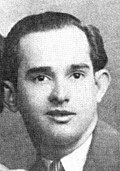
Oscar Collazo's political formation took place across two worlds: the Puerto Rico of his birth and early life, with its direct experience of American colonial rule and its specific regional culture shaped by the economy and the politics of the central highlands, and the New York City of his working adult years, where the experience of being a Puerto Rican immigrant in a racially stratified American metropolis gave his independence convictions their specific urban, working-class character. The movement from Florida, Puerto Rico — a small interior municipality whose residents had experienced the consequences of American territorial rule in the most immediate economic terms — to the metalworking shops and the Puerto Rican community organisations of New York City was a movement that connected him to both the island's independence tradition and the diaspora's particular way of maintaining and expressing that tradition.
New York's Puerto Rican community in the 1940s was one of the most politically active immigrant communities in American urban life — shaped by the specific conditions of racial and economic marginalisation in the city, by the sustained cultural connection to the island, and by the political tradition of the Nationalist movement that Albizu Campos had built and that continued to exercise enormous moral authority among Puerto Ricans who had not abandoned the independence cause even as the Popular Democratic Party's Commonwealth solution was gaining political ground. In this community, Collazo developed the political commitments that would eventually produce his participation in the Blair House attack.
His work as a metalworker placed him in the industrial working class whose conditions — the racial discrimination in unions and in hiring, the economic precariousness of immigrant workers in the American manufacturing economy, the specific humiliations of being a Puerto Rican in a city that classified Puerto Ricans as racially inferior — gave the abstract political argument for independence a concrete, daily dimension. The colonialism that Albizu Campos analysed in terms of international law and Puerto Rican sovereignty was, for a metalworker in New York, also the system that determined where you could live, what jobs you could get, and what respect you could expect in your daily interactions with the society around you.
November 1950: The Attack, the Wound, the Arrest
The decision to participate in the Blair House attack came in the context of the Nationalist uprising that had begun in Puerto Rico three days earlier — the insurrection that included Blanca Canales's proclamation of the Puerto Rican Republic in Jayuya and the attacks on police stations and government buildings across the island. The Washington action was the mainland complement to the island uprising, designed to demonstrate that the independence movement had both the will and the capacity to challenge American colonial power in the colonial capital itself.
Collazo and Torresola had known each other through the New York Nationalist community and had planned the attack together. The operational plan — a simultaneous assault on Blair House from two directions, intended to overwhelm the guards and create the window for a successful assault on the residence — was simple enough in outline but depended on the execution going precisely as planned. What actually happened was more complicated: Collazo's pistol misfired when he needed it most, costing him the seconds of initiative that might have changed the outcome; the guards responded more quickly and more effectively than the two attackers had anticipated; and the exchange of fire that followed was over in less than a minute.
Collazo was shot in the chest and fell at the base of the steps. He was arrested at the scene, bleeding but alive. Torresola, on the other side of the building, had been shot in the head by Officer Coffelt — himself mortally wounded — and was dead by the time the shooting stopped. The asymmetry of their fates — one dead, one wounded and captured — defined the subsequent histories of both: Torresola's martyrdom was immediate, and Collazo's became the long, complicated story of a man who had tried to die for his cause and instead had to live for it, in prison, for twenty-nine years.
The Death Sentence and the Extraordinary Commutation
The trial that followed was conducted in federal court in Washington, D.C., and the evidence against Collazo was overwhelming — he had been arrested at the scene of the attack, wounded, with his weapon beside him. The prosecution's theory on the murder charge — the death of Officer Coffelt — relied on the felony murder rule: even though it was Torresola who had shot Coffelt and Torresola who had been killed by Coffelt in return, Collazo was legally responsible for the killing because it occurred during the commission of a felony that he had participated in. The jury convicted and recommended death.
The death sentence placed Collazo in the death house at Leavenworth and placed the Puerto Rican independence movement in the specific position of demanding clemency from the man whose death its member had sought. The sustained advocacy for Collazo's life — from Puerto Rican independence organisations, from international human rights bodies, from Latin American governments and organisations — was among the most intense and most politically complex campaigns in the movement's history, because it required making the argument for mercy from the exact person who had been the intended victim of the action for which mercy was being sought.
Truman's commutation in July 1952 was one of the most politically complex acts of his presidency. He did not explain it fully or publicly. He did not suggest that Collazo had been wrongly convicted or that his actions were justified. He simply exercised the presidential power of clemency to spare the life of the man who had tried to take his, transforming the death sentence to life imprisonment. The political symbolism of this act — the deliberate choice not to make a martyr of the man who had sought his death — was not lost on contemporary observers, and it has been discussed and interpreted in the literature of the Puerto Rican independence movement ever since.
Twenty-Nine Years: The Long Reckoning with a Life Given to the Cause
The twenty-nine years that Oscar Collazo spent in federal penitentiaries were longer than the combined prison terms of any of the other Puerto Rican Nationalist prisoners of the era — longer than the twenty-five years served by Lebrón and Flores, longer than the seventeen years served by Blanca Canales, longer than the six years served by Corretjer and Soto Vélez. He had been sentenced to death and then to life, and the specific weight of that history — the years in the death house, the commutation, the decades of life imprisonment — was the defining experience of his adult maturity.
He maintained throughout his imprisonment the political convictions that had produced the Blair House attack, and the sustained campaign for his release — which intensified through the 1960s and 1970s as the Puerto Rican independence movement developed new organisations and new alliances — was eventually successful. Carter's September 1979 clemency, which freed Collazo alongside Lebrón and Cancel Miranda, came when Collazo was sixty-five years old, and he returned to Puerto Rico having spent more than a quarter-century of his adult life in federal prison for an action that had lasted less than sixty seconds.
His return to Puerto Rico in 1979 was a moment of personal and political significance for the independence movement — the return of one of the movement's most consequential and most tested figures to the island whose freedom he had tried, at the most direct personal cost, to secure. He settled in Mayagüez, lived quietly, and maintained the political convictions that had shaped his entire adult life without seeking the public prominence that continued to attach to Lebrón and Cancel Miranda.
The Symmetry of Truman's Mercy and Its Political Meaning
The relationship between Oscar Collazo and Harry Truman is one of the most extraordinary in the history of American political violence — a relationship defined by an attack, a death sentence, a commutation, and a strange mutual acknowledgment of something that neither man could easily name. Truman had been the intended target of the attack; Collazo had been willing to die in carrying it out; Truman had refused to provide the death that the execution would have given the independence movement; and the two men had subsequently lived out the remainder of their lives — Truman died in 1972, Collazo in 1994 — in the knowledge of what had passed between them.
Truman's specific motivation for the commutation has never been fully explained. The explanations that have been offered range from the pragmatic — a political calculation that executing a Puerto Rican independence activist would create more problems than it solved — to the more personal and principled, a genuine reluctance to use the death penalty for political violence when the political cause, however wrongly pursued, reflected a genuine grievance. Truman's private papers and his public statements offer hints of both motivations without fully resolving the question.
What the commutation established was a relationship between the colonial power and the independence movement that was different from simple repression: a relationship in which the colonial power had demonstrated the capacity for restraint in the face of direct personal challenge, and in which the independence movement had been denied the martyrdom that Torresola's death had already provided. The political meaning of this relationship has been debated in the Puerto Rican independence literature for decades, and the question of whether Truman's mercy was a gesture of genuine respect or a more calculated act of political management remains open.
Legacy: The Man Who Came Back from the Death House
Oscar Collazo died on 20 February 1994, in Mayagüez, at the age of eighty — having survived the Blair House attack, the death sentence, twenty-nine years in federal prison, and the return to a Puerto Rico that had changed enormously during the decades of his imprisonment. He had attempted the most extreme act available to a Puerto Rican independence activist and had lived to see most of its consequences: the death of his partner in the attack, the years in the death house, the commutation, the long imprisonment, the release, the return. He had not seen Puerto Rico's independence achieved, and he died with the cause he had tried to advance by the most direct means available still unresolved.
His legacy in the Puerto Rican independence movement is that of a figure who paid an almost maximal price for his convictions — who came as close to death as a person can come without dying, who spent twenty-nine years in federal prison, and who maintained the convictions that had produced both experiences without public recantation. The complexity of his relationship to Truman — the attacker kept alive by the intended victim — gives his story a dimension of political and human complexity that the more straightforwardly heroic narratives of the independence movement cannot easily accommodate, and this complexity is part of what makes his story essential to the complete picture of what the Nationalist tradition was and what it cost the people who lived it.