At a Glance
Jayuya, the Jibaro Culture, and the Making of a Nationalist
Jayuya in the early twentieth century was a town whose political consciousness was shaped by the intersection of the jibaro culture's pride and the specific economic grievances that American territorial rule had generated in Puerto Rico's interior communities. The jibaro — the Puerto Rican smallholder farmer of the mountains — had been the central figure in the cultural mythology of Puerto Rican national identity since the nineteenth century, the symbol of the island's authentic character against the cosmopolitan influences of the coastal cities and the foreign interests that dominated its economy. The American annexation of 1898 had transformed Puerto Rico's agricultural economy in ways that were devastating to the smallholder communities of the interior: the consolidation of sugar cane cultivation under large American corporations had dispossessed many smallholders, the island's legal and political integration into the American system had subordinated Puerto Rican institutions to mainland authority, and the educational system had been redesigned to promote American cultural values at the expense of Puerto Rican language and identity.
In this context, Pedro Albizu Campos's Nationalist Party found in the mountain communities of the interior its most committed constituency. The argument that Puerto Rico was a colony — that the Commonwealth relationship was a form of subjugation dressed in the language of self-government — resonated with communities that had experienced the material consequences of American economic control directly and personally. The Nationalist Party's women's organisation, the Daughters of Freedom, built its membership in these communities on the basis of a politics that connected national sovereignty to economic justice and cultural survival in terms that the women of the jibaro communities understood from their own daily experience.
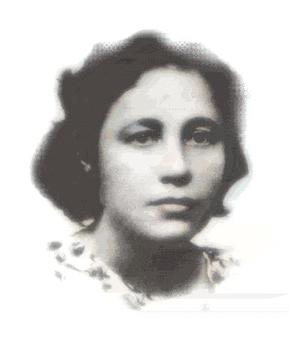
Blanca Canales joined the Nationalist movement in this context, bringing to it the organisational capacity and the personal authority that made her one of the most important Nationalist leaders in the Jayuya region. Her years of work in the Daughters of Freedom gave her both a detailed knowledge of the community's networks and relationships and a leadership role within them that would prove decisive when the moment for armed action arrived in October 1950.
The Gag Law and the Conditions That Made Uprising Feel Necessary
Puerto Rico's Law 53 of 1948 — known popularly as the Gag Law, the Ley de la Mordaza — was one of the most direct provocations that the American colonial administration inflicted on the independence movement, and it played a significant role in creating the conditions that produced the 1950 uprising. The law made it illegal to display the Puerto Rican flag, to sing Puerto Rican independence songs, to advocate for Puerto Rican independence, or to organise or participate in any group that sought to overthrow the government of Puerto Rico — provisions that were so broad that they effectively criminalised the independence movement as such.
The Gag Law was passed under the administration of Governor Jesús T. Piñero, under pressure from the United States government, as part of the American response to the perceived threat of communist influence in Puerto Rico and to the increasing militancy of the Nationalist Party. Its passage was a demonstration that the colonial administration was prepared to use the full power of the law to suppress political opposition to American rule, and it was understood by the Nationalists as a direct challenge that demanded a direct response.
The combination of the Gag Law, the continued imprisonment of Albizu Campos on what the Nationalists regarded as politically motivated charges, and the broad process of Americanisation that was transforming Puerto Rican society created an atmosphere of urgency within the Nationalist Party's leadership that pushed toward the decision for armed action. The October 1950 uprising was not a spontaneous explosion but a planned operation — imperfectly coordinated and ultimately unsuccessful militarily, but politically significant precisely because of its boldness and its willingness to challenge the colonial administration in the most direct way available.
30 October 1950: The Most Important Day in Jayuya's History
The Jayuya uprising of 30 October 1950 lasted approximately three days before the National Guard and federal troops arrived to suppress it, but in those three days Blanca Canales and her Nationalist group accomplished what no Puerto Rican independence action had achieved since the Grito de Lares in 1868: they seized control of a Puerto Rican municipality, proclaimed the Puerto Rican Republic, and physically demonstrated that the independence movement had the capacity and the will to challenge American rule by force.
The sequence of actions on 30 October began with an attack on the Jayuya police station — the symbol and instrument of the colonial administration's presence in the town — that resulted in fighting and casualties. Canales then led her group to the town hall, where she proclaimed the Puerto Rican Republic in terms that invoked the Grito de Lares and the long tradition of Puerto Rican resistance to colonial rule. The American flag that had flown over a municipal building was torn down and replaced with the Puerto Rican flag — a gesture whose symbolic significance was enormous and whose physical enactment was one of the most dramatic moments in the history of the Puerto Rican independence movement.
The American colonial administration's response was swift and overwhelming. Puerto Rico was placed under martial law — the only time in American territorial history that martial law was declared over an American territory — and National Guard troops and federal forces were deployed to suppress the uprising. Jayuya was bombed and strafed from the air, making it the only instance of the American military conducting air attacks on American territory. The uprising was suppressed within days, but its suppression by such overwhelming force — including aerial bombardment — was itself a demonstration of the seriousness with which the colonial administration regarded the Nationalist challenge.
Life Sentence, Seventeen Years, and the Long Return to Jayuya
Canales was arrested after the suppression of the uprising, tried on charges including sedition and murder, and sentenced to life imprisonment — the maximum sentence available under Puerto Rican law for the offences with which she was charged. The sentence reflected both the severity of the actions she had led and the colonial administration's determination to make examples of the Nationalist leadership that would deter future attempts at armed resistance.
She served seventeen years in Puerto Rican prisons — in La Princesa, the old colonial prison in San Juan, and in Arecibo — maintaining throughout her imprisonment the political convictions that had led her to lead the uprising. She was in her mid-forties when she was imprisoned and in her early sixties when she was freed, and the years in prison did not break her or produce the public recantation that the authorities might have hoped for. She maintained contact with the independence movement from prison and remained a figure of moral authority within it precisely because her steadfastness under imprisonment demonstrated the depth and the genuineness of her commitment.
Her pardon in 1967 by Governor Roberto Sánchez Vilella was a political decision that reflected the changing atmosphere of the late 1960s — the international human rights discourse that was increasingly critical of political imprisonment, the specific advocacy of Puerto Rican independence organisations and their international allies, and the passage of time that had reduced the political threat that Canales represented. She returned to Jayuya, the town where she had been born and where she had led the uprising, and she lived there for the remaining twenty-nine years of her life.
Elder, Symbol, and the Long Twilight of an Unrealised Cause
The three decades that Canales spent in Jayuya after her 1967 pardon were decades in which she occupied a specific and important role in the independence movement's public life: that of the elder witness, the living connection to the most dramatic moment in the movement's history, the woman whose presence in the community was itself a statement about the independence cause's continuity across generations and the personal cost that commitment to it could require.
She received visitors, gave interviews, participated in independence movement events, and maintained a presence in the political life of the cause she had served at such personal cost. The transformation of the Nationalist Party's specific organisational form into the broader independence movement of the later twentieth century — the Puerto Rican Socialist Party, the Puerto Rican Independence Party, the various formations that carried the independence argument into the post-Nationalist era — did not diminish her status as a founding figure of the movement's most intense expression, and the younger generations of independence advocates who sought her out found in her a combination of historical depth and personal dignity that no theoretical argument about sovereignty could match.
She died on 9 February 1996, in Jayuya, at the age of eighty-nine — having outlived the insurrection she had led by forty-six years, having outlived the imprisonment it had cost her by twenty-nine years, and having witnessed without seeing resolved the fundamental question of Puerto Rican sovereignty that had organised her entire adult life. Jayuya honoured her with the public commemoration that a town owes to the person who made its name a word for defiance, and the independence movement mourned her as the last living leader of its most celebrated act of armed resistance.