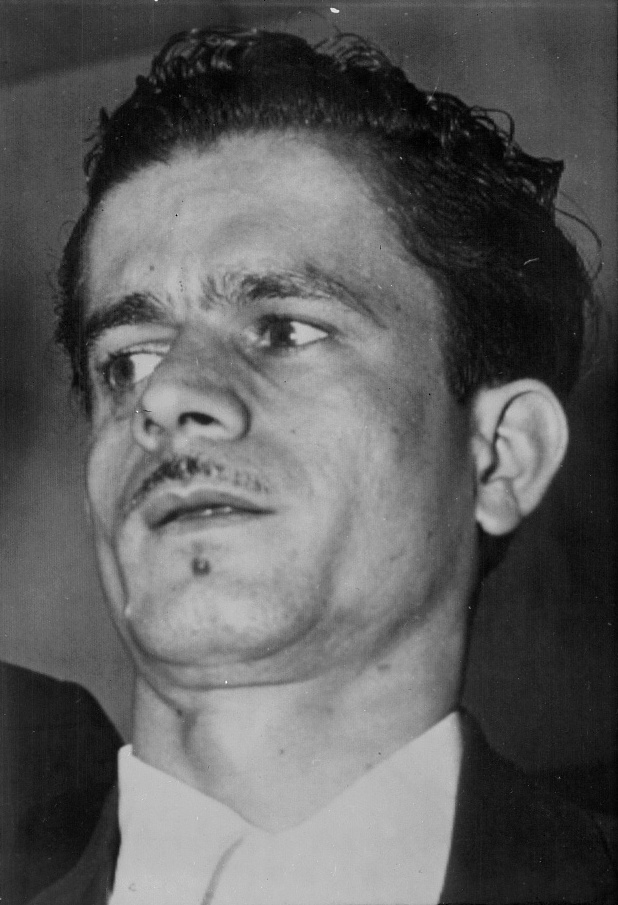
At a Glance
Ciales, the Cordillera Central, and a Puerto Rican Identity Shaped by Mountains
Ciales sits in the Cordillera Central, the mountain range that forms the spine of Puerto Rico, and the communities of the island's interior have historically maintained a stronger and more insular sense of Puerto Rican cultural identity than the coastal cities more thoroughly integrated into the American economic and administrative system after 1898. The mountains were the heartland of the jibaro culture — the rural smallholder tradition that Puerto Rican writers, artists, and nationalists had elevated into a symbol of authentic Puerto Rican identity, the embodiment of the island's pre-American past and of the values — tenacity, pride, self-sufficiency — that colonialism and Americanisation were accused of destroying.
The region also carried the memory of the Grito de Lares — the 1868 uprising against Spanish colonial rule that was Puerto Rico's most significant nineteenth-century independence movement and that had its centre in the mountain communities of the interior. This historical memory was not merely sentimental; it was politically functional, providing the independence movement with a usable past, a tradition of resistance that went back beyond the American colonisation to the Spanish one, and that located the demand for sovereignty in the deepest strata of Puerto Rican historical consciousness.
Growing up in Ciales in the 1930s and 1940s meant growing up during the years of Pedro Albizu Campos's most intense political activity — the period when the Nationalist Party was at its most visible and its most confrontational, when Albizu Campos was organising, speaking, and eventually being imprisoned by the American colonial authorities for his advocacy of independence. The Nationalist Party's message — that Puerto Rico was a colony, that its subjugation was illegal under international law, that the people of Puerto Rico had the right to sovereignty and would exercise that right whether or not the colonial power agreed — reached into the mountain communities of the interior with particular force, finding in the jibaro culture's pride and resilience a receptive audience for its arguments.
Pedro Albizu Campos and the Formation of a Nationalist
Pedro Albizu Campos was the defining political figure of Figueroa Cordero's formation — the man whose ideas, whose example, and whose suffering gave the Puerto Rican independence movement of the 1940s and 1950s its moral framework and its emotional intensity. Albizu Campos was a Harvard Law graduate from Ponce, a man of extraordinary intellectual gifts and equally extraordinary personal courage, who had chosen to return to Puerto Rico and devote his life to the independence cause rather than pursuing the professional career that his Harvard degree would have made available to him in the United States. His Nationalist Party was uncompromising in its position — no accommodation with colonial rule, no acceptance of the Commonwealth arrangement as a substitute for sovereignty, no abandonment of the international legal argument that Puerto Rico's colonisation was a violation of the right of self-determination — and his personal example of willingness to sacrifice everything for the cause gave the party a moral authority that its relatively small membership base did not fully capture.
The American colonial authorities' treatment of Albizu Campos — his repeated imprisonment on charges that the independence movement regarded as politically motivated, the credible allegations that he was subjected to radiation torture in prison, his eventual death in 1965 in circumstances that his supporters attributed to the physical damage of that imprisonment — transformed him into a martyr figure whose suffering gave the cause an emotional dimension that purely political argument could not provide. For Figueroa Cordero and the generation of Nationalists who came of age in the 1940s, Albizu Campos was not merely a political leader but a living demonstration of what commitment to Puerto Rican independence actually cost and what it therefore required of those who held it.
The Nationalist Party's decision to accept the use of political violence — the conviction that Puerto Rico's colonial situation was analogous to a military occupation and that the people of Puerto Rico had the right to resist that occupation by force — was the position that distinguished the Nationalists from the other currents of the Puerto Rican independence movement and that would eventually lead Figueroa Cordero and his companions to the visitors' gallery of the House of Representatives on the afternoon of 1 March 1954.
The 1950 Nationalist Uprising and the Road to 1954
The context for the 1954 Capitol attack was established by the events of 1950 and their aftermath. In October 1950 the Puerto Rican Nationalist Party launched an armed uprising on the island — a coordinated rebellion in multiple municipalities that included attacks on local police stations, the proclamation of Puerto Rican independence in the town of Jayuya, and an attempted assassination of the American governor. The uprising was suppressed within days by the National Guard and federal troops, with significant casualties on both sides and the imprisonment of hundreds of Nationalists including Albizu Campos himself.
In November 1950, two Nationalists — Griselio Torresola and Oscar Collazo — attempted to assassinate President Harry Truman at Blair House in Washington, D.C. Torresola was killed in the attack; Collazo was wounded, tried, convicted, and sentenced to death, with the sentence later commuted to life imprisonment. The Blair House attack brought the Puerto Rican independence movement to national and international attention in the most dramatic way available, but it also produced a wave of repression that further decimated the Nationalist Party's membership and leadership in Puerto Rico.
The 1952 Commonwealth constitution — which the Popular Democratic Party's Luis Muñoz Marín presented as an act of self-determination and which the United Nations accepted as removing Puerto Rico from its list of non-self-governing territories — was, for the Nationalists, a political catastrophe. It gave Puerto Rico a degree of internal self-government while maintaining American control over defence, foreign policy, immigration, and the fundamental economic relationship between the island and the mainland, and it was packaged as independence in a form that was specifically designed to make the independence movement appear to have achieved its goal while leaving the colonial relationship fundamentally intact. The Nationalists rejected the Commonwealth arrangement completely and understood the 1954 Capitol attack as a necessary response to it — a demonstration that the formal closure of the Puerto Rican independence question by the Commonwealth constitution had not been accepted by those who held the independence conviction most seriously.
1 March 1954: The House Gallery and the Unfolding Flag
The four Nationalists who entered the House gallery on 1 March 1954 had planned their action carefully enough to gain entry to the Capitol building and to position themselves in the visitors' gallery while the House was in session. Lolita Lebrón, who had organised and led the group, stood first, unfurling the Puerto Rican flag and shouting "Free Puerto Rico!" before firing her pistol upward toward the ceiling. Cancel Miranda, Flores, and Figueroa Cordero opened fire on the floor below, where representatives were debating immigration legislation.
Five congressmen were wounded: Alvin Bentley of Michigan was shot through the chest and came closest to death; Clifford Davis, Ben Jensen, George Fallon, and Kenneth Roberts were also wounded, all less seriously. The shooting lasted approximately a minute before the attackers were overwhelmed and disarmed by Capitol police and by bystanders. All four were arrested at the scene; none attempted to escape. Lebrón reportedly told the police as she was arrested that she had not come to kill anyone — a statement whose sincerity has been debated in the subsequent literature, given that she had fired a gun at the floor of the House and that Figueroa Cordero's weapon had been discharged in the direction of the representatives below.
The trial that followed was straightforward in its legal dimensions — the evidence of the attack was overwhelming — but politically complex in its implications. The four defendants maintained throughout that they were combatants in a war of national liberation, not criminals, and that their actions were legally and morally justified by Puerto Rico's colonial status and by international law's recognition of the right of self-determination. The federal court rejected this argument, as federal courts had rejected it in the Blair House case, and the four were sentenced to lengthy federal prison terms.
Twenty-Five Years: Imprisonment, Conviction, and the Politics of Clemency
Figueroa Cordero served approximately twenty-five years in federal penitentiaries — years during which the world outside changed enormously but during which his fundamental political convictions remained unchanged. The independence movement for which he had sacrificed his freedom continued to exist and to evolve, passing through periods of greater and lesser activity, developing new organisations and new strategies, but never achieving the formal sovereignty that the Nationalists had sought through armed action.
His release in September 1977 came through a compassionate parole application based on his terminal cancer diagnosis — a release that was the product of sustained advocacy by Puerto Rico's independence movement and by international human rights organisations who argued that a dying man deserved to spend his final months in his homeland rather than in a federal penitentiary. The release was granted; he returned to Puerto Rico already seriously ill; and he died on 7 March 1979, less than eighteen months after his freedom was restored.
The releases of Lebrón, Cancel Miranda, and Flores came later, in 1979, through President Jimmy Carter's grant of clemency — a decision that was controversial in the United States but celebrated in Puerto Rico's independence movement and in the broader international solidarity networks that had campaigned for the four for decades. Figueroa Cordero did not live to see his three companions freed, but his own compassionate release had been the first breach in the wall of their collective imprisonment, and his death in Puerto Rico rather than in an American prison was itself a form of return that the cause considered significant.
Legacy: Martyr, Militant, and the Question of Puerto Rico's Future
Andrés Figueroa Cordero's place in Puerto Rican political memory is that of a martyr — a man who gave everything, including ultimately his life, for the cause of independence, and whose sacrifice is honoured even by those who would not have chosen his methods. Streets and community spaces in Puerto Rico carry his name; his story is part of the foundational narrative of the independence movement's most militant wing; and the question of whether his actions in the House gallery constituted terrorism or legitimate resistance remains as contested and as politically charged as the broader question of Puerto Rico's political status itself.
The independence movement he belonged to has not achieved its goal. Puerto Rico remains an unincorporated territory of the United States, its political status the subject of periodic but inconclusive referendums, its people citizens of a country that does not grant them voting representation in Congress and that governs their fundamental political and economic relationship through institutions in which they have no direct voice. The argument that Figueroa Cordero and his companions made — that this situation is a form of colonialism that the international community is obligated to address — remains alive in the independence movement and in the international forums where Puerto Rico's status is periodically debated.
Whether violence was the right response to that situation is a question that the independence movement itself has never unanimously resolved. What is not contested is the seriousness and the sincerity of the commitment that led Figueroa Cordero to the House gallery, the prison, and the early death that his imprisonment contributed to. He gave thirty years of his adult life — the productive decades that might have built a career, a family, a community — to a cause that demanded exactly that price, and he paid it without apparent regret or recantation.