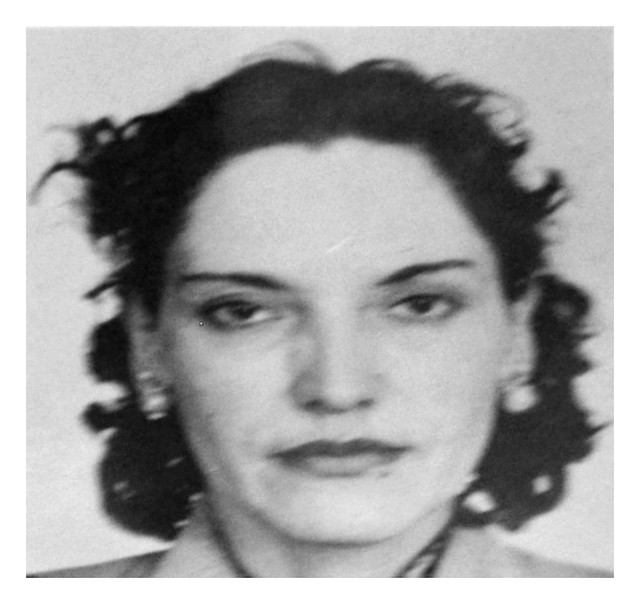
At a Glance
Lares, the Grito, and a Woman Formed for Resistance
To be born in Lares in 1919 was to be born into a town that understood itself as the site of something — the 1868 Grito de Lares, Puerto Rico's most significant nineteenth-century independence uprising — that placed permanent obligations on its inhabitants. The Grito had failed militarily; the Spanish colonial army had suppressed it within days, arrested its leaders, and executed or imprisoned those who had raised the Puerto Rican flag for the first time in the island's history. But its failure had not diminished its significance; if anything, the specific combination of its boldness and its suppression had given it the status of a sacred event in Puerto Rican nationalist consciousness, a demonstration that the desire for sovereignty was deep enough to produce armed action and that the colonial power's capacity to suppress such action was not the same thing as its capacity to extinguish the desire.
Lebrón grew up knowing this history in the most personal way — as the history of her town, the history of the families her family knew, the history that defined Lares's identity and that made the abstract demand for Puerto Rican independence specific and local and irreducibly personal. When she eventually stood in the gallery of the House of Representatives and unfurled the Puerto Rican flag, she was consciously acting in the tradition of the Grito — placing herself in the line of succession from the men and women of 1868 who had raised the same flag over the same demand, and accepting in advance the same consequences that they had accepted: the suppression of the action and the punishment of those who carried it out.
Her move to New York as a young woman was made in the economic circumstances that drove Puerto Rican migration in the 1940s — the island's poverty, the availability of manufacturing jobs in the garment district, the promise of a city where Puerto Ricans were building community and maintaining connection to the island while adapting to the specific conditions of American urban life. She worked in the garment industry and became active in the Puerto Rican community's political life, connecting the island's independence movement to the diaspora experience in ways that gave her political formation a dual character: rooted in the Lares tradition and shaped by the specific conditions of Puerto Rican life in New York.
Albizu Campos and the Decision That Defined Everything
Her encounter with Pedro Albizu Campos and the Nationalist Party deepened and focused the political convictions that her Lares formation had instilled. Albizu Campos was, for the generation of Puerto Ricans who came under his influence in the 1940s and 1950s, the most intellectually formidable and personally courageous figure in the independence movement — a man who had argued the case for Puerto Rican sovereignty before every available forum, who had accepted imprisonment and suffering for his convictions, and whose physical deterioration under what his supporters believed was deliberate mistreatment in prison gave his martyrdom a specific, bodily dimension that made abstract political commitment visceral and personal.
Lebrón's relationship to Albizu Campos was that of a committed follower who had absorbed both his political arguments and his willingness to pay any price for the cause — a follower who took the commitment seriously enough to act on it in the most direct and irreversible way available. The 1954 Capitol attack was her expression of that commitment, and the note she wrote before carrying it out was her statement that she understood the price and had accepted it in advance.
The specific choice of the House of Representatives as the target of the action reflected both practical and symbolic considerations. Practically, it was accessible — the visitors' gallery was open to the public, and four people with concealed weapons could enter it without detection in the security environment of 1954. Symbolically, it was the legislative body of the colonial power — the institution whose members made the laws that governed Puerto Rico without Puerto Ricans having voting representation among them. The attack on the House floor was an attack on the institution that embodied, in the most direct legal terms, the colonial arrangement that the Nationalists were demanding be ended.
1 March 1954: The Flag, the Words, the Shots
The action in the House gallery on 1 March 1954 lasted less than a minute but has been described and analysed in the Puerto Rican independence literature many hundreds of times since. Lebrón stood first — stood, unfolded the Puerto Rican flag that she had brought in her coat, raised it above her head, and shouted "¡Viva Puerto Rico libre!" — Free Puerto Rico — before firing her pistol. Cancel Miranda, Flores, and Figueroa Cordero fired in the same moment from their positions in the gallery. Five representatives were wounded on the floor below: Alvin Bentley of Michigan, who was shot through the chest and came closest to death, and four others with less serious wounds. No one was killed.
The four were arrested at the scene without resistance. Lebrón's demeanour at the moment of arrest — she reportedly told arresting officers that she had not come to kill anyone, that she had come to demonstrate the Puerto Rican people's desire for freedom — was consistent with the note in her purse, which framed the action as a sacrificial demonstration rather than as an assassination attempt. Whether this framing was entirely consistent with the evidence — she had fired a weapon in a room full of people — was debated at the trial. What was not debated was the seriousness of the political commitment that had produced the action and the completeness of her willingness to accept its consequences.
The note found in her purse after her arrest became, almost immediately, one of the defining documents of the Puerto Rican independence movement — a statement of political commitment expressed with the moral vocabulary of sacrifice and martyrdom that the Catholic tradition she had grown up in provided, and that connected the action to a tradition of willing suffering for a greater cause that was immediately legible to both Puerto Rican and international audiences. "Before God and the world, my life I give for the freedom of my country." The sentence has been quoted, reproduced, and commemorated so many times in the seventy years since she wrote it that it has achieved the status of a founding text of the movement's most intense expression.
Twenty-Five Years at Alderson: Conviction Maintained, Spirit Unbroken
The federal prison at Alderson, West Virginia — the facility where Lebrón served most of her twenty-five-year sentence — was a place that tested, without breaking, the conviction that had produced the Capitol attack. She maintained throughout her imprisonment the unwavering refusal to express the remorse that the prison system and the broader political culture expected from those convicted of political violence: a refusal to say that what she had done was wrong, a refusal to characterise the action as anything other than what she had intended it to be — a demonstration of Puerto Rican resistance to colonial rule — and a refusal to cooperate with the institutional pressure to present her convictions as misguided errors that time in prison had corrected.
Her prison years also included a deepening of her religious life — a turn toward the contemplative dimensions of Catholic practice that her earlier political militancy had not fully engaged with — that did not replace her political commitment but existed alongside it, giving her inner life a depth and a complexity that the simple narrative of imprisoned political revolutionary does not fully capture. She spoke in her later years about the relationship between her faith and her politics as two dimensions of the same fundamental commitment to human dignity and divine justice, and the combination gave her public presence in the post-release years an authority that went beyond the purely political.
The sustained international campaign for her release — maintained across the decades of her imprisonment by the Puerto Rican independence movement, by Latin American governments and organisations, by the United Nations' special committee on decolonisation, and by human rights advocates across the political spectrum — was eventually successful. Carter's 1979 clemency freed her along with Cancel Miranda and Flores, and her return to Puerto Rico was met with celebrations that reflected both the movement's joy at her liberation and the depth of the affection and respect she had accumulated over twenty-five years of steadfast imprisonment.
The Final Thirty Years: Icon, Activist, and the Living Memory of the Movement
The thirty-one years between her 1979 release and her death in 2010 were years in which Lebrón occupied a specific and important role in Puerto Rican political life — that of the living icon, the woman whose person embodied the movement's most dramatic moment and whose continued presence was a statement about the continuity and the vitality of the independence cause. She spoke at independence movement events, gave interviews to journalists and scholars, participated in the campaigns of the 1980s and 1990s, and maintained through all of this the combination of personal warmth and absolute political clarity that had always characterised her public presence.
Her rearrest in the 1990s — in connection with a protest action against the US Navy's use of Vieques as a bombing range — demonstrated that her commitment to direct action had not been diminished by age or by the experience of twenty-five years in prison. The Vieques campaign was one of the most broadly supported political movements in Puerto Rican history, drawing together independence activists, environmentalists, health advocates, and mainstream political figures in a coalition that eventually succeeded in forcing the Navy's withdrawal. Lebrón's participation in the protest that led to her arrest — at the age of seventy-five — was understood by the movement as a demonstration that she remained, after everything, the person she had always been.
She died on 1 August 2010, in San Juan, at the age of ninety. Her body was taken to Lares for burial — to the town where she had been born, the town of the Grito de Lares, the town that had formed her into the person who stood up in the House gallery on 1 March 1954 and unfurled a flag and said what she had to say. Puerto Rico mourned her as it has mourned very few public figures in its modern history — with the specific grief that attends the death of someone who has given everything for a cause that matters, who has paid the price that the cause demanded, and who has maintained the commitment without wavering across a lifetime long enough to see both the best and the worst that the cause and its opponents could produce.
Legacy: The Woman Who Stood Up in the Gallery
Lolita Lebrón is, in Puerto Rican political memory and in the broader history of anticolonial struggle, one of the most vivid and most complex figures of the twentieth century. She is remembered as a woman of extraordinary courage — the woman who stood up in the gallery and unfurled the flag and said "Free Puerto Rico" at the moment when she knew that saying it would cost her everything. She is remembered as a political prisoner of twenty-five years who maintained her convictions without breaking. She is remembered as an old woman who was still willing to be arrested for Vieques at seventy-five. And she is remembered as the author of the sentence — "Before God and the world, my life I give for the freedom of my country" — that captures, in a few words, the totality of commitment that the independence cause produced in its most devoted advocates.
The question of whether the 1954 Capitol attack was the right action — whether it advanced the cause it was intended to serve, whether its costs were proportionate to its benefits, whether the political violence it employed was justified by the colonial situation it was responding to — is a question that the Puerto Rican independence movement has never unanimously resolved and that the broader world has evaluated in incompatible terms. What is not in question is the seriousness of the commitment that produced it, the completeness of the price that Lebrón paid for that commitment, and the symbolic power that her story has exercised over the Puerto Rican independence imagination for more than seventy years.