At a Glance
Jayuya, the Torresola Family, and a Tradition of Total Commitment
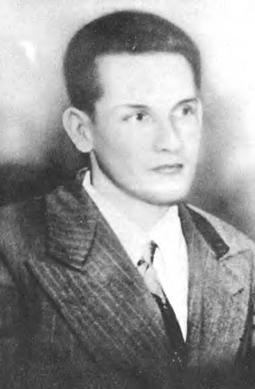
Griselio Torresola grew up in Jayuya in a family whose relationship to the Puerto Rican independence movement was not peripheral but central — a family whose members occupied positions of leadership and commitment within the Nationalist Party and whose identity was shaped by the conviction that Puerto Rico's colonial subjugation required resistance and that that resistance might require everything. His sister Doris was a dedicated member of the movement; his relative Blanca Canales Torresola was one of the most important Nationalist organisers in Jayuya; and the broader Torresola network in the town was among the most committed Nationalist constituencies on the island.
The mountain town where he grew up — with its jibaro culture, its memory of the Grito de Lares, its direct experience of the economic consequences of American territorial rule — produced in its Nationalist families a form of political consciousness that was total rather than partial, that did not accommodate itself to the incremental approach to change that democratic politics normally requires. The Nationalist Party's argument — that Puerto Rico was a colony, that colonialism was a form of violence, that the colonised had the right to resist by force — was received in these families not as an abstract political theory but as a description of the lived reality of their community, and the willingness to act on it was proportional to the specificity of that lived reality.
Pedro Albizu Campos's physical presence in Puerto Rico, his confrontational advocacy, and his willingness to accept imprisonment and suffering for the independence cause gave the movement's most committed members a model of total commitment that shaped their own. For Griselio Torresola, as for Blanca Canales and the others who acted in November 1950, the moment of action was not a sudden departure from their political formation but its most complete expression — the moment at which everything that had been believed and argued and organised for was translated into direct, irreversible action.
Oscar Collazo and the New York Puerto Rican Community
The partnership between Griselio Torresola and Oscar Collazo connected the Jayuya Nationalist tradition to the Puerto Rican diaspora community in New York City — a community that was, by 1950, a significant political constituency whose members maintained strong connections to the island's political life while developing their own forms of engagement with the independence cause in the specific conditions of immigrant community life in a major American city. Collazo was a sheet-metal worker who had moved to New York from Puerto Rico, had become active in the Nationalist movement there, and had maintained his political commitments through the distance that migration imposed.
The decision to travel together to Washington and attack Blair House reflected both men's understanding that the moment of the Nationalist uprising in Puerto Rico — which had begun three days before their Washington action — called for a response that would bring the independence cause to the attention of the American government and the American public in the most direct way available. The uprising on the island demonstrated that the movement had the will to challenge colonial rule; the attack in Washington was intended to demonstrate that the challenge extended to the colonial capital itself and to the person of the colonial power's chief executive.
The two men were very different in their backgrounds — Torresola the Jayuya Nationalist whose family was at the centre of the island's most committed independence community, Collazo the New York Puerto Rican worker whose political commitments had been maintained through the diaspora experience. Their partnership in the Blair House attack was itself a demonstration of the independence movement's geographic reach, spanning the island and the mainland diaspora in a single coordinated action.
1 November 1950: The Attack, the Deaths, and the Sixty Seconds That Changed Everything
The attack on Blair House lasted less than sixty seconds. Torresola and Collazo had arrived separately at Pennsylvania Avenue and had taken positions on either side of the building's entrance. At approximately 2:20 in the afternoon, as President Truman napped upstairs, the two men opened fire simultaneously from east and west. Torresola, on the western side, engaged Private Donald Birdzell, who drew his weapon and fired before being shot in both legs; Torresola then shot Special Agent Floyd Boring in the shoulder, and then shot Private Coffelt — the officer who would kill him moments later.
Officer Coffelt had been shot three times and was mortally wounded, but he had not yet fallen. He steadied himself against the sentry booth, aimed, and fired one shot that struck Torresola in the right temple. Torresola fell and died at the scene. Coffelt collapsed and was rushed to hospital, where he died four hours later. Collazo, on the eastern side, had also been engaged and had been wounded; his pistol had misfired at a critical moment, and the combination of the misfire, the wounding, and the rapid response of the Secret Service agents ended his part of the attack. He was arrested at the scene.
Truman was reportedly awakened by the gunfire and went to the window, where he was seen by the combatants below; agents shouted at him to move away from the window. He was unharmed. He kept his afternoon appointments. His response to the attack — the refusal to change his schedule, the direct and contemptuous dismissal of the attackers — was consistent with the character of a man who had ordered the atomic bombing of Japan and who was unlikely to be significantly disturbed by two Puerto Rican nationalists with pistols.
Death at Twenty-Five: Martyrdom and Its Meaning in the Nationalist Tradition
Griselio Torresola was twenty-five years old when he died in front of Blair House. He had lived his entire adult life — from young manhood to his death — within the Nationalist Party's framework of total commitment to Puerto Rican independence, and he had accepted the consequences of that commitment with the directness of a man who had understood from the beginning that the path he was on led to exactly where it led.
His death on 1 November 1950 — All Saints' Day — and its coincidence with the Jayuya uprising that Blanca Canales was leading on the same day gave it a specific quality in the Nationalist martyrology. The image of a Torresola family whose members were simultaneously dying in Washington and fighting in Jayuya on the same day was the most vivid possible demonstration of the movement's depth of commitment — of the degree to which the independence cause had penetrated the lives and the relationships of specific Puerto Rican families in ways that could not be easily dismissed as the fanaticism of isolated individuals.
The independence movement's memory of Torresola has maintained both the specific human fact of his death — young, from Jayuya, a member of one of the movement's most committed families, shot dead at twenty-five by the same officer he had just fatally wounded in a single exchange of fire — and its political significance as an act of resistance to colonial rule. Whether the specific act was justified — whether the assassination of President Truman would have served the independence cause or damaged it, whether armed action against American political leaders was the right response to Puerto Rico's colonial situation — has been debated within the movement and outside it for more than seventy years. What has not been debated is the seriousness of the commitment that produced it or the price that commitment extracted from Griselio Torresola.
Legacy: A Brief Life and a Long Memory
Torresola's legacy in Puerto Rican political memory is that of a martyr in the most literal sense: a person who died for a cause, at a young age, having acted on his convictions with complete seriousness and having paid the complete price. His grave in Jayuya — the town where he was born, where Blanca Canales led the uprising on the day he died, where the Torresola family's independence tradition was rooted — is a pilgrimage site for the independence movement and a memorial to the specific quality of commitment that the Nationalist tradition produced in its most dedicated members.
The questions his life raises — about the legitimacy of political violence in the context of colonial rule, about the relationship between the sincerity of a political conviction and the appropriateness of the methods used to act on it, about what a twenty-five-year-old from a mountain town in Puerto Rico understood himself to be doing when he walked toward Blair House with a loaded pistol on All Saints' Day 1950 — are the questions that the entire history of the Puerto Rican armed independence movement raises, and they do not have easy answers. What they require is the kind of engagement with the specific historical and political context that Torresola's brief life provides: the context of a colonial situation that had persisted for more than fifty years, that had been challenged through every available political means without success, and that the Nationalist tradition had decided to challenge through the only means left to them.