At a Glance
Mayagüez, the Western Coast, and Political Formation
Mayagüez, on Puerto Rico's western coast, was one of the island's major cities and one whose character — a university town with significant working-class fishing and manufacturing communities, a city of cultural ambition and political consciousness — made it fertile ground for the Nationalist Party's arguments in the 1930s and 1940s. The Nationalist movement under Albizu Campos drew its membership from across Puerto Rican society, but its working-class base was particularly significant, and cities like Mayagüez with their combination of industrial workers, small business owners, and educated professionals provided the kind of diverse Nationalist constituency that the party needed to maintain its presence across the island.
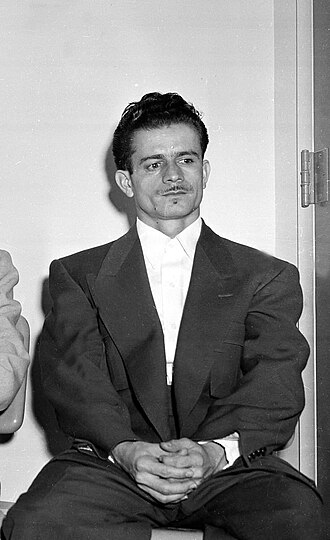
Irving Flores grew up in this context, shaped by the same currents of Nationalist politics that were producing, in the same period, the other members of the group with whom he would eventually enter the House gallery. The specific experience of growing up in Puerto Rico during the 1930s — the years of the Great Depression, when the island's already precarious economy was devastated; the years of the Nationalist Party's most confrontational activism; the years of the Ponce Massacre and the federal prosecution of Albizu Campos — gave his generation a political formation grounded in specific, lived experience of colonial rule's consequences rather than in abstract political theory.
The decision to join the Nationalist Party and eventually to participate in the 1954 Capitol attack was the product of this formation and of the specific political context of the early 1950s — the passage of the Commonwealth constitution in 1952, which the Nationalists regarded as a fraudulent solution that closed the independence question without actually resolving it, and the continuing imprisonment of Albizu Campos, whose suffering gave the movement its most visceral demonstration of the colonial administration's willingness to use its legal apparatus against independence advocates.
The Four in the Gallery: What the Attack Was and What It Was Meant to Do
The 1954 Capitol attack was designed to do two things simultaneously: to be a genuine military strike against the legislative apparatus of the American colonial power, and to be a piece of political theatre that would force the world's attention onto the Puerto Rican independence cause at a moment when the Puerto Rican question was about to disappear from international view. The timing was deliberate — the Inter-American Conference was meeting in Caracas, Venezuela, and the Nationalists wanted to place the Puerto Rican independence question before the hemispheric gathering in the most dramatic way available.
Lolita Lebrón organised and led the group, and it was her vision and her authority that gave the action its specific shape. The combination of the flag unfurling, the shouted declaration of "Free Puerto Rico!", and the gunfire was designed as an integrated political statement in which each element was essential: the flag announced what the action was about, the words named the cause explicitly, and the shooting demonstrated that the people making the statement were prepared to back it with force and with their own lives. Flores, Cancel Miranda, and Figueroa Cordero were the three who completed the statement by firing their weapons and accepting the inevitable arrest that followed.
The wounding of five congressmen was the action's most contested dimension — the measure of whether it constituted legitimate resistance or criminal violence that the independence movement and the American legal system have evaluated in incompatible terms ever since. For the Nationalists, the congressmen were the legislative representatives of the colonial power, and their wounding was a proportionate response to a colonial situation that had persisted for fifty-six years. For the American legal system, they were elected representatives of the people who had been attacked in the performance of their public duties, and the attack was a federal felony regardless of the political motivations of those who carried it out.
Twenty-Five Years: The Duration of a Commitment
The twenty-five years that Irving Flores served in federal prison were the primary fact of his adult life between his arrest in 1954 and his release in 1979 — a span of time that covered the entirety of what would otherwise have been the most productive decades of his maturity, from his late twenties to his early fifties. During those twenty-five years, Puerto Rico changed enormously: the Commonwealth's industrialisation programme transformed the island's economy, migration to New York created a massive Puerto Rican diaspora, the independence movement continued to evolve through multiple organisational forms, and the global political context that had shaped the 1954 attack — the Cold War, the decolonisation of Africa and Asia, the American civil rights movement — developed in ways that both the imprisoned Nationalists and the world outside could observe but could engage with only at a distance.
The maintenance of political conviction across twenty-five years of federal imprisonment is not a simple or automatic achievement. The institutional pressures of imprisonment — the isolation, the controlled environment, the constant proximity of a system that had convicted you and that could reward compliance and punish resistance — are designed to produce the kind of disengagement from prior commitments that makes the individual a manageable subject of the institutional regime. That Flores, like his three co-defendants, maintained his conviction without public recantation across the full quarter-century of his imprisonment was itself a form of political resistance — the refusal to provide the colonial system with the validation it would have gained from a repudiation.
The international campaign for the four prisoners' release, which gathered momentum through the 1960s and 1970s and eventually produced Carter's 1979 clemency, was sustained by the independence movement's understanding of the four as political prisoners — prisoners of conscience whose imprisonment reflected not the justice of their convictions but the power of the colonial administration to use the federal legal system against those who challenged it. The United Nations, the Non-Aligned Movement, numerous Latin American governments, and human rights organisations across the spectrum joined in the call for their release, and the sustained pressure of this international solidarity eventually produced the outcome the movement sought.
Carter, Clemency, and the Return Home
The September 1979 grants of clemency — issued by President Jimmy Carter to Lebrón, Cancel Miranda, and Flores — were the product of a sustained political calculation on Carter's part that the continued imprisonment of the three Nationalists was a political liability in the Latin American and international context that outweighed the domestic political cost of appearing to reward political violence. The independence movement, various Puerto Rican political organisations, the UN Special Committee on Decolonisation, and numerous governments had been advocating for the prisoners' release for years, and the Carter administration's foreign policy priorities — particularly its engagement with Cuba and its desire to build more constructive relationships with Latin American governments — made the resolution of the Puerto Rican prisoner question politically useful.
The clemency was not an acknowledgment that the four had been right or that the Capitol attack had been justified. It was a practical political decision, and its terms — the prisoners were freed, not exonerated — reflected that practical character. But for the independence movement, the distinctions were less important than the fact of freedom: the three surviving prisoners were coming home, and Flores's return to Puerto Rico in September 1979 — twenty-five years, seven months, and a few days after his arrest in the House gallery — was the end of the sentence that the attack had cost him.
The Quiet Return and the Last Fifteen Years
Irving Flores's return to Puerto Rico in 1979 was followed by a life considerably quieter than those of his co-defendants Lebrón and Cancel Miranda, who continued to be public figures in the independence movement and who maintained their political presence through the 1980s and 1990s and beyond. Flores retreated from public life, living in Puerto Rico without seeking the continued prominence that the history of the Capitol attack made available to him. This choice — the preference for private life after a quarter-century of imprisonment — was entirely understandable and entirely honourable, and it is part of the complete picture of what the 1954 attack cost its four participants and what they each did with the rest of their lives after the cost had been paid.
He died on 8 February 1994, at sixty-seven — fifteen years after his release, thirty-nine years after the attack. His death was noted in the independence movement without the extended public mourning that would later accompany the deaths of Lebrón and Cancel Miranda, who had maintained higher public profiles. But the movement recognised in his passing the loss of one of the four who had carried the most dramatic single action in its modern history, and whose twenty-five years in prison had been as complete an expression of political commitment as the gunfire in the House gallery that had produced them.
Legacy: One of Four, Equally Committed, Differently Remembered
The four participants in the 1954 Capitol attack have been remembered unequally — Lebrón most prominently, as the organiser and the most publicly celebrated figure; Cancel Miranda next, for his continued activism and his longevity; Figueroa Cordero for the pathos of his death from cancer in 1979 just months after his compassionate release; and Flores most quietly, for a post-prison life that did not generate the public narrative that the others' did. This inequality of memory is a product of the specific personalities and choices of the four individuals rather than of any difference in the significance of their action or the completeness of their commitment.
Irving Flores Rodríguez participated equally in the action that defined all four of their lives. He served the same sentence. He paid the same price. His political conviction was no less real and no less seriously held than those of his three companions. That he chose to live quietly after his release rather than continuing as a public figure of the movement is a choice that reflects his own character and his own understanding of what the years in prison had meant and what came after — and it is a choice that deserves to be honoured rather than read as absence.