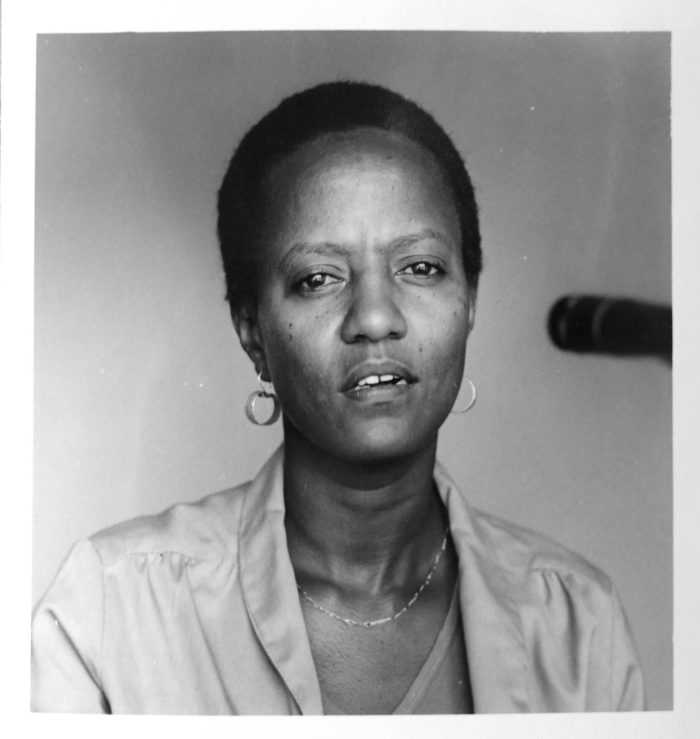
Jacqueline Creft, Grenadian educator and revolutionary who served as Minister of Education and Women's Affairs in Maurice Bishop's People's Revolutionary Government, transformed Grenada's educational system, and was executed alongside Bishop and other cabinet members on 19 October 1983 during the coup that destroyed the revolution she had served.
Grenada · Caribbean

Jacqueline Creft

Jacqueline Creft was born on 19 September 1945 in Grenada and grew up to become one of the most effective ministers in Maurice Bishop's People's Revolutionary Government — the New Jewel Movement government that took power in Grenada in March 1979 and that built, across four and a half years of revolutionary governance, one of the most ambitious and most broadly praised social transformation programmes in the Caribbean's post-colonial history. She was an educator and a community organiser before the revolution, and she brought to the Ministry of Education and Women's Affairs the combination of practical knowledge, commitment to Grenadian working-class communities, and revolutionary energy that Bishop's government needed if the educational transformation it sought was to move beyond declaration into the daily reality of changed lives. The educational reforms that her ministry implemented were among the most consequential of the revolution's social achievements: the literacy campaign that dramatically reduced Grenada's illiteracy rate, the construction of new schools and community centres, the introduction of Cuban teachers and Cuban educational assistance that extended educational provision to communities that had been inadequately served by the colonial system, and the integration of education with community development that made schooling a vehicle for the broader social transformation the revolution sought. She was also Maurice Bishop's partner — the relationship that gave her both personal connection to the revolution's central figure and the specific vulnerability that came from being identified with him when the internal power struggle that destroyed the revolution turned violent. On 19 October 1983, following Bishop's release from house arrest by a crowd of supporters who brought him to Fort Rupert, Bernard Coard's faction of the NJM sent troops who recaptured Bishop and his cabinet ministers — including Creft, who was pregnant with Bishop's child — and executed them by firing squad. She was thirty-eight years old. The killing of Jacqueline Creft, Maurice Bishop, and the other cabinet ministers on that October afternoon was one of the most shocking acts of political violence in Caribbean history — a revolutionary government murdering its own prime minister and his cabinet — and it destroyed in a single afternoon the most ambitious experiment in Caribbean progressive governance that the post-independence era had produced.

Grenada Minister of Education People's Revolutionary Government Executed 19 October 1983 Maurice Bishop's Partner Grenada Literacy Campaign

Born: 19 September 1945, Grenada  |  Died: 19 October 1983, Fort Rupert, Grenada — aged thirty-eight; Minister of Education; executed in the coup that destroyed the Grenadian revolution

At a Glance

Full NameJacqueline Creft; born 19 September 1945 in Grenada; educator and community organiser before the revolution; became Minister of Education and Women's Affairs in Maurice Bishop's People's Revolutionary Government from 1979; implemented the literacy campaign, school construction programme, and Cuban educational assistance that transformed Grenada's educational system; Maurice Bishop's partner, pregnant with his child at the time of her death; executed by firing squad at Fort Rupert on 19 October 1983
Born19 September 1945, Grenada; grew up in the specific conditions of Grenadian colonial and post-colonial working-class life that gave her both the practical knowledge of what the educational system was failing to provide and the commitment to changing it that made her an effective minister; her background as an educator and community organiser gave her the specific expertise and community connections that her ministry required
Died19 October 1983, Fort Rupert (Fort George), St. George's, Grenada; executed by firing squad alongside Maurice Bishop and other cabinet ministers after Bernard Coard's faction of the New Jewel Movement sent troops to recapture Bishop following his release by supporters; she was pregnant with Bishop's child at the time of her death; she was thirty-eight years old; her execution was one of the most shocking acts of political violence in Caribbean history
Minister of EducationServed as Minister of Education and Women's Affairs in the People's Revolutionary Government from the NJM's seizure of power in March 1979 until her death in October 1983; her ministry was responsible for implementing the most significant educational reforms in Grenada's history — the literacy campaign, the school construction programme, the introduction of Cuban teachers and educational assistance, and the integration of education with community development; her effectiveness as a minister was widely recognised even by critics of the revolution's political methods
The Literacy CampaignThe literacy campaign that Creft's ministry implemented was one of the People's Revolutionary Government's most celebrated achievements; working with Cuban educators and using the methods that had been developed in Cuba's own literacy campaign, the programme dramatically reduced Grenada's illiteracy rate and was recognised internationally as a model for small-island literacy work; the campaign was part of the broader educational transformation that sought to make Grenadian education responsive to the developmental and cultural needs of the Grenadian working class rather than to the requirements of the colonial examination system it had inherited
Cuban Educational PartnershipOne of the most significant elements of Creft's ministry was the partnership with Cuba that brought Cuban teachers, educational materials, and pedagogical methods to Grenada; the partnership was controversial — it was cited by the Reagan administration as evidence of communist penetration — but its practical effects on Grenadian educational provision were positive and broadly acknowledged; the new school buildings, the extended teacher training, and the literacy campaign all drew on Cuban assistance in ways that made the partnership one of the revolution's most tangible contributions to Grenadian development
Women's AffairsHer ministry's responsibility for Women's Affairs reflected the People's Revolutionary Government's commitment to gender equality as part of its broader social transformation programme; the National Women's Organisation that her ministry supported was one of the most active mass organisations of the revolutionary period, and the specific attention to women's economic and social conditions — childcare provision, maternity leave, women's health — was among the revolution's more concrete achievements in moving beyond formal equality to substantive improvement in women's daily conditions
19 October 1983The events of 19 October 1983 began when Bishop — who had been placed under house arrest by the Coard faction — was freed by a crowd of supporters who brought him to Fort Rupert; Coard's faction responded by sending troops, who retook the fort, disarmed Bishop's supporters, and separated Bishop and his cabinet ministers from the crowd; Bishop, Creft, and five other ministers were then taken to the fort's courtyard and executed by firing squad; the specific decision to kill the cabinet — rather than merely reimprison them — was one of the most consequential and most condemned decisions in Caribbean political history

Grenada, Education, and the Making of a Revolutionary Minister

Jacqueline Creft came to the People's Revolutionary Government through the specific background of an educator who had worked within and then against the colonial educational system that had shaped Grenadian schooling since the island's British colonial period. The educational system she had worked in was the system that most British Caribbean colonies had inherited — oriented toward the colonial examination curriculum, underfunded in its provision to working-class communities, more effective at selecting the few who could pass examinations for further advancement than at providing a genuinely transformative education to the many, and shaped by the cultural assumptions of a system designed to reproduce colonial hierarchy rather than to develop the full capacities of colonial subjects.

Her community organising work before the revolution gave her a detailed knowledge of the specific gaps between what Grenadian working-class communities needed from education and what the existing system was providing, and her involvement in the New Jewel Movement's political work connected this practical knowledge to the ideological framework of Caribbean democratic socialism that Bishop's movement was developing. When the NJM seized power in March 1979, she was the obvious choice to lead the educational transformation that the revolution had put at the centre of its programme.

The specific approach she brought to the Ministry of Education reflected both her background as a practitioner and the revolution's broader understanding that educational transformation had to be rooted in the specific conditions and needs of Grenadian communities rather than imposed from above through the replacement of one set of elite assumptions with another. The literacy campaign, the community education centres, the integration of formal schooling with practical community development — these reflected a philosophy of education as a tool of liberation rather than a mechanism of sorting and selecting, and they drew on both Cuban pedagogical experience and Creft's own understanding of what Grenadian communities needed.

Four and a Half Years: What the Revolution Built

The People's Revolutionary Government's four and a half years — from March 1979 to October 1983 — were years in which Grenada achieved some of the most significant social improvements in its history. The literacy campaign reduced illiteracy dramatically. New schools and community centres were built across the island. The infant mortality rate fell. The tourism infrastructure that would sustain the island's economy was expanded, most visibly through the international airport at Point Salines — built with Cuban assistance and bitterly opposed by the Reagan administration as a potential military asset — that would finally give Grenada direct access to international air routes. The Centre for Popular Education that Creft's ministry developed was recognised internationally as a model for small-island community education.

These achievements were genuine and broadly acknowledged even by critics of the revolution's methods. The Grenada revolution was not without its serious problems — the suspension of elections, the political imprisonment of opponents, the internal party conflicts that eventually destroyed it — but the social transformation it achieved in four and a half years was more concrete and more broadly distributed than what most Caribbean governments had achieved in comparable periods. Creft's contribution to this transformation — through the educational programme that was one of its most visible and most consequential elements — was one of the most significant ministerial achievements of the revolutionary period.

Her dual role as minister and as Bishop's partner gave her both a central position in the revolution's social programme and a specific vulnerability when the internal power struggle that destroyed the revolution began. The conflict between Bishop and Coard — which concerned the question of whether the NJM's leadership should be reorganised to share power jointly between Bishop and Coard, a proposal that Bishop resisted and that his supporters regarded as a disguised attempt to remove him — eventually produced the confrontation that led to Bishop's house arrest, his liberation by supporters, and the catastrophic violence that followed.

19 October 1983: The Day the Caribbean Revolution Killed Itself

The sequence of events on 19 October 1983 was one of the most catastrophic in Caribbean political history — a series of decisions that each made subsequent catastrophe more likely, ending in the murder of the revolution's most important leaders by the revolution's own security forces. Bishop, liberated from house arrest by a crowd of thousands who brought him to Fort Rupert, the military headquarters on the hill above St. George's harbour, found himself in control of a building with a crowd of supporters but no effective military defence against the forces that Coard's faction controlled.

When the troops arrived and retook the fort — firing on the crowd, killing several people in the process — Bishop and the cabinet ministers who had been with him were captured. The decision that followed — to execute them — was made by the leadership of Coard's faction, and it was a decision whose consequences went far beyond the immediate political situation. The execution of Creft, pregnant, alongside Bishop and five other ministers, was an act that shocked the Caribbean world and provided the Reagan administration with the justification it needed for the American invasion of Grenada that followed within days.

Creft died at thirty-eight, carrying the child of the man who was executed alongside her. The specific brutality of her death — a pregnant woman executed by the revolutionary government she had served — was one of the details that made 19 October 1983 so permanently damaging to the Caribbean left's public reputation. The revolution that had been built partly on the promise of women's emancipation had murdered its most prominent woman minister while she was pregnant. The revolution that had built schools and reduced illiteracy had destroyed itself in an afternoon's violence.

Legacy: What Grenada Built and How It Was Destroyed

Jacqueline Creft's legacy is inseparable from the revolution she served and from the manner of her death. She is remembered as one of the most effective ministers of that revolution — the educator who transformed Grenada's schooling, who built the literacy programme, who brought Cuban pedagogical assistance to communities that had been underserved by the colonial system — and as one of its most tragic martyrs, killed by the revolution's own internal conflicts at the moment when she was carrying its future.

The revolution she served has been the subject of sustained historical reassessment in the decades since its destruction — a reassessment that has tried to hold together the genuine social achievements of the four and a half years and the genuine political problems of the authoritarian party structures that eventually produced the October catastrophe. The educational transformation she led is part of that genuine achievement, and her name is attached to schools and educational institutions in Grenada that carry forward, in the formal structure of institutions if not always in the transformative spirit, the work she gave her life to building.

Other Caribbean Profiles

Grenada, Guyana & Others Aimé Césaire Martinican poet; Négritude; intellectual foundation of Caribbean liberation Grenada, Guyana & Others Arthur Henry Trinidad 1937 oilfield strikes; Caribbean labour independence Grenada, Guyana & Others Cheddi Jagan Guyanese democratic socialist; CIA overthrow — parallel Caribbean story Grenada, Guyana & Others Forbes Burnham Guyana's independence leader who became an authoritarian Grenada, Guyana & Others Frantz Fanon Martinican psychiatrist; Wretched of the Earth; intellectual foundation Grenada, Guyana & Others Janet Jagan American-born PPP leader; president of Guyana 1997–1999 Grenada, Guyana & Others Leon Damas Co-founder of Négritude; Guyanese poet of Black liberation Grenada, Guyana & Others Maurice Bishop Grenada's revolutionary prime minister; executed alongside Creft Grenada, Guyana & Others Unison Whiteman Foreign minister; executed alongside Creft and Bishop on 19 October Grenada, Guyana & Others Walter Rodney Guyanese historian assassinated 1980; parallel Caribbean martyr
Share X Facebook WhatsApp LinkedIn