At a Glance
Porto-Novo and the Legal Culture of the Atlantic Coast
Porto-Novo in 1917 — the year of Ignacio-Pinto's birth — was one of the most distinctive cities in West Africa: Dahomey's administrative capital, a coastal city whose culture combined Yoruba political traditions, Catholic Brazilian returnee community practices, French colonial administration, and the specific legal consciousness that the intersection of these traditions had produced over more than a century of Atlantic engagement. The city's Aguda community — the Brazilian returnees and their descendants who had been bringing back from the Americas since the 1830s the cultural influences of Brazilian Catholicism, Portuguese language, and the specific cosmopolitanism of the Atlantic world — had created in Porto-Novo a cultural environment that was West African in its roots and Atlantic in its orientation, and that produced professionals who moved with unusual ease between African and European institutional worlds.
The legal consciousness that this community had developed was one of its most distinctive features. The Aguda's engagement with the colonial legal system — as litigants, as property owners, as traders who needed to navigate the intersection of customary and colonial law — had produced a tradition of legal awareness and legal engagement that gave the Porto-Novo community a disproportionate share of the lawyers, notaries, and legal professionals who populated the colonial legal system. Ignacio-Pinto grew up in this tradition and extended it to its furthest possible reach — from the colonial courts of Porto-Novo to the International Court of Justice in The Hague.
The International Court and What It Meant for Africa
The International Court of Justice was established in 1945 as the principal judicial organ of the United Nations — the institution responsible for adjudicating disputes between states under international law and for providing advisory opinions on legal questions referred to it by UN organs. Its fifteen judges are elected to nine-year terms by concurrent majority votes in the General Assembly and the Security Council, and the Court's composition has always reflected the political dynamics of the UN — including the increasing insistence of African and Asian states, as their numbers in the General Assembly grew through the decolonisation era, that the Court's membership should reflect the geographic diversity of the international community.
For African states, the question of ICJ representation was not merely symbolic. The Court adjudicated disputes about territorial boundaries — disputes that the postcolonial African order had inherited from the arbitrary lines of colonial partition and that remained sources of conflict between newly independent states. It heard cases about the interpretation of colonial-era treaties and agreements whose terms continued to shape the legal framework within which African states operated. It adjudicated questions of state sovereignty and state responsibility that were directly relevant to the legal position of African governments in their relationships with former colonial powers and international organisations. Having African judges on the Court who brought to these adjudications the perspective of the African experience of colonialism and decolonisation was not incidental to the quality of the Court's work — it was potentially directly relevant to the quality of the legal reasoning the Court applied to questions in which that experience was substantively important.
The Jurist's Contribution: Reasoning as a Form of Resistance
Ignacio-Pinto's significance in the history of African independence is of a kind that is easily overlooked because it expresses itself not in dramatic political acts but in the quality of legal reasoning applied to complex institutional questions over a sustained period of time. His presence on the ICJ from 1970 to 1984 meant that the Court's deliberations on cases involving African territorial questions, African state sovereignty, and the interpretation of colonial-era legal frameworks were conducted with a judge in the room whose specific expertise and specific experience gave the deliberations a dimension that would otherwise have been absent.
This kind of contribution — the quiet, sustained application of expert knowledge in institutional settings that shape the legal framework within which political claims are adjudicated — is the legal equivalent of Gratien Pognon's trade union organising: the work that makes other things possible, that creates the capacity and the institutional presence without which the dramatic moments of political history cannot be translated into durable institutional outcomes. The guerrilla commander and the diplomat make history visible. The jurist makes it defensible — constructs the legal framework within which the political achievements of independence can be maintained against the challenges that power and interest bring to bear on them.
Ignacio-Pinto's work on the ICJ was this kind of contribution. It was not the work of a revolutionary or a political leader. It was the work of a legal mind of the first rank, applying the full rigour of international legal reasoning to the most consequential disputes that the postcolonial order generated, from a position that gave African legal perspectives direct access to the institution responsible for adjudicating those disputes. The fourteen years of his service on the Court are not recorded in the dramatic narratives of the independence struggle, but they contributed to the legal fabric of the postcolonial international order in ways that the dramatic narratives alone could not have achieved.
The Broader Context: African Legal Capacity and Institutional Equality
Ignacio-Pinto's career in international law was part of a broader effort by the African independence generation to build the institutional capacity that genuine sovereignty required. Political independence — the formal transfer of sovereignty, the flag, the seat in the United Nations — was the necessary beginning of independence, not its completion. Completing independence required the development of the professional, technical, and institutional capacities that would allow African states to function effectively in the international order: the lawyers, the economists, the scientists, the diplomats, and the judges who could engage with international institutions as peers rather than as supplicants.
The generation that came of age around independence was the first generation that had access, in limited numbers, to the professional education that this institutional capacity required. Ignacio-Pinto was one of those who used that access most fully — who took the legal education that colonial Dahomey had made available to a tiny number of its subjects and used it to reach the highest levels of the international legal system. His career is evidence that African legal capacity, given the opportunity to develop, was equal to the most demanding international requirements. It is also evidence of the cost that the colonial system's systematic restriction of educational opportunity imposed on the African independence generation — the gap between what a larger and better-educated professional class might have achieved and what the tiny class that colonial education had produced actually managed.
Legacy: The Invisible Foundation of International Legal Equality
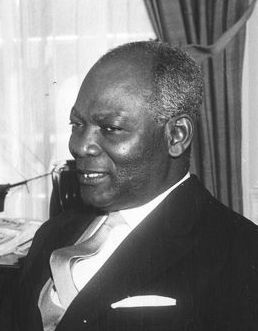
Louis Ignacio-Pinto died in 1993, the same year as Félix Houphouët-Boigny — two men whose careers had in different ways embodied the specific character of Dahomean and West African engagement with the French colonial and postcolonial world. His death received far less attention than Houphouët-Boigny's, reflecting the broader pattern by which the political leaders of the independence generation receive historical attention that the jurists and diplomats and institution-builders do not. But his contribution to African international legal standing — his fourteen years as a judge of the world's principal judicial body, his participation in the development of the international legal reasoning that shaped the postcolonial order's institutional framework — was no less significant for being less visible.
The argument that African sovereignty required not only political independence but legal equality — the capacity to engage with international institutions as an equal rather than as a dependent — was an argument that Ignacio-Pinto made not in words but in the quality of his judicial work. His fourteen years on the ICJ were a demonstration, conducted through the rigorous medium of international legal reasoning, that African jurists could contribute to the development of international law at the highest institutional level. That demonstration matters — both as a record of individual achievement and as a statement about what African legal capacity, given the educational opportunity to develop, had already achieved within a single generation of independence.