At a Glance
Soudouré and the World of Sahelian Dosso
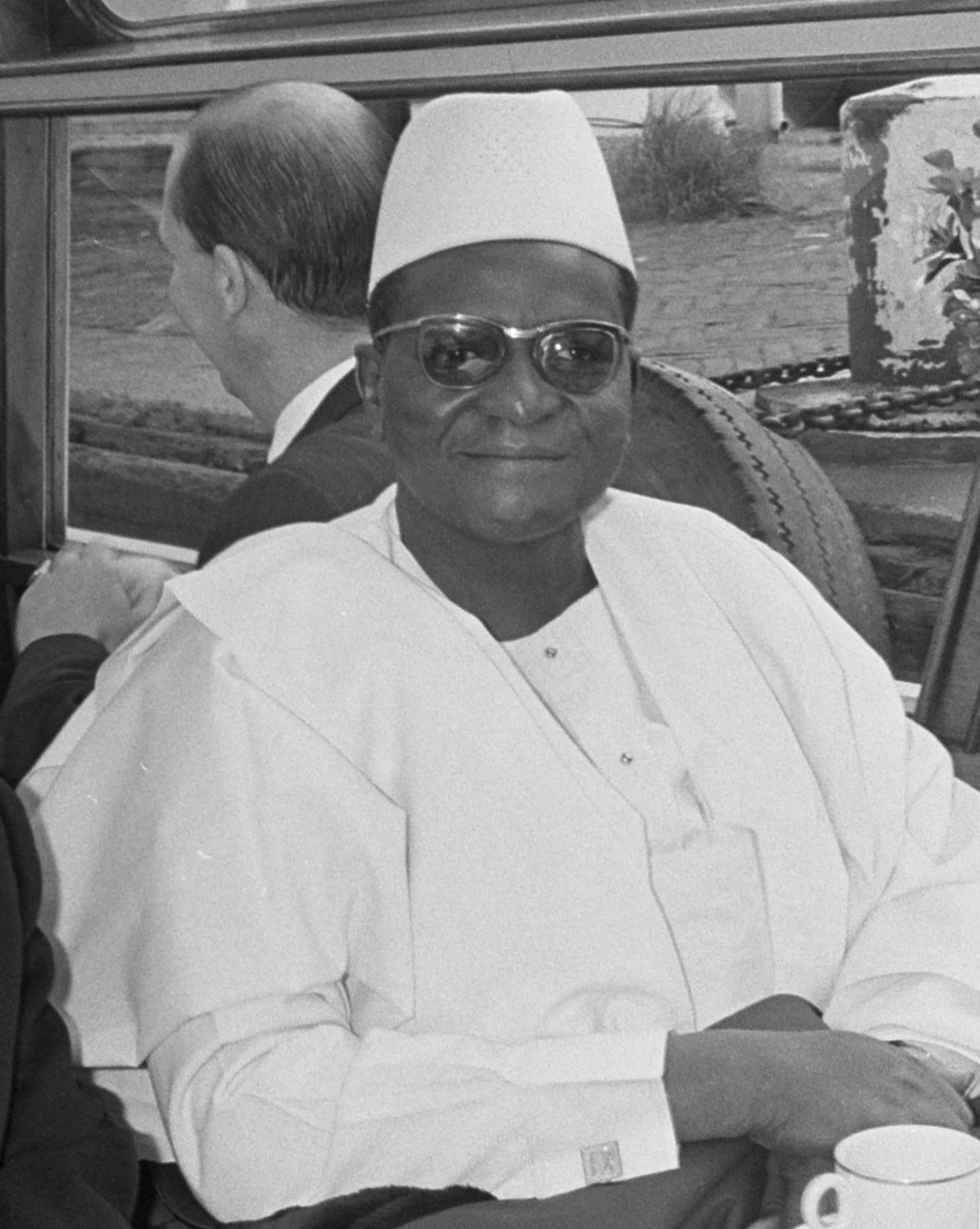
Diori Hamani was born in 1916 in Soudouré, in the Dosso region of what was then French West Africa — the territory that would become Niger, a landlocked country of extraordinary geographic diversity, from the Sahara desert in the north to the Niger River valley in the south, from the Aïr Mountains with their ancient Tuareg communities to the agricultural plains of Hausa country where the majority of the population lived. The Dosso region where Diori was born was part of the agricultural south — the zone of millet and sorghum farming, of the Djerma and Hausa communities who constituted the country's largest populations, and of the seasonal rhythms of rain-dependent agriculture that made the Sahel's climate variability so politically consequential.
His formation followed the path that the French colonial educational system had designed for the production of a limited class of African schoolteachers and administrators: primary schooling in the colonial system, selection for the William Ponty School in Dakar — the institution in Senegal that trained teachers and clerks for the entire French West African federation — and then a career in the colonial educational system that provided the social position, the linguistic skills, and the political networks that made the transition to independence-era politics possible. The William Ponty experience was formative for the entire Francophone West African independence generation: it created a community of educated Africans from across the federation who knew one another, shared a common educational formation and a common administrative language, and would go on to lead the political movements of their respective territories.
The RDA and the Architecture of Francophone African Nationalism
The Rassemblement Démocratique Africain that Houphouët-Boigny founded in 1946 was the dominant political force in French West Africa for the entire independence decade — the organisation that, more than any other, structured the political landscape through which the independence transition would be navigated. Diori's career was built within and through the RDA, leading its Nigerien affiliate the PPN-RDA through the years of electoral competition, colonial administration management, and eventually independence preparation that the 1950s required.
Niger's internal politics during this period were complicated by the competition between different ethnic and regional political movements — the Djerma-dominated political networks of the west, the Hausa-majority areas of the south and centre, the Tuareg communities of the north who had their own relationship to both the colonial state and the emerging national politics. Diori's navigation of these divisions — building a national political coalition that was broad enough to sustain his presidency without the ethnic fractures that destabilised many of his contemporaries — was one of his most significant domestic political achievements, and it rested on the combination of personal relationships, political skill, and the patronage networks that the governing party could deploy to maintain support across the country's different communities.
Bridging the Continental Divide: Francophone and Anglophone Africa
One of Diori's most distinctive contributions to African politics was his consistent effort to bridge the divide between Francophone and Anglophone Africa — the linguistic and institutional division that threatened to become a permanent fracture in the continent's political landscape. The divide was not merely linguistic: it reflected different colonial traditions, different institutional frameworks, different economic relationships with metropolitan powers, and different political cultures that the independence process had inherited from the specific characters of French and British colonialism. The risk that these differences would harden into a permanent partition of African political life — with Francophone states grouped in one set of organisations and Anglophone states in another — was real, and it threatened the pan-African solidarity that figures like Nkrumah were trying to build.
Diori's ability to operate in both linguistic worlds — he was fluent in English as well as French, unusual for a Francophone African leader — gave him a specific capacity to participate in pan-African politics across the linguistic divide. He used this capacity deliberately, building personal relationships with Anglophone leaders including Nigeria's Tafawa Balewa and Tanzania's Julius Nyerere, participating in pan-African institutions that brought Francophone and Anglophone states together, and using his personal authority as a trusted figure across both camps to mediate in situations where the linguistic divide threatened to become a political obstacle to African solidarity.
The Mediator: Nigeria, Biafra, and the Limits of African Diplomacy
The Nigerian civil war of 1967–70 — the secession attempt of the predominantly Igbo southeastern region that declared itself the Republic of Biafra — was the most severe internal conflict that independent Africa had yet faced, and it produced a crisis in African diplomacy that exposed the limits of the OAU's capacity to resolve conflicts among its own members. The Organisation of African Unity was formally committed to the principle of the inviolability of colonial-era borders — a commitment designed to prevent the fragmentation of African states along ethnic lines — but the Biafran secession raised questions about what that principle meant when the borders being preserved enclosed populations that had experienced systematic discrimination and, ultimately, what many characterised as genocide.
Diori was one of the African leaders most actively involved in the search for a negotiated settlement — attempting to mediate between the Nigerian federal government and the Biafran leadership in ways that might end the conflict without either the permanent fragmentation of Nigeria or the military defeat of Biafra that was eventually achieved at enormous human cost. His mediation efforts, conducted through the OAU's consultative mission to Nigeria in 1968, were ultimately unsuccessful — the Nigerian federal government was not willing to accept the terms that might have brought Biafra back into a Nigerian federation, and Biafra was not willing to accept terms that meant anything less than recognition of its independence. The limits of African diplomatic capacity were exposed by the failure, but the effort itself was genuine and the commitment it reflected to African peace as a priority of his presidency was real.
The Uranium Paradox: Wealth Without Development
The uranium deposits of the Aïr Mountains — discovered in the 1960s and developed extensively in the 1970s — represented both the greatest economic opportunity in Niger's post-colonial history and its most vivid illustration of the neo-colonial economic structures that prevented African independence from translating into African development. Niger sat on some of the world's largest uranium reserves at precisely the moment when the global nuclear industry — both military and civilian — was demanding uranium at unprecedented scale. The revenues from uranium exploitation had the theoretical potential to transform one of Africa's poorest states into something approaching a middle-income economy.
The practice was very different from the theory. The French nuclear industry's relationship with Niger was structured through arrangements that ensured French control over the exploitation, processing, and pricing of Nigerien uranium. The Franc Zone's currency arrangements meant that Niger's export earnings were managed through French financial institutions. The technical expertise required to mine and process uranium was held by French companies, giving them structural leverage over the terms of exploitation that Niger's negotiating position could not overcome. The result was that the uranium wealth of Niger enriched France's nuclear programme while Niger itself remained among the world's ten poorest countries — a pattern that Osende Afana's economic analysis of colonial underdevelopment had predicted and that the specific history of Niger's uranium illustrated in concrete and infuriating detail.
Diori understood this dynamic and attempted to negotiate better terms for Niger in the early 1970s, as uranium prices rose following the 1973 oil crisis and Niger's leverage as a major producer briefly increased. The negotiations were ongoing at the time of the 1974 coup — some accounts suggest that his attempt to renegotiate the uranium terms with France was a contributing factor in French acquiescence to the coup that overthrew him. Whether or not this specific claim is accurate, the broader pattern — a Francophone African president who attempted to exercise genuine economic sovereignty over his country's primary resource and found himself facing the combined opposition of French commercial interests and French political will — was consistent with the broader history of Françafrique that shaped the post-colonial relationship between France and its former African territories.
The Famine and the End: April 1974
The Sahel drought that began in the late 1960s and reached its catastrophic peak in 1972–74 was not simply a natural disaster — it was a natural event whose political and humanitarian consequences were shaped by the governmental response to it, and in Niger that response was inadequate in ways that were not inevitable. The government was slow to acknowledge the scale of the crisis. Food aid that reached Niger was not always distributed to those who needed it. The diplomatic activity that Diori continued to pursue on the international stage — attending summits, chairing international bodies, mediating African disputes — continued at a pace that seemed, to the population experiencing the famine's consequences, incompatible with the urgency of the domestic crisis.
The military coup of 15 April 1974 that overthrew Diori drew its legitimacy primarily from this failure. Lieutenant Colonel Seyni Kountché, who led the coup, justified it in terms that resonated with a population that was hungry and that associated the government's international prestige with its domestic neglect. The coup was not a radical nationalist uprising in the mould of the Congolese or Cameroonian rebellions — it was a military intervention by officers who had concluded that the civilian government had failed its basic obligation to keep the population alive, and who seized power with the intention of managing the crisis more effectively. Whether the military government actually managed it better is a separate question, but the coup's immediate popular legitimacy reflected a real failure of Diori's last years in office.
The Statesman in Retrospect
Diori Hamani's historical standing is complex in ways that resist the simplifications of both celebration and dismissal. He was, by any reasonable measure, one of the most diplomatically skilled African leaders of the independence generation — a man whose personal authority, linguistic range, and genuine commitment to African solidarity gave him an influence in continental politics that far exceeded what Niger's size and poverty would have suggested. His mediation efforts, his OAU leadership, his consistent advocacy for non-alignment and African solidarity, and his personal relationships across the continent were real contributions to the project of building an African international politics that was something more than the sum of its fragmented, dependent parts.
He was also a leader who governed a poor country for fifteen years without fundamentally altering its poverty — who presided over the development of uranium wealth that enriched France more than Niger, who failed catastrophically to respond to the famine that ended his presidency, and whose domestic political legacy was a one-party state that had managed political competition through the patronage and the administrative machinery of the governing party rather than through the development of genuinely democratic institutions. These failures were not entirely his responsibility — the structural conditions of a landlocked, aid-dependent country in the Franc Zone imposed constraints on any Nigerien leader — but they were real, and they limited what his diplomatic achievements could mean for the people of Niger in their daily lives.
He died in Niamey in April 1989, twenty-nine years after independence and fifteen years after the coup that had ended his presidency. Niger had passed through Kountché's military government and was beginning the transition to a more democratic order. The uranium economy that had been the hope of the independence era was entering the volatility that global commodity markets inflicted on mineral-dependent states. The Sahel continued its cycles of drought and recovery. The questions that Diori's presidency had raised — about the terms on which African states could exercise genuine economic sovereignty, about the relationship between international diplomatic prestige and domestic development performance, about what non-alignment actually meant for one of the world's poorest countries — remained as open and as urgent as they had been when he had first begun trying to answer them.