At a Glance
Ouidah: The City That Slavery Built and Brazil Returned To
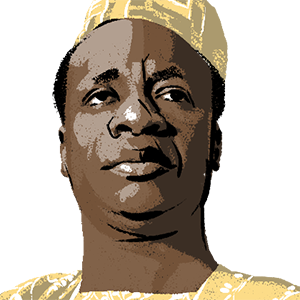
The city of Ouidah where Emile Derlin Zinsou was born in 1918 was one of the most historically layered places in West Africa — a place whose character had been shaped by the Atlantic slave trade and its consequences in ways that gave it a cultural complexity unlike any other city in the region. From the late seventeenth century to the mid-nineteenth century, Ouidah was one of the primary ports through which enslaved Africans were shipped across the Atlantic, primarily to Brazil and the Caribbean. Estimates suggest that over a million people passed through the Ouidah slave port — the Gate of No Return that the Dahomean kings sold into captivity in exchange for European goods, especially firearms.
The consequence that gave Ouidah its distinctive postcolonial character was the return migration. From the 1830s onward, freed slaves and their descendants from Brazil — the Aguda or Afro-Brazilians — began returning to the Slave Coast in significant numbers, bringing with them the Portuguese language, Brazilian Catholic religious practices syncretised with Vodou traditions, distinctive architectural styles, specific culinary traditions, and a cosmopolitan worldliness that the Atlantic crossing and the Brazilian experience had produced. The Aguda community of Ouidah became one of the most culturally distinctive communities in West Africa — simultaneously African, Brazilian, Catholic, and Vodou-practising, shaped by the triangular Atlantic world in ways that no purely continental African community could have been.
Growing up in this environment gave Zinsou a specific cultural formation that shaped his subsequent career — a cosmopolitan ease with different cultures, a Catholic identity that was simultaneously deeply rooted and ecumenically open, and a connection to the Atlantic world that expressed itself in his diplomatic comfort across different national and cultural contexts. The physician who would become president had been formed in one of West Africa's most historically complex communities, and that formation was visible in the breadth of his intellectual and cultural range.
The Physician's Path: Medicine, Diplomacy, and the Road to Power
Zinsou's training as a physician in France — the result of both personal intellectual ability and the specific social capital that the Ouidah Aguda community had accumulated over a century of Atlantic engagement — placed him in the small class of Dahomeans with European professional qualifications at a time when such qualifications were the primary currency of social advancement in the late colonial world. The medical degree was genuinely his — he practised medicine, understood medical science, and brought a scientist's habit of evidence-based analysis to his subsequent political work — but it was also a social credential that opened doors in the colonial and post-colonial institutional world that most of his contemporaries could not access.
His move from medicine to diplomacy was the product of the specific opportunities that independence created for the tiny class of Dahomeans with the qualifications and the connections to represent the new state in international forums. Dahomey needed diplomats, and Zinsou was one of a handful of people who combined the language skills, the professional formation, and the personal manner that international diplomacy required. He served in various diplomatic roles, including as foreign minister, and built a reputation for intellectual seriousness and personal integrity that gave him a standing in West African diplomatic circles that extended well beyond Dahomey's small size and limited resources.
The Triangle of Paralysis: Apithy, Maga, Ahomadégbé, and the Problem Zinsou Was Supposed to Solve
The structural problem that Zinsou was appointed to solve was one of the most clearly defined in postcolonial African politics: a country whose three principal political leaders each commanded a genuine and roughly equal regional following, in a parliamentary system that required coalition government, with three leaders constitutionally incapable of cooperating and constitutionally sufficient to prevent any government that excluded any one of them from functioning. Sourou-Migan Apithy was the representative of the Yoruba-influenced coastal south around Porto-Novo, where the Catholic community of returnees and their descendants formed a distinct political culture. Hubert Maga was the representative of the Muslim north, the Bariba and other Sahelian communities whose geographic remoteness from the colonial coastal centres had given them a distinct political identity. Justin Ahomadégbé was the representative of the Fon heartland around Abomey — the historic capital of the Dahomean kingdom, the community whose political culture was most shaped by the precolonial state's tradition of centralised authority.
Each of these leaders had enough following to make governance impossible without him, and insufficient trust in the others to allow governance with him. The first coup of 1963 removed Maga's government when Apithy and Ahomadégbé combined against him. The subsequent attempts to build a working coalition produced governments that fell through internal conflict. The second military intervention in 1967 attempted to reset the political situation by removing all three leaders from power. The attempt to hold elections in 1968 produced — predictably — a result that none of the three major parties accepted, and the military council that was managing the process decided to appoint a president from outside the three-way conflict. Zinsou was the man they chose.
Governing in a Vacuum: Seventeen Months of Attempted Reform
Zinsou's seventeen months as president — from July 1968 to December 1969 — were genuinely productive in the narrow sense that his government made progress on the technical agenda of economic modernisation and administrative reform that he had been appointed to pursue. He brought to the presidency the same methodical approach that medicine had trained him in — diagnosis of the specific institutional and economic weaknesses, identification of the specific interventions most likely to address them, and implementation of those interventions with the administrative capacity available. Dahomey's chronic fiscal problems, its dependence on French budgetary support, and its underdeveloped administrative infrastructure were the problems his government worked on, and the work was serious and the progress, within the seventeen months available, was real.
But governing without a political base in a country whose politics were defined by the three-way regional competition meant governing without the protection that political support provides. Every decision Zinsou made was evaluated by the three political networks in terms of which of them it favoured — and any decision that appeared to favour one network risked the active opposition of the other two. The attempt to govern on purely technocratic grounds — to make decisions based on their economic and administrative logic rather than their political implications — was an attempt to operate outside the system of political exchange that Dahomean governance required, and it was an attempt that the system's internal logic was eventually going to defeat.
The coup of December 1969 was not a revolution — it was the system asserting itself against an attempt to reform it from within. The military officers who removed Zinsou were not pursuing a different political vision; they were responding to the pressure of the three political networks that had not been included in his government and that had been working, through various channels, to demonstrate that his government did not have the political legitimacy to govern Dahomey. The circular absurdity of justifying his removal on grounds of democratic illegitimacy — when he had been appointed because elections were impossible — was the perfect illustration of the political pathology that his appointment had been designed to address.
Dahomey After Zinsou: From Instability to Marxism to Democracy
The political history of Dahomey after Zinsou's removal traces one of the more remarkable arcs in postcolonial African politics. The rotating presidential council that attempted to manage the three-way deadlock after 1970 — giving Maga, Apithy, and Ahomadégbé each a two-year term — was itself ended in October 1972 by Mathieu Kérékou's military coup, which inaugurated a seventeen-year period of Marxist single-party rule under the name Benin. The ideological transformation — from the unstable multipartyism of the 1960s to an avowedly Marxist-Leninist one-party state — was one of the most abrupt political shifts in West African history, and it ended, in 1989–90, with another transformation: the National Conference that peacefully removed Kérékou from power and established a democratic constitutional order that has proven more durable than anyone predicted.
Zinsou was present through all of this — surviving Kérékou's Marxist revolution, the democratic transition, and the subsequent consolidation of Benin's democratic institutions. His specific contribution to this long arc was limited — he had been president for seventeen months and had been removed before he could demonstrate whether his programme could work — but his survival as a respected public figure gave him a role as a witness and a connector between the different phases of the country's political history. He represented, in his person, the continuity of a specific tradition of Dahomean/Beninese political life — educated, cosmopolitan, professionally competent, and committed to governance as a serious intellectual and practical enterprise — that the successive upheavals of Dahomey's political history had not entirely destroyed.
The Technocrat's Dilemma: Intelligence Without Power
Zinsou's career raises, in acute form, the question of what technical competence and personal integrity can achieve in a political system that is structured to reward neither. His appointment as president was an acknowledgement that the three-way regional competition had produced a political system incapable of governing itself, and that a man of his qualities might be able to break the deadlock by governing on grounds that transcended the regional competition. The seventeen months of his presidency suggested that he could, in fact, govern effectively in the narrow sense — that the technical agenda of reform could be advanced, that the government could function, that the machinery of the state could be directed toward productive ends.
What the seventeen months also demonstrated was that technical governance without political legitimacy is structurally fragile — that the inability of the regional political networks to accept his authority was not a problem that could be solved by governing well, because the networks were not evaluating the government on its performance but on whether it served their interests. A government that governed competently but without reference to the political networks' interests was, from the networks' perspective, a government that was governing against their interests — and they eventually found the means to remove it.
Zinsou's legacy is the legacy of the able administrator who operated in a system that his abilities alone could not change — who brought genuine quality to a role that the structural conditions of the political environment prevented him from performing as effectively as those qualities merited. He was not a transformative figure in the mould of Lumumba or Boganda. He was something more modest and more common in the history of postcolonial African governance: a capable person who was given responsibility without being given power, and who managed the combination as well as the conditions allowed while recognising, with the intellectual honesty that his formation had given him, that the conditions were the fundamental problem.