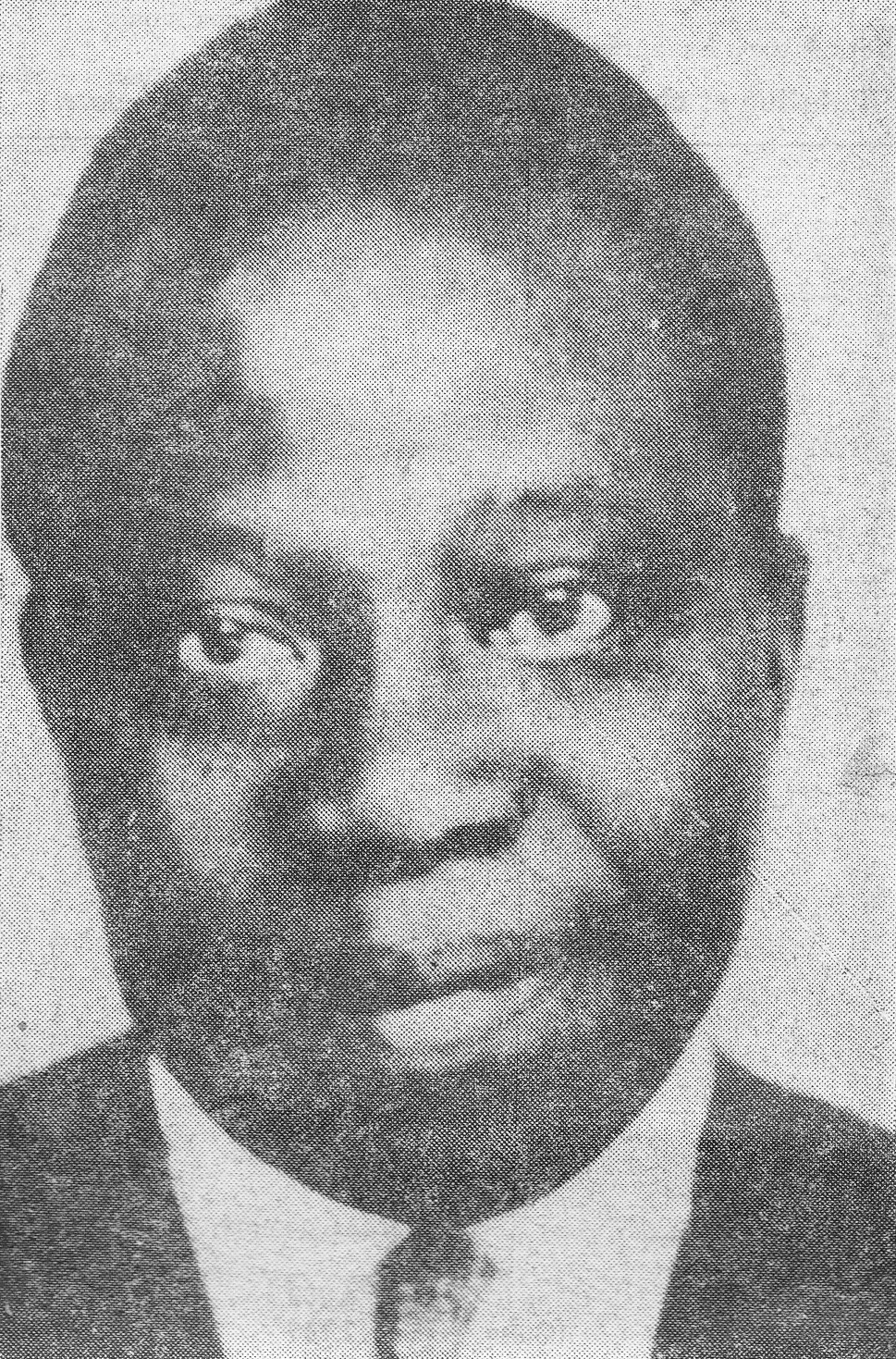
At a Glance
Ubangi-Shari: The Most Forgotten Corner of Empire
To understand Barthélemy Boganda is to understand Ubangi-Shari — the territory that would become the Central African Republic, and that was, in the early twentieth century, one of the most intensively exploited and most brutally governed parts of the French colonial world. Ubangi-Shari sat at the geographic centre of Africa — landlocked, remote from the Atlantic and Indian Ocean coasts, connected to the rest of the French empire only by long and difficult overland routes — and its geographic isolation had made it one of the last parts of the continent to be formally incorporated into a European colonial system and one of the first to be subjected to the most rapacious form of that system: the rubber concession.
The concession companies that the French government granted authority over large parts of Ubangi-Shari in the late nineteenth and early twentieth centuries operated with a freedom from oversight that produced atrocities comparable to those of Leopold II's Congo. The rubber collection quotas, the hostage-taking, the mutilation and killing of Africans who failed to meet their quotas, the destruction of villages as collective punishment — the practices that André Gide documented in his 1927 travel book Voyage au Congo with the shock of a European intellectual encountering colonial reality for the first time — were the practices that the people of Ubangi-Shari had lived with for decades before Boganda was born. The territory's population had declined dramatically under the concession system, and the marks of that violence were still visible in the communities that the missionaries served when Boganda grew up among them.
The Orphan Made Priest: Formation Within the Colonial Church
Boganda's personal history began in violence — his mother's death, reportedly at the hands of a colonial agent, left him an orphan who was taken in by the Spiritan missionaries who were the primary Catholic presence in Ubangi-Shari. The missionaries saw in him the exceptional intelligence and spiritual temperament that they were looking for in candidates for the priesthood, and they channelled his education entirely through their institutions — from primary schooling through seminary training to his ordination in 1938 as the first Ubangi-Shari man to become a Catholic priest.
The Church that formed Boganda was a colonial institution — it operated within the colonial system, depended on French governmental support, and was generally understood to serve the civilising mission that the colonial state promoted. But the Church also contained within it traditions of social teaching — the Catholic concern for the dignity of the poor, the condemnation of exploitation as a violation of natural law, the obligation of the Christian to act in the world for justice — that were genuinely in tension with the colonial system's practices, and that provided Boganda with an intellectual and moral framework that his experience of colonial Ubangi-Shari transformed from abstract principles into a programme for action.
His priestly identity remained central to his political work throughout his career. He was not a priest who became a politician in spite of his faith but a priest who understood his faith as the foundation of his politics — who saw the liberation of the people of Ubangi-Shari from colonial exploitation as a religious obligation, an expression of the Catholic social teaching that he had been formed in, as much as a political programme. This gave his political work a moral authority and a consistency that purely secular political leaders rarely achieved, and it gave him a direct connection to the ordinary people of Ubangi-Shari — who understood and trusted the priest in a way that the purely political figure of the colonial institutional world could not automatically command.
The Deputy Who Spoke the Truth
Boganda's election to the French National Assembly in 1946 and his subsequent decade of parliamentary work gave him a platform that he used with a directness that distinguished him from most of his African parliamentary contemporaries. He raised, in the chamber of the French legislature, the specific practices of the colonial system in Ubangi-Shari that official accounts preferred to obscure: the forced labour that continued under different names after its formal abolition, the abusive taxation that left communities without the resources for subsistence, the administrative violence that French officials directed at the African population with effective impunity, and the economic structures of the concessionary system that extracted the territory's natural resources for French benefit while leaving the population in poverty.
He did this not in the abstract language of anti-colonial ideology but in the specific language of the specific abuses of specific officials and companies in Ubangi-Shari — naming names, documenting cases, presenting evidence that the colonial administration was violating not only the moral standards of the human dignity he was committed to as a priest but the legal standards of the French Republic whose legislature he was sitting in. The directness of his approach made him enemies in the administration and in the concessionary companies, and it made him a hero to the people of Ubangi-Shari who had experienced what he was describing and who had not previously had anyone willing to say it in a forum where it might matter.
Zo Kwe Zo: Every Person Is a Person
The phrase that became Boganda's political motto — Zo kwe zo, "Every person is a person" in the Sango language that served as the common language across ethnic boundaries in Ubangi-Shari — encapsulated the core of his political and moral programme with a simplicity and a depth that formal political manifestos rarely achieve. The claim that every person is a person was not a truism in the context of French colonial Ubangi-Shari, where the legal and social framework of the colonial system systematically denied the full humanity of the African population — treating them as subjects rather than citizens, as labour rather than persons, as resources to be extracted rather than people to be served.
Zo kwe zo was both a challenge to the colonial system and a foundation for the post-colonial politics Boganda was building. It meant that the Central African state he was creating would recognise and protect the dignity of every person regardless of ethnicity, religion, or social origin — a commitment that was simultaneously a moral claim grounded in his Catholic formation and a political programme for a country whose colonial history had been built on the systematic denial of that dignity. The motto remained the motto of the Central African Republic after his death, a persistent reminder of the founding vision that his successors struggled to honour.
The Pan-African Dream: A United States of Latin Africa
Boganda's political vision was not confined to Ubangi-Shari. He understood — with a clarity that many of his contemporaries lacked — that the small, landlocked, resource-poor territories that French colonialism had carved out of central Africa were not economically or politically viable as separate nation-states. A Central African Republic of two or three million people, landlocked, dependent on the export of diamond and cotton revenues, with no significant industrial base, no educated professional class to speak of, and surrounded by equally poor and equally vulnerable neighbours, was not going to be able to resist the neo-colonial pressures that would be brought to bear on it by the French companies, the French financial institutions, and the French military presence that independence would not automatically remove.
The United States of Latin Africa that Boganda proposed — a federal union beginning with the territories of French Equatorial Africa (Ubangi-Shari, Congo-Brazzaville, Chad, and Gabon) and eventually potentially incorporating the Belgian Congo — was his response to this structural problem. The federation would have created a political unit with a combined population of tens of millions, with a combined territory spanning the heart of the continent, with a combined resource base — the diamond, uranium, gold, timber, and agricultural wealth of the equatorial zone — that would have given it a degree of economic and strategic weight that none of the individual territories could have possessed separately. It was a vision in the tradition of Nkrumah's pan-Africanism, applied specifically to the conditions of the equatorial interior.
The vision was not implemented. The French government, which was managing the independence process of its African territories with an eye to maintaining maximum influence over the successor states, preferred the fragmentation of the equatorial zone into small, individually dependent states to the creation of a large federated entity that might develop the capacity for genuine independence from French control. The individual territorial political elites — the men who would become the presidents and prime ministers of the separate states after independence — also preferred separate sovereignty over federation, because it maximised their individual political power in ways that federation would have constrained. Boganda's federation project died with him in the plane crash of March 1959, and the territories that might have been its components became the separate and separately dependent states that French policy had designed them to be.
The Crash of 29 March 1959: History's Open Wound
The plane carrying Boganda from Berberati to Bangui exploded in midair on the evening of 29 March 1959. There were no survivors. The official investigation attributed the crash to an accidental cause — the specific finding varied across different accounts — but the investigation was conducted by French authorities and its conclusions were not accepted by many observers at the time or since. The political context of Boganda's death — eleven months before independence, at the moment when his federation project was in active development and when his political authority was at its peak — gave it a significance that accidental death alone would not have had.
The list of those with motive to prevent Boganda from reaching independence was not short. The French colonial administration and the French commercial interests in Ubangi-Shari had been fighting him for over a decade. The concessionary companies whose practices he had documented and challenged had powerful connections to the colonial government. Political rivals within Ubangi-Shari — most importantly David Dacko, who would succeed him as the country's leader — had reasons to prefer his absence. And the broader French policy interest in preventing the emergence of a large federated African entity in the equatorial zone was directly threatened by the momentum that Boganda's federation project had been building.
None of this proves that the crash was not an accident. Aerial accidents in central Africa in 1959 were not unusual, and the investigation — whatever its limitations — did not produce evidence of deliberate sabotage that independent observers have subsequently verified. What it does mean is that the question of how Boganda died remains legitimately open, and that the political significance of the timing of his death is real regardless of whether it was caused or coincidental.
Legacy: The Country His Death Made Different
The Central African Republic that Boganda founded — that became independent on 13 August 1960 without him — had a history after his death that can only be understood in contrast to what his life had promised. His successor David Dacko governed briefly before being overthrown by Jean-Bédel Bokassa in 1966 — a coup that began a period of extraordinary misrule culminating in Bokassa's self-coronation as Emperor in 1977 and the 1979 massacre of schoolchildren that finally prompted French intervention to remove him. The decades of instability, coups, and civil conflict that have characterised Central African history since independence have produced a country that ranks consistently among the poorest and most fragile states on earth.
The contrast with what Boganda had built — a mass movement with genuine popular roots, a political programme with both moral coherence and practical vision, a pan-African federation project that might have created a more viable political unit — is stark enough to raise the question of whether the Central African Republic's subsequent history would have been different had its founding father lived to guide it through independence. The question is unanswerable with certainty, and hagiography is a poor substitute for honest historical analysis. Boganda was a remarkable figure, but remarkable figures do not guarantee the outcomes of the states they build. What can be said with confidence is that he was the most capable and most visionary political leader the Central African Republic has produced, and that his death before independence left it without the one person who had both the authority and the programme to make independence mean something more than the transfer of power from French officials to their preferred African successors.