At a Glance
Cheongwon and the Classical Formation: The Scholar Who Turned Historian
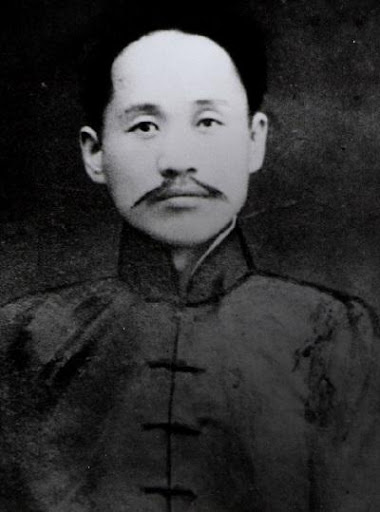
Shin Chae-ho was born in 1880 into a yangban family in Cheongwon, Chungcheong Province — the central Korean heartland, south of Seoul, a region of agricultural wealth and deep Confucian scholarly tradition. His family background was one of classical learning: his grandfather, who raised him after his father's early death, was a scholar in the Confucian tradition, and Shin received the thorough classical Chinese education that was the foundation of Korean elite intellectual life in the late Joseon period. He went on to study at Sungkyunkwan — the royal Confucian academy in Seoul, the highest institution of traditional Korean learning — where he acquired a mastery of the classical Chinese textual tradition that he would later turn, with devastating effect, against the Sinocentric framework that classical learning had imposed on Korean historical consciousness.
The paradox of Shin Chae-ho's career is that his deep formation in classical Chinese scholarship was precisely what equipped him to critique the distortions that Chinese cultural influence had produced in Korean historical writing. You need to know the sources intimately to understand how they have been misread; you need to understand the framework thoroughly to identify where it has been imposed on material that does not fit. Shin's classical training gave him the tools for a critique that a less thoroughly educated man could not have mounted.
In the early years of the twentieth century, as Japanese pressure on Korean sovereignty intensified and the independence movement began to organise around the question of what Korea was and why it should remain independent, Shin Chae-ho emerged as the most important journalist and historical thinker of the nationalist press. He wrote for the Hwangseong Sinmun (Imperial Capital Newspaper) and then the Daehan Maeil Sinbo (Korea Daily News), producing historical essays, political commentary, and the nationalist intellectual framework that gave the independence movement its most systematic account of Korean historical identity.
Doksa Sillon and the Minjok Revolution in Korean Historical Thought
The publication of Doksa Sillon — A New Reading of History — in 1908 was the founding moment of modern Korean historiography, and one of the most significant intellectual acts in the history of the Korean independence movement. The text was a manifesto as much as a historical argument: it proposed to rewrite Korean history from the beginning, replacing the Sinocentric framework that had dominated Korean historical writing throughout the Joseon Dynasty with a framework centred on the minjok — the Korean ethnic nation — as history's primary subject.
The argument had several interconnected dimensions. At the most fundamental level, Shin was arguing that Korean history had for centuries been written from a perspective that treated Chinese civilisation as the standard against which all others were measured, and Korean history as significant primarily insofar as it participated in or deviated from Chinese cultural norms. This framework systematically undervalued the specifically Korean dimensions of Korean historical experience — the pre-Chinese-influence cultural traditions, the indigenous political formations, the distinctively Korean adaptations of shared East Asian cultural resources. He proposed to reverse this: to write Korean history from the inside, from the perspective of the Korean people as the history's subject rather than China's student.
The concept of minjok — ethnic nation, a term and concept that Shin largely introduced into Korean political discourse — was the theoretical foundation of this reversal. Minjok designated the Korean people as a historically constituted ethnic community with a continuous existence stretching back to the ancient past, a community that was the proper subject of Korean history and the foundation of the claim to Korean national sovereignty. The concept drew on late nineteenth-century European and Japanese nationalist thought but applied it to the Korean context in ways that were specifically tailored to address the intellectual challenge that Japanese colonialism posed: the Japanese argument that Korea had never had genuine independent civilisation and therefore required Japanese guidance to develop it.
Shin's historical writing directly refuted this argument by demonstrating the depth and independence of Korean civilisation in the pre-Joseon and early Joseon periods — recovering figures like Eulji Mundeok and Gwanggaeto the Great as Korean national heroes, establishing the Gojoseon and Goguryeo kingdoms as expressions of specifically Korean national spirit, and tracing the continuity of Korean ethnic and cultural identity through millennia of political change. His biographies of historical Korean figures — Yi Sun-sin the admiral, Eulji Mundeok the general — presented them not as Confucian exemplars of loyalty and virtue (the traditional Joseon framing) but as national heroes whose resistance to external invasion embodied the Korean minjok's historical will to survive and flourish.
Shanghai, the Provisional Government, and Growing Disillusionment
Shin Chae-ho participated in the Korean independence movement's exile politics in Shanghai in the years after the March First Movement of 1919, serving on various bodies connected to the Korean Provisional Government and continuing his historical and political writing. But his relationship with the Provisional Government's mainstream was always uncomfortable, and it progressively deteriorated as he observed the direction that the exile leadership was taking.
His primary objection was to what he called the diplomacy faction — the wing of the independence movement, associated with figures like Rhee Syngman, that placed primary reliance on persuading great powers (particularly the United States) to support Korean independence through diplomatic pressure rather than building the indigenous organisational and military capacity that Shin believed was the only reliable foundation for genuine liberation. Shin argued, with characteristic directness, that this approach was both strategically misconceived and politically servile: it made Korean independence dependent on the goodwill of powers that had shown no consistent interest in Korean sovereignty, and it cultivated a posture of petition rather than the posture of self-assertion that genuine independence required.
He also grew increasingly critical of the class character of the Provisional Government's leadership — the tendency of educated elites to position themselves as the natural leaders of the independence movement without accountability to the Korean masses whose interests independence was ostensibly being sought. This critique deepened as his political thought evolved from ethnic nationalism toward a more systematic analysis of the relationship between national liberation and social liberation — the question that Na Hye-sok was asking from a feminist direction and that the Korean left more broadly was raising from a class perspective.
From Nationalism to Anarchism: The Deepening Critique
Shin Chae-ho's move toward anarchism in the 1920s was not an abandonment of his nationalism but its logical extension — the conclusion that the liberation of the Korean minjok required not merely the replacement of Japanese colonial authority by Korean state authority but the elimination of the structures of domination that made some people rulers and others subjects regardless of which nation was in charge. His anarchism was grounded in his historical analysis: he had spent years documenting how Korean rulers had exploited Korean people, how Korean elites had accommodated with Chinese power at the expense of the Korean masses, and how the patterns of hierarchy and oppression operated within Korean society as well as between Korean society and its external oppressors.
He became associated with the Eastern Anarchist Federation and wrote his most explicitly anarchist theoretical text, the Declaration of the Korean Revolution (1923), which argued that the Korean independence struggle should be directed not only against Japanese imperialism but against all forms of state authority, capitalist exploitation, and institutional hierarchy. The declaration was a significant document in the history of Asian anarchism — a systematic argument for the inseparability of national and social liberation that anticipated debates the global left would continue for decades.
His historical writing continued through this period and became, if anything, more ambitious. The major work Joseon Sangosa — Ancient History of Korea — which he wrote in the late 1920s and which was serialised in 1931, was the culmination of his career as a historian: a systematic rewriting of Korean ancient history from the minjok perspective, recovering the Gojoseon civilization and the ancient Korean kingdoms as expressions of a specifically Korean cultural and historical identity reaching back millennia. The work was methodologically innovative, drawing on linguistics, archaeology, and comparative cultural analysis as well as documentary sources, and it established frameworks that Korean historical scholarship has engaged with — sometimes critically, sometimes approvingly — ever since.
Arrest, Prison, and Death
Shin Chae-ho was arrested in 1932 in Taiwan — where he had gone in connection with efforts to raise funds for anarchist operations — on charges relating to the use of forged foreign currency cheques to finance independence movement activities. The charge was essentially a financial crime grafted onto what was fundamentally political imprisonment: the Japanese authorities had found a pretext to incarcerate one of the independence movement's most important intellectuals on charges that were less politically sensitive than sedition but equally effective at removing him from circulation.
He was transferred to Lüshun Prison in Manchuria and sentenced to ten years' imprisonment. He died there on 21 February 1936, of a cerebral haemorrhage — four years into his sentence, with six years remaining. He was fifty-five years old. The death in prison, of natural causes accelerated by the conditions of imprisonment, was less dramatic than the deaths of An Jung-geun or Yun Bong-gil but no less complete as a measure of what the independence struggle cost its participants. Shin Chae-ho had given his entire adult life — his scholarship, his political organising, his physical freedom — to the cause of Korean liberation, and he died in a Japanese prison having seen neither the liberation he had worked for nor the completion of the historical work he had begun.
Legacy: The Historian Who Made Korea's Past Usable
Shin Chae-ho's legacy operates on two distinct but related levels. As a historian, he is the founding figure of modern Korean historiography — the person who established the framework within which Korean history has been understood and debated throughout the twentieth century. His minjok concept, his recovery of the ancient Korean past from Sinocentric distortion, his presentation of Korean historical figures as national heroes rather than Confucian exemplars — these innovations shaped the Korean national historical consciousness that was transmitted through the educational systems of both post-liberation Korean states and that continues to inform Korean national identity today.
The influence is not uncritical: subsequent Korean historians have engaged with, revised, and in some respects departed from his frameworks, and the minjok concept itself has been subject to searching criticism from scholars who question its essentialism and its relationship to ethnic exclusivism. But even critical engagement with Shin Chae-ho is engagement with the framework he established — testimony to how thoroughly he defined the terms of the debate.
As a political thinker, his anarchist phase produced the most intellectually sophisticated left critique of Korean nationalist politics in the colonial period — an analysis of the relationship between national liberation, social liberation, and the internal dynamics of the independence movement that anticipated debates the Korean left would conduct for decades after his death. His insistence that independence without social transformation would be independence only for elites, that the Korean masses required liberation from Korean hierarchy as much as from Japanese colonialism, was a position that made him uncomfortable allies and powerful enemies within the independence movement but that history has confirmed as asking the right questions.
He was honoured posthumously by South Korea with its highest independence movement recognition. His historical works remain in print and are studied in Korean universities. His political writings are increasingly read by scholars of Korean anarchism and left nationalism. The man who spent his life trying to give Korea an honest account of its own past has received, in turn, an increasingly honest account of his own contribution — which is, in the end, the appropriate reciprocity.