At a Glance
Haeju Origins: Poverty, Failure, and the Making of a Revolutionary
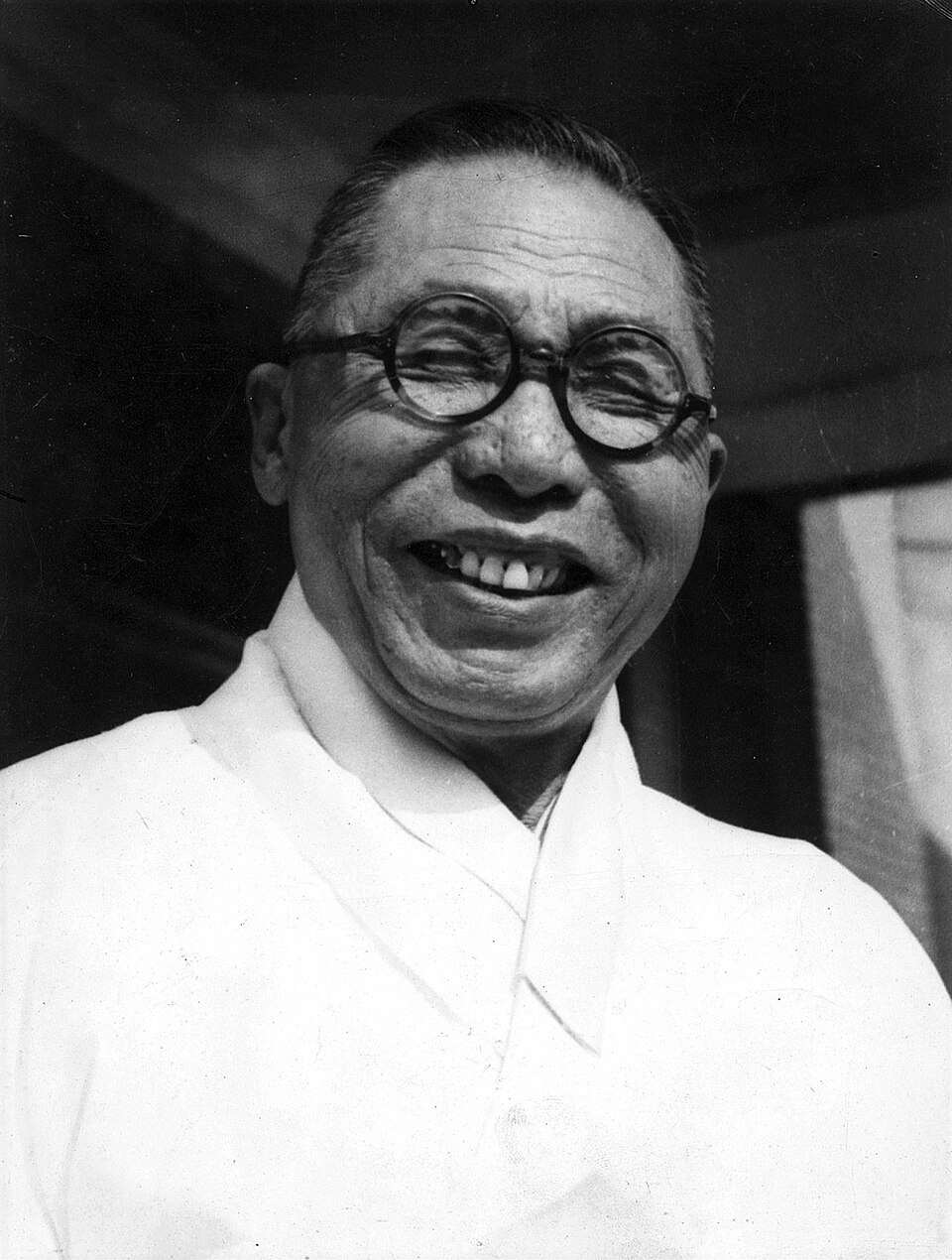
Kim Ku was born in 1876 in a poor village near Haeju in Hwanghae Province — the same northwestern region of Korea that had produced An Jung-geun three years earlier, and that would produce more than its share of the independence movement's leadership across the colonial period. His family were of chungin background — the middle class between the aristocratic yangban and the common people — with insufficient resources to provide him with the kind of education that might have opened conventional paths to official advancement.
He attempted the civil service examinations that were the traditional route to official position in the Joseon system, failed them, and experienced the kind of personal crisis that such failures produced in young men who had invested their identities in academic success. The failure directed him toward other paths: he became involved in the Donghak movement — the Korean religious and social reform movement that combined elements of Buddhism, Confucianism, and shamanism with a fierce critique of yangban privilege and foreign interference — and participated in the Donghak Uprising of 1894–1895, the mass peasant rebellion that shook the Joseon Dynasty and drew in both Chinese and Japanese military intervention.
In 1896, at nineteen years old, he killed a Japanese soldier — a military officer named Tsuchida Jōsuke whom he believed had been involved in the assassination of Empress Myeongseong (Queen Min), the Korean queen who had been murdered by Japanese agents in the royal palace in 1895. Whether the specific identification was accurate is disputed; what is not disputed is that Kim killed the man, made no attempt to deny or conceal his action, and spent the subsequent years in prison under a death sentence that was commuted to life imprisonment, from which he eventually escaped. The killing at nineteen was the defining act of his early life — the moment that established the pattern of his relationship with Japanese power: direct, personal, and utterly unambiguous.
Prison, Escape, and the Long Education of a Resistance Leader
Kim Ku's years in Incheon Prison were transformative in the way that extended imprisonment often is for political figures of sufficient intellectual depth: they provided forced leisure for reading, reflection, and the formation of the philosophical framework that would sustain his subsequent career. He encountered Christianity in prison, converting to a faith that provided him with both the moral framework for understanding his own actions — martyrdom, sacrifice, the obligation to resist injustice — and the connection to the network of Protestant missionaries and Korean Christian nationalists that was one of the independence movement's most important social foundations.
He escaped in 1898, spent years as a fugitive travelling under various names through the Korean countryside, and used this period to teach in village schools, to organise, and to deepen his understanding of Korean social conditions at the grassroots level. When the Japanese formally annexed Korea in 1910, Kim Ku was already a formed political activist with nearly fifteen years of resistance experience behind him — a man who had personally killed a Japanese officer, served time under a death sentence, and spent years evading colonial surveillance. The annexation radicalised him further. He joined the Sinminhoe — Ahn Chang-ho's underground nationalist network — and was arrested in the 105-Man Incident of 1911, serving further prison time before his release.
Shanghai and the Provisional Government: Keeping the Flame Alive
After the March First Movement of 1919 — the mass popular uprising that demonstrated the depth of Korean resistance to Japanese rule and produced the immediate political context for the establishment of the Korean Provisional Government in Shanghai — Kim Ku made his way to China and embedded himself in the exile government's institutional life. He served initially as a police chief — responsible for maintaining order within the Korean exile community and for counterintelligence against Japanese agents who infiltrated the community regularly — and then as Home Minister, before eventually becoming the Provisional Government's President in one of the most difficult periods of the exile government's existence.
The Korean Provisional Government in Shanghai was a perpetually struggling institution: chronically underfunded, riven by factional disputes between nationalists, socialists, and communists, unable to exercise any real authority over the Korean population under Japanese rule, and dependent on the tolerance of Chinese host governments that were themselves dealing with Japanese pressure and domestic instability. The period of the 1920s was particularly demoralising: after the initial energy of the March First Movement and the government's founding, the independence movement settled into a kind of exhausted stalemate, with no clear path forward and no significant international support for Korean self-determination.
Kim Ku's response to this demoralisation was characteristic: rather than accepting the stalemate or seeking accommodation with Japan, he escalated. In 1931, he founded the Korean Patriotic Corps — the Hangukin Aegukdan — a covert operations unit dedicated to carrying out high-profile attacks against Japanese imperial figures and installations. The Patriotic Corps was Kim Ku's personal project, financed through whatever funds he could raise from the Korean diaspora and from sympathetic Chinese nationalists, and it would produce the two most dramatic Korean operations against Japanese power in the 1930s.
The Korean Patriotic Corps: Striking at the Empire
The first Patriotic Corps operation was the mission of Lee Bong-chang — a Korean worker who had approached Kim Ku with the offer of his life in service of the independence cause. Kim Ku trained and equipped him, provided him with grenades, and sent him to Tokyo. On 8 January 1932, Lee Bong-chang threw a grenade at the carriage carrying Emperor Hirohito in a Tokyo procession. The grenade struck the wrong carriage — the Emperor's procession was further back than Lee had realised — and Hirohito was uninjured. Lee was captured immediately, tried, and executed in October 1932. The operation had failed to achieve its intended objective, but it demonstrated that the Korean independence movement was willing and able to strike at the heart of the Japanese empire on Japanese soil.
The second Patriotic Corps operation, three months later, was the more consequential. Yun Bong-gil — a Korean agricultural activist who had made his way to Shanghai and presented himself to Kim Ku as willing to sacrifice his life — was equipped with a bomb disguised as a water bottle and sent to Hongkew Park in Shanghai on 29 April 1932, where the Japanese military was holding a celebration of Emperor Hirohito's birthday combined with a victory ceremony for the Shanghai campaign. Yun Bong-gil detonated the bomb among the senior Japanese officials on the reviewing stand, killing the commander of Japanese forces in China, General Yoshinori Shirakawa, and the Japanese Minister to China, Kawabata Sadaji, and wounding several other senior military and diplomatic figures.
The Hongkew Park bombing transformed the political situation of the Korean Provisional Government overnight. Chiang Kai-shek, the Chinese Nationalist leader, was reported to have said that what millions of Chinese soldiers could not do, one Korean youth had accomplished — and the Chinese Nationalist government, deeply hostile to Japan in the wake of the Shanghai Incident, began providing significant material support to the Korean Provisional Government for the first time. The bombing also forced Kim Ku to flee Shanghai with a price on his head — Japanese authorities offered a large reward for his capture — and the Provisional Government began the long itinerant period of its existence, moving through a series of Chinese cities as Japanese military advances pushed them further inland.
The Long Exile: Keeping the Government Moving
The years between the Hongkew bombing in 1932 and Japan's defeat in 1945 were years of perpetual movement, material hardship, and the daily labour of maintaining the organisational coherence of the Korean Provisional Government against the combined pressure of Japanese military advances, internal factional divisions, and the indifference or active hostility of the international powers whose support Korean independence required. Kim Ku was the central figure sustaining this institution — not always the formal President, but always the most forceful political personality, the man whose refusal to accept defeat or compromise kept the exile government functioning when every practical consideration suggested dissolution.
He organised the Korean Liberation Army in 1940 — a military force attached to the Chinese Nationalist Army that provided Korean fighters with training, military experience, and a formal institutional structure that could claim belligerent status in the war against Japan. The Liberation Army conducted operations in the China theatre and maintained connections with Korean resistance networks in Manchuria and on the peninsula itself, though its military significance was limited by the small numbers it could recruit and the dependence on Chinese nationalist support. Kim also maintained connections with the American OSS — the Office of Strategic Services, forerunner of the CIA — and was planning Korean operations behind Japanese lines in cooperation with American intelligence when Japan's sudden surrender in August 1945 made them unnecessary.
Liberation, Division, and the Final Battle
When Japan surrendered on 15 August 1945, Kim Ku expected to return to Korea as the leader of the Provisional Government — the institution that had represented Korean independence for twenty-six years and that had, in his view, the strongest claim to govern a liberated Korea. The American and Soviet occupying powers thought otherwise. The Americans, who occupied the southern zone, did not recognise the Provisional Government as Korea's legitimate authority and required its members to return as private citizens rather than as a government in waiting. Kim Ku returned to Seoul in November 1945 — to enormous popular welcome — but without the political authority he had anticipated.
The subsequent years — 1945 to 1949 — were the period of Kim Ku's most important and least recognised political struggle: his insistent, ultimately fatal opposition to the division of Korea. As it became clear that the American and Soviet occupation zones were hardening into separate political entities — with Rhee Syngman's US-backed government consolidating in the South and Kim Il-sung's Soviet-backed government consolidating in the North — Kim Ku maintained his position that a divided Korea was unacceptable and that no separate government in either zone had legitimacy as long as the country remained divided.
In April 1948, he made the most controversial decision of his post-liberation political career: he travelled to Pyongyang to attend the North-South Korean Political Leaders' Conference, meeting with Kim Il-sung and other northern leaders to discuss the possibility of a unified Korea. The journey was condemned by Rhee Syngman and his supporters as naivete at best, collaboration with communism at worst. Kim Ku's position was that the attempt at negotiation had to be made — that the alternative, accepting division, was worse than the risk of being manipulated by the northern leadership. The conference produced no concrete outcome, and Kim returned to Seoul to continue opposing the separate southern elections that were held in May 1948.
Assassination and the Question That Remained
On the morning of 26 June 1949, Korean Army Lieutenant Ahn Doo-hee entered Kim Ku's study at the Gyeonggyo-jang residence in Seoul and shot him dead. Kim Ku was seventy-three years old. Ahn Doo-hee was tried, convicted, and sentenced — but released after a relatively short period in circumstances that remained controversial. The full truth of who ordered the assassination, and what political forces stood behind Ahn Doo-hee, has never been definitively established, though suspicion has long pointed toward figures connected to the Rhee Syngman government who regarded Kim Ku's unification advocacy as a political threat.
The assassination removed from Korean political life the figure who had most consistently argued, from a position of unimpeachable resistance credentials, that the division of the peninsula was a catastrophe that Koreans themselves had an obligation to prevent. His death came fourteen months before the Korean War began — the war that entrenched the division he had spent his final years trying to prevent and that killed millions of Koreans on both sides of the line he had refused to accept as permanent. Whether his unification project was realistic, given the Cold War geopolitics of the period, is a question historians continue to debate. What is not debatable is that he pursued it with the same unflinching commitment with which he had pursued every other position he held across seven decades of resistance — and that he paid for it with his life.
Legacy: The Autobiography and the Unanswered Question
Kim Ku's Baekbeom Ilji — his autobiography, written across his years of exile — is one of the canonical texts of Korean national identity, read in Korean schools and homes across the generations since its publication. It is a remarkable document: honest about its author's doubts and failures as well as his achievements, written in a prose style that combines the classical Chinese learning of his Joseon formation with the directness of a man who had spent his life in the practical world of resistance politics, and suffused throughout with the question that animated his entire career: what did it mean to love Korea, and what did love of Korea require?
His answer — that it required refusing every form of subjugation, including the subjugation of division — was not the answer that postwar Korean politics delivered. The division he opposed has persisted for more than seventy-five years, and the peninsula remains separated by one of the most heavily militarised borders in the world. In that context, Kim Ku's insistence that unification was a non-negotiable condition of genuine Korean liberation looks less like naivete than like the clearest possible articulation of what was lost when the independence movement's victory in 1945 was immediately succeeded by a new form of division imposed by outside powers. He saw it coming, fought it as long as he lived, and was killed for fighting it. Korea has not resolved the question he died asking.