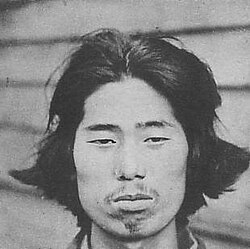
At a Glance
Mungyeong and the Road to Tokyo: Colonial Radicalisation
Park Yeol was born in 1902 in Mungyeong — a mountainous inland town in North Gyeongsang Province in the southeastern Korean peninsula, remote from the coastal commercial centres and the capital where the independence movement's educated leadership was concentrated. His background was rural and modest, without the educational or social resources that gave figures like Ahn Chang-ho or An Jung-geun their early exposure to nationalist political thought. What he had was intelligence, anger, and the experience — which he shared with Lee Bong-chang — of encountering Japanese colonial society from below as a Korean worker and student in Japan.
He arrived in Tokyo in the early 1920s, part of the stream of young Koreans who came to Japan seeking the education and economic opportunities that the colonial system had made scarcer in Korea itself. The experience of living in Japan as a Korean — subject to routine discrimination in housing, employment, and social life, legally designated as a colonial subject rather than a citizen, watching Japanese society treat Koreans as a permanently inferior category — produced in Park Yeol a rage that went beyond Korean nationalism into a more systematic critique of the entire social and political order that made this treatment possible and legitimate.
He encountered anarchism — the political philosophy that rejected not merely specific instances of oppression but the entire apparatus of state power, hierarchy, and institutional authority that sustained oppression — through the networks of Japanese radical intellectuals and Korean exile militants that overlapped in Tokyo's left-wing subculture of the early 1920s. Anarchism appealed to him precisely because it refused the compromises that other political positions required: it did not ask whether Japanese imperialism could be reformed, or whether Korean independence within the existing international order would be sufficient. It said that the entire system — imperial authority, state coercion, class hierarchy — was wrong and should be abolished. For a young Korean man whose experience of Japanese colonial society had confirmed at every level that the existing order was built on oppression, this total refusal was more honest than any partial critique.
Kaneko Fumiko and the Partnership of Total Refusal
The relationship between Park Yeol and Kaneko Fumiko — the Japanese anarchist and nihilist intellectual who became his partner in both life and political conviction — was one of the most remarkable political partnerships of the colonial period, and one that carried a specific significance that transcended its personal dimensions. Kaneko Fumiko was Japanese: a woman who had grown up in poverty, experienced abuse within her own family, and developed through that experience a philosophical perspective on power and hierarchy that led her to the same rejection of the imperial system as Park Yeol's colonial experience had led him to. Their partnership was a Korean-Japanese radical alliance — a demonstration that the line of political solidarity ran not between nations but between those who refused the systems of power that both Japanese imperialism and Korean colonialism represented.
Kaneko Fumiko was intellectually formidable — her prison writings, produced during her detention, are considered significant contributions to anarchist and nihilist philosophy in their own right. Her rejection of the imperial system was, if anything, more total than Park Yeol's: where he was motivated by the specific experience of Korean colonial subjugation, she arrived at the same rejection from within Japanese society itself, through a philosophical analysis of power that concluded that the emperor system was oppressive to Japanese people as well as to the peoples Japan colonised. The combination of their perspectives — the colonised and the dissident member of the colonising society — gave their partnership a political depth and an intellectual range that single-nationality radical politics could not achieve.
Together they organised Futeisha — the "Malcontents' Society" — a small group of Korean and Japanese anarchists who produced the journal Futei Senjin (Malcontent Koreans) and engaged in the kind of provocative political agitation that was designed not to build a mass movement but to make unmistakably clear where they stood and what they refused. The publication's title was itself a political act: futei senjin was the Japanese slur for Koreans who refused compliance with colonial authority, and reclaiming it as a self-description was the kind of defiant inversion that characterised Park Yeol's entire political practice.
The Great Kantō Earthquake and the Arrests
On 1 September 1923, the Great Kantō Earthquake struck the Tokyo-Yokohama region — one of the most devastating natural disasters in Japanese history, killing over 100,000 people and destroying vast areas of the two cities. In the chaos that followed the earthquake, false rumours spread through the Japanese population that Koreans were poisoning wells, committing arson, and planning to exploit the disaster to rise against Japanese society. The rumours were fabrications — almost certainly originating in some combination of spontaneous panic and deliberate incitement — but they produced a wave of murderous violence against Koreans and other minorities in the earthquake zone. Vigilante groups and military forces killed an estimated 6,000 Koreans in the days following the earthquake, in one of the worst episodes of mass ethnic violence in twentieth-century Japanese history.
The Japanese authorities used the earthquake's aftermath to arrest large numbers of Korean leftists and other political dissidents under the cover of emergency powers. Park Yeol and Kaneko Fumiko were arrested on 3 September 1923 — two days after the earthquake — not because of any specific evidence of imminent action but as part of the broader sweep of Korean radical figures. During interrogation, however, it emerged — or was alleged — that they had been planning to acquire a bomb and use it to assassinate Emperor Hirohito at a public ceremony. The charge of high treason, carrying the death penalty, was filed.
The allegation of an assassination plot has been disputed by historians: the evidence presented at trial was thin, and Park Yeol's own conduct at trial suggests that he was making a political rather than factual claim when he did not deny the charges. Whether the plot existed in any operationally serious form, or whether Park Yeol essentially adopted the charge because refusing it would have diminished the political statement he intended to make, remains unclear. What is clear is that he chose to use the trial as a platform for his political views rather than to contest the factual accusations, and that this choice shaped the trial's significance for subsequent generations.
The Trial: Philosophy as Defiance
The trial of Park Yeol and Kaneko Fumiko — which proceeded through 1924 and 1925 before concluding with their conviction and death sentences in January 1926 — was one of the most politically charged legal proceedings in Taisho-era Japan. Both defendants used the courtroom as a forum for systematic philosophical and political argument rather than as a venue for contesting their guilt. Park Yeol delivered extended statements attacking the legitimacy of the imperial system, the injustice of Japanese colonial rule in Korea, and the philosophical foundations of the authority that the court claimed to exercise over him. Kaneko Fumiko was, if anything, more radical: her statements in court were devastating philosophical analyses of the imperial system's claims to legitimacy, argued with a precision and a depth that left the court's representatives struggling to respond substantively.
The spectacle of a Korean anarchist and a Japanese nihilist refusing to acknowledge the legitimacy of the imperial court trying them, and delivering philosophical attacks on the foundations of imperial authority from the dock, was profoundly threatening to the Japanese political establishment — more threatening, in some respects, than a conventional military or violent resistance would have been, because it attacked the intellectual and moral foundations of the system rather than merely its physical manifestations. The defendants were not asking for mercy or reform. They were saying, systematically and publicly, that the system had no right to exist.
Both were convicted and sentenced to death. The sentences were immediately commuted to life imprisonment by imperial pardon — a move that was itself a kind of defeat for the state: executing them would have made them martyrs, but keeping them alive under commuted sentences required them to accept, implicitly, the imperial mercy that demonstrated the Emperor's authority over their lives. Park Yeol refused the implicit acceptance: when offered pardon in exchange for expressions of loyalty to the Emperor, he refused repeatedly. He would serve his full sentence rather than perform a submission that would have falsified everything he had argued.
Twenty-Two Years: The Prison as Political Statement
Park Yeol spent twenty-two years in Ichigaya Prison — from his arrest in 1923 to his release six weeks after Japan's surrender in August 1945. The duration of the imprisonment was itself a consequence of his refusal: other Korean political prisoners of the period who expressed loyalty or regret were released earlier. Park Yeol's insistence on maintaining his position — on refusing the performance of submission that the imperial system required — kept him in prison long after the immediate political crisis his arrest had represented had receded from public attention.
Kaneko Fumiko did not survive to share the eventual release. She died in Utsunomiya Prison in July 1926 — officially described as a suicide, disputed by her supporters who questioned whether a woman of her philosophical commitments would have chosen death after so recently demonstrating the depth of her defiance at trial. Her death at twenty-three, in a prison cell, was the most complete possible expression of what the imperial system did to those who refused it most completely. Park Yeol was informed of her death in prison and continued his imprisonment for nineteen more years after losing the partner with whom he had shared both his political convictions and his willingness to pay their full price.
Liberation, Division, and the Anarchist Without a Home
Park Yeol was released on 27 October 1945, six weeks after Japan's formal surrender — one of the last Korean political prisoners to be freed, a measure of how completely he had refused any accommodation with the colonial authority holding him. He returned to Korea into the chaotic political environment of the immediate post-liberation period, when the peninsula was being divided between American and Soviet occupation zones and the political future was entirely uncertain.
His anarchism made him genuinely homeless in the new political landscape. The American-backed southern zone was building a capitalist liberal democracy in which anarchism had no institutional space; the Soviet-backed northern zone was building a communist state in which anarchism — which rejected the state itself — was equally unwelcome. He moved to the North by 1946 and was given nominal political positions in the DPRK structure, but remained politically marginal under Kim Il-sung's increasingly total control of North Korean political life. An anarchist who had refused to perform submission to the Japanese Emperor was not going to find it easier to perform submission to the Great Leader.
He died in Pyongyang on 1 January 1974, having spent his post-liberation years in a state that was as far from his political convictions as the one he had spent twenty-two years refusing. The South Korean government posthumously awarded him the Order of Merit for National Foundation in 1989 — a belated recognition that whatever his subsequent political trajectory, his resistance to Japanese colonial authority had been genuine and costly and deserved acknowledgment. The recognition came forty-five years after his release and fifteen years after his death, but it came.
Legacy: Total Refusal as Political Practice
Park Yeol's historical significance lies less in any specific political achievement than in the quality and completeness of his refusal — his insistence on maintaining his political and philosophical position at every point where the system offered him a less costly alternative. He could have denied the assassination plot charges and received a lighter sentence. He could have expressed loyalty to the Emperor and received a pardon. He could have accepted accommodation with the post-liberation political systems of either Korean state. At each point, he chose the harder path: the path that kept him true to what he had argued and what he believed, at whatever personal cost that consistency required.
This quality of total consistency — of refusing to let the pressure of circumstances produce the compromises that circumstances usually do produce — is rare in political life and historically significant when it occurs. Park Yeol did not merely say that the imperial system was wrong; he proved it, through twenty-two years of living his refusal, at a cost that most people would have found insupportable. The political statement his life made was made not in words or actions but in the sheer duration and completeness of his refusal to give the system what it wanted from him.
The partnership with Kaneko Fumiko adds another dimension: theirs was a demonstration that the struggle against Japanese imperialism was not simply a Korean national struggle but a struggle that Japanese people committed to human freedom could and did share. That demonstration — of Korean-Japanese radical solidarity grounded in shared philosophical conviction rather than national interest — was as subversive of the imperial system's racial and national logic as any bomb could have been.