At a Glance
Yongsan and the Colonial Interface: Growing Up Between Two Worlds
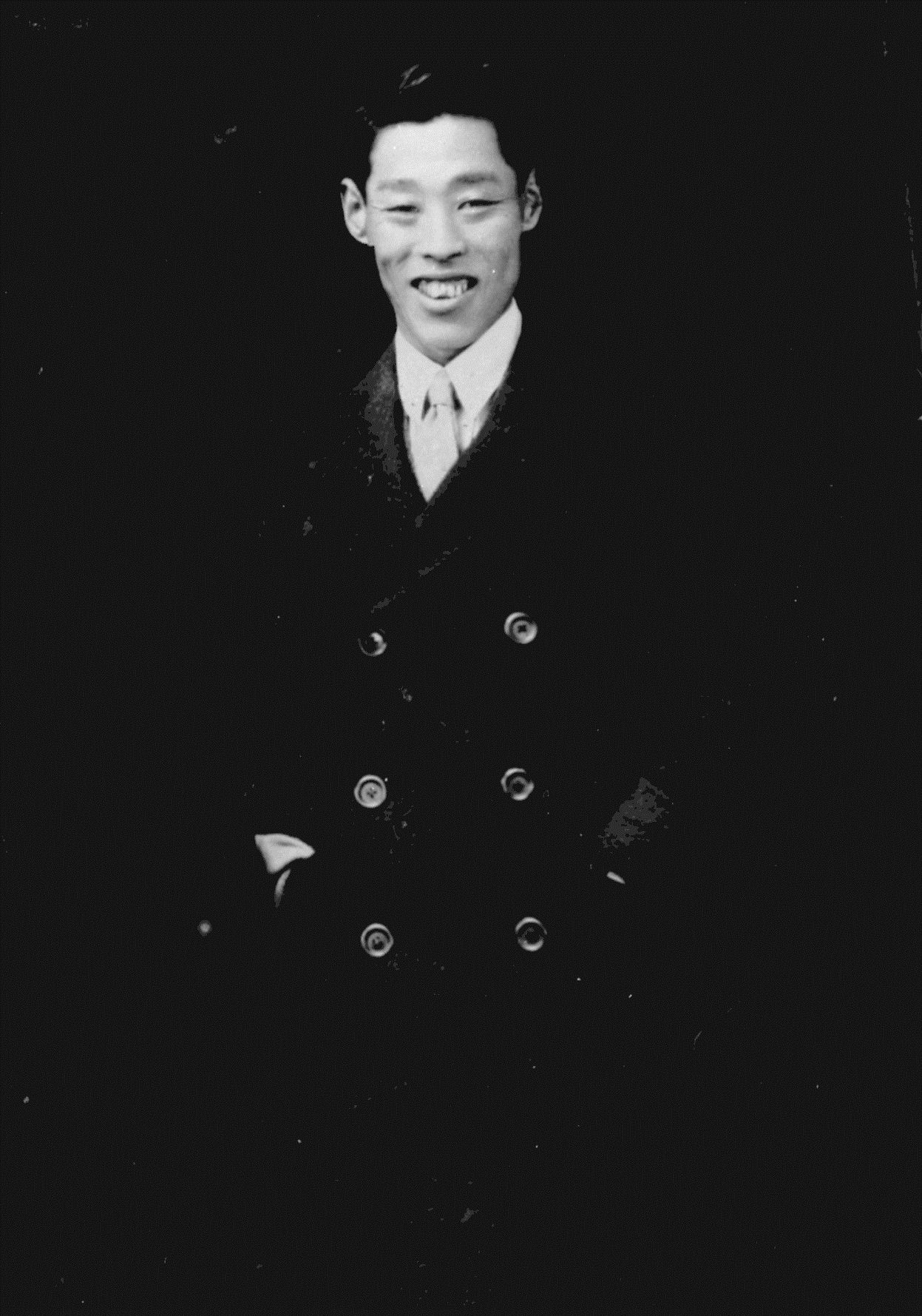
Lee Bong-chang was born in 1900 in Yongsan — a district of Seoul that occupied a particular position in the geography of Japanese colonial power. Yongsan had been selected by the Japanese military as the site of the primary Japanese garrison in Korea, and it developed across the colonial period as a district with a heavily Japanese character: Japanese military installations, Japanese commercial enterprises, Japanese residential areas, and the railway infrastructure that connected Japan's Korean colonial administration to the peninsula's transportation network. Growing up in Yongsan meant growing up in daily proximity to Japanese colonial society — seeing its institutions, its people, its assumptions about Korean subordination — in a way that was different from the experience of Koreans in the countryside or in older Korean urban districts.
The experience was formative in a specific way. Lee Bong-chang was not radicalised by abstract nationalist ideology or by the reading of independence movement literature. He was radicalised by what he saw and experienced directly: the casual assumption of Japanese superiority, the systematic discrimination against Koreans in employment and public life, the way that Japanese colonial society had constructed a racial hierarchy in which Koreans were permanently subordinate regardless of their individual ability or effort. He absorbed this reality through years of working in proximity to Japanese employers and customers, learning the language and customs well enough to function in Japanese society, and experiencing from the inside what that society thought of him and his people.
He worked as a railway employee, as a worker in confectionary shops, and in various other occupations that brought him into the daily commerce of Japanese colonial life on both sides of the Korea Strait. He lived in Japan for extended periods, using the Japanese name Kinoshita Shōzō that allowed him to navigate Japanese society with less friction than an obviously Korean identity would have produced. This experience — of passing, of proximity, of seeing the empire from below — was the crucible of his political consciousness. The decision he eventually made was not the decision of someone who had been told that Japanese colonial rule was unjust. It was the decision of someone who knew it from lived experience and had concluded that his personal response to that knowledge needed to be proportionate to its significance.
The Road to Shanghai: Seeking Kim Ku
By 1931, Lee Bong-chang had made the decision that directed him to Shanghai. The specific chronology of his political radicalisation — the particular moments or experiences that moved him from resentment to the resolve to sacrifice his life — is not fully documented in the historical record. What is clear is that by the time he arrived in Shanghai's Korean exile community in late 1931, he was a man who had already decided what he wanted to do and was looking for the means to do it.
He sought out Kim Ku — the man who was known in the Korean independence movement as the most willing to authorise and organise direct action against Japanese power. Kim Ku's initial response to Lee's approach was skepticism: the Korean exile community in Shanghai had been penetrated by Japanese agents on multiple occasions, and a Korean who arrived claiming to want to sacrifice his life for independence was a plausible cover story for an informer or provocateur. Kim Ku tested Lee Bong-chang through extended conversations, assessing his knowledge, his consistency, and the authenticity of his commitment.
He was eventually persuaded. What convinced him, by his own account in his autobiography, was the quality of Lee's directness — his willingness to discuss his plan in concrete terms, his lack of rhetorical inflation, and the specific grounding of his motivation in the personal experience of discrimination that he described without self-pity or political abstraction. Lee Bong-chang was not offering ideology. He was offering his life, specifically and practically, in exchange for the opportunity to make a statement that he had concluded needed to be made. Kim Ku, who had spent his entire career making exactly that kind of calculation about what the independence movement required, recognised the authenticity of the offer.
Tokyo: The Plan and the Operation
Kim Ku equipped Lee Bong-chang with two grenades — hand grenades capable of the kind of damage that would be required to kill or seriously wound a person in an open procession — and briefed him on the operation's objectives and the timing of the Imperial procession that would provide the opportunity. Lee returned to Japan, resumed his ordinary presence in Japanese society, and waited for the procession date: 8 January 1932, when Emperor Hirohito would be returning to the Imperial Palace from the New Year military review at Yoyogi Parade Ground in Tokyo.
The procession route passed through central Tokyo, with the public permitted to line the streets to observe the Emperor's carriage. Lee positioned himself in the crowd along the route, waited for the procession to approach, and when what he believed to be the Emperor's carriage passed, threw both grenades. The grenades struck the second carriage in the procession — but Hirohito was in the leading carriage, not the second. The Emperor was uninjured. The second carriage — carrying members of the imperial household's senior staff — was struck and damaged, but the casualties were limited. Lee was seized immediately by police and security forces who had been monitoring the crowd.
The operational failure — the wrong carriage — was the result of a misidentification that was difficult to avoid given the conditions: the procession moved quickly, the carriages were similar in appearance, and Lee had no way of knowing in advance which carriage the Emperor would be in. It was the kind of operational error that could not have been fully prevented by better planning, and its occurrence did not diminish the significance of what Lee had done. He had stood in the crowd on a Tokyo street and thrown grenades at the Japanese Emperor's procession. The act itself — regardless of its outcome — was the statement he had set out to make.
Trial, Execution, and the International Reverberations
The Sakuradamon Incident — named for the Sakuradamon gate near where the procession was passing — produced immediate and significant consequences across the Japanese political and diplomatic landscape. In Japan, the failure to prevent an armed attack on the Emperor's procession was a profound embarrassment to the security services and prompted major reviews of imperial security protocols. The Japanese government and press treated it as a major crisis, and the subsequent investigation and trial were conducted with the full weight of the imperial judicial system.
Lee Bong-chang at trial was, by all available accounts, composed, clear, and unrepentant. He stated that he had acted to protest Japanese colonisation of Korea and to draw international attention to the Korean independence cause. He did not express remorse, did not attempt to mitigate his sentence by claiming diminished responsibility or external coercion, and did not give the Japanese authorities the performance of submission that the imperial judicial system was designed to extract from those who challenged its authority. He was convicted and sentenced to death. He was executed at Ichigaya Prison on 10 October 1932, reportedly shouting "Long Live Korean Independence" before his death.
The international repercussions of the incident extended beyond Japan. In China, newspapers that reported the attack — including the influential Shanghai newspaper that ran the headline expressing something that sounded like satisfaction at the near-miss — provoked a formal Japanese diplomatic protest, contributing to the deterioration of Sino-Japanese relations in the weeks before Japan's military assault on Shanghai in late January 1932. The incident thus connected, however indirectly, to the chain of events that would deepen the conflict between Japan and China across the 1930s.
For the Korean independence movement, the incident had a clarifying effect. Kim Ku publicly acknowledged his role in directing the operation — an act that required considerable courage given the Japanese manhunt that followed and that established his personal accountability for the movement's most dramatic actions. The acknowledgment, combined with the Hongkew Park bombing three months later, established the Korean Patriotic Corps as a force that the Japanese imperial authorities could not afford to ignore.
Legacy: The Working-Class Martyr
Lee Bong-chang occupies a distinctive place in the Korean independence movement's gallery of martyrs — distinctive because of who he was and where he came from. The movement's most celebrated figures were largely from educated or aristocratic backgrounds: An Jung-geun the yangban Catholic, Ahn Chang-ho the educated organiser, Kim Ku the former civil service aspirant. Lee Bong-chang was a railway worker and shop employee from Yongsan — a man whose political consciousness was formed not in schools or universities but in the daily experience of working-class life under colonial rule.
This background gives his act a particular quality: it was not the product of a theoretical commitment to national liberation derived from reading and education, but of the kind of knowledge that comes from being subjected to a system and understanding from the inside what it means and what it costs. The decision he made in Shanghai — to offer his life for the chance to make a statement — was the decision of a man who had been living the reality that the independence movement's educated leadership analysed from a greater distance, and who had concluded that the appropriate response to that reality was more personal and more immediate than any amount of organisation-building or theoretical writing could be.
His remains were returned to Korea after liberation in 1945 and interred at the Seoul National Cemetery, where they lie alongside those of other independence movement figures in a site of national commemoration. His name and image appear in Korean independence movement commemorations alongside An Jung-geun and Yun Bong-gil as the movement's most celebrated individual martyrs — the three men who carried the Korean independence struggle most directly and most personally into the heart of Japanese imperial power. The working-class man from Yongsan belongs among them as fully as either of the others, and Korean memory has placed him there.