Origins: San Salvador and the Making of a Poet
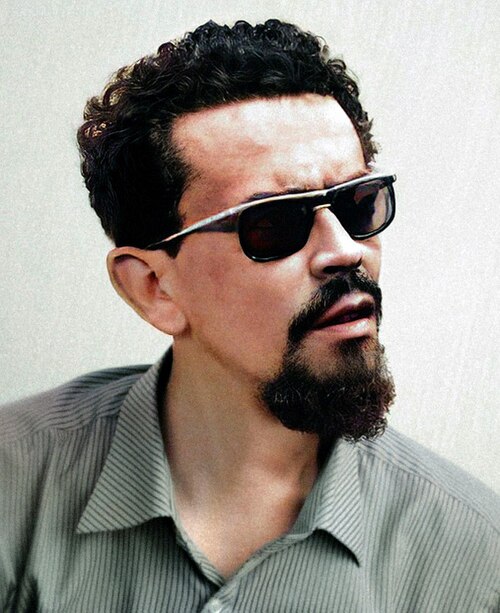
Roque Dalton García was born on 14 May 1935 in San Salvador, the illegitimate son of Winnall Dalton — a member of one of El Salvador's most prominent American families, whose father had been a partner of the Dole banana empire — and María García Medina, a Salvadoran nurse. His illegitimacy gave him, like Sandino and Fonseca before him, an early and intimate understanding of the social hierarchies that shaped Central American life — the difference between being born inside and outside the legitimating structures of class and family. He was raised by his mother, received an education that combined Catholic schooling with the intellectual currents of 1950s San Salvador, and by his university years had become both a committed communist and a poet of startling natural gifts.
The two vocations — poet and revolutionary — were not separate for Dalton. He understood, with more sophistication than most of his contemporaries, that poetry was a political act in itself: that the way language was used, the forms it took, the lives it described and the lives it ignored, were themselves political choices. He wrote poems about the Salvadoran poor with a directness that was new in Central American poetry, mixing lyric intensity with irony, black humour, and a self-awareness about his own contradictions — the bourgeois origins, the romantic excesses, the gap between revolutionary theory and lived reality — that made him something genuinely different from the earnest political versifiers his era also produced. He studied law and social sciences, moved in the intellectual circles of San Salvador, and began publishing poetry that got him noticed simultaneously by the literary establishment and the security services.
Prison, Death Sentences, and the Earthquake
Dalton was arrested for the first time in 1959 for political activities and sentenced to death by the military government of Lemus. He was saved by a coup that overthrew Lemus before the sentence could be carried out — his first improbable escape. He was arrested again in 1960 and sentenced to death a second time. He escaped from prison when the earthquake of May 1960 cracked the walls of his cell sufficiently for him to slip out — a detail so remarkable that he later incorporated it into his writing as evidence of a providential relationship with his own survival. He escaped a third time in 1964, this time by simply walking out of a lightly guarded prison, and went into exile.
These imprisonments and escapes were not merely biographical adventures. They were the formative experience of his political and literary maturity. Prison gave him time to read, write, and think with an intensity that the contingencies of underground political work made difficult. It also gave him the material for some of his best writing — poems about imprisonment, about the gap between revolutionary aspiration and squalid material reality, about the dark comedy of being sentenced to death and then reprieved by a geological event. His humour in the face of his own mortality was neither bravado nor denial. It was a considered literary and philosophical position: that the only honest response to the absurdity of dying for a political cause in a country as small and apparently insignificant as El Salvador was to acknowledge the absurdity without letting it extinguish the commitment.
"Poetry, like bread, is for everyone."
— Roque DaltonExile: Cuba, Prague, and the Literary World
Dalton's years of exile took him to Cuba, Mexico, Czechoslovakia, Vietnam, South Korea, and the Soviet Union. In Cuba he was associated with the Casa de las Américas — the cultural institution founded by Haydée Santamaría that was at the centre of Latin American intellectual and literary life in the 1960s and 1970s. He won the Casa de las Américas poetry prize in 1969 for Taberna y otros lugares — a collection of bar-room poems that mixed earthy comedy with political meditation in a way that made it immediately his most celebrated work. He travelled to Prague and lived for several years in Czechoslovakia, an experience that deepened his engagement with European Marxism and its debates while giving him material for further writing.
Through all of this he maintained his connection to the Salvadoran Communist Party and, eventually, to the broader revolutionary movement. He wrote Miguel Mármol — a biographical account, based on extensive interviews, of one of the survivors of the 1932 Matanza, the massacre that had followed Farabundo Martí's execution — which became one of the most important documents in Salvadoran revolutionary history: a first-hand account of the 1932 events and their aftermath, told by a man who had been shot and left for dead and had survived to tell the story. The book was simultaneously oral history, political testimony, and literary achievement. It recovered a history that the Salvadoran state had tried to bury.
Return, the ERP, and the Fatal Dispute
In the early 1970s Dalton returned clandestinely to El Salvador and joined the Ejército Revolucionario del Pueblo — the ERP — one of the guerrilla organisations that would eventually form part of the FMLN. The ERP represented a more militaristic and less theoretically elaborate approach to revolution than Dalton's own political formation, and his relationship with its leadership was marked from the beginning by ideological tension. He was, by this point, a figure of significant international stature — known across Latin America as a poet and as a political thinker — who held his own views on revolutionary strategy with the confidence of someone whose political education had taken place in the major intellectual centres of the international left.
The specific disputes that led to his death are complicated by the subsequent interests of those involved in rewriting or suppressing the history. What is established is that in early 1975 a faction within the ERP led by Joaquín Villalobos accused Dalton of being a CIA and Cuban intelligence agent — charges that were almost certainly false and that served the political purpose of eliminating a figure whose intellectual authority threatened the leadership's control of the organisation's political line. He was held, subjected to an internal "trial," convicted of the accusations, and executed by ERP members sometime around 10 May 1975 — four days before his fortieth birthday. His body was not found until years later.
Legacy: The Poet the Revolution Killed
The murder of Roque Dalton was one of the most consequential internal crimes of the Central American revolutionary left — not because of the political impact of his death, which was significant, but because of what it revealed about the dynamics of small, clandestine, ideologically intense organisations under extreme pressure. The same certainty that made revolutionary organisations capable of extraordinary collective sacrifice made them capable of turning that violence inward, of treating internal disagreement as treason, of executing the people who asked the hardest questions. Cayetano Carpio's FPL had its own version of this dynamic in the 1983 murder of Ana María. The ERP's killing of Dalton was an earlier and in some ways more egregious instance of the same pathology.
Joaquín Villalobos, who ordered Dalton's execution, later became one of the FMLN's principal military commanders and after the 1992 peace accords reinvented himself as a peace process consultant and academic. He has acknowledged responsibility for the killing while offering explanations that have satisfied almost no one who has examined them carefully. The survivors of the revolutionary period are still arguing about what happened and why.
What is beyond argument is Dalton's literary legacy. He is El Salvador's most important poet, and one of the most important political poets in the Spanish language of the twentieth century. His work — irreverent, formally inventive, politically committed without being didactic, funny in the face of death — has been read across Latin America for half a century and continues to find new readers. He wrote about El Salvador with the love of someone who had spent most of his adult life unable to live there, and about revolution with the honesty of someone who understood both its necessity and its capacity for self-destruction. The revolution he gave his life to eventually came to power without him. His books outlasted everyone who killed him.
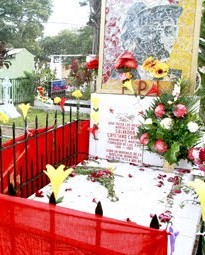
He is buried in El Salvador, where streets and cultural institutions bear his name. The FMLN — formed partly from the organisation that killed him — claimed his legacy after the peace accords. The irony was not lost on those who remembered. Dalton himself, had he survived, would almost certainly have written about it — with the sardonic humour that was his most distinctive literary trait and his most reliable defence against the earnest certainties that got him killed.