Origins: The Bakery and the Union
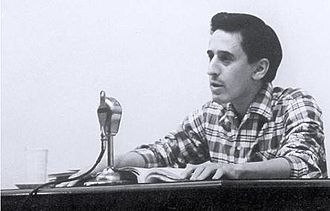
Salvador Cayetano Carpio was born on 6 August 1918 in Quezaltepeque, in the La Libertad department of El Salvador — the same department where Agustín Farabundo Martí had been born twenty-five years earlier. He was the son of a poor family, left school at a young age to work as a baker's apprentice in San Salvador, and found the political movement that would define his life not through books or university but through the labour struggle of the bakery workers — one of the most organised sectors of the Salvadoran urban working class in the 1930s and 1940s. He joined the Communist Party of El Salvador as a young man, rose through its labour organising work, was arrested and imprisoned multiple times for union activity, and eventually became the party's most prominent working-class leader.
His trajectory from baker's apprentice to communist organiser to armed guerrilla commander over six decades was one of the longest and most complete political lives in the history of Central American radicalism. He was imprisoned so many times and for so long that he eventually wrote a book about his experiences: Secuestro y capucha — Kidnapping and Hood — a memoir of political imprisonment that became one of the canonical texts of Salvadoran revolutionary literature. He was not an intellectual in the manner of Carlos Fonseca or a charismatic military commander in the manner of Sandino — he was something rarer and in some ways more formidable: a man of the working class who had risen through decades of patient, dangerous organising to lead the most powerful revolutionary organisation in his country's history.
Secretary-General of the Communist Party
Carpio served as secretary-general of the Communist Party of El Salvador (PCS) from 1964 to 1970 — a period during which the Latin American left was being transformed by the Cuban Revolution's example and by the debates it provoked about the proper relationship between armed struggle and political organising. The Communist Parties of Central America had followed the Soviet line of "peaceful coexistence" and electoral politics, arguing that the path to power ran through mass organisation, elections, and eventually a peaceful transition. The Cuban Revolution had demonstrated, to the satisfaction of a significant part of the Latin American left, that this line was wrong — or at least incomplete. A small guerrilla force, operating in the countryside with popular support, could defeat a U.S.-backed military dictatorship.
Carpio became increasingly convinced that the PCS's commitment to electoral politics in a country where elections were systematically fraudulent and opposition was met with death squads was not a strategy but a form of complicity with the existing order. He argued internally for a shift to armed struggle. He was unable to move the party. In 1970, at the age of fifty-one — an age at which most revolutionaries have either achieved their goals or abandoned them — he resigned from the party he had led for six years, went underground, and founded a new organisation.
The FPL: Fuerzas Populares de Liberación
The Fuerzas Populares de Liberación "Farabundo Martí" — the People's Liberation Forces — was founded in 1970 by Carpio and a small group of former Communist Party members and independent radicals. Its name invoked Farabundo Martí's legacy explicitly, connecting the new organisation to the martyred communist of 1932. Its strategic doctrine was "prolonged people's war" — a theory derived from the Vietnamese and Chinese revolutionary experiences that envisioned a long campaign of building popular support in both urban and rural areas, gradually expanding liberated zones, and wearing down the military capacity of the state over years or decades rather than seeking a swift insurrectional seizure of power.
The prolonged people's war doctrine put the FPL in sharp strategic disagreement with other Salvadoran guerrilla organisations — particularly the Ejército Revolucionario del Pueblo (ERP), which favoured a more insurrectional approach — a disagreement that would shape the internal dynamics of the Salvadoran revolutionary movement for more than a decade. Carpio, known by his nom de guerre "Marcial," led the FPL through its growth from a clandestine urban network to a significant military force operating in both the cities and the countryside of El Salvador. The organisation built mass front organisations among workers, students, and the urban poor, conducted high-profile urban operations including kidnappings of business and government figures for ransom and political concessions, and developed a guerrilla presence in the rural north and east of the country.
"The revolution is not a dinner party. It demands sacrifice, discipline, and a lifetime of commitment."
— Salvador Cayetano Carpio, "Marcial"Ana María and the FMLN
Among the FPL's most capable leaders was Mélida Anaya Montes — known by her nom de guerre "Ana María" — a schoolteacher and union organiser who had joined the organisation in its early years and risen to become Carpio's second-in-command. Ana María was the FPL's operational and organisational brain — the person who managed the organisation's relationships with the mass front organisations, coordinated its military and political activities, and represented it in negotiations with the other guerrilla groups. She was, by most accounts of people who worked with both, more politically flexible and organisationally sophisticated than Carpio.
In October 1980, the FPL joined four other Salvadoran guerrilla organisations — the ERP, the PCES, the PRTC, and the FAPU — in forming the Frente Farabundo Martí para la Liberación Nacional, the FMLN. The unification was driven partly by the example of the Nicaraguan Sandinista revolution of 1979, which had demonstrated what a unified revolutionary movement could achieve, and partly by Cuban pressure on the fractious Salvadoran organisations to present a unified front. Carpio was one of the FMLN's five-member directorate but remained committed to the FPL's prolonged people's war doctrine in tension with the insurrectional approach that other FMLN tendencies favoured. The strategic debate within the FMLN — which approach offered the best path to victory — was never resolved through political argument. It was resolved, catastrophically, through violence.
The Tragedy of April 1983
On 6 April 1983, Ana María — Mélida Anaya Montes — was murdered in her safe house in Managua, Nicaragua. She was stabbed more than sixty times. The assassination shocked the revolutionary movement across Central America; Ana María was one of the most respected figures in the Salvadoran left, and her killing raised immediate questions about who had ordered it and why. Within days, Carpio was under interrogation by Nicaraguan authorities and FMLN investigators. Evidence mounted that the murder had been ordered from within the FPL — by a faction loyal to Carpio that believed Ana María was moving the organisation away from prolonged people's war toward the insurrectional position. Whether Carpio had personally ordered the killing was never definitively established. What was established was that it had been done in his name, by people loyal to him, in a dispute whose ideological stakes he had defined.
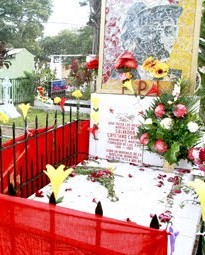
On 12 April 1983, six days after Ana María's murder, Salvador Cayetano Carpio shot himself in Managua. He left a statement denying personal responsibility for Ana María's death but acknowledging the catastrophe that had befallen the movement. He was sixty-four years old. He had spent more than forty years in the Salvadoran revolutionary movement — more than any other figure in its history. He died in a safe house in a foreign country, by his own hand, six days after the murder of the woman who had been his closest political colleague and the person most responsible, after himself, for the organisation he had built.
Legacy: The Long Trajectory
The April 1983 crisis severely damaged the FPL but did not destroy it. The organisation continued as part of the FMLN through the remainder of the civil war, which ended with the peace accords of 1992. The FMLN became a political party, eventually won the presidency in 2009, and governed El Salvador until 2019. Carpio's contribution to this outcome was foundational — without the FPL, which was the FMLN's largest and most rooted component organisation, the revolutionary coalition would have been significantly weaker. His thirteen years of building the organisation from nothing, developing its mass front networks, and sustaining it through intense military repression created the infrastructure that made the broader revolutionary movement possible.
His story is also, inevitably, a cautionary one. The rigidity of his commitment to prolonged people's war — a doctrine that he had developed in the early 1970s and that he held with an inflexibility that made internal debate increasingly dangerous — contributed to the crisis that killed Ana María and destroyed him. He was a man of extraordinary personal courage and organisational capacity who had spent a lifetime fighting for the Salvadoran poor. He was also, by the end, a man whose political certainty had become a weapon turned against the movement he had built. The two things are inseparable in his legacy, and both are true.
Carpio is remembered in El Salvador primarily through the FPL's role in the FMLN and through the civil war's eventual political resolution — a resolution that vindicated the broad strategy of mass organising combined with armed pressure that he had championed, even if not in the prolonged form he had envisioned. His nom de guerre "Marcial" appears in the organisational histories of the Salvadoran left as the founding figure of its largest component. He was a baker's apprentice who built a revolutionary army. That is a remarkable thing to have done, whatever the tragedy with which it ended.