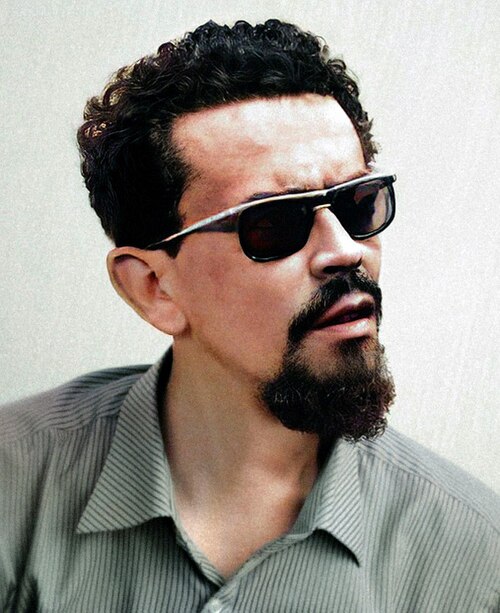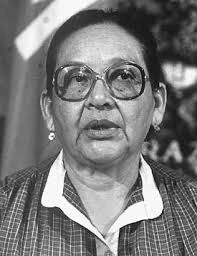
Origins: The Schoolroom as Political Space
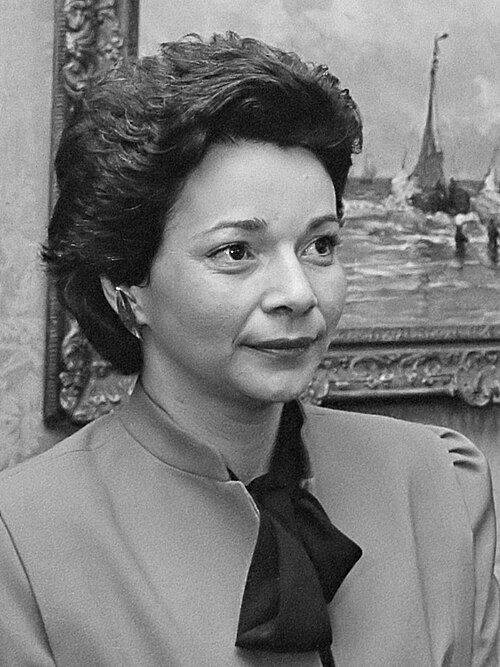
Mélida Anaya Montes was born on 12 June 1929 in San Salvador — making her, at fifty-three, one of the oldest senior commanders in the FMLN when she was murdered in 1983. Her formation was rooted in the Salvadoran education system: she trained as a teacher, taught for many years, and became a union leader within the Asociación Nacional de Educadores Salvadoreños (ANDES 21 de Junio) — the National Association of Salvadoran Educators — which she helped found and which she eventually led as general secretary. ANDES 21 de Junio was one of the most militant trade unions in El Salvador's history, regularly confronting the government over wages, working conditions, and the political repression of union members, and operating in the tradition of Salvadoran labour organising that ran back through the Communist Party's work in the 1930s to the conditions that had produced Farabundo Martí's uprising.
Her path from union organiser to revolutionary guerrilla followed the logic that many of her Salvadoran contemporaries experienced in the 1960s and 1970s: the legal spaces for political organising were systematically closed by repression, the military governments were responsive only to force, and the escalating violence of the security forces against union organisers, peasant leaders, and political activists made the choice between armed resistance and silent submission increasingly stark. She joined the Fuerzas Populares de Liberación in the early 1970s — almost certainly through her connections with Cayetano Carpio, whose political formation in the Communist Party's labour organising she shared — and rose rapidly through the organisation's structures on the strength of the qualities that made her exceptional: organisational intelligence, political flexibility, the ability to work across different social sectors, and the personal authority that a lifetime of union leadership had given her.
Second-in-Command of the FPL
By the mid-1970s, Ana María — the nom de guerre by which she was universally known within the revolutionary movement — had become Carpio's deputy in the FPL. The relationship between them was one of the most significant partnerships in the Salvadoran revolutionary movement: Carpio provided the founding authority and the theoretical framework of prolonged people's war; Ana María provided the operational capacity, the political relationships with the mass front organisations, and the strategic flexibility that rigid adherence to any single doctrine tends to suppress. She was, by the accounts of those who worked with both of them, the more practically effective of the two — better at managing the organisation's relationships with other FMLN tendencies, more willing to compromise on strategic questions when compromise was necessary, more attentive to the political dimensions of military decisions.
This difference in political style — Carpio's doctrinal rigidity against Ana María's pragmatic flexibility — was the source of the growing tension between them that eventually produced the catastrophe of April 1983. The specific question in dispute was the FMLN's strategic orientation: Carpio's prolonged people's war doctrine held that the revolution required years more of patient mass organisation before a decisive insurrection was possible; Ana María and other FPL leaders were moving toward the view that the conditions for a more rapid offensive existed and that the strategy needed to adapt. The argument was genuine and reflected real disagreements about the situation. It was also, by the standards of any political organisation, a legitimate internal debate. What happened to it was not.
"The masses are not a backdrop. They are the protagonists of their own history."
— Mélida Anaya Montes, "Ana María"Building the Mass Fronts
Ana María's particular contribution to the FPL was her work building and sustaining the mass front organisations — the legal and semi-legal popular organisations through which the revolutionary movement maintained its connection to the broader Salvadoran population. These fronts — teacher organisations, peasant associations, neighbourhood committees, student unions — were the political infrastructure that gave the guerrilla movement its social base. Without them, the FPL would have been an armed group without popular roots; with them, it was the military expression of a genuine social movement with connections in every sector of Salvadoran society.
Building and maintaining these organisations under conditions of intense military repression — where union leaders, peasant organisers, and student activists were routinely tortured and killed by the security forces and the death squads that operated under their protection — required extraordinary political skill, personal courage, and organisational patience. Ana María possessed all three. She was the person who managed the FPL's relationships with ANDES, with the BPR (Bloque Popular Revolucionario), and with the dozens of smaller organisations through which the revolutionary movement maintained its mass connections. When the FMLN was formed in October 1980 and the question arose of how the five constituent organisations would coordinate their mass front work and their political representation, Ana María was the FPL's principal interlocutor with the other organisations — the person who made the unity work at the operational level.
The Murder: 6 April 1983
On the night of 6 April 1983, Mélida Anaya Montes was murdered in the safe house in Managua where she was staying. She was stabbed more than sixty times — an act of extreme violence that went far beyond what killing required and that suggested the perpetrators' emotional state as much as their political intent. She was fifty-three years old. The investigation that followed — conducted by Nicaraguan authorities with FMLN cooperation — established that the murder had been carried out by members of the FPL. The specific chain of command that led from the decision to kill her to the act itself, and the precise degree of Carpio's personal involvement, remain disputed in the historical literature. What is beyond dispute is that the murder was carried out in the context of the internal FPL dispute over strategy, by people who believed — or were told — that Ana María's political positions made her an obstacle that needed to be removed.
The murder of Ana María provoked immediate international condemnation from across the Latin American left. She was among the most respected figures in the FMLN — known not just within El Salvador but across the Central American revolutionary networks as someone of exceptional ability and political seriousness. Her killing by members of her own organisation was a shock to the movement's self-image and to the solidarity networks that supported it. Within days, Carpio himself was dead — he shot himself in Managua on 12 April 1983, unable or unwilling to survive the exposure of what had been done in his name. The FPL survived the crisis but permanently damaged. The FMLN continued, absorbed the lessons of April 1983 — about the dangers of doctrinal rigidity, about the costs of political violence turned inward — and fought for another nine years before the peace accords of 1992.
Legacy: The Organiser the Movement Devoured
Mélida Anaya Montes occupies a particular and painful place in the history of Central American revolution — the figure of extraordinary capacity and contribution who was destroyed not by the enemy but by the movement she had built. Her murder belongs in the same category as the ERP's killing of Roque Dalton in 1975 and the crisis that destroyed Cayetano Carpio in 1983: evidence that small, clandestine, ideologically intense organisations under extreme external pressure develop internal dynamics that can be as lethal as any external enemy.
What makes her legacy distinct from Carpio's is the clarity of her moral position in the crisis. She was not the perpetrator of an internal crime — she was its victim. Whatever her strategic disagreements with Carpio, whatever her political positions within the FPL, she was doing what political leaders in revolutionary organisations are supposed to do: arguing for a change of strategy through persuasion and political process. She was killed for that — for being right about something, or for being more persuasive about it than the people who killed her could tolerate.
Salvadoran feminist and revolutionary organisations have worked to recover her legacy and place it within the history of women's leadership in the FMLN — a history that includes her union work with ANDES, her founding role in the FPL's mass front structures, and her political leadership in the FMLN's early years. She is remembered as one of the most capable leaders the Salvadoran revolutionary movement produced, a woman whose political intelligence and organisational skill exceeded those of most of the men around her, and who was murdered by her own organisation before she could demonstrate what that capacity might have achieved. The revolution that bore Farabundo Martí's name eventually came to power. It came to power without her, and the loss is measurable.