Origins: Illegitimacy, Poverty, and Books
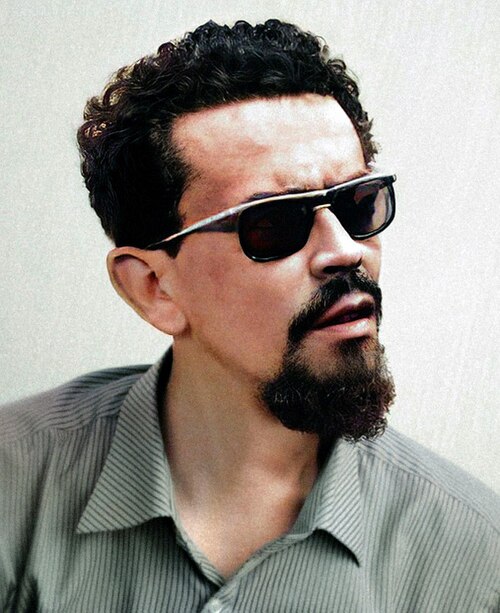
Carlos Fonseca Amador was born on 23 June 1936 in Matagalpa, a coffee-growing city in north-central Nicaragua, the illegitimate son of Fausto Amador — the administrator of a hacienda and later a close associate of the Somoza family — and Justina Fonseca, a domestic worker who raised Carlos in poverty while his father maintained a separate, prosperous life. The parallel with Augusto Sandino — also born illegitimate to an indigenous mother and an absent landowner father — was not lost on Fonseca. He would later write about it explicitly, drawing a connection between the personal experience of social marginality and the political consciousness of liberation.
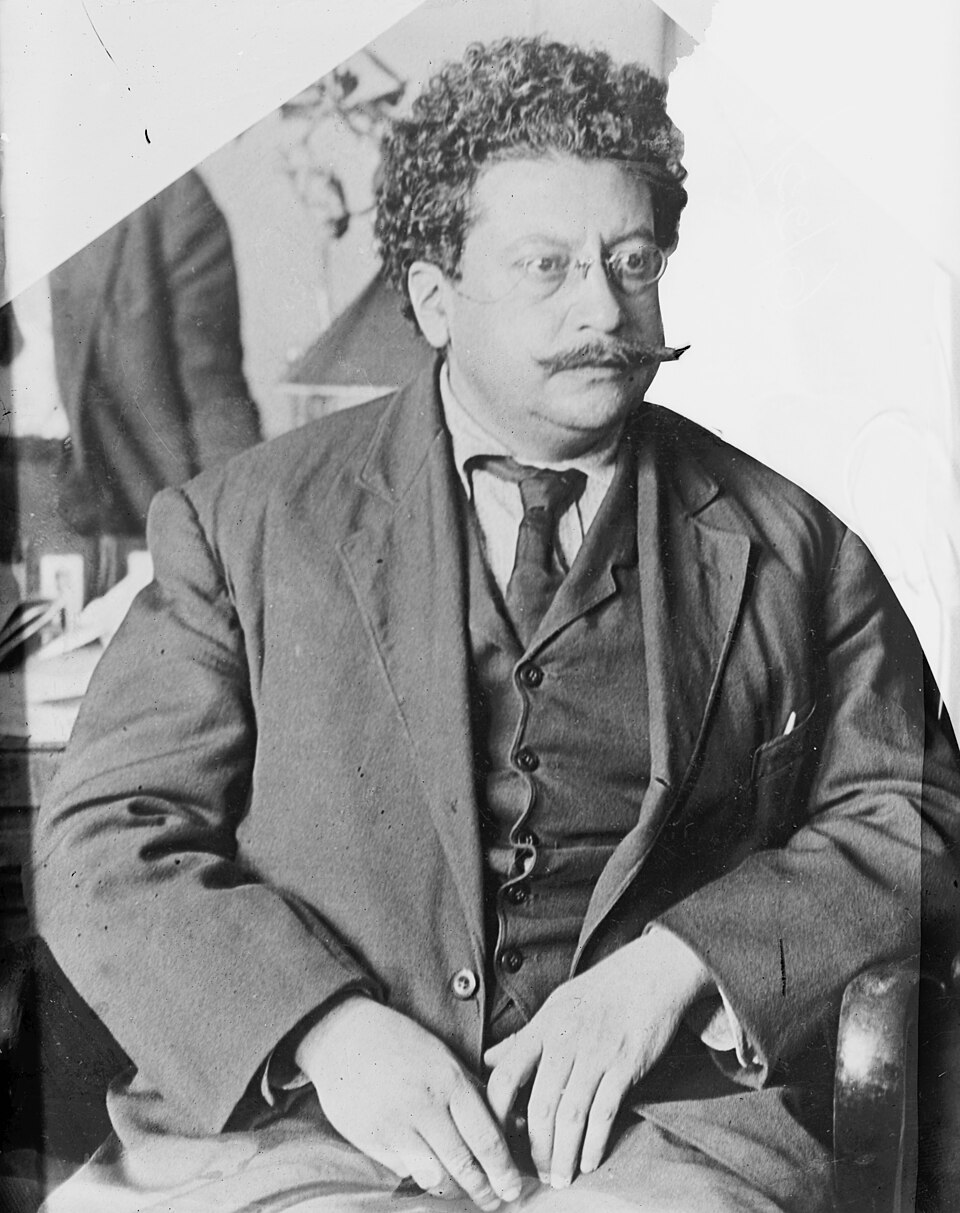
What Fonseca had, despite poverty, was access to books. He was an extraordinary reader from childhood, educating himself through the Matagalpa public library and through whatever he could find — Nicaraguan history, Marxist theory, Latin American literature. He enrolled in the Universidad Nacional Autónoma de Nicaragua in Managua in 1955, became immediately politically active, joined the Socialist Party of Nicaragua, and within a year had been arrested for the first time for distributing anti-Somoza literature. He was nineteen years old. He would spend much of the next twenty years being arrested, imprisoned, exiled, and returning. Like Ricardo Flores Magón before him, exile was not an interruption to his political work but one of its principal theatres.
The Recovery of Sandino
The most distinctive and historically important intellectual contribution Fonseca made — before founding the FSLN, before any of the military operations, before any of the theoretical writing — was the recovery of Augusto Sandino's history. The Somoza regime — founded by the man who had ordered Sandino's assassination — had systematically suppressed Sandino's memory in Nicaraguan public life. His archives had been scattered. His former fighters had been killed, imprisoned, or silenced. His name appeared in Nicaraguan schoolbooks, when it appeared at all, as a bandit or a communist troublemaker rather than as a national hero who had forced the United States out of his country.
Fonseca tracked down surviving Sandinistas from the 1927–1934 campaign, recorded their testimonies, searched archives in Nicaragua, Mexico, and the United States, and reconstructed a documented account of who Sandino was, what he had fought for, and what his legacy meant for Nicaraguan politics. His essay "Nicaragua: Zero Hour" (1969) — which opened with the line "A Nicaraguan, Augusto César Sandino, fought and died so that Nicaragua might be free" — became the foundational theoretical document of the Sandinista movement. It argued that Sandino's anti-imperialist nationalism was not a historical curiosity but a living political tradition that could be united with Marxist analysis of class to produce a distinctly Nicaraguan revolutionary programme.
"A Nicaraguan, Augusto César Sandino, fought and died so that Nicaragua might be free."
— Carlos Fonseca, "Nicaragua: Zero Hour," 1969Founding the FSLN: 1961
In 1961, Fonseca co-founded the Frente Sandinista de Liberación Nacional with Silvio Mayorga and Tomás Borge in Tegucigalpa, Honduras. The FSLN was from the beginning explicitly committed to armed struggle as the path to the overthrow of the Somoza dictatorship — a conclusion drawn from the failure of the Nicaraguan Socialist Party's electoral politics, from the Cuban Revolution's example of what a small guerrilla force could achieve against a U.S.-backed dictatorship, and from the Somoza regime's absolute refusal to permit meaningful political opposition. The FSLN was not, however, simply a Nicaraguan copy of the Cuban model. Fonseca insisted on developing a specifically Nicaraguan revolutionary theory rooted in Nicaraguan history — which meant Sandino — rather than importing a framework from elsewhere.
The early years of the FSLN were catastrophic by conventional military measures. The Pancasán operation of August 1967 — the organisation's most ambitious early military action, a guerrilla campaign in the mountains of Matagalpa department — was a near-annihilation. Somoza's National Guard tracked and killed most of the column, including Silvio Mayorga, one of the FSLN's co-founders. Fonseca was not in Nicaragua at the time — he was in Cuba — but the defeat forced a fundamental rethinking of strategy. The period from 1967 to the mid-1970s was one of rebuilding, internal debate, and the development of the three political tendencies within the FSLN that would eventually almost destroy it: the Prolonged People's War tendency, the Proletarian tendency, and the Insurrectional tendency (the Terceristas).
Years of Exile, Prison, and Return
Fonseca spent much of the late 1960s and early 1970s in Cuba, where he had the support of the Cuban government, wrote his theoretical works, maintained contact with the FSLN's underground networks inside Nicaragua, and worked to hold together an organisation that was under severe military pressure. He was arrested in Costa Rica in 1969 and imprisoned; an FSLN operation hijacked a plane and secured his release in exchange for hostages in 1970. He was arrested again in Mexico in 1976 — imprisoned under pressure from the Somoza government — and this time released only after an FSLN bank robbery provided funds for a legal defence and international pressure secured his freedom.
His health was poor — he wore thick glasses and suffered from chronic conditions that years of guerrilla life and imprisonment had worsened — but his political and intellectual output was prodigious. He wrote theoretical analyses of the Nicaraguan political economy, histories of Sandino's campaign, strategic assessments of the FSLN's situation, and correspondence with the movement's cadres inside Nicaragua and in exile. He was simultaneously the FSLN's principal theorist, its most important historical scholar, and one of its primary political leaders — a combination of roles that few revolutionary organisations have managed to concentrate in a single person and that gave the Nicaraguan revolution an unusual intellectual depth.
Death in the Mountains: November 1976
In late 1975, Fonseca made the decision to return to Nicaragua and resume active guerrilla operations in the mountains. He crossed the border clandestinely and joined a guerrilla column operating in the Zinica region of Matagalpa department — the same mountains where the FSLN had been nearly destroyed at Pancasán in 1967. On 8 November 1976, his column was ambushed by Somoza's National Guard. Carlos Fonseca Amador was killed in the fighting. He was forty years old.
The revolution he had founded was three years from victory. The FSLN's Insurrectional tendency — the Terceristas led by Daniel Ortega and his brothers — was in the process of building the broad-based coalition that would, through the mass uprising of 1978–1979, finally bring the Somoza dynasty down. The earthquake of Managua in 1972, which Somoza had responded to by pocketing international aid and rebuilding his family's properties while the city's poor lived in rubble, had destroyed whatever residual legitimacy the regime possessed. The three tendencies of the FSLN reunified in 1979 under Cuban pressure. On 19 July 1979, the Sandinista forces entered Managua. Anastasio Somoza Debayle, the dictator's son, fled to Paraguay. The dynasty that had been founded on Sandino's murder ended with his movement's triumph.
Legacy: The Man Who Made the Revolution Possible
Carlos Fonseca's relationship to the Nicaraguan Revolution of 1979 is analogous in some ways to Farabundo Martí's relationship to the Salvadoran revolutionary struggle: both died before the revolution they had built came to power, both gave the movement their name, and both are remembered primarily through the political tradition that claimed their inheritance rather than through any governmental achievement of their own. But Fonseca's role was more foundational than Martí's — he did not merely inspire or organise, he built the institution, theorised the ideology, and recovered the historical tradition without which the Nicaraguan revolution of 1979 would have lacked both its organisational vehicle and its political identity.
The FSLN government that came to power in 1979 declared Fonseca one of the revolution's principal heroes. His image appeared alongside Sandino's on murals, currency, and public spaces across Nicaragua. His theoretical writings were published and circulated. The revolution's subsequent history — the Contra war financed by the United States, the economic embargo, the 1990 electoral defeat, the complicated return of Daniel Ortega to the presidency in 2007 and his subsequent authoritarian evolution — belongs to the story of what the revolution became after Fonseca's death. What belongs to Fonseca is the revolution's beginning: the act of intellectual and political will that said Nicaragua's revolutionary tradition had not died with Sandino in 1934, that its history could be recovered, that its people could be organised, and that the dynasty built on its founder's murder could be overthrown.
He was killed wearing thick glasses that he could barely see without, in mountains where he had no business being given the state of his health, at the age of forty, three years before the victory he had spent his entire adult life working toward. He had founded an organisation, recovered a history, theorised a revolution, and refused to stay safe while other people did the fighting. That is what the revolution required, and he gave it everything he had.