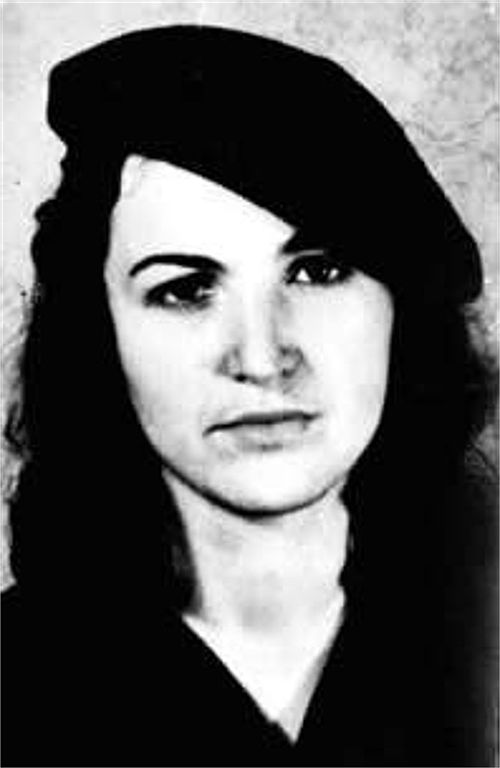
Tania la Guerrillera — Haydée Tamara Bunke — the only woman combatant in Che Guevara's Bolivian guerrilla column, killed in the Vado del Yeso river ambush on 31 August 1967 alongside Coco Peredo, and honoured in Cuba and Bolivia as a martyr of the continental revolution.
Bolivia · Latin America

Tania la Guerrillera

Bolivia did not produce Tania la Guerrillera — she arrived there as an operative, as a stranger building a cover identity in a country whose language she had learned and whose terrain she had studied but whose history was not hers by birth. Yet Bolivia is where she died, in the Vado del Yeso river on 31 August 1967, and Bolivia is in many ways where she belongs most fully in historical memory — not because her Argentine birth or her East German formation are irrelevant, but because it was in Bolivian terrain, inside a Bolivian guerrilla campaign, fighting for a vision of Bolivian and continental liberation, that everything her life had prepared her for was finally expressed and finally ended. The column she joined in early 1967 — after her intelligence cover in La Paz society was blown and the option of quiet withdrawal no longer existed — was attempting something that no one in the column was certain was possible: the ignition of a continental revolutionary movement from a base in the Bolivian jungle, the building of a foco that would spread from Bolivia into neighbouring countries and transform the political landscape of South America. The attempt failed. But the people who made it, and the courage with which they made it, have remained a permanent presence in the political imagination of the Bolivian and Andean left — a presence that Tania occupies as fully as any of the men who died alongside her or after her. She was the only woman combatant in the column. She died in the river. She became an icon. The icon is real. So was the person.

Bolivia Only Woman in Guevara's Column Killed at Vado del Yeso 1967 Died Alongside Coco Peredo Andean Revolutionary Icon Cuba Honoured Her Remains

Born: 19 November 1937, Buenos Aires, Argentina  |  Died: 31 August 1967, Vado del Yeso, Vallegrande, Bolivia — Argentine-born; raised in East Germany; intelligence operative in Bolivia c.1964–67; cover blown; joined Guevara's column 1967; killed in Bolivian army ambush aged 29 alongside Coco Peredo and seven others; remains reinterred in Cuba 1998

At a Glance

Bolivia Before the ColumnTania arrived in Bolivia in 1964 as "Laura Gutierrez Bauer" — a Bolivian woman of German descent, interested in folklore and ethnomusicology — and spent approximately three years building the cover identity and the network of social contacts that made her one of the most deeply placed intelligence assets the Cuban-supported revolutionary movement had in the country. She moved through Bolivian elite social circles, attended government functions, met officials including President René Barrientos, and gathered the kind of political and military intelligence about the Bolivian state's security arrangements that would be valuable to an armed operation planning its strategy. The Bolivia she lived in during these years was a country still processing the contradictions of its 1952 National Revolution — a society whose indigenous majority had won formal political inclusion and partial land reform but remained economically marginalised, governed by a military-backed government with close US ties that was systematically suspicious of left-wing political organisation.
The Cover That BrokeThe precise mechanism by which Tania's cover was compromised in early 1967 has been the subject of historical debate. The most widely accepted account — supported by the memoirs of surviving column members including Inti Peredo — is that a visitor connected to the guerrilla network was detained by Bolivian security, and the information extracted under interrogation led investigators to connections that pointed back to "Laura Gutierrez Bauer." With her identity at risk of exposure, remaining in La Paz was impossible. She could not simply disappear without drawing the kind of attention that would confirm suspicions and expose the entire network. She joined the column in the Ñancahuazú region, transitioning from her three years of careful intelligence work into the dangerous, exposed role of a combatant whose presence in the field was already known to the Bolivian security apparatus.
Inside the ColumnThe role Tania played inside the column after joining it in early 1967 was shaped by the circumstances of her arrival as much as by any deliberate assignment. The column was already under pressure — its communications with its Cuban and urban support networks were increasingly disrupted, its supply lines were unreliable, and the Bolivian army's CIA-trained Ranger units were steadily improving their intelligence picture of the guerrillas' movements. Tania was a known intelligence operative who had lost her cover, which made her simultaneously valuable — she had real knowledge of the Bolivian political and security landscape — and a liability in terms of the attention her presence drew. She participated in the column's military operations as a full combatant, carrying a weapon, moving through the difficult terrain of the Ñancahuazú with the rest of the fighters, enduring the same conditions of hunger, illness, and physical exhaustion that the campaign's increasingly desperate situation produced.
31 August 1967: Vado del YesoThe Vado del Yeso — the Ford of Gypsum, a river crossing in the Vallegrande province of Santa Cruz department — was the site of the ambush that killed Tania, Coco Peredo, and seven other guerrillas on 31 August 1967. The army unit that executed the ambush had been tracking the column's movements and positioned itself at the crossing point in anticipation of the guerrillas' route. The fighters were caught in the open water, without cover, against an enemy that had chosen its ground and its moment. All nine died. Guevara's diary entry for 31 August records the loss: "A black day. At dusk, we received news that Vado del Yeso had been an ambush and that Coco, Miguel, Julio, León, and Tania had fallen." He named her last in the list. She was the only woman.
The Body, the Finding, the HonoursTania's body was recovered from the Vado del Yeso river by Bolivian army forces and held for some time. The circumstances of the recovery and initial burial were not respectful — the Bolivian military's treatment of the guerrilla dead throughout the campaign was shaped by the logic of counter-insurgency rather than by any obligation to the fallen. Her remains were eventually located decades later, identified through DNA analysis, and transferred to Cuba in 1998 — thirty-one years after her death — where they were interred in a mausoleum in Santa Clara alongside Guevara's remains and those of other guerrillas from the Bolivian campaign. The reinterment was a state occasion in Cuba, attended by senior Cuban officials, acknowledging the specifically international dimension of the campaign: an Argentine-born, East German-trained operative honoured by the Cuban state in whose service she had died in a Bolivian river.
What Bolivia Did With Her MemoryBolivia's relationship to Tania's memory has been complicated and contradictory in ways that reflect the complexity of the Bolivian left's relationship to the 1967 campaign itself. The campaign was a failure in Bolivia specifically — it did not ignite a popular uprising, did not find the peasant base it needed, did not spark the continental revolution Guevara envisaged. But the people who died in it — Guevara, the Peredo brothers, Tania — have been incorporated into the Bolivian revolutionary tradition not as symbols of the campaign's specific strategic approach but as symbols of the willingness to sacrifice for the possibility of a different Bolivia. Streets in several Bolivian cities bear her name. The Evo Morales government, which came to power in 2006 through the specifically Bolivian political path that the 1967 campaign had failed to open, incorporated the campaign's martyrs into its historical narrative without endorsing the foco strategy that had brought them to their deaths.

The Three Years in La Paz: What She Built and What It Cost

The intelligence work Tania conducted in Bolivia between 1964 and 1967 represents one of the most sustained and sophisticated penetrations of a Latin American government that the Cuban-supported revolutionary movement ever achieved, and it is worth understanding in its own terms — not merely as the background to her eventual death, but as a form of political commitment that required a different kind of courage from anything the Ñancahuazú jungle demanded. To build a deep cover identity is to make a choice about who you are willing to pretend to be, for how long, and at what psychological cost. Three years is a long time to be someone else. Three years of attending cocktail parties, cultivating relationships based on deception, building the kind of social trust that requires showing people what appears to be your genuine self — all while maintaining the absolute separation between that performance and the actual political work underlying it.

Tania managed this successfully enough to reach the social circles around President Barrientos — a level of penetration that the operation's planners could not have been certain was achievable. The intelligence she gathered during those years had genuine operational value: knowledge of the Bolivian security apparatus's structure and capabilities, contacts within the political class, understanding of the communication patterns and organisational vulnerabilities of the Bolivian state that the guerrilla column would eventually be confronting. When that intelligence capacity was destroyed by the cover's compromise, the loss was not merely personal — it was a significant degradation of the revolutionary movement's position in Bolivia. She joined the column not as a choice between two equally available options but as the only option remaining once the intelligence role was finished.

The Only Woman: What That Meant in the Column

Tania was the only woman combatant in Guevara's Bolivian column — a fact whose significance has been interpreted in almost opposite ways by different traditions of historical writing. For the hagiographic tradition, primarily Cuban, it is a mark of extraordinary distinction: she was exceptional enough, committed enough, skilled enough, to be accepted as a full combatant in a column that was otherwise entirely male. For the feminist critical tradition, it raises uncomfortable questions about why there was only one woman, what the conditions of her acceptance required her to suppress or prove, and what the column's social dynamics looked like from the perspective of the single female presence in an otherwise male space operating under conditions of extreme physical and psychological pressure.

The honest answer is that both observations have merit and that holding them simultaneously is necessary for an accurate account. She was exceptional — her linguistic skills, her intelligence training, her political commitment, and her physical toughness were all real qualities that made her presence in the column genuinely valuable rather than merely tolerated. The column was also a product of its specific social and political formation: the Cuban revolutionary tradition of the 1950s and 1960s, which was more gender-inclusive than most Latin American guerrilla movements but which was shaped by assumptions about the relationship between combat and masculinity that made a single woman's presence anomalous rather than unremarkable. Both things shaped her experience, and both should shape our understanding of it.

Vado del Yeso in the Context of the Bolivian Campaign's Logic

The ambush at Vado del Yeso on 31 August 1967 was the single most devastating blow the Bolivian campaign suffered before Guevara's own capture six weeks later, and it needs to be understood in the context of the campaign's overall deterioration rather than as an isolated incident of bad luck. By August 1967, the column was in serious strategic difficulty. The communications with the urban support network in La Paz had broken down almost completely. The Bolivian Communist Party, whose cooperation had been a precondition of the campaign's viability, had withheld the support it had originally promised. The Bolivian peasantry in the Ñancahuazú region — Quechua-speaking communities whose relationship to the guerrillas was characterised by wariness rather than solidarity — was not providing the popular base that the foco theory required. The CIA's training of the Bolivian Ranger battalions was producing a counter-insurgency force that was specifically designed for this kind of operation, and it was getting better at it.

The army unit that executed the Vado del Yeso ambush was not operating on general intelligence about guerrilla activity in the region — it had specific intelligence about the column's likely route and had positioned itself accordingly. The guerrillas crossing the river on 31 August were moving through terrain the army knew they would use, at a time the army had anticipated. The nine people who died there were not victims of a chance encounter but of a systematic military intelligence operation that had been improving its picture of the column's position and movements for weeks. Tania, Coco Peredo, and the seven others who died with them at Vado del Yeso were the price of that intelligence advantage — the clearest evidence of how thoroughly the campaign's operational security had been compromised by the time of their deaths.

The Icon and the Geography That Made It

Tania's iconography — the poster image, the legend of Tania la Guerrillera — was constructed primarily in Cuba, by the Cuban state and the international solidarity movement, in the months and years after her death. It emphasised youth, beauty, commitment, and heroic death in the jungle: the complete revolutionary woman, dying young in service of the continental revolution. This image circulated alongside the image of Guevara himself and became part of the global visual vocabulary of the late 1960s revolutionary left. It was politically powerful precisely because it was simple — uncomplicated by the operational realities of intelligence work, by the specific circumstances of cover compromise and forced enlistment, by the question of how her death related to the campaign's overall failure.

But the specific geography of that death — Bolivia, the Vallegrande province, the Vado del Yeso river — gives her a claim on Bolivian memory that is not entirely reducible to Cuban propaganda. She died in Bolivia. She was trying to change Bolivia — to contribute to the transformation of conditions she had spent three years studying and that she understood, by the end, with the specificity that only prolonged presence in a place can produce. The Bolivian left that eventually succeeded in transforming the country's political landscape — through paths that the 1967 campaign had not imagined and by means that its participants had not used — honoured her alongside its own martyrs, not as a Cuban project but as a contribution to the specifically Bolivian history of people who died for a Bolivia different from the one they found. That incorporation into Bolivian memory is, in the end, the most fitting recognition of what she actually did: not the romantic myth of the guerrillera, but the concrete fact of a person who spent three years in Bolivia, died in a Bolivian river, and left something of herself in the political soil of the country that was the last thing she saw.

Also Profiled — Colombia, Venezuela & Bolivia

Colombia, Venezuela & Bolivia Antonio Nariño Precursor of Independence; printed the Declaration of the Rights of Man 1793 Colombia, Venezuela & Bolivia Camilo Torres Restrepo Liberation Theology priest; ELN guerrilla; killed in first combat 1966 Colombia, Venezuela & Bolivia Coco Peredo Bolivian communist; killed at Vado del Yeso alongside Tania, 31 August 1967 Colombia, Venezuela & Bolivia Francisco de Paula Santander Man of Laws; Bolívar's partner; founder of Colombian constitutional republicanism Colombia, Venezuela & Bolivia Hugo Chávez Venezuelan president; Bolivarian Revolution; survived 2002 coup; ALBA founder Colombia, Venezuela & Bolivia Inti Peredo Coco's brother; survived the column; wrote the memoir; killed in La Paz 1969 Colombia, Venezuela & Bolivia Jacobo Arenas FARC co-founder; chief ideologist; died in the Colombian jungle 1990 Colombia, Venezuela & Bolivia Jaime Bateman Cayón M-19 founder; stole Bolívar's sword; political theatre guerrilla; died 1983 Colombia, Venezuela & Bolivia Manuel Marulanda Vélez Tirofijo — FARC supreme commander for four decades; died in the field 2008 Colombia, Venezuela & Bolivia Raúl Reyes FARC Secretariat member; killed in Colombian airstrike inside Ecuador 2008 Colombia, Venezuela & Bolivia Simón Bolívar The Liberator — freed five nations including Bolivia; died 1830 disillusioned Colombia, Venezuela & Bolivia Simón Rodríguez Bolívar's teacher; radical educator; died in poverty in Peru 1854
Share X Facebook WhatsApp LinkedIn