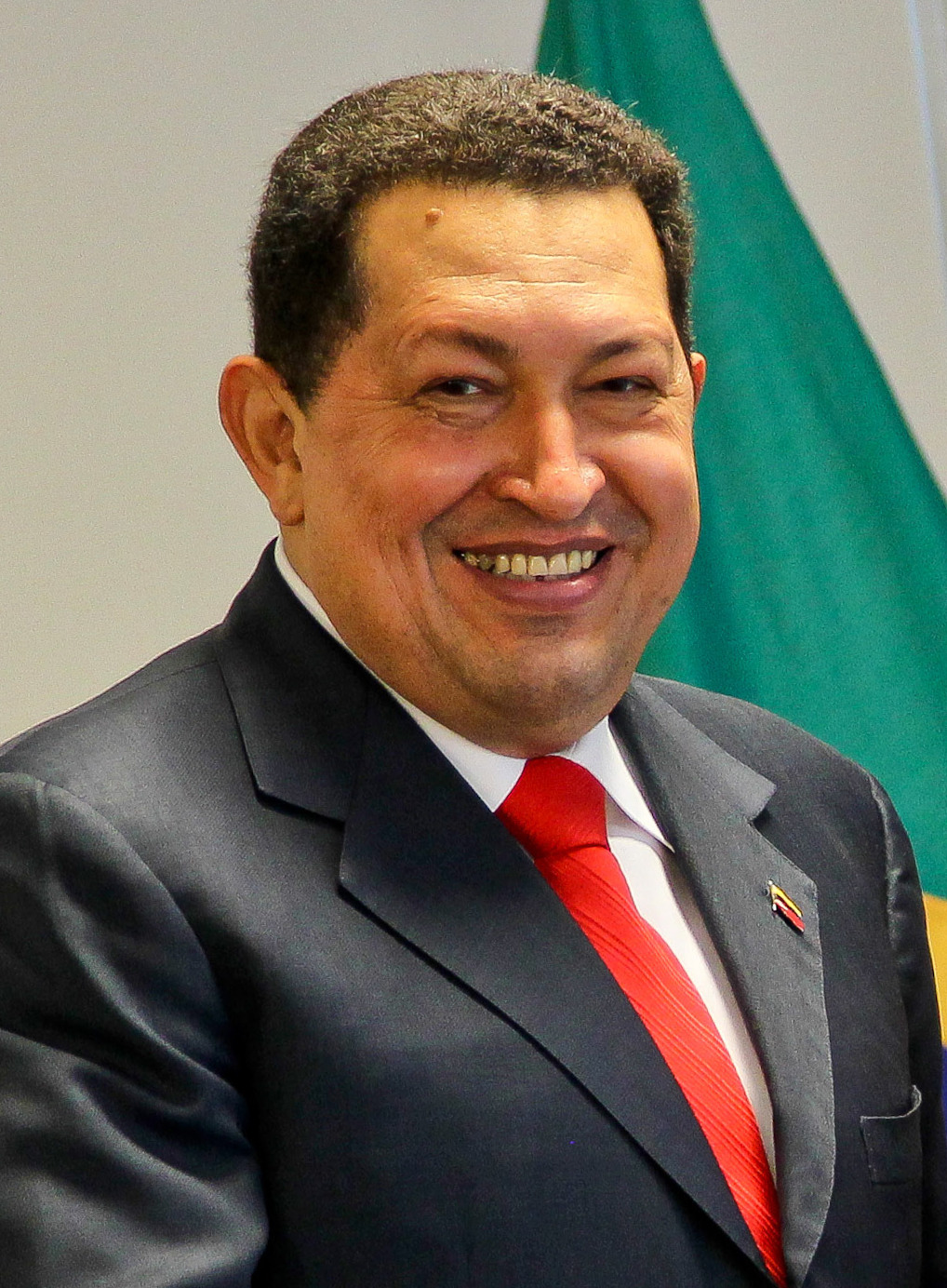
At a Glance
Barinas, the Military, and the Formation of a RevolutionaryChávez's formation was shaped by three things that do not obviously combine: a rural Venezuelan childhood in a state where the oil economy's wealth was invisible, a military career that gave him discipline and institution and access to Venezuelan history in ways that the civilian educational system did not provide, and a voracious reading habit in Latin American political thought — Bolívar, Zamora, Ezequiel Zamora, Marxist political economy — that produced an increasingly radical political analysis within a military framework. The combination was unusual: a professional soldier who was simultaneously developing a revolutionary political theory, who was building a clandestine organisation inside the institution he served, and who was waiting for the right moment to act. The moment he chose — February 1992 — turned out not to be right. But the television appearance that followed the failed coup, and the "por ahora" that he inserted into his acceptance of responsibility, was right: it established him as a political figure of national importance at the moment of his apparent defeat.
The 1998 Election and the Bolivarian ProgrammeChávez's electoral victory in December 1998 — with 56 per cent of the vote — was the product of a specific political conjuncture: the comprehensive discrediting of Venezuela's traditional political establishment, the two parties (Acción Democrática and COPEI) that had alternated in power since 1958 and that had presided over two decades of economic decline, the 1989 Caracazo massacre in which hundreds of people protesting price rises were killed by the army, and the structural poverty of a country that was simultaneously an oil power and deeply unequal. Chávez offered something that neither of the traditional parties had offered: the explicit identification of the poor as the primary constituency of government, the promise of a new constitutional settlement that would make Venezuelan democracy responsive to that constituency rather than to the financial and political elite that had captured it, and an unmistakable personal authenticity — the man from Barinas, not from the clubs of Caracas.
The Social Missions: What the Oil Money BoughtThe social programmes that Chávez funded through PDVSA's oil revenues — known collectively as the Misiones — were the most direct expression of the Bolivarian Revolution's redistributive ambition and its most concrete achievements in terms of measurable human welfare. Barrio Adentro brought Cuban doctors into the poorest barrios of Venezuela's cities, providing primary health care to communities that had never previously had consistent access to it. Mission Robinson — named for Simón Rodríguez's alias — addressed adult illiteracy using Cuban teaching methods and reached more than a million Venezuelans. Mission Ribas and Mission Sucre provided secondary and university education respectively to people who had been excluded from those systems by poverty. Mercal subsidised food for the poor. Habitat built public housing. These programmes were real and their beneficiaries were real people whose lives were measurably improved by them. They are the foundation of any honest assessment of what the Chávez years produced.
The April 2002 Coup AttemptThe coup of April 2002 — in which a coalition of military officers, business leaders, and media owners removed Chávez from power for forty-seven hours before a combination of popular mobilisation from the barrios and loyalty from certain military units returned him to the presidency — is one of the most dramatic and most revealing episodes of the Bolivarian Revolution's history. The coup had US support: the Bush administration recognised the interim government of Pedro Carmona within hours of its announcement, before international bodies had time to respond. Declassified US documents confirm that the CIA was aware of coup planning in advance. Chávez's survival and return — carried back to the presidential palace by the popular mobilisation he had spent years building — demonstrated both the depth of his popular support and the fragility of the institutional arrangements through which that support was expressed.
ALBA and the Alternative to US HegemonyThe Bolivarian Alliance for the Peoples of Our America — ALBA — which Chávez launched with Cuba in 2004 and expanded across the decade to include Bolivia, Ecuador, Nicaragua, and several Caribbean states, was his most ambitious regional project: an attempt to build a framework for Latin American and Caribbean integration that was explicitly alternative to the US-dominated models of the OAS and the proposed Free Trade Area of the Americas. ALBA operated on the basis of solidarity rather than comparative advantage — Venezuela supplied oil to Cuba and the Caribbean at preferential rates in exchange for Cuban professional services, particularly the doctors and teachers who staffed the social missions. The framework was built on Venezuelan oil wealth and on an explicit rejection of the Washington Consensus economic model. Its durability beyond Chávez's death has been limited but its ambition was genuine.
The Contested LegacyThe assessment of Chávez's legacy is complicated by the fact that his death in 2013 was followed by the comprehensive economic collapse of the Maduro government — a collapse whose causes include the fall of oil prices, the US sanctions regime, the structural economic distortions produced by the Bolivarian economic model, and the political failures of Maduro's government itself. The Venezuela of 2024 — with its massive emigration, its hyperinflation, its humanitarian crisis — is a different country from the Venezuela of 2012, and the relationship between Chávez's choices and that deterioration is genuinely contested. What is not contested is that the social indicators for Venezuela's poorest citizens improved significantly during the Chávez years, and that those improvements were real. What is also not contested is that the institutional arrangements he built — the concentration of power in the executive, the subordination of independent institutions, the use of oil revenue in ways that created dependencies rather than structural economic development — created conditions that made subsequent failure easier and recovery harder.
The Por Ahora That Changed Everything
The moment that defined Hugo Chávez's public career was not a military victory or an electoral triumph — it was a defeat acknowledged on television. On 4 February 1992, the coup he had spent years planning collapsed within hours, its coordination failures and the government's decisive military response turning a planned seizure of power into a chaotic series of engagements across Venezuela that Chávez could not coordinate or control from his position in the Military History Museum in Caracas. He negotiated to surrender personally and was taken to television to call on the other coup columns to stand down and avoid further bloodshed. The address he gave was brief, calm, and contained the two words — "por ahora," for now — that transformed a failed military conspiracy into the beginning of a political career of extraordinary consequence.
The calculation behind those two words was deliberate. Chávez understood that accepting personal responsibility for the failure — telling his followers that the objectives he had set had not been achieved, not yet — was politically more effective than denial, deflection, or the kind of institutional passing of blame that Venezuelan political culture had made familiar. By saying "for now," he was telling the television audience watching from across Venezuela — particularly the audience in the poor barrios where the gap between oil wealth and daily poverty was most visible — that the project of structural change was alive, that someone had tried and failed but had not abandoned the attempt. The response across Venezuela's poor communities was not the reaction to a defeated conspirator but the reaction to an announcement: here is a man who tried to change things, who failed, and who has not given up. They remembered him for the two years he spent in prison, and when he was pardoned in 1994 and became free to engage in legal politics, his base was already there, waiting.
Oil, the Missions, and the Poor
Venezuela sits atop the world's largest proven oil reserves, a geological fact that has dominated Venezuelan political economy for a century and that shaped everything Chávez did in government. The question of who controls Venezuela's oil — PDVSA, the state oil company — and in whose interest it is managed is the central question of Venezuelan political economy, and Chávez's answer to it was unambiguous: the oil belonged to the Venezuelan people, and its revenues should be used for Venezuelan social development rather than for the enrichment of the existing elite and the satisfaction of the Washington Consensus economic orthodoxy. This position was not invented by Chávez — it was part of Venezuelan political culture going back to the nationalisation of oil in 1976 — but he pursued it with an energy and a directness that previous governments had not.
The social missions that the oil revenues funded were the most visible achievement of this approach and the most genuinely transformative in terms of the daily lives of Venezuela's poor. Infant mortality fell. Adult literacy rose. Access to primary health care expanded dramatically in communities that had never had consistent access to it. Poverty rates fell significantly in the first decade of the Chávez government by most standard measures. These improvements were real and their recipients knew they were real, which is why Chávez won re-election in 2006 with 63 per cent of the vote and in 2012 — already ill with the cancer that would kill him — with 55 per cent. His base in the barrios of Caracas and the rural interior was genuine, built on the experience of what the Bolivarian Revolution had actually delivered to people whose previous experience of Venezuelan democracy had been that it was a system run for other people's benefit.
The April 2002 Coup and What It Revealed
The forty-seven hours of April 2002 — when Chávez was removed from power, briefly replaced by Pedro Carmona, and then returned to the presidency by a combination of popular mobilisation and military loyalty — revealed the full landscape of Venezuelan politics under the Bolivarian Revolution. On one side: the business community, the traditional political parties, most of the private media, the middle and upper class, and the Bush administration, all of whom had concluded that Chávez represented a threat to their interests that justified extra-constitutional action. On the other side: the poorest communities of Caracas and other cities, who poured into the streets demanding Chávez's return, and the military officers who had remained loyal to the constitutional government and who moved to return him to the presidential palace.
The coup's failure was a turning point in the Bolivarian Revolution. Before April 2002, Chávez had operated with some degree of accommodation toward the business and media establishment — maintaining relationships, allowing critical media to function, avoiding direct confrontations with opposition-controlled institutions. After April 2002, and after the subsequent oil strike of 2002–2003 in which PDVSA's management attempted to strangle the economy into regime change, Chávez concluded that accommodation was impossible and moved to consolidate control over the institutions that had been turned against him: purging PDVSA's management, using the oil revenue more aggressively for the social missions, and accelerating the institutional changes that concentrated power in the executive. The political polarisation that characterised the remainder of his presidency — and that has continued under Maduro — was partly a consequence of the radicalisation that the coup attempt produced.
The Assessment: What Remains
The honest assessment of Hugo Chávez requires holding simultaneously two sets of facts that his supporters and critics each prefer to emphasise exclusively. The first set: real poverty reduction, real literacy gains, real health care provision to communities that had never had it, real electoral victories in elections that independent observers certified as free and fair, real regional solidarity through ALBA, real assertion of Venezuelan national sovereignty over its own resources. The second set: the concentration of executive power at the expense of independent institutions, the use of oil revenue in ways that created consumption dependencies rather than structural economic development, the relationship with authoritarian governments internationally, the suppression of political dissent that became increasingly pronounced in his later years, and the institutional deterioration that left Venezuela poorly prepared for the collapse of oil prices and the economic crisis that followed his death.
Both sets of facts are real. The difficulty of holding them simultaneously — the temptation to emphasise one and minimise the other in service of a predetermined conclusion — is the reason why Chávez remains the most globally divisive Latin American political figure of his generation. He was not a simple figure, and the Venezuela he governed was not a simple country. The poor of Venezuela had real reasons to support him. The independent journalists, judges, and political opponents who experienced the Bolivarian state's pressure and intimidation had real reasons to fear what he was building. The question of how to weigh these different experiences against each other is not merely a political question — it is a moral one, and it does not have a clean answer.
Also Profiled — Colombia, Venezuela & Bolivia
Colombia, Venezuela & Bolivia
Antonio Nariño
Precursor of Independence; printed the Declaration of the Rights of Man 1793
Colombia, Venezuela & Bolivia
Camilo Torres Restrepo
Liberation Theology priest; ELN guerrilla; killed in first combat 1966
Colombia, Venezuela & Bolivia
Coco Peredo
Bolivian communist; killed at Vado del Yeso with Guevara's column 1967
Colombia, Venezuela & Bolivia
Francisco de Paula Santander
Man of Laws; Bolívar's partner; founder of Colombian constitutional republicanism
Colombia, Venezuela & Bolivia
Inti Peredo
Coco's brother; survived Guevara's column; killed 1969 rebuilding resistance in La Paz
Colombia, Venezuela & Bolivia
Jacobo Arenas
FARC co-founder and chief ideologist; died in the field 1990
Colombia, Venezuela & Bolivia
Jaime Bateman Cayón
M-19 founder; seized the Colombian National Palace; died in plane crash 1983
Colombia, Venezuela & Bolivia
Manuel Marulanda Vélez
Tirofijo — FARC founder; supreme commander for four decades; died in the field 2008
Colombia, Venezuela & Bolivia
Raúl Reyes
FARC Secretariat member; killed in Colombian airstrike inside Ecuador 2008
Colombia, Venezuela & Bolivia
Simón Bolívar
The Liberator — freed five nations; dreamed of a unified continent; died 1830
Colombia, Venezuela & Bolivia
Simón Rodríguez
Bolívar's teacher; radical educator; most original thinker in South American education
Colombia, Venezuela & Bolivia
Tania la Guerrillera
Argentine-born East German operative; killed at Vado del Yeso 1967