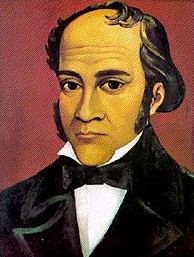
At a Glance
The Caracas SchoolmasterRodríguez was teaching in Caracas by his mid-twenties, at the city's public school, where one of his pupils was the young Simón Bolívar. The pedagogical relationship that developed between them was not conventional instruction — Rodríguez had already formed the educational philosophy that would define his life, rooted in Rousseau's Emile and the progressive educational movements of the European Enlightenment, that refused to treat children as vessels for the transmission of received knowledge and insisted instead on developing their capacity for independent observation and rational judgment. He took Bolívar out of the classroom into the countryside, taught through experience rather than recitation, and introduced his pupil to the political philosophy that would eventually produce the liberator. The relationship between teacher and student continued into adulthood: they travelled Europe together, Rodríguez was present at the famous Monte Sacro oath, and the bond between them was as formative for Bolívar as any of his military experiences.
The 1797 Conspiracy and ExileRodríguez was implicated in the conspiracy of 1797 — the Gual and España conspiracy, a planned uprising against Spanish colonial rule that was suppressed before it could act — and was forced to flee Venezuela. He lived in Europe for more than twenty years under the pseudonym Samuel Robinson — a name borrowed from Robinson Crusoe, the Defoe novel whose protagonist's self-sufficient ingenuity on a deserted island was a model Rodríguez found philosophically meaningful. In Europe he worked as a typographer, a teacher of languages, a chemist's assistant, and a philosopher-observer of the revolutionary transformations that the French Revolution and the Napoleonic era were producing in European political life. He encountered the utopian socialist currents that were emerging in the early nineteenth century and incorporated them into his already-radical educational philosophy.
The Bolivian ExperimentWhen Bolívar invited Rodríguez to return to South America in 1823 and to establish in newly independent Bolivia the schools that would put their shared educational principles into practice, Rodríguez threw himself into the project with the energy of a man who had been waiting thirty years for the opportunity. He was appointed Director of Public Education and established schools in Chuquisaca that enrolled indigenous children, mixed-race children, and the children of the poor alongside the children of creole families — teaching not just literacy and numeracy but practical skills, treating education as preparation for productive citizenship rather than for social reproduction of existing hierarchies. The experiment lasted two years. The Bolivian elite and the Catholic Church, which had controlled education and resisted the secular, inclusive model Rodríguez was building, combined to undermine and eventually close his schools. Rodríguez was removed from his position in 1826. He left Bolivia and resumed wandering.
The Educational PhilosophyRodríguez's educational philosophy was built on a single foundational insight: that South America could not build genuinely republican societies by importing European models, because European models — whether educational, political, or economic — had been developed in and for European conditions that did not obtain in South America. The continent needed, in his famous formulation, to be original — to invent its own solutions to its own problems, drawing on its own conditions, its own populations, its own geography and history. This principle applied above all to education: the schools the new republics needed were not copies of European schools but institutions designed for the specific populations of South America — the indigenous majority, the mixed-race poor, the people who had been excluded from colonial education entirely — and the specific civic purposes of republican self-governance. His insistence on including indigenous and poor children in schools alongside the children of the elite was not charitable but political: a republic could not function without literate, capable citizens from all its constituent communities.
The Long WanderingAfter Bolivia, Rodríguez spent nearly three decades wandering South America — through Peru, Ecuador, Colombia, Chile, Venezuela — proposing educational schemes, establishing short-lived schools, writing the philosophical texts that constitute his intellectual legacy, and watching his proposals be rejected, underfunded, or simply ignored by the governments and elites of the republics whose liberation he had helped to inspire. He was periodically recognised and given positions, periodically ignored and left to scratch for resources. He was old, eccentric, typographically idiosyncratic in his writing style, and persistently radical in his political positions. He died in Amotape, Peru in 1854, at eighty-four, in the house of one of his former students, without money or institutional recognition. Bolívar had preceded him by twenty-four years.
Recognition: Long Delayed, Genuinely EarnedThe recovery of Rodríguez's intellectual importance began in the twentieth century, as Latin American educational theorists and political philosophers began to read his texts seriously and to recognise in them an anticipation of ideas — Paulo Freire's pedagogy of the oppressed, the dependency theory's insistence on original South American solutions to South American problems, the decolonial critique of imported European models — that were thought to be mid-twentieth century innovations. He had arrived at these positions, through a different intellectual path, in the 1820s. The FARC's naming of its literacy mission "Mission Robinson" — the alias Rodríguez had used in his European exile — was a recognition of his specific contribution to Venezuelan and South American radical politics. It came two hundred years late, but it was genuine.
The Teacher Who Made the Liberator
The relationship between Rodríguez and Bolívar is one of the most consequential pedagogical relationships in the history of political thought. Rodríguez did not merely teach the young Bolívar to read and to reason — he formed the political imagination of a person who would use those capacities to liberate five nations. The Rousseauian pedagogy he practised, with its emphasis on direct observation of the natural and social world rather than rote repetition of received knowledge, produced in Bolívar exactly the qualities that his subsequent career required: the ability to see political situations clearly, to reason from observed conditions rather than from inherited frameworks, and to maintain a vision of what ought to be in the face of what is. The famous Monte Sacro oath — made in Rome in 1805, in Rodríguez's presence — was the direct expression of the political formation his teacher had given him: a young aristocrat who had been taught to see his society's unjust arrangements as arrangements rather than as natural order, making a public commitment to change them.
They were reunited in Europe during Bolívar's second visit, and Rodríguez accompanied him across France and Italy — the period during which Bolívar's political vision crystallised from a general sense of colonial injustice into the specific commitment to liberation that defined the rest of his life. Rodríguez's presence during this period was not incidental: his political philosophy, his reading of the European revolutionary experience, and his insistence that the American condition required specifically American solutions were the intellectual environment in which Bolívar's mature political thinking formed. The debt that five liberated nations owe to a Venezuelan schoolmaster who died in poverty in Peru is one of the more striking ironies of South American history.
Originality as Political Programme
Rodríguez's most famous and most politically pointed argument was his insistence on originality — on South America's need to invent its own solutions rather than import European models. The argument is easy to summarise and difficult to fully appreciate without reading the specific context in which he made it: the newly independent South American republics were enthusiastically adopting European constitutional models, European legal frameworks, European educational institutions, and European economic theories, and applying them to societies whose populations, histories, and conditions were entirely different from the European societies those frameworks had been developed to serve. The constitutions were liberal and republican; the societies they governed remained profoundly hierarchical. The educational systems were modelled on European academies; the populations they were supposed to serve were largely illiterate, largely indigenous, largely excluded.
Rodríguez argued that this mismatch was not accidental but structural — that the creole elites who designed the new republics wanted the legitimacy of liberal republican rhetoric without the social transformation that genuine liberal republicanism would have required. He was right, and the argument anticipated by more than a century the critique that dependency theorists and decolonial philosophers would develop in the twentieth century. He was also consistently marginalised for making it, because the people with the power to fund and implement his educational experiments were precisely the people whose social position depended on not transforming the conditions his experiments were designed to change. The Bolivian experiment of 1824–1826 — the most direct attempt to put his philosophy into practice — was destroyed by exactly this political dynamic: the elite and the Church whose cooperation was necessary for sustained implementation were the same institutions whose interests his inclusive, secular, practically oriented schools directly challenged.
The Eccentric Text and Its Recovery
Rodríguez's writing style is one of the reasons he was ignored for so long and one of the reasons reading him carefully is rewarding. He printed his own texts, controlled the typography himself, and used spacing, capitalisation, and visual layout as rhetorical tools — grouping ideas spatially on the page, using white space to indicate logical relationships, breaking words and sentences in ways that forced the reader to slow down and attend to the specific weight of specific words. This typographical eccentricity looked, to nineteenth-century readers accustomed to conventional prose, like the work of a madman. To twentieth-century readers trained in the close reading of experimental texts, it looks like a sophisticated attempt to break the automatic rhythms of received language and force genuine engagement.
The recovery of his thought in the twentieth century — through the scholarship of Venezuelan, Colombian, and Ecuadorian historians and educational theorists who began taking his texts seriously — revealed a thinker whose central concerns were more contemporary than historical: the relationship between education and social reproduction, the politics of whose knowledge counts as legitimate, the question of what education is for in a society trying to build genuine rather than formal democracy. Hugo Chávez named Venezuela's adult literacy programme after him. The FARC's Mission Robinson — the Cuban-assisted literacy campaign that reached over a million Venezuelans who had been excluded from education — bore his exile alias. These belated recognitions were appropriate: Rodríguez had argued, two centuries before they were implemented, that the republic could not function without the active participation of the people it claimed to represent, and that the prerequisite for that participation was education genuinely designed for everyone rather than schooling designed to reproduce the hierarchies of those who already had access to it.
Also Profiled — Colombia, Venezuela & Bolivia
Colombia, Venezuela & Bolivia
Antonio Nariño
Precursor of Independence; printed the Declaration of the Rights of Man 1793
Colombia, Venezuela & Bolivia
Camilo Torres Restrepo
Liberation Theology priest; ELN guerrilla; killed in first combat 1966
Colombia, Venezuela & Bolivia
Coco Peredo
Bolivian communist; killed at Vado del Yeso with Guevara's column 1967
Colombia, Venezuela & Bolivia
Francisco de Paula Santander
Man of Laws; Bolívar's administrative partner; built Colombian public education
Colombia, Venezuela & Bolivia
Hugo Chávez
Venezuelan president who named his literacy programme after Rodríguez
Colombia, Venezuela & Bolivia
Inti Peredo
Survived Guevara's column; wrote the memoir; killed in La Paz 1969
Colombia, Venezuela & Bolivia
Jacobo Arenas
FARC co-founder; chief ideologist; died in the jungle 1990
Colombia, Venezuela & Bolivia
Jaime Bateman Cayón
M-19 founder; stole Bolívar's sword; died in plane crash 1983
Colombia, Venezuela & Bolivia
Manuel Marulanda Vélez
Tirofijo — FARC supreme commander for four decades; died 2008
Colombia, Venezuela & Bolivia
Raúl Reyes
FARC Secretariat; killed in Colombian airstrike inside Ecuador 2008
Colombia, Venezuela & Bolivia
Simón Bolívar
The Liberator — Rodríguez's most famous student; freed five nations
Colombia, Venezuela & Bolivia
Tania la Guerrillera
Argentine-born East German operative; killed at Vado del Yeso 1967