At a Glance
Mahdia, Zeitouna, and the Double Formation
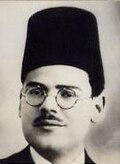
Tahar Sfar was born in 1903 in Mahdia — a coastal city on the Sahel whose identity was shaped by one of the most remarkable chapters in medieval Islamic history. Mahdia had been the founding capital of the Fatimid dynasty in the tenth century — the city from which the Fatimids had launched their eventual conquest of Egypt and their transformation into a caliphate whose influence stretched from North Africa to the Levant. The city's ancient origins in this Islamic imperial tradition gave it a specific cultural character, a pride in its historical depth that distinguished it from the coastal communities whose identity was more closely shaped by their commercial engagement with European traders.
The educational formation available to a talented young man in Mahdia in the first decade of the twentieth century combined two quite different intellectual traditions. The Zeitouna mosque-university in Tunis — the oldest university in the Arab world, founded in 737 CE — remained the primary institution of Islamic higher education in Tunisia, training scholars in the classical Islamic sciences that had sustained Tunisian intellectual life through the Ottoman period and into the French Protectorate. Alongside this traditional formation, the French educational system that the Protectorate had built offered a different pathway — the schools and lycées that taught in French, using French pedagogical methods and French intellectual frameworks, and that led to the professional credentials of the French university system.
The figures who navigated both systems — who combined a grounding in the Islamic scholarly tradition with the professional credentials of French legal or medical training — were among the most intellectually complete of the Tunisian nationalist generation. They could engage with the French colonial administration on its own institutional terms while maintaining the cultural and religious identity that connected them to the Tunisian community they sought to represent. Sfar was among those who held both dimensions most fully, and the combination gave his political and administrative work a breadth that more narrowly formed colleagues could not always achieve.
The Destour Generation and the First Constitutional Nationalism
Sfar's engagement with the Destour — the Liberal Constitutional Party that was founded in 1920 as the first formal expression of Tunisian nationalist politics — placed him in the founding generation of organised Tunisian nationalism. The Destour's social base was the educated Tunisian professional class: doctors, lawyers, merchants, teachers, and the graduates of both the Islamic scholarly tradition and the French educational system who constituted the Tunisian community's most intellectually capable and most politically engaged members.
The Destour's political method was the constitutional argument — pressing the case for Tunisian rights through petitions to the French government, through contacts with sympathetic French politicians, and through the articulation of constitutional claims that engaged with the French liberal tradition's own proclaimed values. This method was appropriate to the social base it drew on and produced real but limited results in the specific political context of the 1920s and early 1930s. It was the method of men who believed that the French Republic's constitutional principles, honestly applied, required the recognition of Tunisian political rights — and who were gradually learning that the French Republic was not prepared to honestly apply those principles to its colonial relationships.
Sfar's contributions to the Destour's work in this period were those of the intellectually serious professional who could articulate constitutional arguments with precision and who could engage with the French administrative apparatus on its own terms. His legal training made him particularly effective in the specifically legal dimensions of the independence case — the arguments about what the Protectorate relationship's legal framework actually required and how France had departed from it — and his administrative experience gave those arguments a concreteness that purely theoretical advocacy could not achieve.
The 1934 Split and the Bridge Position
The founding of the Neo-Destour at Ksar Hellal in March 1934 created the most consequential division in the history of Tunisian nationalism — the split between Bourguiba's mass mobilisation approach and the Destour's constitutional method. For a figure of Sfar's generation and intellectual formation, the split created a positioning challenge: the constitutional tradition he had been part of was being challenged by a younger generation whose political method he understood and whose political objectives he shared, but whose specific confrontational approach toward French authority he was also equipped, by professional experience, to assess realistically.
His bridge position — maintaining credibility with both the Destour tradition and the new Neo-Destour — was less dramatic than the partisan commitments of either camp but was politically valuable in a movement that needed as much internal coherence as the split had left available. The Tunisian nationalist movement's ability to maintain some degree of connection between its constitutional and its mass mobilisation wings — to prevent the split from becoming a complete rupture that the French colonial government could exploit — was partly a function of the bridge figures who refused to identify entirely with either camp.
His administrative work within the Protectorate government during this period added a dimension to his bridge position that was unique among the nationalist figures of his generation. As one of the first Tunisians to hold senior administrative positions in an administration that was designed for French governance, he was simultaneously an achievement that demonstrated Tunisian administrative capacity — a walking argument against the colonial premise that Tunisian people needed French administration — and a presence within the system that gave him specific institutional knowledge that the independence movement's political work required.
The Early Death and What It Foreclosed
Tahar Sfar died in 1942 at thirty-nine years of age. The cause of his death — illness, in the conditions of wartime Tunisia — cut short a career whose trajectory suggested significant contributions to come. He died before the North African campaign of 1942–1943 transformed Tunisia's political landscape through the direct experience of the war; before the post-war political openings that accelerated the independence campaign; before the critical years of 1951–1956 when the independence movement reached its most intense confrontation with French colonial authority; and before the independence of 1956 that his generation's work had made possible.
The question of what Sfar would have contributed had he lived — what role he would have played in the Youssefist crisis of 1955–1956, whether his bridge position would have offered a path to resolution that the factional combat between Bourguiba and Ben Youssef prevented, what administrative or diplomatic role he would have held in the independent state — is one of the more genuinely open counterfactuals of Tunisian independence history. The bridge figures who maintain coherence within divided movements are among the most valuable and the least replaceable of political actors, and Sfar's death removed from the Tunisian nationalist movement a figure whose specific combination of constitutional legal training, administrative experience, and cross-factional credibility was not easily replaced.
He is remembered in Tunisia as a figure of the founding generation — one of the first educated Tunisians to engage with national politics in an organised way, one of the first to hold significant administrative positions within the colonial framework that his career was working to replace, and one of the earliest advocates for the Tunisian self-governance that independence eventually achieved. His early death means that his place in the historical narrative is smaller than his abilities deserved, and that the specific questions about what he would have done with more time remain open in ways that the careers of the men who survived to see independence cannot.
The Tunisia of 1956 — the independent Tunisia whose constitution was written and whose institutions were built by Bourguiba, Ben Youssef's rivals, Slim, Matri, Ladgham, and the others who lived to see independence — was built on the ground that Sfar and his generation had prepared. The constitutional arguments they had made, the administrative competence they had demonstrated, the organisational work they had done in the difficult conditions of the early Protectorate years were the foundation on which the mass independence movement of the 1950s had operated. Sfar did not live to see it. He had done his part of the work.