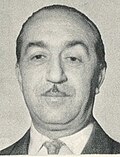
At a Glance
Tunis, Law, and the Making of an International Lawyer
Mongi Slim was born on 11 April 1908 in Tunis — into the generation whose political formation occurred in the interwar years, when the French Protectorate over Tunisia was fully established and when the first organised expressions of Tunisian political will were beginning to emerge through the Destour and subsequently the Neo-Destour. His legal education — conducted through the French system that the Protectorate had made the pathway to professional credentials — gave him the specific skills that his subsequent diplomatic career would deploy in international forums whose languages, procedures, and institutional logics were those of the European legal tradition that the French educational system had transmitted.
The lawyer-diplomat was a recognisable type in the independence movements of the mid-twentieth century — the professional trained in European legal traditions who deployed those traditions against the colonial order whose institutions had generated them, arguing in the procedural languages of international law and constitutional argument that the colonial relationship violated the very principles that European legal culture claimed to uphold. Slim was an exceptionally accomplished version of this type — someone whose mastery of French legal language, of international institutional procedure, and of the constitutional arguments for self-determination was sufficient to allow him to operate at the highest levels of international diplomacy rather than merely in the domestic arena of nationalist politics.
His engagement with the Neo-Destour independence movement placed his legal skills in the service of the independence campaign's international dimensions — the work of presenting Tunisia's case to the international community in ways that generated diplomatic pressure on France and built the international solidarity that the independence movement needed. This work was less visible than the mass organising that Bourguiba and the party apparatus were conducting within Tunisia, but it was no less essential to the independence campaign's eventual success. The international community's engagement with the Tunisian question — the UN General Assembly debates, the Security Council discussions, the diplomatic representations to the French government — was shaped significantly by how convincingly Tunisia's case was made in international forums, and Slim was the person who made it most effectively.
The United Nations and Tunisia's International Case
Tunisia's engagement with the United Nations before its independence was necessarily indirect — it was not a member state and could not participate in UN proceedings as a full participant. But the Neo-Destour's diplomatic strategy included the UN as a forum in which the legitimacy of the French Protectorate could be contested and in which international support for Tunisian self-determination could be built. Slim's role in representing Tunisia's case in this forum — presenting arguments to the General Assembly's committees, engaging with the diplomatic representatives of states sympathetic to the independence cause, and developing the institutional relationships that would eventually support Tunisia's application for UN membership — was among the most consequential diplomatic work of the independence campaign.
The specific arguments that Tunisia's case required were arguments that Slim was uniquely equipped to make. The case for Tunisian self-determination involved: the legal argument that the Protectorate relationship had never extinguished Tunisian sovereignty but had merely suspended it under conditions that the Protectorate power had now violated; the constitutional argument that the French commitment to self-determination expressed in the Atlantic Charter and the UN Charter applied to Tunisia as much as to any other people; and the political argument that the continuation of the Protectorate was generating a level of instability and violence that France's own interests as well as Tunisia's made unsustainable. These were arguments that a trained lawyer with deep knowledge of international legal precedent and constitutional theory was better placed to make than a purely political advocate.
Tunisia was admitted to the United Nations on 12 November 1956 — the same year as independence — and Slim became its permanent representative to the organisation. The position gave him the institutional platform that his diplomatic skills had been preparing him for, and his performance in the role rapidly established him as one of the UN's most capable and most respected voices among the newly independent states that were transforming the organisation's character.
The 1961 General Assembly Presidency: When Africa Spoke for Itself
The sixteenth session of the United Nations General Assembly, which opened in September 1961, was one of the most historically significant in the organisation's history. The previous year — 1960, the Year of Africa — had seen seventeen African states join the UN in a single year, transforming the organisation's membership from an institution dominated by European and American voices into one in which the newly independent nations of the developing world constituted a majority. The political implications of this demographic transformation were profound: the UN's agenda, its voting patterns, and its institutional culture were all being reshaped by the presence of states whose experience of international relations had been shaped by colonialism rather than by the European power politics that had founded the organisation.
Slim's election as President of the General Assembly for the sixteenth session was the institutional expression of this transformation. He was the first African and the first Arab to hold the position — a landmark that was immediately recognised as significant by both the newly independent states that had elected him and the established powers that were adjusting to the changed dynamics that the wave of African independence had created. His election was not merely symbolic: the General Assembly president's role — presiding over debates, managing the procedural complexities of a 104-member body, representing the Assembly's collective authority — required the specific combination of institutional knowledge, procedural skill, and personal authority that Slim's career had developed.
The session he presided over was one of the most contentious of the Cold War era. The Congo crisis — the collapse of the post-independence Congolese state, the murder of Patrice Lumumba, the UN peacekeeping operation whose management had produced the Soviet Union's fierce opposition to Secretary-General Dag Hammarskjöld (who died in a plane crash in September 1961, during Slim's presidential tenure) — dominated the session's political attention. The Berlin crisis, the nuclear testing controversy, and the beginning of serious decolonisation debates in southern Africa were all on the Assembly's agenda. Slim managed these contentious debates with the procedural skill and the diplomatic intelligence that the Assembly's procedural rules required and that his legal training had developed — maintaining the dignity and the authority of the institution while navigating political disputes of extraordinary complexity.
Foreign Minister and the Management of Independence
Slim's service as Tunisia's Foreign Minister — a role he held alongside his UN responsibilities at various points in the independence period — placed him at the centre of the new state's most consequential bilateral and multilateral relationships. The management of the post-independence relationship with France was among the most delicate of these challenges: Tunisia had achieved independence through negotiation rather than armed confrontation, and the maintenance of a workable relationship with France — which remained Tunisia's largest trading partner, the source of much of its technical assistance, and a political presence of continuing importance — required diplomatic skill of the kind that Slim had demonstrated in the independence campaign itself.
The specific issues that the Franco-Tunisian relationship generated in the early independence period were numerous and often acute: the French military's continued presence at the Bizerte naval base, which Tunisia demanded the evacuation of and France resisted surrendering; the management of the French settler community in Tunisia; the economic arrangements governing trade and investment; and the broader political relationship between a former colonial power and its former dependency in the specific context of a North Africa that was also experiencing the Algerian independence war whose conduct generated its own bilateral complications between France and Tunisia.
The Bizerte crisis of 1961 — in which Tunisian forces attempted to blockade the French naval base and French forces responded with military action that killed hundreds of Tunisian soldiers and civilians — was the most acute expression of these bilateral tensions during Slim's tenure. Managing the international dimensions of a crisis in which Tunisia was both victim and active participant, while simultaneously presiding over the UN General Assembly, required a diplomatic agility that Slim demonstrated with a distinction that established his reputation as one of the outstanding diplomats of the post-colonial era.
The Secretary-General That Wasn't: A Counterfactual in African History
By the late 1960s, Slim's reputation within the UN system and among the international diplomatic community was sufficiently distinguished that his name was being seriously discussed as a candidate for Secretary-General — the position that U Thant of Burma had held since 1961 and that would need to be filled when his term ended. As the first African and Arab General Assembly president, as one of the most experienced diplomats from the newly independent world, and as a figure whose institutional knowledge and personal standing were widely acknowledged, Slim was a natural candidate for a position whose holder would need to represent the claims and the perspectives of the post-colonial majority of UN members.
His death on 27 August 1969 at sixty-one years of age ended this possibility. The Secretary-General position would not be held by an African until Boutros Boutros-Ghali of Egypt was appointed in 1992 — twenty-three years after Slim's death — and the question of what he might have brought to the role, in the specific period of the early 1970s when the UN was navigating the decolonisation of southern Africa, the management of the Middle East conflict, and the broader tensions of the Cold War, is a counterfactual that his admirers have continued to contemplate.
He died in Tunis, in the country whose independence cause he had championed in the international forum that most completely represented the post-war aspiration for a world governed by law and collective security. His career had demonstrated, with unusual completeness, what a small country's diplomatic excellence could achieve in the international institutions whose deliberations shaped the framework within which all countries' security and development were pursued. Tunisia was not a great power; it was not a country of vast resources or large population. What it had produced, in Mongi Slim, was a diplomatic intelligence and a personal authority that commanded the respect of the world's largest deliberative body — and that, for the period of his career, put Tunisia's voice among the most consequential in the room.