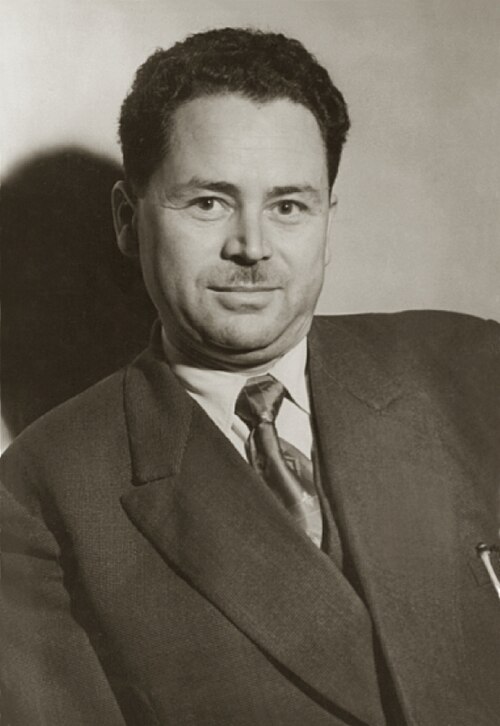
At a Glance
El Abassia, Sfax, and the Formation of a Working-Class Organiser
Farhat Hached was born on 2 February 1914 in El Abassia, a village in the Sfax region of the Sahel — the coastal plain of central Tunisia whose olive groves, fishing ports, and merchant traditions had shaped the social and economic character of the region for centuries. The Sfax of the early twentieth century was a city in the process of transformation — its traditional economy of olives and fishing was being integrated into the colonial commercial system that French capital was building, generating new forms of employment and new forms of exploitation that the existing social arrangements of the region had not anticipated.
His family background was working class in a specific sense — not the urban proletariat of the factory towns that European industrialisation had produced, but the labouring class of a mixed agricultural, commercial, and maritime economy whose workers experienced the colonial economic order through the specific conditions of Tunisian labour in olive production, port work, and the service industries that the colonial city was generating. This background gave Hached a political formation rooted in material experience rather than intellectual sympathy — he knew what colonial labour exploitation felt like from the inside, and this knowledge gave his trade union work a grounding in specific human reality that the Neo-Destour's predominantly middle-class leadership, whatever its genuine commitment to Tunisian independence, could not entirely replicate.
His early engagement with trade unionism came through the existing colonial union structures — the French Confédération Générale du Travail and its Tunisian affiliates — that organised some Tunisian workers alongside French workers within the framework of metropolitan French labour politics. This experience gave him both the organisational skills that trade unionism required and the understanding of its limitations as a vehicle for specifically Tunisian workers' interests. The CGT's political priorities were set in Paris, its leadership was predominantly French, and its relationship to the colonial question was complicated by the presence within its membership of French metropolitan workers whose interests were not always aligned with those of the Tunisian workers the colonial economy exploited alongside them.
Founding the UGTT: Independence Within the Independence Movement
The founding of the Union Générale Tunisienne du Travail in December 1944 was one of the most consequential organisational acts in the history of Tunisian civil society — the establishment of an independent Tunisian trade union federation that was free from metropolitan French control and that could represent specifically Tunisian workers' interests within a specifically Tunisian institutional framework. The timing — in the immediate aftermath of the Second World War, when the political landscape of the colonial world was being reshaped by the war's disruption of European imperial legitimacy and by the Atlantic Charter's promises of self-determination — was not accidental. The political moment made possible what the colonial administration's active resistance had previously prevented.
The colonial government's opposition to the UGTT was immediate and sustained. The French administration preferred that Tunisian workers remain within the CGT's structure, where their political influence was diluted and their specifically nationalist concerns were subordinated to the metropolitan organisation's own political priorities. An independent Tunisian trade union — one that could build mass working-class support for the independence movement, that could mobilise strikes and work stoppages as tools of political pressure on the colonial regime, and that could represent Tunisia's labour interests in international forums — was exactly the kind of civil society organisation that the colonial administration was most concerned to prevent.
Hached built the UGTT against this opposition through a combination of organisational energy, political intelligence, and the genuine appeal that a specifically Tunisian labour organisation had for workers whose experience of the colonial economy gave them concrete reasons to support an institution that was organised in their interests rather than in the interests of a French metropolitan labour movement with its own priorities. The UGTT grew rapidly through the late 1940s and early 1950s, reaching into sectors of the Tunisian economy — port workers, transport workers, agricultural labourers, construction workers — that the colonial union structures had never adequately organised, and building a mass base that made it one of the most genuinely representative civil society organisations in the country.
International Labour and the ICFTU: Bringing Tunisia to the World
Hached's decision to affiliate the UGTT with the International Confederation of Free Trade Unions at the ICFTU's founding in 1949 was a diplomatic achievement of the first order — and one whose consequences for the Tunisian independence campaign extended well beyond the labour movement itself. The ICFTU, established as an alternative to the Soviet-controlled World Federation of Trade Unions, brought together the major trade union federations of the Western democratic world — the British TUC, the American AFL, the West German DGB, and their counterparts across Western Europe — in an international organisation with genuine political weight and with connections to the governments and the public opinion of the most powerful countries in the democratic world.
The UGTT's ICFTU membership gave Hached — and through him, the Tunisian independence movement — an institutional platform in the international community that the Neo-Destour's diplomatic work alone had not been able to create. Through the ICFTU, Hached was able to bring the specific realities of Tunisian working-class experience under colonial rule to the attention of international audiences whose sympathy for the independence cause was genuine but whose knowledge of what that cause involved was limited. He spoke at international labour conferences about the conditions of Tunisian workers — the wage differentials between French and Tunisian workers doing equivalent work, the exclusion of Tunisian workers from the better-paid industrial and professional roles that French workers monopolised, the use of security legislation to suppress trade union organisation — in terms that gave specific human content to the abstract political arguments for independence.
His effectiveness as an international advocate made him a target for the colonial forces that were most threatened by the independence movement's growing international support. A Tunisian trade union leader who could speak at international conferences, who had relationships with senior figures in the British and American labour movements, and who was building the institutional connections that gave the Tunisian independence cause international civil society support was a more dangerous adversary than a purely domestic political figure whose activities could be contained within the colonial territory's information environment.
Labour Movement as Independence Movement: The Strategic Relationship
The relationship between the UGTT and the Neo-Destour was one of the most carefully managed strategic relationships in the Tunisian independence campaign — carefully managed precisely because it was both essential to the campaign's success and potentially destructive to both organisations if it were managed poorly. Hached understood that the UGTT's value to the independence movement depended on its maintaining a genuine independence from the Neo-Destour — on its being seen, by international labour organisations and by the Tunisian working class itself, as a trade union rather than as a party auxiliary. An UGTT that was merely an instrument of Neo-Destour political direction would have lost its credibility with the international labour movement that gave it institutional leverage, and would have forfeited the specific representational legitimacy among Tunisian workers that distinguished it from a political organisation.
At the same time, the UGTT's political alignment with the independence cause — its willingness to mobilise its members in strikes and demonstrations that served the independence movement's political objectives alongside their specifically labour objectives — was the contribution that made the alliance with the Neo-Destour consequential. General strikes were among the most effective tools of political pressure available to the independence movement, and the UGTT's ability to call and sustain them was a function of its genuine organisational strength among Tunisian workers rather than of any directive from the Neo-Destour's leadership.
Hached navigated this relationship with considerable political sophistication — maintaining the UGTT's organisational independence and its specific trade union identity while cooperating with the independence movement at the strategic level. Bourguiba respected this independence, understanding that the UGTT's value to the independence cause was a function of its genuine autonomy rather than of its subordination to the party's direction. The relationship worked because both sides understood what the other required.
The Red Hand and the Assassination: 5 December 1952
The Red Hand — Main Rouge — was the organised expression of the French settler community's most extreme resistance to Tunisian independence. Operating as a terrorist organisation in the early 1950s, it targeted the most effective figures of the independence movement — those whose organisational work, diplomatic connections, or symbolic significance made their elimination most damaging to the independence cause. It had conducted assassinations in both Tunisia and Morocco, operating in a political space that the colonial security apparatus tolerated and in some dimensions facilitated, reflecting the colonial government's ambivalence about the independence movements it was trying simultaneously to suppress and negotiate with.
Hached was the most significant figure the Red Hand killed. On 5 December 1952, he was ambushed on a road near La Marsa — the northern suburb of Tunis where he lived — and shot. He died at thirty-eight years of age, leaving a wife and children, an organisation he had built into the most powerful civil society body in Tunisia, and an international network of labour movement relationships that made his death an event of global significance rather than merely of Tunisian political consequence.
The immediate international response was overwhelming. The ICFTU condemned the assassination in the strongest terms. Trade union federations across the Western world called for investigations and for French accountability. International newspapers reported the killing as evidence of the brutal lengths to which the colonial system was prepared to go to suppress legitimate political organisation. The moral authority that the Tunisian independence movement derived from Hached's assassination — from the fact that a man who had built a trade union and spoken at international conferences had been shot on a road near his home by men whose connections to the colonial security apparatus were clear — was incalculable in its effect on international opinion.
The French government's failure to arrest and prosecute the perpetrators compounded the diplomatic damage. The Red Hand's members were not held to account; the investigations into the assassination produced no convictions; and the subsequent evidence of official knowledge and complicity — which accumulated over decades and was eventually documented in French historical scholarship — confirmed what the Tunisian independence movement had immediately claimed: that the assassination had been conducted with the knowledge if not the direct instruction of the colonial security apparatus. This confirmation, coming long after independence had been achieved, did not change the political outcome but it completed the historical record in ways that vindicated everything Hached and the independence movement had argued about the nature of French colonial rule.
The Legacy That Outlived the Assassination
Farhat Hached's assassination achieved, from the perspective of the forces that ordered it, the opposite of what they intended. They removed a specific individual who was an effective organiser and advocate. They created, in his place, a martyr whose moral authority was far greater than any living person's could be, and whose killing made the Tunisian independence cause morally compelling to international audiences that might otherwise have remained detached from the complexities of colonial politics.
The UGTT that he founded survived him and became, over the subsequent seven decades, one of the most important institutions in Tunisian civil society — the organisation that maintained, through the Bourguibist and Ben Ali authoritarian periods, enough independence from the state to provide the institutional foundation for the democratic civil society that the 2011 revolution required. The UGTT was one of the four organisations that constituted the National Dialogue Quartet — whose mediation of the 2013–2014 political crisis, when Tunisia's democratic transition appeared to be collapsing, produced the constitutional settlement that the Nobel Committee recognised in 2015. Hached's creation, maintained and defended through decades of political pressure, was the institution that ultimately won the Nobel Peace Prize as a component of the coalition that saved Tunisian democracy.
This continuity — from Hached's founding of the UGTT in 1944 to the organisation's Nobel Prize in 2015 — is the most concrete measure of what his work achieved. He built an institution whose independence and whose representational legitimacy among Tunisian workers gave it the social authority to play a decisive role in the democratic transition that his assassination, in its oblique way, had helped make both necessary and inevitable. He did not live to see it. He was thirty-eight years old when they killed him on the road near La Marsa. The institution he built lived for seventy years after him, and the democracy it helped save was the delayed fulfilment of what the independence movement he had served had always been working toward.