At a Glance
Djerba, the Law, and the Pan-Arab Vision
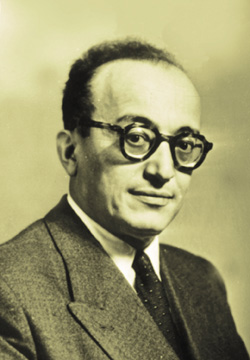
Salah Ben Youssef was born in 1907 on the island of Djerba — the flat, sandy island off Tunisia's southern coast whose character was unlike any other community in the country. Djerba's most remarkable feature was its religious diversity: the island was home to one of the oldest Jewish communities in North Africa, tracing their presence there to the destruction of the First Temple in Jerusalem; a significant Ibadi Muslim community whose version of Islam differed from the Sunni mainstream that the rest of Tunisia followed; and the Maliki Sunni majority that connected Djerba to the broader Tunisian Islamic tradition. This religious diversity, embedded in the specific commercial culture of an island that had been a crossroads of Mediterranean trade for millennia, gave Djerba a particular cultural character — cosmopolitan in a specifically Mediterranean and North African sense, more oriented toward the wider Arab and Mediterranean world than toward the specifically French-influenced culture of the Tunisian mainland's educated class.
Ben Youssef's legal training and his subsequent engagement with the Neo-Destour placed him in the institutional mainstream of Tunisian nationalism — the party that Bourguiba had built into the most powerful political organisation in the country and that was the acknowledged vehicle of the independence campaign. His rise within the Neo-Destour to the position of secretary-general made him the party's most senior organisational figure after Bourguiba, giving him both the institutional authority and the political connections that his subsequent challenge to Bourguiba's leadership required.
The years he spent in Cairo in the early 1950s — during Bourguiba's imprisonments — immersed him in the Nasserist political milieu that was transforming the political consciousness of the Arab world. Nasser's Egypt was the most powerful expression of the pan-Arab nationalism that held that the Arab states' colonial-era fragmentation was not merely an injustice to be corrected but the principal obstacle to the Arab world's collective development and dignity. The vision of a unified Arab political community capable of acting as a single force in the international arena — capable of addressing the Palestinian question collectively, of resisting the continued economic and political influence of the former colonial powers, and of building the kind of modern developmental state that national sovereignty was supposed to enable — was a vision that Ben Youssef embraced with a genuine conviction that distinguished his political identity from Bourguiba's more pragmatic Tunisian nationalism.
The Autonomy Agreement and the Crisis of 1955
The autonomy agreement that France and Tunisia negotiated in 1955 — the arrangement that gave Tunisia significant self-governance in domestic affairs while leaving French control over foreign policy, defence, and some administrative functions — was, from Bourguiba's perspective, the best available agreement in the specific circumstances of 1955. It was a step toward independence rather than independence itself, but it was a real step that created the institutional conditions from which full independence could be negotiated. Bourguiba's calculation — that the achievable agreement now was better than the unachievable complete independence immediately — reflected his specific assessment of what France was prepared to concede and what the costs of continuing armed confrontation were.
Ben Youssef's denunciation of the agreement — delivered immediately on his return to Tunisia in September 1955 from Cairo — was that it was a capitulation, not a step. His argument was that Bourguiba had accepted an arrangement that consolidated French control over the most consequential dimensions of Tunisian sovereignty while offering the appearance of self-governance in domestic matters that France had already conceded were politically unsustainable. The appropriate response, in Ben Youssef's view, was not to accept this arrangement and build on it toward full independence but to reject it and maintain the political and military pressure that the continued struggle — supported by the solidarity of the Arab world and particularly of Nasser's Egypt — could generate until France conceded genuinely complete independence.
The split that Ben Youssef's denunciation created within the Neo-Destour was the most serious internal crisis in the history of Tunisian nationalism. The party that had maintained its unity through decades of colonial repression, through Bourguiba's imprisonments, through the fellagha campaign in the mountains — this party was now divided between those who supported Bourguiba's pragmatic agreement and those who supported Ben Youssef's demand for immediate and complete independence. The division was not merely political but personal and regional — Ben Youssef drew particular support from the south of Tunisia, from activists with pan-Arab sympathies, and from the communities most influenced by the Nasserist political milieu that his Cairo years had exposed him to.
The Neo-Destour's October 1955 congress resolved the crisis in Bourguiba's favour — expelling Ben Youssef and endorsing the autonomy agreement's approach. The resolution was not clean: violence between Bourguibist and Youssefist factions had already occurred in parts of the country, and the expulsion of Ben Youssef left a significant portion of the independence movement's activist community feeling that the internal democratic process of the party had been used against them. The subsequent political history of the Bourguibist state — its progressive suppression of internal dissent, its elimination of alternative political voices — has made it impossible to assess the October 1955 congress purely as an institutional process whose outcome reflected the genuine preferences of the party's membership.
Exile, Resistance, and the Alternative Tunisia
Ben Youssef's flight to Egypt after his expulsion from the Neo-Destour placed him in the political space that Nasser's pan-Arab nationalism had created — the Cairo of the late 1950s that was the most important centre of anti-colonial and pan-Arab political activity in the Arab world. From Cairo, he continued to press his alternative vision of Tunisian independence — arguing that the Bourguibist settlement was incomplete, that the Tunisia being built was a client state of the Western powers rather than a genuinely sovereign nation, and that the political suppression of internal dissent within Tunisia demonstrated that Bourguiba's modernisation project was built on the denial of the political rights it claimed to be creating.
The armed groups that Ben Youssef supported in the Tunisian interior — the remnants of the fellagha who had not accepted the Bourguibist settlement — maintained a guerrilla campaign against the new Tunisian state that was eventually suppressed by the Tunisian security forces. The campaign was unsuccessful militarily and politically — it did not destabilise the Bourguibist state, it did not generate the international sympathy that Ben Youssef hoped it would, and it provided the Bourguibist government with a security justification for the political repression that it was simultaneously developing for reasons unrelated to any genuine security threat.
His subsequent move to Germany — as the Egyptian political context changed and as the practical base of his exile activity shifted — placed him in the specifically West German environment that the Cold War had created as a site of political exile for figures from countries on both sides of the superpower divide. Frankfurt in the early 1960s was a city of competing exile communities, intelligence operations, and the specific vulnerabilities that exile created for political figures who were known adversaries of sitting governments with the resources and the will to reach them abroad.
Assassination: The Frankfurt Hotel and the Unanswered Question
The killing of Salah Ben Youssef in his Frankfurt hotel room on 12 August 1961 was a professional assassination — conducted by gunmen who escaped without arrest, without investigation producing public results, and without any government acknowledging responsibility. The Tunisian government denied involvement. The West German authorities conducted an investigation that produced no convictions. The perpetrators were never publicly identified or prosecuted.
What subsequent historical research has established is that the connections between the Tunisian security services and the assassination are credible and documented — that the government that had the strongest motive to silence Ben Youssef permanently also had the operational capacity, through its security services, to conduct the kind of operation that killed him, and that the specific evidence pointing toward Tunisian government involvement is more substantial than the official denials acknowledged. The assassination occurred in the same year as the Bizerte crisis — the most acute moment of Tunisian-French bilateral tension — and at a time when the Bourguibist state was simultaneously managing an external challenge and an internal political consolidation that the continued existence of a credible alternative leadership in exile complicated.
Ben Youssef's assassination closed the most consequential internal battle in Tunisian independence politics. With his death, the alternative vision he represented — the pan-Arab, immediately and unconditionally independent Tunisia that he had argued for against Bourguiba's pragmatic negotiated settlement — lost its most compelling institutional voice. The Bourguibist settlement that he had opposed became, definitively, the Tunisia that was built. The question of whether his alternative would have produced a better outcome — more democratic? more economically integrated with the Arab world? more resistant to the kind of Western dependency that his critique had identified? — is a question that the historical record cannot definitively answer, but that the trajectory of the Bourguibist state has kept alive as a legitimate alternative possibility.
The Rehabilitation and the Unresolved Question
Ben Youssef's posthumous rehabilitation in Tunisian historical memory has been gradual and incomplete. The Bourguibist state's official narrative — that he was a traitor to the independence cause who had endangered independence by splitting the movement at its most critical moment — was the dominant account through the decades of Bourguibist and Ben Ali governance. His name was not honoured in public spaces; his contribution to the independence movement was not acknowledged in official history; and the fact of his assassination was not discussed publicly in terms that acknowledged potential government responsibility.
The 2011 revolution, and the reassessment of the Bourguibist state's legacy that the revolution enabled, created space for a more complex historical view. Ben Youssef's pan-Arab convictions, his opposition to what he saw as a capitulation in the 1955 agreement, and his continued resistance from exile have been reassessed as legitimate political positions rather than as treason — as the expression of a genuine alternative vision of Tunisian independence rather than as mere disruption of a movement whose success required his defeat. Monuments have been erected in his name in some Tunisian cities; historical accounts have acknowledged his contribution more fully than the Bourguibist narrative allowed.
The assassination remains the most uncomfortable part of the rehabilitation process — the acknowledgement that the government whose legacy is being partially preserved through the rehabilitation of Bourguiba's achievement also ordered or facilitated the murder of the man who had challenged that achievement most seriously. The complexity is irreducible: the Bourguibist state that built the Personal Status Code, the educational system, and the specific secular Tunisian character that the 2011 revolution was fighting to democratise was also the state that imprisoned its opponents, manipulated elections, and killed, in a Frankfurt hotel room, the man who had dared to imagine a different Tunisia. Both of these things are true, and no rehabilitation of either figure can make them less than both true simultaneously.