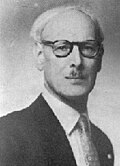
At a Glance
Tunis Under the Protectorate: The Formation of a Medical Nationalist
Mahmoud Matri was born in 1897 in Tunis — in the years when the French Protectorate, established in 1881, was still consolidating its administrative and cultural presence over a Tunisian society that had its own deep institutional roots and its own political traditions. The Protectorate framework that France had imposed was legally distinct from the direct annexation that Algeria had experienced — Tunisia retained its Bey, its traditional Islamic institutions, and a formal Tunisian sovereignty that the Protectorate relationship had suspended rather than abolished. This legal fiction of maintained sovereignty, combined with the actual reality of French administrative, commercial, and cultural dominance, created the specific political situation within which the Destour's constitutional argument would be made: Tunisia had existing constitutional rights that the Protectorate had effectively nullified, and the restoration of those rights was the first and most defensible political demand that Tunisian nationalism could make.
Matri's path to medical education in France was the path of the exceptional — the very small number of Tunisian students who navigated the French educational system successfully enough to reach university level and who then obtained the degrees that placed them in the highest tier of the Tunisian educated class. Medical training in particular required both the academic preparation and the financial resources that only a small minority of Tunisian families possessed in the early twentieth century. His emergence from this process as a trained physician gave him a professional standing that was, in the Tunisian social context of the 1910s and 1920s, almost uniquely authoritative — a Tunisian doctor who had studied in Paris was not merely educated but was the product of the most demanding professional training that the colonial educational system offered.
This professional formation shaped his political style in ways that distinguished it from both the popular mass organising that Bourguiba would later deploy and the purely intellectual constitutional advocacy of some of his Destour colleagues. A doctor's relationship to his patients — the trust placed in professional knowledge, the obligation to provide honest assessment, the commitment to the patient's welfare over institutional comfort — was a model of professional responsibility that Matri carried into his political work. He was known for directness, for the willingness to say what he believed regardless of whether it was politically convenient, and for a personal integrity that his political opponents acknowledged even when they disagreed with his positions.
The Destour and the First Generation of Organised Tunisian Nationalism
The founding of the Destour — the Hizb al-Hurr al-Dusturi al-Tunisi, the Liberal Constitutional Party — in 1920 was the first significant attempt to organise Tunisian political will in a formal institutional structure rather than through the traditional channels of Bey's court politics and Islamic establishment advocacy. The timing reflected the specific political moment that the First World War had created — the war's disruption of European imperial authority, the Wilsonian rhetoric of self-determination, and the mobilisation of Tunisian soldiers in the French army who had fought and died for a France that denied their homeland political rights were all factors in the political consciousness that produced the Destour's founding.
Matri's co-founding role placed him in the group of doctors, lawyers, and educated notables who constituted the party's founding generation. The Destour's social base was the Tunisian upper-middle class — the families whose resources and whose engagement with French education had produced professionals and merchants who understood the colonial system's workings well enough to articulate constitutional arguments against it. This was not a mass movement; it was a notables' organisation whose political method was the petition, the delegation, and the constitutional argument rather than the strike, the boycott, and the mass demonstration.
The Destour's specific demands centred on the restoration and implementation of Tunisia's pre-Protectorate constitutional framework — the Fundamental Pact of 1857 and the constitution of 1861, which had established certain rights for Tunisian subjects and which the French Protectorate had effectively suspended. The argument that France was violating its own stated legal framework for the Protectorate relationship by denying these rights was a constitutional argument that engaged with French liberal principles on their own terms — the kind of argument that a generation trained in French legal and political traditions was uniquely equipped to make.
The Destour's political achievements in its first decade were modest by the standards of the independence it eventually wanted — some French acknowledgement of Tunisian political concerns, some incremental expansion of Tunisian representation in advisory bodies, some slowing of the most aggressive aspects of French settler colonisation of Tunisian land and resources. These achievements were real but were insufficient to the full political transformation that Tunisian nationalist consciousness was increasingly demanding. The gap between what the Destour's constitutional method was producing and what the political situation was requiring was the gap that Bourguiba's generation would eventually fill by a different method.
The 1934 Split and the Transition to Elder Statesman
The founding of the Neo-Destour at Ksar Hellal in March 1934 — Bourguiba's breakaway from the Destour that demanded mass politics, immediate independence, and a willingness to confront French authority directly rather than petitioning it diplomatically — created the defining split in the history of Tunisian nationalism. The split was generational as much as strategic: the Neo-Destour's founders were younger men whose political formation had occurred in the specific context of the early 1930s, with its combination of French political exhaustion, rising anti-colonial consciousness in the international milieu, and the specific model of Gandhi's mass civil disobedience that had demonstrated what organised popular pressure could achieve against a colonial power.
Matri, as a senior Destour figure of the founding generation, was associated with the more moderate wing of the movement that the Neo-Destour's founders explicitly rejected. The criticism that Bourguiba and his colleagues directed at the Destour's leadership — too conservative, too deferential to the French political establishment, too willing to accept incremental reform when independence was what the situation required — was not directed at Matri personally in the same way it was directed at other Destour figures, but it was the context within which his subsequent political positioning had to be understood.
His navigation of the post-1934 political landscape — the years when the Neo-Destour progressively demonstrated its superior mass mobilisation capacity and when the Destour's conservative constitutionalism was increasingly marginalised within the independence movement — required the political intelligence of an experienced figure who understood that the independence goal was shared even when the methods differed, and who could maintain his dignity and his political relevance without either subordinating himself completely to the Neo-Destour or maintaining a futile competition with it. His eventual positioning as an elder statesman of Tunisian nationalism — acknowledged by both the Neo-Destour leadership and the wider political community for his founding contribution, without the specific organisational loyalty to the Neo-Destour that its junior members expressed — was the appropriate political home for a figure of his generation and his standing.
The Constituent Assembly: Presiding Over the Constitution
The National Constituent Assembly elected in March 1956 was the body charged with writing the constitution of independent Tunisia — the institutional expression of the transition from Protectorate territory to independent republic. Its work was constitutionally consequential in the most direct sense: it would determine what kind of state independent Tunisia would be, how power would be distributed between the presidency, the government, and the legislature, what rights Tunisian citizens would enjoy, and what relationship would exist between the state and the Islamic traditions that the Tunisian constitution was simultaneously embracing as cultural heritage and constraining as political force.
Matri's appointment as the Assembly's first president was an act of political acknowledgement — recognition that the founding generation's constitutional advocacy had been vindicated by the independence it had always sought, and that the appropriate symbolic head of the body writing the independent state's constitution was someone who had been arguing for Tunisian constitutional self-governance since 1920. The appointment was also, in the specific political context of 1956, a gesture of political inclusion — the acknowledgement that the independence achieved by the Neo-Destour's mass movement was the fulfillment of the constitutional project that the Destour's founding generation had begun, and that the republic's constitutional foundation should carry the moral weight of that longer tradition.
He presided over an Assembly whose debates were complex and whose political direction was ultimately determined by the Neo-Destour's dominant position — the party that had won the elections and that controlled the government was also, inevitably, the party whose political vision shaped the constitutional settlement. The 1959 constitution that the Assembly eventually produced established the presidential republic that Bourguiba would inhabit, with the concentration of executive authority that would eventually enable the authoritarian practices his presidency developed. Whether Matri had concerns about the constitutional framework's presidential concentration — whether the elder constitutional democrat who had argued for decades for Tunisian self-governance through constitutional institutions had reservations about a constitution that gave so much power to a single executive — is not fully recoverable from the historical record. What is clear is that he presided over the Assembly's work with the dignity and the constitutional seriousness that his career had always expressed.
The Doctor Who Founded the First Party
Mahmoud Matri's place in Tunisian history is as a founder — one of the men who organised the first formal expression of Tunisian nationalist political will and who sustained that expression through the difficult years when the French colonial government's response was suppression and the nationalist movement's own internal divisions were as much a challenge as the colonial power's opposition. His specific contribution was not the mass mobilisation of the Neo-Destour or the diplomatic brilliance of Bourguiba's international advocacy; it was the establishment of the institutional form of Tunisian nationalism — the founding of a party, the articulation of a constitutional programme, the creation of the organisational space within which the subsequent development of the independence movement could occur.
The Constituent Assembly presidency that concluded his active political career was the appropriate closure — the constitutional project that he had begun in 1920 arriving, thirty-six years later, at the actual constitution of an independent state. He did not live to see the democratic consolidation that the 2011 revolution eventually produced, dying in 1972 in the middle of the Bourguibist state's authoritarian consolidation. But the constitutional tradition he had represented — the argument that Tunisia's self-governance should be grounded in constitutional institutions and legal rights rather than in personal authority — was the tradition that the revolution eventually vindicated, however obliquely and however much delayed.
He died in 1972, seventy-five years old, in the Tunisia he had spent his adult life working to create. The republic whose constitution he had presided over writing was well established, even if the specific constitutional balance that the founding generation had sought — with genuine institutional checks on executive power — was being progressively eroded by the presidential consolidation that the Bourguibist state was pursuing. His contribution to its founding was acknowledged at his death as the contribution of a pioneer whose work had made everything that followed possible, even when what followed did not entirely honour what he had sought to establish.