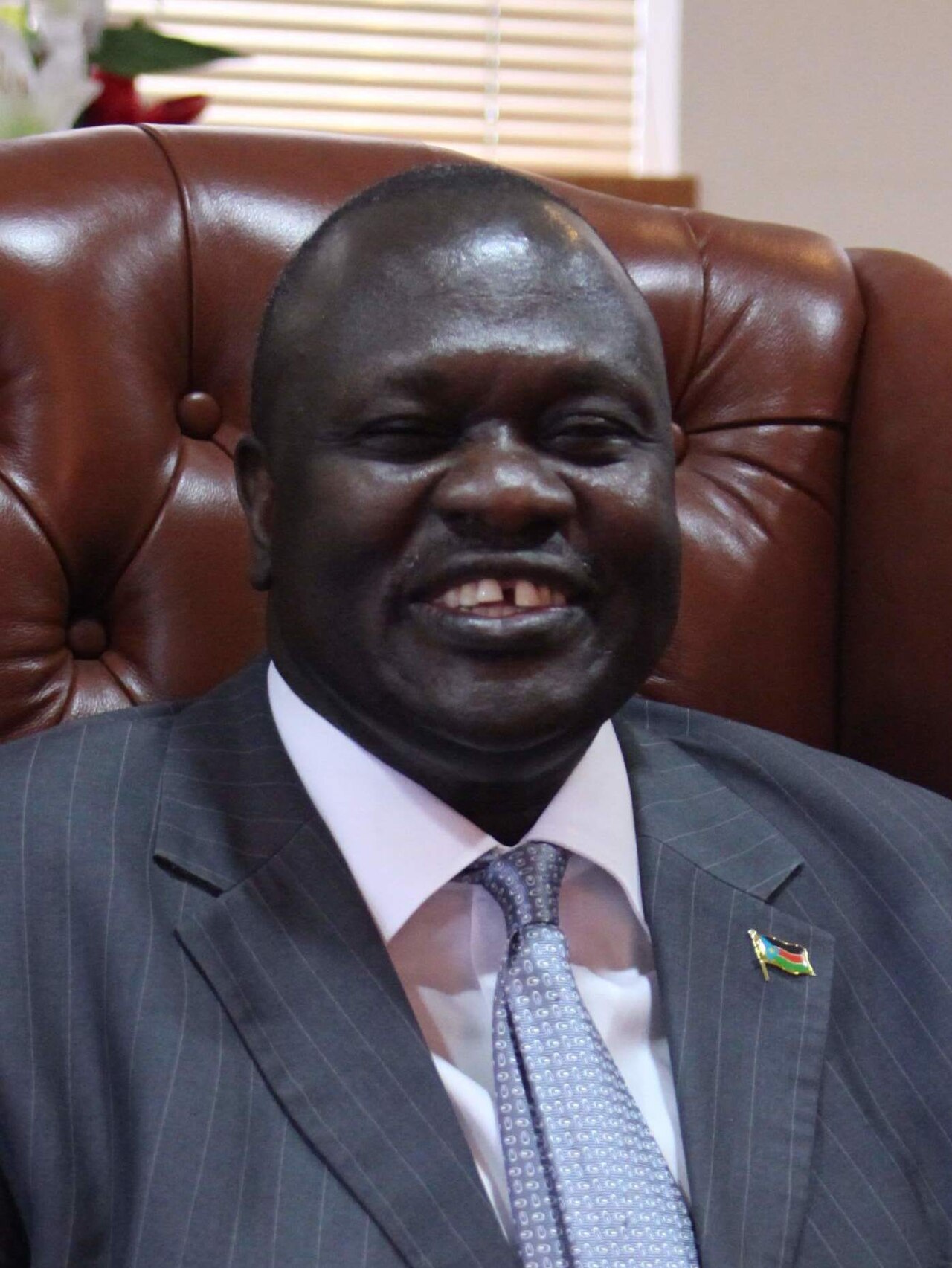
At a Glance
The Weight of 1991: A Rupture That Never Fully Healed
Any honest account of Riek Machar's place in the history of the South Sudanese liberation movement and the independent state it produced has to begin with August and October 1991, because everything that followed — the fragmentation of the liberation movement, the Khartoum Agreement, the uneasy reunification, the Vice Presidency, the 2013 civil war, the peace agreements and their collapses — was shaped by the specific rupture that the 1991 split and its immediate consequences created in the social fabric of South Sudanese political life. The Bor massacre is not merely one event among many in a career of complex political choices; it is the event whose shadow fell over everything that came after and whose consequences the independent state of South Sudan was still living with decades later.
To understand the 1991 split in its full context requires acknowledging the genuine elements of the case that Machar, Lam Akol, and Gordon Kong made when they announced their opposition to Garang's leadership. Garang's command of the SPLA had been genuinely authoritarian — he had imprisoned, and in some cases killed, commanders who challenged his authority, and the movement's internal political culture was organised around his personal dominance rather than the kind of collective decision-making that a more institutionally mature liberation movement would have developed. The strategic argument that the SPLA should explicitly commit to southern independence rather than Garang's New Sudan framework was also, as the subsequent referendum of 2011 would demonstrate, closer to what the south's population actually wanted. And the accusation that Garang was using the movement's resources to pursue personal political ambitions rather than southern political interests was not without foundation in the view of significant numbers of SPLA commanders and political figures.
But the case for the 1991 split, whatever its internal logic, does not survive the test of its consequences. The immediate military effect of the split — combined with the fall of Mengistu's Ethiopia, which deprived the SPLA of its most important external base — was to dramatically weaken the southern resistance at a moment when the Sudanese government was in a strong enough military position to exploit that weakness aggressively. The Bor massacre that followed the split within weeks was not a planned act of war against a military target but a catastrophic episode of ethnic violence in which Machar's Nuer fighters and the Nuer civilians who joined them attacked Dinka Bor communities with a ferocity that reflected the specific character of Dinka-Nuer historical relations — the cattle raiding, the territorial competition, the accumulated grievances — as much as it reflected any military strategy. The two thousand or more civilians killed at Bor were not killed because they were SPLA soldiers; they were killed because they were Dinka, and the violence was conducted with the kind of communal thoroughness that marks episodes of ethnic cleansing rather than conventional military operations.
The political consequences of the Bor massacre extended far beyond the immediate death toll. The massacre established, in the most vivid and concrete possible terms, the reality that the south's liberation movement was not a unified community of shared purpose but a political landscape in which ethnic mobilisation could be weaponised with devastating effectiveness. It created a specific pattern of Dinka-Nuer antagonism — a cycle of violence and counter-violence, of perceived grievances and demands for accountability, of ethnic military mobilisation justified by the other side's ethnic military mobilisation — that became the structural fault line of South Sudanese politics for the following three decades. When fighting broke out in Juba in December 2013, the specific form it took — Nuer presidential guard soldiers targeted by Dinka soldiers, Nuer civilians killed in Juba, the conflict spreading along ethnic lines — was the 1991 pattern repeated at national scale and with the resources of a state rather than a guerrilla movement.
The years between the 1991 split and the 2002 reunification were, for Machar, a period of political marginalisation and tactical manoeuvre that revealed both his genuine political resilience and the costs of his 1991 choices. The SSIM/A that he led had real military capacity in parts of the south, particularly in the oil-producing Unity State region where Nuer communities provided his core support base, but it lacked the international legitimacy and the political breadth that the mainstream SPLA under Garang possessed. The Khartoum Peace Agreement of 1997 gave him a formal political position but at the cost of being seen as Khartoum's instrument — a perception that damaged his standing in the southern political community and that the agreement's eventual collapse did nothing to rehabilitate. His return to the SPLM fold in 2002 was a recognition of political reality: that the CPA process was going to be driven by the SPLM and its international partners, and that a faction leader outside that process would have no meaningful role in determining the south's political future.
The Vice Presidency that Machar held from 2005 was never a comfortable fit. The formal power-sharing arrangement that the CPA framework required placed him in institutional proximity to Kiir without the trust or the aligned political interests that could have made that proximity productive. His evident ambition for the presidency — he made no serious effort to conceal his intention to contest the SPLM leadership — was a source of ongoing tension in a political system where the incumbent, backed by the Dinka community's numerical weight and by the SPLA's institutional loyalty to Garang's successor, was unlikely to surrender power through internal party competition. The dismissal of Machar and the entire cabinet in July 2013 was the formal rupture of an arrangement that had been failing in practice for years, and the events of December 2013 were the violent expression of conflicts that the institutional framework of the transitional period had managed without resolving.
The 2013 civil war and its aftermath — the displacement of four million people, the famine conditions in parts of the country, the systematic destruction of civilian infrastructure, the use of sexual violence as an instrument of military strategy — represented the worst possible outcome of the political trajectory that the 1991 split had initiated. The independent South Sudan that had been celebrated in July 2011 as one of the great achievements of African liberation politics had become, within two and a half years of independence, a site of mass atrocity that placed it among the world's most acute humanitarian crises. Riek Machar's responsibility for this outcome is direct and substantial — not sole, because Kiir's government bore its own share of responsibility for the conflict's character and conduct, but central in the sense that the specific form the conflict took, its ethnic mobilisation and its Dinka-Nuer dimension, was the direct legacy of choices that Machar had made in 1991 and had never adequately accounted for in the years since.