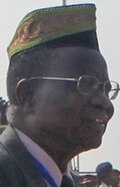
At a Glance
The Art of Unification: How Lagu Made Negotiation Possible
The central historical problem that Joseph Lagu solved — and it was a problem that had defeated every previous attempt to give the southern Sudan movement military and political coherence — was the problem of unification: how to bring together a movement defined by ethnic diversity, geographic dispersion, personal rivalry, and strategic disagreement into a sufficiently unified structure to function as a single actor in both military operations and political negotiations. The solution he found, and the method by which he found it, are as instructive as the outcome he achieved.
The Anyanya of the late 1960s was not a single movement but a collection of movements that shared a common enemy and a common cause while differing on virtually everything else. The Equatoria-based units, drawing on the Madi, Acholi, Bari, Kakwa, and other Equatoria communities, had their own commanders and their own relationship to the political exile organisations; the Upper Nile units, drawing on the Nuer, Shilluk, and other riverine communities, operated in a completely different geographic and ethnic environment with their own command structures; the Bahr el-Ghazal units, in the Dinka heartland of the west, were a third distinct political and military entity. Between these three main groupings, smaller ethnic and regional units operated with varying degrees of connection to the larger structures and varying degrees of commitment to any particular political framework.
Lagu's approach to this fragmentation was pragmatic rather than ideological — he did not attempt to resolve the strategic and political disagreements between the different factions before seeking military unification, but rather used the tangible benefit of weapons supply as the mechanism through which unification could be achieved. By establishing himself as the channel through which the Israeli weapons supply reached the movement — weapons that every Anyanya commander wanted and that the movement's military effectiveness critically needed — he created a material incentive for accepting unified command that no amount of political argument could have produced. The commander who accepted Lagu's authority received weapons; the commander who refused to accept it did not. In the specific conditions of the Anyanya's war, this was an argument of overwhelming practical force.
The political dimensions of the unification required more delicate handling. Lagu was a Madi — a member of one of Equatoria's smaller communities, which had the advantage of not being dominant enough to provoke the ethnic jealousy that a Dinka or Nuer leader would have faced in attempting to assert overall command. His background as a professional officer in the Sudanese national army gave him a form of military legitimacy that was distinct from the battlefield prestige of the guerrilla commanders — he knew how to organise a military force in ways that the self-taught guerrilla leaders did not, and this knowledge was visibly valuable in the specific military challenges of transforming a dispersed insurgency into a more coordinated fighting force. The formal military skills he had acquired in the Sudanese army — logistics, communications, unit organisation, tactical planning — were precisely the skills that the Anyanya needed and that the movement had previously lacked.
By 1971, Lagu had achieved sufficient authority over the various Anyanya commands to declare the formation of the Southern Sudan Liberation Movement — the political structure that would give the military movement a negotiating face — and to begin making contact with potential mediators for negotiations with the Khartoum government. The timing was propitious: Nimeiry, having consolidated his power through the destruction of the SCP in July 1971 and the defeat of a Libyan-backed counter-coup, was sufficiently secure in his political position to contemplate the kind of negotiated settlement with the south that no previous Sudanese government had been willing to offer. The convergence of Lagu's newly unified command — capable of negotiating as a single actor — with Nimeiry's newly consolidated government — capable of making offers that the army would not immediately overturn — created the political window that the Addis Ababa process exploited.
The negotiations at Addis Ababa in January and February 1972 were difficult and genuinely uncertain in their outcome until the final stages. The core issues — the constitutional status of the Southern Region, the size and command structure of the southern military force that would be integrated into the national army, the timeline for integration and the treatment of Anyanya fighters who did not wish to serve in the national army — each required compromises from both sides that were genuinely painful. Lagu's negotiating position was strengthened by the military credibility of the unified SSLM he led — Khartoum could not dismiss his demands as representing a fragmented and militarily ineffective movement — but it was constrained by the political realities that limited what Nimeiry could offer without losing northern political support for the agreement.
The decade that followed the agreement's signing was, in retrospect, the period in which Lagu's judgment about the value of negotiated autonomy over continued war was most fully vindicated. The Southern Region functioned — imperfectly, with persistent tensions over resource allocation and the pace of integration, but functioned — as a framework of regional governance that gave the south genuine political agency within Sudan. The integration of the Anyanya into the national army, while generating ongoing friction, proceeded without the catastrophic breakdown that pessimists had predicted. Southern communities that had spent seventeen years in the shadow of war could build schools, develop agricultural land, and live the kinds of ordinary lives that the previous decade had denied them. This peace was Lagu's achievement as much as it was Nimeiry's, and its eventual destruction by Nimeiry's 1983 decisions was a verdict on the northern political establishment's unwillingness to honour its commitments rather than on the wisdom of the agreement Lagu had negotiated.
Joseph Lagu's death in Juba in September 2021 closed the life of a man who had accomplished the specific, concrete, historically consequential thing that the moment of the early 1970s required — the thing that made the subsequent history of the southern Sudan cause possible. Without the unified SSLM that he built, the Addis Ababa Agreement could not have been negotiated; without the Addis Ababa Agreement, the political and organisational development of the south through the 1970s would not have occurred; without that development, the SPLA of 1983 would have lacked the social base and the political frameworks that Garang's movement inherited and built upon. The independence of South Sudan in 2011 was the product of an accumulation of causes and contributions stretching back decades, and Joseph Lagu's unification of the Anyanya stands near the foundation of that accumulation.