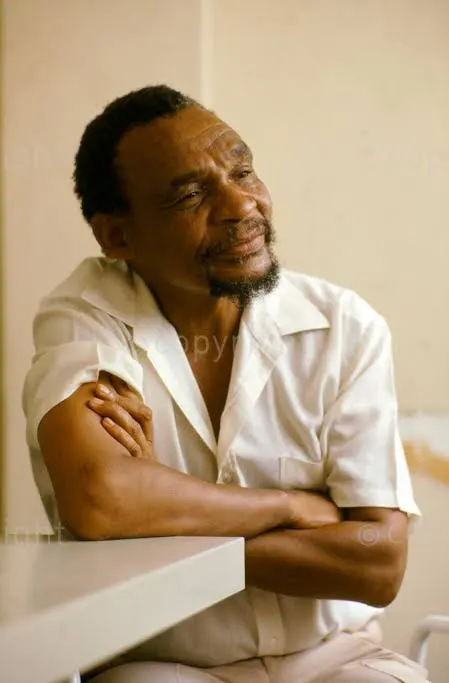
At a Glance
The Eastern Cape, the Mines, and the Making of a Union Leader
Elijah Barayi was born in the Eastern Cape in 1936, in one of the provinces from which the gold mines of the Witwatersrand drew the largest proportion of their migrant labour force. The migrant labour system that supplied the mines was one of the most thoroughly developed mechanisms of labour control in the history of capitalism: it recruited men from the rural homelands on fixed-term contracts, housed them in single-sex compounds isolated from the broader urban community, paid them wages that assumed the partial subsidisation of their families by subsistence agriculture in the homelands, and returned them when their contracts ended. The system was designed to provide cheap, controllable labour for an industry that required enormous quantities of it, and its design was so thoroughgoing that it shaped not only the economic conditions of the workers it recruited but their entire social world — their family lives, their community relationships, their possibilities of political organisation.
For the thousands of Eastern Cape men who followed the same path as Barayi, the mines were simultaneously an economic necessity — the wages, however inadequate, were essential to family survival in the increasingly impoverished rural homelands — and an experience of systematic exploitation and dehumanisation. The compound system, the racial hierarchy that placed white miners in skilled positions while confining Black miners to unskilled and semi-skilled work regardless of their capabilities, the wages that were a fraction of what white miners received for equivalent work, the pass laws that followed workers even into the compounds — all of these were the daily material conditions of a mineworker's life.
They were also the conditions that the National Union of Mineworkers was built to address. When Cyril Ramaphosa began building the NUM in 1982, working his way through the compounds and explaining to workers what a union could do, he was building on a pent-up demand for representation that had been building for decades. Barayi was part of the early organising wave — one of the mineworkers who saw in the NUM the possibility of collective action against the conditions he had experienced directly as a worker, and who threw himself into the organising work with the energy that direct personal experience of exploitation generates.
The NUM, Ramaphosa, and the Building of a Power Base
The relationship between Ramaphosa and Barayi in the NUM's early years was a partnership of complementary strengths. Ramaphosa brought legal expertise, organisational skill, and the intellectual framework that the union's negotiations with the mining industry required. Barayi brought the direct connection to the working membership — the credibility of a man who had done the work, lived in the compounds, and experienced the exploitation that the union was organising against. As Vice-President alongside Ramaphosa's presidency, he provided the human face of a union whose legal sophistication might otherwise have felt distant from its membership's daily experience.
The NUM's growth from 6,000 members at its founding in August 1982 to over 300,000 within five years was one of the most remarkable organisational achievements in South African history, and it created the power base from which COSATU was built. The decision to form COSATU — to consolidate the various trade union federations and independent unions that had been developing since the early 1970s into a single powerful federation — was driven partly by the NUM's example: if one union could build this much membership and this much power, what could a federation of thirty-three unions do?
The founding congress of COSATU in December 1985 was the answer to that question. Approximately 450,000 to 500,000 workers were represented by the federation's affiliated unions at its founding — a number that would grow substantially in subsequent years — and the political significance of this organised force, aligned explicitly with the ANC and the liberation movement, was immediately apparent to both the liberation movement and the apartheid state. For the state, COSATU was a new and dangerous threat — the combination of industrial power and political alignment that made organised labour a potential weapon against the apartheid economy in a way that previous union formations had not been. For the liberation movement, COSATU was the realisation of the Congress Alliance's aspiration to incorporate organised labour into the anti-apartheid coalition as a full and powerful partner.
The P.W. Botha Statement and Its Political Context
The statement that made Barayi internationally famous — his declaration at the founding congress that the workers would hang P.W. Botha if apartheid was not dismantled — has to be understood in its specific context to be properly evaluated. December 1985 was not a moment of political optimism in South Africa. The apartheid state had declared a state of emergency in July 1985, thousands of activists were in detention without trial, the townships were under military occupation, and the violence of both the state and the resistance was at an intensity that had not been seen since Sharpeville. The negotiated transition that would eventually end apartheid was more than four years away, and in December 1985 there was no particular reason to believe it would happen at all.
In this context, Barayi's statement was not primarily a threat — though it was received as one — but a declaration of political position: a statement that the working class of South Africa was no longer prepared to accept the apartheid state on the terms the state was imposing, and that the price of maintaining those terms would be escalating organised resistance. The specific reference to Botha was inflammatory by design — Barayi was not an unsophisticated communicator, and he understood that naming the head of state in terms of physical threat would amplify his message far beyond what a more measured formulation would have achieved. The international press coverage confirmed this calculation.
The apartheid government condemned the statement as incitement to violence and used it as evidence of COSATU's dangerous political character. The liberation movement celebrated it as evidence of organised labour's new confidence and political assertiveness. Both reactions were appropriate to what the statement actually was: a political declaration in inflammatory language, designed to communicate to the widest possible audience that a new power had entered South African politics — one that was prepared to speak with the directness that the conditions demanded.
Leading COSATU Through the Emergency Years
Barayi's presidency of COSATU from 1985 to 1991 covered the most difficult years in the federation's history — the years of the state of emergency, the systematic detention of union leaders, the attacks on union offices, and the apartheid state's sustained attempt to destroy organised labour's capacity for political action. COSATU's survival and continued growth under these conditions was one of the most significant achievements of the internal resistance of the 1980s, and Barayi's leadership was central to it.
The state's strategy was to use the emergency legislation to detain without trial the most effective union organisers and leaders, thereby disrupting the union structures and deterring others from taking leadership roles. The strategy had some success — the detention of hundreds of union leaders imposed real costs on COSATU's organisational capacity — but it could not destroy the federation because the conditions that had created the demand for union membership were unchanged, and the members themselves maintained the structures even when their leaders were imprisoned.
Barayi navigated this period with a combination of political courage and organisational skill, maintaining COSATU's public presence and its alignment with the liberation movement even as the state attempted to force the federation to choose between its industrial functions and its political commitments. His refusal to make this choice — his insistence that organised labour's industrial and political roles were inseparable in the conditions of apartheid South Africa — was consistent with the Congress Alliance's analysis and essential to COSATU's effectiveness as a political as well as an industrial force.
Legacy
Elijah Barayi's legacy is the legacy of organised labour's contribution to the South African liberation struggle — the contribution that COSATU and its predecessor formations made to the anti-apartheid movement by demonstrating that the Black working class was organised, politically conscious, and capable of collective action that threatened the apartheid economy at its foundations. His presidency of COSATU at the federation's founding and through its most difficult years was a central element of this contribution.
The P.W. Botha statement for which he is most widely remembered was a moment of political theatre as much as a political declaration, but its significance as a symbol of the labour movement's new assertiveness was real and its impact on the international understanding of the South African conflict was substantial. It communicated, in the most direct possible terms, that the working class of South Africa was not going to ask politely for the rights the apartheid state had stolen, and that the state's continued refusal to dismantle apartheid would be met with escalating organised resistance.
He died in 1994, in the year of the democratic elections, having served the cause of working-class liberation from the mine compounds of the Eastern Cape to the presidency of the most powerful trade union federation in South Africa's history. The democratic South Africa that his leadership helped to build has not fully delivered on the economic transformation that the labour movement fought for. The unfinished business of that transformation remains the labour movement's ongoing project.