At a Glance
The Fouta Djallon, the Fula Imamate, and the Making of a Political Identity
The Fouta Djallon highlands of central Guinea are one of the most historically distinctive regions of West Africa — a plateau that rises sharply from the coastal plain and extends across much of central Guinea's territory, cooler and better-watered than the surrounding lowlands, home to the Fula (Peul) people who had established, in the eighteenth century, one of the most significant Islamic states in the pre-colonial western Sahel. The Imamate of Fouta Djallon, founded through a jihad led by Karamoko Alfa in the 1720s, governed the highlands for more than a century, establishing a theocratic system of Islamic law, scholarship, and governance that shaped the social and political traditions of the Fula community in ways that were still vivid in the twentieth century.
The French conquest of the Fouta Djallon in the late nineteenth century did not erase these traditions — it overlaid them with colonial administration and subjected them to the distortions of indirect rule, which in the Fula case meant the manipulation of the traditional chiefly system in ways that simultaneously preserved and undermined its authority. The Fula intellectual class that emerged in the colonial period — educated in both the Islamic scholarly tradition of the Fouta Djallon and in the French colonial school system — brought both heritages to its engagement with the independence movement, and the tension between these two frameworks for political identity was one of the defining features of Fula politics in the late colonial and independence period.
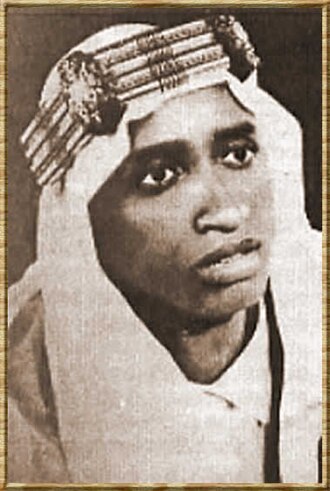
Saifoulaye Diallo emerged from this milieu. His education and his political formation took place in the context of a community with strong traditions of collective organisation, Islamic identity, and intellectual achievement, but also one that was navigating the transition from the aristocratic social structure of the Imamate to the more democratic, mass-organisation politics of the independence movement. His decision to commit to the PDG rather than to an ethnic Fula party — to situate his political identity in pan-Guinean nationalism rather than in Fula communal politics — was a choice that reflected both personal political conviction and a judgment about the most effective path to genuine political advance in the context of late colonial and early independence Guinea.
The PDG and the Construction of Pan-Ethnic Nationalism
The Parti Démocratique de Guinée's success in building a genuinely pan-ethnic mass movement was, as already noted in the context of figures like Majmouth Diallo, one of the most significant political achievements of the West African independence era. The specific challenge of including the Fula community was both particularly important — the Fula were the largest ethnic group in Guinea and their political incorporation was essential to any claim of genuine national representation — and particularly difficult, given the Fula's historical traditions of political autonomy and their ambivalent relationship with both French colonial rule and with the Malinké and coastal communities that provided much of the PDG's initial base.
Senior Fula politicians like Saifoulaye Diallo played an essential role in this incorporation. Their presence in the PDG leadership sent a signal to the Fula community that the party's pan-ethnic nationalism was genuine rather than a device for Malinké domination — that a Fula person could reach the highest levels of political authority within the movement rather than being permanently subordinate to leaders from other ethnic communities. This signal was important for building the Fula participation in the independence movement that the 1958 Non vote required, and Diallo's subsequent elevation to senior positions in the government was, at one level, a fulfilment of the promise that his early involvement had represented.
His role in the Political Bureau and subsequently as President of the National Assembly gave him both formal authority and informal influence within the governing system. In a single-party state, formal authority matters less than proximity to the leader and participation in the networks of trust and loyalty that determine who has genuine influence. Diallo's longevity in senior positions — maintained across the considerable political turbulence of the 1960s and 1970s, when many of his contemporaries were purged — suggests that he maintained Touré's confidence in ways that others had not, though the nature of that confidence and what it required are not fully transparent in the historical record.
The Paradox of Fula Prominence in an Anti-Fula State
From the late 1960s onward, the Touré government's relationship with the Fula community deteriorated dramatically. The shift was driven by multiple factors: Touré's growing political paranoia and his tendency to interpret communal solidarity as evidence of conspiratorial politics; the influence of advisors who cultivated his suspicion of ethnic groups they presented as insufficiently loyal; and the specific features of Fula social organisation — the communal solidarity, the Islamic identity, the tradition of political independence — that Touré came to see as incompatible with the total loyalty his government demanded.
The purges of Fula politicians, teachers, religious figures, and professionals that followed were among the most ethnically targeted of the Touré era's extensive repressions. Fula men and women who had devoted their lives to the PDG and to the Guinean independence project found themselves accused of conspiracy, imprisoned in Camp Boiro, or killed. The poet Keïta Fodeba — though not himself Fula — died at Camp Boiro in the same period; many of the other victims of the camp were Fula. The community as a whole was subjected to a kind of collective suspicion that contradicted everything the independence movement had promised about pan-ethnic Guinean citizenship.
Diallo's continued presence in the government during this period placed him in an extraordinarily difficult position. His prominence as a Fula politician could serve multiple functions simultaneously — and it is not clear from the available historical evidence which function was dominant. It could serve as a fig leaf for the anti-Fula persecution, providing the government with a Fula face that could be pointed to as evidence of Fula inclusion even as Fula people were being systematically persecuted. It could serve as a limited form of protection, with Diallo's presence and informal influence moderating, at the margins, the most extreme expressions of the government's anti-Fula turn. Or it could represent the genuine but impossible situation of a man who had committed to a political movement he could no longer fully endorse but could not leave without consequences worse than staying.
These interpretations are not mutually exclusive, and the truth of Diallo's experience may have involved elements of all three. What is certain is that he remained in the government and maintained his senior positions until his death in 1981, that the Fula community's persecution continued throughout his tenure, and that the historical record does not document any public protest or resistance from him against the government's treatment of his community. Whether this silence reflected genuine agreement, tactical calculation, personal fear, or some combination of these — the conditions of a totalitarian single-party state are not ones in which honest public expression of disagreement was possible — is a question that cannot be definitively answered from the outside.
Islam, Identity, and the Politics of the Fouta Djallon
The Islamic dimension of Fula identity was both a source of cultural depth and a political complication in the context of Touré's Guinea. The Fouta Djallon's tradition of Islamic scholarship — the village schools teaching Arabic and Quranic commentary, the networks of learned men whose prestige crossed ethnic and national boundaries, the pilgrimage routes connecting the highlands to the broader Islamic world — was a living tradition in the communities where Diallo had grown up. This tradition represented a form of cultural autonomy that operated partly outside the structures of both the colonial state and the post-colonial PDG government, and Touré's government's suspicion of it was in some ways consistent with the broader pattern of authoritarian states' hostility to institutions and networks they do not control.
The tension between Islamic identity and the PDG's secular nationalism was not unique to Guinea — it was a feature of many post-colonial African states that had significant Muslim populations and that were building state authority in competition with the existing authority of Islamic institutions and networks. In most of these states, some form of accommodation was reached: the state recognised Islamic institutions, Islamic leaders were incorporated into state legitimating structures, and a working arrangement was established that gave the state the loyalty it needed while preserving the religious community's most essential institutional practices. Touré's government attempted this accommodation in the early independence years, but the paranoid political logic of his later governance made it impossible to sustain — any institution or network that operated partly outside state control was eventually treated as a threat.
Diallo's Islamic identity and his Fula background thus placed him in the intersection of two sources of potential political suspicion in Touré's later years. His survival in senior positions despite these vulnerabilities was either evidence of genuine political skill, of Touré's continued personal trust, or of some combination of circumstances that the historical record does not fully illuminate. What it was not was evidence that the system was functioning in the tolerant, pan-ethnic way that the independence movement had promised.
The Guinean National Assembly: Form and Substance
The National Assembly of the First Republic was, in formal constitutional terms, the sovereign legislative body of the Guinean state — the institution through which the will of the Guinean people was expressed in law. In practice, as with all legislative bodies in single-party states, its role was primarily ratificatory. The PDG's Political Bureau made the major policy decisions; the National Assembly endorsed them. The debates that took place in the assembly were real in the sense that they involved genuine exchange of views about the details and implementation of policy, but they were not free in the sense of permitting fundamental challenge to the direction the government had chosen.
Within these constraints, Diallo's role as President of the Assembly gave him a visible institutional platform and a degree of authority over the conduct of the assembly's work. He presided over the legislative sessions, managed the relationships between the assembly and the executive, and represented the legislature in the constitutional and ceremonial dimensions of Guinean public life. It was a role that required political skill — maintaining the dignity and formal authority of the institution while navigating the political realities of a system in which the assembly's actual power was limited — and one that Diallo appears to have performed with competence.
The question of whether competent performance of institutional roles in a system of this kind constitutes a contribution to the liberation project that independence had promised, or whether it represents a form of complicity in the suppression of genuine democratic politics, is one that applies to Diallo as it does to many figures who served in the Touré government. It is not a question that admits simple answers, and the honest historiography of the independence era must hold both its genuine achievements and its systematic failures in view simultaneously, without collapsing the complexity into either celebration or condemnation.
Death in 1981 and the Question of What Endures
Saifoulaye Diallo died in 1981, three years before the end of the political era he had participated in building. He did not live to see the fall of Touré's government, the military coup of 1984, or the subsequent decades of Guinean history that have been shaped partly by the institutional damage and political trauma of the First Republic. Nor did he live to see the gradual historical rehabilitation of the independence generation's genuine achievements that has accompanied the growing recognition of its failures — the understanding that the men and women who built Guinea's independence movement made a real contribution to African liberation even as the government they built subsequently betrayed many of the values the movement had expressed.
His place in the history of Guinean independence is genuinely complicated — more complicated than either the simple celebration of a liberation hero or the simple condemnation of a collaborator with an oppressive state would allow. He was a Fula politician in a pan-ethnic nationalist movement who helped build that movement's national character; a senior figure in a single-party state who served in that state through its worst period of ethnic persecution; a man whose political career embodied both the genuine achievement of Guinean independence and the profound failure of the Touré government to honour what independence had promised. The honest account of his life does not resolve these tensions but holds them in view — as evidence of the complexity that the history of African independence actually contains, and that the history it deserves must not simplify away.