At a Glance
Joal, the Catholic Missions, and the Formation of an Extraordinary Mind
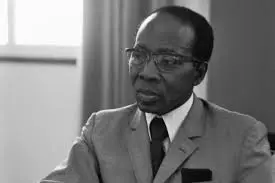
Léopold Sédar Senghor was born in 1906 in Joal — a small coastal town on the Petite Côte south of Dakar, in what was then the heart of Serer country. The Serer were one of Senegal's major peoples, and Joal had a specific character: it was a town with a significant Catholic community, the product of Portuguese and French missionary activity going back centuries, and Senghor's family was part of this Catholic minority within a predominantly Muslim Senegalese society. His father Basile Diogoye Senghor was a prosperous merchant — wealthy enough by the standards of his community to provide his son with educational opportunities that were exceptional for Africans in colonial Senegal.
The Catholic mission school in Joal gave Senghor his first formal education; from there he went to the seminary in Ngasobil and subsequently to the Lycée Van Vollenhoven in Dakar — then the most academically rigorous secondary school available to Africans in French West Africa. His academic performance was exceptional throughout, and in 1928 he went to France to continue his studies at the Lycée Louis-le-Grand in Paris and subsequently at the Sorbonne and the École Normale Supérieure. He was preparing for the agrégation — the examination that would, when he passed it in 1935, make him the first African qualified to teach in the highest level of the French secondary system.
The Paris of the late 1920s and 1930s was, for a young African intellectual of Senghor's formation, both an extraordinary opportunity and a profound challenge. It was the centre of the French intellectual world — the world of surrealism, existentialism, the Communist Party, the literary journals, the debates about art and politics and the nature of human experience that France produced with the density and intensity that made Paris the intellectual capital of the Western world in this period. It was also a city in which Africans were a small and easily marginalised minority, in which the colonial ideology that classified them as primitive was the ambient assumption of the educated class, and in which the distance from home was both geographical and cultural — a distance that made the question of who one was and where one belonged both personally urgent and intellectually productive.
Négritude: The Assertion of African Identity
The Négritude movement that Senghor, Aimé Césaire, and Léon-Gontran Damas began developing in Paris in the early 1930s was one of the most significant intellectual and literary movements of the twentieth century. Its starting point was a simple but radical assertion: that African and African diasporic cultural identity had value — that it was not the negative that colonial ideology defined it as, not the absence of civilisation, not the raw material awaiting European refinement, but a positive set of values, sensibilities, and ways of engaging with the world that had their own authenticity and their own beauty.
The specific content of Senghor's version of Négritude was elaborated over decades of poetry, essays, and philosophical writing into a distinctive and controversial synthesis. He argued that African civilisation was characterised by a particular relationship to the world — more emotional, more rhythmic, more communal, more rooted in the vital forces of nature and human connection — that differed from the analytical rationalism that he associated with European, and particularly Greek, intellectual tradition. His famous formulation — l'émotion est nègre, la raison est hellène (emotion is Black, reason is Hellenic) — was both the most quoted expression of his vision and the most criticised: it seemed to accept and even celebrate precisely the racial categorisation that colonial ideology had used to justify African subjugation.
The criticism came from multiple directions. Frantz Fanon argued that Négritude was a necessary but insufficient stage in colonial liberation — that it reclaimed the humanity that colonialism had denied but stopped short of the political analysis and action that genuine freedom required. Cheikh Anta Diop challenged Senghor's cultural synthesis model from the position of a more assertively African civilisational pride — arguing that African civilisation, rooted in the achievement of ancient Egypt, needed no synthesis with European culture to establish its dignity and worth. Abdoulaye Ly challenged Senghor from the Marxist left, arguing that cultural reclamation was inadequate without structural economic transformation. The Nigerian writer Wole Soyinka delivered one of the most celebrated literary criticisms: a tiger, he noted, does not proclaim its tigritude; it pounces.
These criticisms are serious and they have not been definitively answered. But they should not obscure what Négritude achieved at the moment it was created. In the 1930s and 1940s, when colonial ideology confidently categorised African culture as primitive and African peoples as incapable of civilisation, the assertion of African cultural value was a necessary act of political and psychological resistance. The Négritude writers — and Senghor's poetry in particular, with its extraordinary imagery of African landscape, its evocation of African oral tradition and music, its sensuous celebration of African femininity and communal life — gave a generation of African and African diasporic readers a sense of their own cultural richness that colonial education had systematically denied them. That contribution is real and substantial, whatever the limitations of the theoretical framework in which it was embedded.
Politics, Federation, and the Independence Settlement
Senghor's political career, running parallel to his intellectual work from the mid-1940s onward, was shaped by his specific vision of what African independence should mean and how it should be achieved. He was elected to the French National Assembly in 1945, broke with his mentor Lamine Guèye in 1948 to found the Bloc Démocratique Sénégalais, built a mass political base in the Senegalese interior through alliances with the Islamic brotherhoods and the rural Wolof population, and gradually consolidated his position as the dominant figure in Senegalese politics.
His vision of independence was explicitly federalist — he argued consistently, through the 1950s and up to the moment of actual independence, for a French West African federation rather than the balkanisation of the region into small separate states. The federation he envisioned would have combined the territories of French West Africa into a single political unit with significant economic and institutional weight, maintaining a transformed but continuing relationship with France that he described as a Community of freely associated equals. This vision was opposed from the left — by those who believed it preserved too much of the colonial relationship — and it was also undermined from within by leaders like Félix Houphouët-Boigny of Côte d'Ivoire, who preferred separate independence that would give their own countries more direct control over their resources and relationships with France.
The Mali Federation that Senghor and Modibo Keïta of Sudan attempted to create as a partial realisation of the federalist vision lasted less than two years before Senegal's secession in August 1960. The failure of the federation was a genuine political defeat for Senghor, and the separate Senegalese independence that followed was, in some ways, the smaller-scale outcome he had argued against. But Senegalese independence within the CFA franc zone, with French military presence and strong cultural and institutional ties to France, was also, from a different perspective, the neo-colonial arrangement that his radical critics had always feared his federalism would produce.
Twenty Years of Power: The Presidential Record
Senghor governed Senegal from 1960 to 1980 — two decades that produced a record of genuine achievements alongside real failures and significant compromises. On the positive side: Senegal maintained a functioning institutional framework, a degree of civil society activity and press freedom unusual in the Africa of the period, and — most significantly — the peaceful transfer of power that Senghor's voluntary resignation produced. The quality of Senegalese public administration, while far from perfect, was among the better in post-colonial West Africa. The economy grew modestly, the education system expanded, and the country was not wracked by the coups, civil wars, and ethnic massacres that devastated many of its neighbours.
On the negative side: the political system was not genuinely democratic for most of Senghor's tenure. Opposition parties were banned or severely restricted through much of the 1960s and 1970s. The 1962 constitutional crisis, in which Senghor used his control of the military to remove Prime Minister Mamadou Dia and imprison him for eleven years, was a moment of political ruthlessness that contradicted the democratic values Senghor publicly championed. The close relationship with France — the CFA franc, the French military bases, the preferential trade arrangements, the continued presence of French advisors and capital in the Senegalese economy — was precisely the neo-colonial dependency that critics had predicted his federalist approach would produce.
The student and worker protests of May 1968, which brought Senegal close to a revolutionary situation, were a significant challenge to his government and a reminder that the political consensus he had constructed was less solid than it appeared. His response combined real concessions — economic and political reforms that opened the system somewhat — with sustained pressure on the opposition and the maintenance of his party's dominance. It was a response that preserved his government's stability without addressing the fundamental demands of those who wanted more genuine transformation.
The Civilisation of the Universal
The philosophical project that ran through Senghor's entire intellectual career — Négritude, African socialism, and what he eventually called the Civilisation of the Universal — was an attempt to think through what African cultural identity meant in a world that was both irreversibly interconnected and deeply marked by the hierarchies that colonialism had established. His answer was neither assimilation nor separatism but a third path: the contribution of African cultural values to a genuinely universal human civilisation, a synthesis in which African, European, Asian, and other cultural traditions would meet as equals and create something richer than any one of them could produce alone.
This vision is both admirable in its aspirations and problematic in its assumptions. The aspiration to a genuinely universal civilisation — one that includes African contributions on equal terms rather than treating European culture as the default universal — is important and not yet achieved. The assumption that African, European, and other cultural traditions can be characterised in terms of complementary essential characteristics — emotion and rhythm on one side, reason and analysis on the other — reproduces the racial typology of colonial thought in inverted form rather than transcending it. Senghor knew this criticism and responded to it across decades of philosophical writing, arguing that the cultural values he identified were historical and contingent rather than biologically determined. Whether his response was fully satisfying remains disputed.
What is not disputed is the range, depth, and seriousness of the intellectual project. Senghor thought harder and more systematically about African cultural identity and its implications for world civilisation than any political figure of his generation, and he did so while simultaneously governing a country, managing international relationships, writing poetry, and engaging with the full breadth of French and world intellectual life. The resulting body of work — the poetry, the political philosophy, the essays on aesthetics and African culture — constitutes one of the most substantial intellectual achievements of any twentieth-century African figure.
The Poet Above All
Whatever judgements are made about Senghor the politician or Senghor the philosopher, the poetry stands as his most enduring achievement. His collections — Chants d'ombre, Hosties noires, Éthiopiques, Nocturnes — represent an extraordinary body of French-language verse that draws on African oral traditions, on the landscapes and figures of Senghor's Serer childhood, on the experience of diaspora and encounter, and on a vision of human experience that is both deeply African in its cultural references and genuinely universal in its emotional resonance. The poems of Hosties noires — written during and after Senghor's service as a French soldier in the Second World War, during which he was captured and held as a prisoner of war — achieve a meditation on African sacrifice for a France that did not fully recognise its African soldiers that is among the most powerful anti-colonial literature in any language.
His election to the Académie française in 1983 — the first African member of an institution founded in 1635 — was recognition of this poetic achievement by the most established institution of French cultural life. For some, the recognition was a vindication of his life's project; for others, it was the clearest evidence that his relationship with French culture had gone too far toward accommodation. The debate continues, as debates about Senghor's legacy always do, without simple resolution.
Léopold Sédar Senghor died in December 2001 in Normandy, ninety-five years old, having outlived most of his generation and most of the political world he had inhabited. He had been the most celebrated African intellectual of his century and one of its most controversial political figures. He had written some of the most beautiful poetry in the French language and constructed one of the most debated philosophical systems in twentieth-century African thought. He had governed Senegal with greater institutional respect than most of his contemporaries and with less genuine democracy than his own stated values required. He had built a relationship with France that sustained Senegal's stability while perpetuating dependencies that his radical critics never forgave. His legacy is not a verdict but a continuing argument — which is perhaps the most appropriate tribute to a man who spent his life making arguments that demanded engagement rather than acceptance or dismissal.