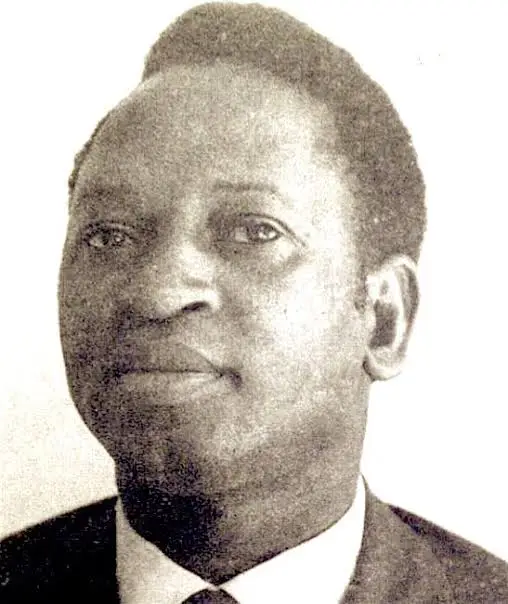
At a Glance
Kindia, the École Ponty, and the Formation of a Cultural Nationalist
Keïta Fodeba was born in 1921 in Kindia, a town in the highlands of French Guinea whose position in the Fouta Djallon made it part of one of the most culturally distinctive regions of West Africa. The Fouta Djallon had been the site of an eighteenth-century Islamic theocratic state built by the Fula people — one of the most sophisticated state-building enterprises in pre-colonial West Africa — and its highlands were home to communities with deep traditions of Islamic scholarship, music, and oral performance. The Malinké culture that Fodeba was born into had its own rich tradition of performance, centred on the griot — the hereditary musician-historian-praise-singer who maintained the memory of lineages and events in oral form and who performed at the major occasions of social and political life. This tradition of performance as memory, as political statement, as communal celebration, was the cultural inheritance that Fodeba would draw on and transform in his artistic career.
The École William Ponty in Dakar was, as it was for so many of the West African independence generation, the institution that both equipped Fodeba for participation in the colonial intellectual world and gave him the distance from which to see that world clearly. The school's theatrical tradition was significant: Ponty encouraged its students to develop theatrical pieces based on African historical and cultural material, and this practice — of taking African oral tradition and historical experience as the raw material for performance — was directly connected to what Fodeba would later do with the Ballets Africains. The school simultaneously taught him the French intellectual tools he would use to make his cultural arguments and showed him, in the community of West African students it brought together, the richness of the cultural traditions those arguments were about.
After Ponty, Fodeba trained as a teacher and spent time both in Guinea and in France. By the late 1940s he was in Paris, at the centre of the remarkable West African and African diasporic intellectual and artistic community that had formed there. This was the Paris of Senghor's Négritude, of the journal Présence Africaine founded by Alioune Diop, of Aimé Césaire's political and poetic work, of the Haitian and Antillean writers and intellectuals who were developing, alongside their West African contemporaries, a body of thought and art that challenged colonial ideology at its most fundamental level. Fodeba was part of this world, and his artistic and political development were shaped by it.
The Ballets Africains: Art as Political Statement
The founding of the Ballets Africains de Keïta Fodeba in Paris in the early 1950s was an act with implications that went well beyond its immediate artistic context. West African performing arts — the griot traditions, the mask dances, the percussion ensembles, the acrobatic performance traditions of various communities — were, in the European cultural imagination of the period, either invisible or categorised as primitive ritual rather than as art in the same sense as European concert music, ballet, or theatre. The colonial ideology that justified African subjugation required this categorisation: if African cultural production was art — complex, sophisticated, aesthetically rich, capable of moving audiences and expressing the full range of human experience — then the civilisational argument for colonialism collapsed. If it was merely primitive ritual, the hierarchy was maintained.
Fodeba's ensemble challenged this categorisation directly and on its own terms. The Ballets Africains performed West African music, dance, and theatrical material on European concert stages, in European theatres, before European audiences who came expecting to be entertained and found themselves confronted with performances of extraordinary richness and power. The griot traditions that Fodeba incorporated — the praise singing, the historical narration, the musical complexity of the kora and the balafon — had nothing primitive about them; they were sophisticated artistic forms with long histories and demanding technical requirements. The dances were not mere ritual; they were choreographically complex, dramatically expressive, and visually spectacular in ways that European audiences responded to with genuine enthusiasm.
The political implications were immediate and understood by those who watched. A Guinean company performing to full houses in Paris was making an argument about African culture and African humanity that colonial ideology had systematically denied. The independence movements of the late colonial period understood this: cultural assertion was political assertion, the claim that African culture was worthy of respect was part of the claim that African people were worthy of self-determination. Fodeba's artistic work was therefore not a retreat from political engagement but one of its most effective expressions — an argument made not in manifestos or speeches but in the immediate, undeniable presence of living performance.
Poetry of the Colonial Dawn
Alongside the Ballets Africains, Fodeba was producing poetry that addressed the colonial experience with a directness and power that matched anything in the francophone African literary tradition. His collection Poèmes africains, published in the early 1950s, and the individual poems that circulated in the anti-colonial press and in the cultural circles of the Paris African community, were works of genuine literary achievement as well as political commitment.
His most celebrated poem, Aube Africaine — African Dawn — is one of the defining texts of anti-colonial literature in French. The poem depicts a colonial morning raid on an African village: the soldiers arriving at dawn, the violence, the deaths, the fire, the resistance. Its imagery is concrete and specific — not the abstract language of political manifesto but the direct sensory language of poetry — and its emotional impact is correspondingly immediate. The poem made visible, in terms that French readers could not dismiss as mere complaint, the specific texture of colonial violence: what it looked like, what it felt like, what it did to the people it was inflicted on.
This was the literary tradition that Frantz Fanon was theorising and that Aimé Césaire was also practising — the use of French language and French literary forms to unmask the violence and the dehumanisation that French colonialism had perpetrated in Africa and the Caribbean. Fodeba's contribution to this tradition was specific to the West African experience, grounded in the particular landscape and social reality of Guinea and the Sahel, and it earned him the recognition of the broader francophone African literary world as one of the significant voices of his generation.
Independence and the Ministry: The Political Turn
When Sékou Touré led Guinea to independence with the extraordinary Non of the September 1958 referendum — the vote that rejected de Gaulle's proposed French Community and made Guinea the only French African territory to choose immediate and complete independence — Fodeba was among those who had contributed to the cultural and political formation that made that vote possible. The years of the Ballets Africains, the poetry, the cultural nationalism that had built Guinean and West African identity as something worth fighting for — this was the foundation on which the political moment of independence stood.
His transition into government — initially as a minister and subsequently in security-related roles including the interior ministry — represented a different kind of commitment from his artistic work. The Guinean state that Touré was building in the years after 1958 was under genuine pressure: France had cut off all support virtually overnight after the Non vote, withdrawing its technical assistance, removing its equipment, and attempting to destabilise the new government in ways that were petty, vindictive, and significant. The CIA was also active in Guinea, attempting to undermine a government that had rejected France and was cultivating relations with the Soviet Union and other socialist states. In this context, the security apparatus that Touré built — of which Fodeba became a part — was responding to real threats as well as imaginary ones.
But the security logic that Touré applied to Guinea's situation was one that found enemies everywhere and trusted no one. The purges began early: real and alleged plotters, former colleagues, members of ethnic groups that Touré suspected of insufficient loyalty, intellectuals whose independence of thought made them seem unreliable, military officers whose competence made them seem threatening. The Fula (Peul) people of the Fouta Djallon — Fodeba's own highland region — were particularly targeted, suspected by Touré of constituting an ethnic bloc that could be mobilised against his authority. The cultural nationalism that had celebrated the diversity and richness of Guinean ethnic traditions was giving way to a political monoculture in which diversity itself was treated as a threat.
Camp Boiro and the Destruction of the Revolution's Friends
Camp Boiro was established in the early 1960s as the detention centre for those accused of plotting against the Touré government. Over the next two decades — until Touré's death in 1984 — it became one of the most notorious sites of political repression in post-colonial Africa. The camp's practices included not only conventional imprisonment but systematic torture, deliberate starvation through what Touré's government called the diète noire (black diet — no food at all), and execution. Tens of thousands of Guineans passed through it; estimates of the death toll range from several thousand to tens of thousands.
The camp consumed not only declared enemies of the regime but the revolution's own founders and supporters. Ministers, army officers, intellectuals, union leaders, people who had been at the centre of the independence movement and who had given years of their lives to building the Guinean state — they ended up in Camp Boiro because Touré's paranoia had no logical stopping point. The accusation of plotting — always available, never requiring evidence — could be levelled at anyone whose profile made them seem potentially threatening, and in Touré's Guinea that profile expanded continuously as the government's isolation from both France and, eventually, the Soviet Union deepened its anxieties.
Fodeba was accused of involvement in a coup plot and imprisoned at Camp Boiro, probably in the early 1960s. The charge was almost certainly fabricated — the pattern of charges in Touré's Guinea was consistent enough to make fabrication the default assumption — but the specific evidence against him has never been established because the Touré government suppressed information about its victims as systematically as it eliminated them. He died in the camp, probably in 1964, at approximately forty-three years of age. The man who had founded the Ballets Africains, who had brought West African performance to the stages of Paris and Europe, who had written Aube Africaine, who had been a minister of the independent Guinean state — he died in a detention camp at the hands of the government he had helped build.
The Ballets Africains After Fodeba
The artistic legacy of the Ballets Africains outlasted its founder's death in ways that were both tribute to his achievement and testimony to what he had built. After Guinean independence, the company was reconstituted as Les Ballets Africains de la République de Guinée — a state company that performed Fodeba's vision of West African performing arts as a national cultural institution rather than an independent touring ensemble. The company continued to perform, to tour internationally, and to bring West African music and dance to audiences around the world throughout the independence period and beyond, carrying the artistic programme that Fodeba had created even after his death and even under the government that had killed him.
This continued existence was both a tribute to the power of what Fodeba had created and a measure of the grotesque contradiction that the Touré period represented. A government that was capable of imprisoning and killing the founder of the national ballet was simultaneously presenting that ballet internationally as a symbol of Guinean cultural achievement and national identity. The art survived and was celebrated; the artist was murdered. The cultural nationalism that the art expressed — the claim to African dignity, the assertion of African civilisational achievement, the insistence that West African performing traditions were as worthy of respect as any European art form — was used by a government that was simultaneously destroying the people who had developed and embodied those traditions most fully.
The Meaning of Keïta Fodeba's Life
Keïta Fodeba's life and death raise questions about the relationship between culture and politics, between artistic commitment and revolutionary loyalty, that do not have simple answers. He was, by any measure, one of the most significant West African cultural figures of the twentieth century — a man whose artistic vision created an institution that changed how the world understood West African culture and whose poetry captured the experience of colonial violence with an authenticity and power that have not been surpassed. He was also a man who committed himself to a political project that eventually destroyed him, and who served in a government whose security apparatus participated in atrocities.
These dimensions of his life cannot be separated from each other without falsifying both. The Fodeba who wrote Aube Africaine and the Fodeba who served as a minister in Touré's increasingly repressive government were the same person, navigating the same impossible situation that confronted many of the best and most committed figures of the West African independence generation: a situation in which the liberation they had worked for produced governments that replicated, in African form, the authoritarian patterns of the colonial states they had replaced. The tragedy of Fodeba's death is inseparable from the tragedy of what Guinean independence became, and the tragedy of what Guinean independence became is inseparable from the broader tragedy of post-colonial Africa's struggle to build genuinely free and just societies from the ruins of colonial rule.
He deserves to be remembered for both what he created and what he suffered — for the extraordinary cultural achievement of the Ballets Africains, for the literary power of his poetry, and for the manner of his death, which was not incidental to his life but its terrible conclusion, imposed by a system he had helped to build and that destroyed him when it turned against its own.