At a Glance
Kwilu and the World That Made a Revolutionary
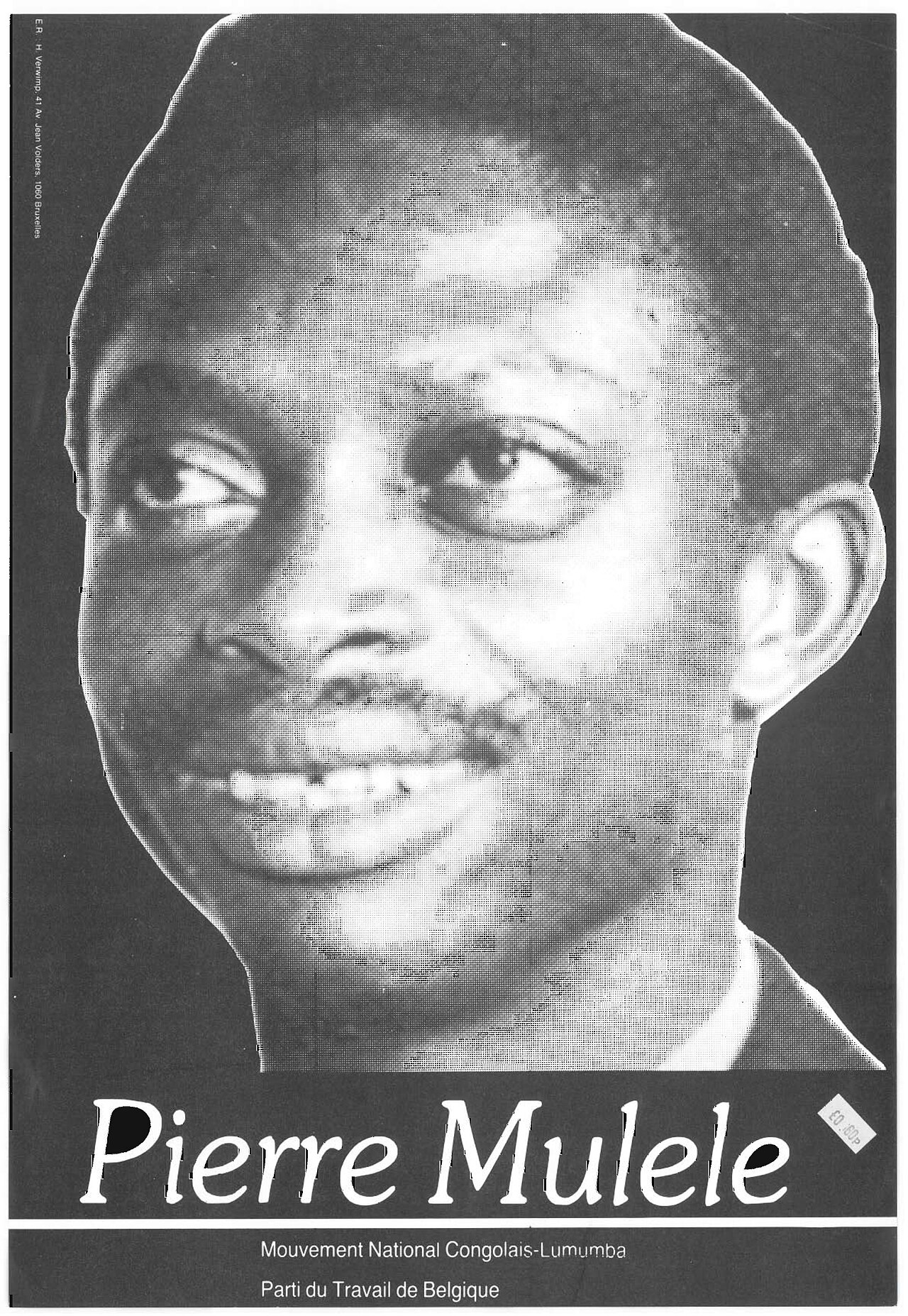
Pierre Mulele was born on 9 July 1929 in Masi-Manimba, in Kwilu province — the territory in Bandundu that sits between the Kwilu and Kasai rivers, a region of dense forest and agricultural community whose people had experienced the Belgian colonial system with the full intensity of rubber extraction, forced labour, and the systematic suppression of any political organisation that exceeded the strictly local and the strictly apolitical. His formation was that of the mission-educated schoolteacher — the small class of Congolese men who had received enough education to teach in village schools but who existed in the paradoxical position of having absorbed enough of European intellectual culture to understand, with unusual clarity, the nature of the system that had educated them for its own purposes.
This formation gave Mulele both the analytical tools and the community networks that his subsequent political work required. As a teacher in Kwilu, he was embedded in the village communities that would become the social base of the movement he built — knowing the people, understanding their specific grievances, speaking their languages, and having the educational authority that made him a trusted figure in the communities that colonial society consistently disrespected. The combination of analytical intelligence, community rootedness, and personal credibility was the human foundation on which the Kwilu rebellion was built, and it was a foundation that the Simba uprising in the east, with its more externally organised character, never quite replicated.
The PSA, the MNC, and the Radical Wing of Congolese Nationalism
Mulele's political formation was through the Parti Solidaire Africain — the party that Gizenga had built in Kwilu as one of the most radical formations in the Congolese nationalist spectrum, committed to a programme that went beyond formal political independence to demand economic transformation and the redistribution of the colonial economy's benefits toward the people who had generated them. The PSA's base in Kwilu was deep and genuine — rooted in the specific grievances of Kwilu's agricultural communities against the colonial cash-crop system, the land appropriation that had dispossessed communities of their most productive land, and the labour extraction that had taken men away from their families and their fields to build the colonial infrastructure.
The PSA's alliance with the MNC for the 1960 elections put Mulele in the coalition that produced Lumumba's government, and his appointment as minister of education reflected both his professional background and his position as a senior figure in the PSA. The education ministry was a significant portfolio in the context of independence — the school system was the primary mechanism through which the colonial state had produced the limited class of educated Congolese that independence would have to govern with, and the transformation of that system was one of the most fundamental tasks that a genuinely sovereign Congo would have to undertake. Mulele understood this and approached the portfolio with the seriousness of someone who saw education not as administration but as the reproduction of a particular kind of social consciousness — either the colonial consciousness that the Belgian system had been designed to produce, or a Congolese consciousness that would support rather than undermine the project of genuine sovereignty.
China and the Theoretical Deepening
The decision to go to China for political and military training was one that several African liberation movement figures made in the early 1960s, as the People's Republic of China competed with the Soviet Union for influence among African revolutionary movements by offering training, ideological formation, and material support. For Mulele, the China experience was transformative in a specific way: it gave him a theoretical framework — Mao Zedong's theory of people's war — that he found genuinely applicable to the conditions he was planning to work in, and that shaped the character of the Kwilu rebellion in ways that distinguished it from every other armed movement the Congo produced in the independence decade.
The Maoist framework emphasised several things that Mulele found directly relevant to the Congolese situation. First, the primacy of the peasantry as the revolutionary class — in a country where the urban working class was small and the rural agricultural population was vast, the theory that the revolution would come from the countryside rather than from the cities reflected the actual social geography of the Congo more accurately than the more urban-focused Marxist traditions. Second, the principle of people's war — the idea that military action was an extension of political work rather than a substitute for it, and that without the political education and mobilisation of the population, military victories would be temporary and reversible. Third, the emphasis on cadre discipline and political commitment — the insistence that revolutionary fighters had to be exemplary in their behaviour toward the civilian population, had to understand and be able to explain the political programme, and had to maintain a personal conduct that was consistent with the movement's values.
These principles shaped the Kwilu rebellion's character in concrete ways. Mulele's forces were expected to pay for what they took from villages, to treat the civilian population with respect, to submit to political education sessions, and to understand the purpose of what they were doing in terms that went beyond personal loyalty to a leader. The contrast with the less disciplined conduct of some Simba units in the east — where the rapid advance had created opportunities for looting and violence that a more politically formed movement might have prevented — was not incidental but reflected the difference between a movement built on Maoist principles of people's war and one built more spontaneously on political commitment without the same organisational framework.
The Kwilu Rebellion: Building from the Village Up
Mulele returned from China in 1963 and went directly to Kwilu — not to Brazzaville, not to the border camps, not to the exile political circles where most Lumumbist politicians waited for the political situation to change. He went to the villages of his home province, to the communities he knew, and began the slow patient work of building a revolutionary movement from the ground up that Maoist theory prescribed and that his own formation had prepared him for. This preparation period — the months between his return and the outbreak of open armed struggle in January 1964 — was in many ways the most important phase of the rebellion, because it established the political and organisational foundations that gave the subsequent armed struggle its distinctive character.
The political education that Mulele conducted in the villages of Kwilu in 1963 was not conventional propaganda. It was an attempt to help the people of the province develop their own analysis of their situation — to understand the mechanisms of their own exploitation, to trace the connections between the colonial economy's organisation and the poverty they lived in, and to arrive at the conclusion that the independence that had occurred in 1960 had not changed those mechanisms and that a different kind of action would be required to change them. This pedagogical approach — the teacher's instinct applied to revolutionary organisation — was one of the most distinctive features of the Kwilu rebellion and one of the reasons it proved more resilient than movements that relied more heavily on the charisma of a leader or the momentum of military advance.
The armed uprising began in January 1964, approximately a year before the Simba rebellion would launch its eastern offensive. Mulele's forces — called Jeunesse Mulele or simply the partisans — attacked the symbols and instruments of the colonial and neo-colonial order in Kwilu: government buildings, administrative posts, the vehicles and equipment of the state apparatus that the Leopoldville government used to extract revenue and maintain control. The attacks were directed at institutions and their representatives rather than at the civilian population, reflecting the Maoist principle that the revolutionary movement could not afford to alienate the communities whose support it depended on.
Five Years in the Forest: The Long Resistance
The Kwilu rebellion lasted five years — from January 1964 to Mulele's departure in 1968 — and during that entire period Mulele lived in the forest with his fighters, sharing their conditions rather than directing from a safe distance. This was a deliberate choice rooted in the same logic that had driven Ernest Ouandié to return from exile to the Cameroonian maquis: that a leadership which asked others to risk their lives while preserving its own safety had forfeited the moral authority that revolutionary command required. The choice was also practically important: Mulele's presence in the field gave him a knowledge of the rebellion's actual conditions — the morale of the fighters, the state of the civilian support networks, the effectiveness of specific tactics — that no distant commander could have had.
The ANC's operations against the Kwilu rebellion were sustained and eventually effective in reducing the rebellion's territorial control, though they never eliminated it entirely. The government deployed mercenaries alongside the regular army — some of the same white mercenary units that were operating against the Simba rebellion in the east — and used the combination of professional military capacity and superior weaponry to gradually roll back the areas under partisan control. But the rebellion's deep roots in the civilian population gave it a resilience that the more rapid Simba advance had lacked: when the partisans lost territory they did not simply dissolve, because the political organisation and the community networks that Mulele had built before the armed phase began provided the foundation for continued resistance even under military pressure.
The Ideology of the Kwilu: What Made It Different
The Kwilu rebellion's most distinctive feature — the feature that distinguished it from every other armed movement in the Congo's independence decade — was its ideological coherence. Mulele's fighters had a political programme that they had been educated in and that they could articulate: the analysis of why the Congolese people were poor, who had made them poor, what would need to change for their poverty to end, and what role the armed struggle played in that change. This programme was not the spontaneous Lumumbist sentiment that animated the Simba uprising, genuine and important as that sentiment was. It was a thought-through political economy — shaped by Maoist theory but grounded in the specific conditions of Kwilu province — that connected the immediate experience of rural poverty to the broader structures of colonial and neo-colonial exploitation and proposed a specific programme for changing them.
The programme included the redistribution of land — the reversal of the colonial appropriations that had taken the most productive land from village communities and transferred it to European plantation owners; the organisation of agricultural production on cooperative rather than individual capitalist lines; the development of village-level institutions of self-governance that would make the communities of Kwilu genuinely self-administering rather than dependent on a state bureaucracy that served external interests; and the education of the population in the political and economic analysis that would allow them to understand and resist future attempts to reimpose the structures of exploitation.
Whether this programme could have been implemented on a national scale, and whether it would have produced the development outcomes it promised, are questions that the rebellion's eventual defeat makes impossible to answer empirically. What the five years of the Kwilu rebellion demonstrated was that the programme could generate sustained popular support, could build the organisational capacity to maintain armed resistance against a better-equipped adversary for an extended period, and could produce a quality of political commitment among fighters and supporters that went beyond the loyalty to a charismatic individual that most armed movements depended on.
The False Amnesty: Mobutu's Most Calculated Atrocity
By 1968 the Kwilu rebellion had been reduced militarily — still functional, still holding some territory, but no longer threatening to expand beyond Kwilu province. Mulele was exhausted by five years in the forest, isolated from the international networks that had sustained the movement's earlier phases, and increasingly aware that the political conditions that might have allowed the rebellion to succeed were not going to materialise. When Mobutu's government offered a general amnesty for rebel leaders who returned to Congo, and when the offer was endorsed by the Congolese government-in-exile figures in Brazzaville — including Gizenga, who had himself accepted a form of political accommodation with the post-Lumumba order — Mulele was persuaded to consider it.
The persuasion came from people he trusted. Gizenga, who had known Mulele since the PSA years and who genuinely believed the amnesty was real, urged him to return. The President of Congo-Brazzaville, Marien Ngouabi, provided assurances. The Organisation of African Unity was involved in the negotiations. The framework of guarantees appeared substantial enough to be credible. Mulele returned to Kinshasa in July 1968.
He was arrested within days of his arrival. The amnesty was fraudulent — Mobutu had never intended to honour it, and the diplomatic assurances that had been provided were either worthless or had been deliberately manufactured to deliver Mulele into his hands. What followed was documented by witnesses and subsequent investigations with a specificity that removes any ambiguity. Mulele was subjected to prolonged torture. His eyes were gouged from their sockets while he was still alive. His ears were cut off. His genitals were amputated. He was then shot. His body was thrown into the Congo River. The entire sequence was a deliberate act of state terror — a demonstration to every surviving Lumumbist fighter and sympathiser of what return and resistance meant in Mobutu's Congo.
The International Response and the Silence That Followed
The manner of Mulele's murder provoked international condemnation that was remarkable given the relative indifference with which the Western press had treated earlier atrocities of the Mobutu government. The specificity of the torture — the detailed accounts of what had been done to him while he was still alive — was too extreme to be ignored even by publications that had been broadly sympathetic to the Leopoldville and then Kinshasa governments throughout the independence decade. Several African governments protested. The OAU, which had been involved in the negotiations that had persuaded Mulele to return, expressed outrage at the violation of the amnesty guarantees.
But the outrage did not produce consequences. Mobutu remained in power, continued to receive American support, continued to govern the Congo with the combination of violence and patronage that his CIA-backed seizure of power in 1965 had established. The murder of Mulele was not an aberration from the Mobutu system — it was the system operating at its most extreme. It demonstrated, for those who needed the demonstration, that the project of genuine revolutionary change in the Congo would not be accommodated, negotiated with, or gradually reformed into acceptability. It would be eliminated, with whatever degree of violence the elimination required.
Legacy: The Maoist Who Carried Lumumbism Furthest
Pierre Mulele's legacy in Congolese political history is complex and underappreciated. He was the figure who took the Lumumbist political tradition and subjected it to the most rigorous ideological development — who asked, with the tools of Maoist political economy, what the structural conditions of Congolese underdevelopment actually were and what a movement that sought to reverse those conditions would actually need to do. The Kwilu rebellion that he built was the answer he gave to those questions in practice, and the answer demonstrated both the possibilities and the limits of revolutionary organisation in the specific conditions of the post-independence Congo.
His murder — the calculated savagery of Mobutu's response to his return — was the final act in a career defined by the willingness to accept consequences. Mulele had accepted the consequences of choosing the maquis over the safety of exile. He had accepted the consequences of five years in the forest while most of his political generation waited in Brazzaville or Cairo or Paris. He had accepted — or been persuaded to accept — the consequences of returning to Kinshasa on the strength of assurances that proved worthless. At each point he made the choice that his analysis and his commitments directed him toward, and at each point the choice cost something. The final cost was everything.
He deserves to be remembered not only as a martyr but as a thinker — as the person who most rigorously applied an international revolutionary theory to the specific conditions of the Congolese rural economy, who built the most disciplined and ideologically coherent armed movement the Congo produced in the independence decade, and who demonstrated that the questions Lumumba's programme had raised about sovereignty, economic self-determination, and the distribution of the Congo's resources were not just political slogans but questions that required specific, technical, politically educated answers. The Kwilu rebellion was his attempt to work out those answers in practice. Its defeat was not a refutation of the questions. It was evidence of how much power was arrayed against anyone who tried to answer them honestly.