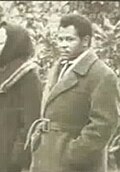
At a Glance
A Land That Bred Revolution: The Bamiléké Highlands
To understand Abel Kingue is to understand the specific landscape and social structure of the Bamiléké highlands, because the highlands produced him as surely as the highlands produced the revolt he led. The Bamiléké plateau of western Cameroon is a high, green, volcanic country of remarkable fertility, cut by deep river valleys and populated at densities unusual for sub-Saharan Africa. The French colonial administration encountered in the Bamiléké a people organised into dozens of small chieftaincies — each with its own fondom, its own traditions of land tenure, its own complex system of secret societies and age-grade organisations that regulated political life and the transfer of authority. The French dismantled what they could not instrumentalise, manipulating chiefly succession to install compliant fons, converting communal land-tenure systems to accommodate European plantation agriculture and cash-crop extraction, and imposing the indigénat — the system of summary administrative punishment without trial — on a population that had previously governed itself through deeply rooted customary institutions.
Into this landscape came the UPC, and into this landscape was born Abel Kingue. The UPC's message resonated in the Bamiléké highlands not because the people there were more radical than other Cameroonians but because the colonial dispossession had been more complete and more visible. The highlands had the highest density of French-owned agricultural operations. The highlands had the most intensive extraction of forced labour for road-building and administrative projects. The highlands had the most aggressive manipulation of traditional chiefly authority. When Ruben Um Nyobé came to the highlands and spoke about sovereignty, about the land, about the right of Cameroonians to govern themselves without French tutelage, he was speaking directly to the lived experience of hundreds of thousands of people whose grandparents had known a different life.
The Banning, the Underground, and the Turn to Arms
The French colonial administration banned the UPC in July 1955, a decision that reflected both the party's growing mass following and the Cold War logic of the colonial state, which classified any serious African nationalism as a communist threat. The ban did not destroy the UPC — it transformed it. What had been an open political party with branches, newspapers, and elected representatives became a clandestine organisation, and what had been peaceful political agitation became, by necessity, armed resistance. The French brought in additional troops, declared states of emergency in the Bamiléké and Mungo regions, and began systematic military operations against UPC strongholds. Villages were burned. Suspected UPC supporters were arrested, tortured, and killed. The maquis — the guerrilla networks that the UPC built in the forests and farmlands of the highlands — became the only form that political organisation could take.
Abel Kingue entered this underground at a time when commitment meant not the risk of arrest but the near-certainty of death. The choice he made was not made in ignorance. He had seen what French pacification looked like in the highlands. He understood that the UPC's insistence on genuine independence — not the managed transfer of power to friendly elites that the French were preparing — would be met with force, and that force would have to be answered with force. The maquis commanders of the Bamiléké were not adventurists. They were men and women who had concluded, on the available evidence, that no peaceful path to real sovereignty remained.
The Killing of Um Nyobé and the Succession of Command
On 13 September 1958, French forces ambushed Ruben Um Nyobé in the forest near his home village of Boumnyébel and shot him dead. Um Nyobé had been the UPC's secretary-general, its most important intellectual figure, and the man who had made Cameroon's case before the United Nations Trusteeship Council with a clarity and moral authority that had earned him the nickname "Mpodol" — the one who carries the voice of the people. His death was a catastrophic blow, but it did not end the struggle. Félix-Roland Moumié assumed leadership of the exile wing of the UPC from bases in Guinea and Ghana. Inside the country, the maquis continued. Abel Kingue was among the commanders who held the Bamiléké networks together in the years between Um Nyobé's death and the formal independence of 1960.
That formal independence — January 1, 1960, under the government of Ahmadou Ahidjo — was exactly what the UPC had spent twelve years trying to prevent: a transfer of juridical sovereignty without any transfer of real power, a flag independence that left French troops on Cameroonian soil, French advisers in every ministry, French companies in control of the export economy, and a Cameroonian president who owed his position to French sponsorship. The UPC called it independence in quotation marks, and the maquis went on fighting.
Moumié's Murder and the International Dimension
In November 1960, Félix-Roland Moumié was poisoned in Geneva. A man presenting himself as a journalist invited Moumié to dinner, slipped thallium into his drink, and disappeared. Moumié died in hospital on 3 November 1960. The assassin was later identified as a French intelligence operative working for the SDECE. The murder of Moumié — following the killing of Um Nyobé, the systematic assassination of UPC figures inside Cameroon, and the deployment of French forces in counterinsurgency operations — formed part of a coordinated French strategy to destroy the Cameroonian independence movement by eliminating its leadership wherever they could be found, whether inside the country or in exile in Europe or independent Africa.
For Abel Kingue, operating in the Bamiléké highlands, these deaths in Geneva and the forest meant a narrowing of command. He was not an exile. He was not a politician in a distant capital. He was a guerrilla commander whose entire world was the highlands, the forest paths, the network of trusted supporters, the constant calculation of where the next French sweep would fall and how to move before it arrived. The loss of Moumié was strategic as well as personal — it severed one of the exile movement's most important international connections, at precisely the moment when international support was most needed.
The Long Maquis: Fighting into the 1960s
The conventional narrative of African decolonisation treats 1960 as the year when French Africa became free, and treats the subsequent violence in Cameroon as an internal security matter — a government suppressing disorder — rather than as a colonial war continued by proxy. The UPC's maquis tells a different story. In the Bamiléké highlands, armed resistance to the Ahidjo government and its French backers continued well into the 1960s, involving large-scale military operations, mass displacements of civilian populations, and a level of violence that French and Cameroonian official sources worked hard to conceal from international scrutiny.
Abel Kingue commanded guerrilla units operating in this environment. The maquis sustained itself through an intimate relationship with the civilian population — families who hid fighters, women who carried supplies, fons and church elders who provided intelligence, young men who rotated between the fields and the forest. It was a total-population resistance of the kind that colonial pacification found most difficult to destroy, because destroying it meant destroying the civilian communities that sustained it, which French and Cameroonian forces did not hesitate to do. Villages were burned, crops destroyed, collective punishments imposed, and the mass relocation of civilian populations undertaken in ways that replicated French methods in Algeria and Vietnam.
Ernest Ouandié and the Final Phase
Abel Kingue worked in the field in conjunction with Ernest Ouandié, who had been a UPC deputy secretary-general and who returned to Cameroon clandestinely in the 1960s after years in exile to lead the internal movement. Ouandié's presence inside the country gave the remaining maquis a connection to the UPC's political leadership, and his work coordinating between the internal resistance and whatever external support remained was crucial to keeping the movement alive. But the resources were dwindling, the international climate had shifted — most African governments, newly independent themselves, were unwilling to support armed movements against neighbouring states — and the French military and intelligence apparatus was applying increasingly sophisticated counterinsurgency techniques.
Ouandié was captured in August 1970. He was tried by a military tribunal, convicted of terrorism and subversion, and publicly executed by firing squad on 15 January 1971 alongside two others. The execution was staged as a public spectacle in Bafoussam — the capital of the Bamiléké region — in a deliberate demonstration of state power intended to crush any remaining will to resist. Abel Kingue was captured and executed later that same year. With his death, the armed phase of the Cameroonian independence struggle — which had begun with the banning of the UPC in 1955 — finally ended, sixteen years after it had started.
The Historical Record: What Was Suppressed and Why
The suppression of Cameroonian revolutionary history did not end with the deaths of its protagonists. Under Ahmadou Ahidjo and then Paul Biya, the official Cameroonian state narrative celebrated independence as a gift of French benevolence and depicted the UPC's armed struggle as banditry, terrorism, and communist subversion. The names of Um Nyobé, Moumié, Ouandié, and Kingue were absent from textbooks, from public monuments, from the calendar of national commemorations. The scale of the killing in the Bamiléké highlands — the estimates of 100,000 to 400,000 dead, the hundreds of villages destroyed, the mass population displacements — was simply not mentioned in official accounts of the period.
It was left to independent historians, to diaspora researchers, and to the survivors and descendants of the maquis to reconstruct what had happened. Scholars like Richard Joseph, Meredith Terretta, and Thomas Deltombe have worked to document the Cameroonian independence war in its full dimensions — to name it as a war, to count its dead, to restore the agency and the reasoning of the men and women who chose to fight rather than to accept the French-managed handover as the end of the colonial story. Abel Kingue belongs to this history. He was not a bandit or a terrorist by any meaningful definition of those terms. He was a military commander who fought for what the United Nations Trusteeship Council had in principle affirmed: the right of the Cameroonian people to genuine self-determination, under a government of their own choosing, free of external military and economic domination.
Legacy and the Unfinished Question
The question of what Cameroon might have become under genuine independence — under the programme that the UPC sought, rather than the managed handover that France delivered — is necessarily speculative, but it is not idle. The Cameroonian state that emerged from French sponsorship was one-party, authoritarian, and structured to perpetuate French economic dominance through the systems of Françafrique — the networks of patronage, bribery, and military guarantee that tied African client states to Paris for decades after formal independence. The Bamiléké region, whose revolutionary energy had powered the UPC's struggle, was subsequently treated with deep suspicion by successive Yaoundé governments, its people subject to discrimination and periodic violence in the politics of a state that had been built partly on their suppression.
Abel Kingue did not live to see Cameroon's post-independence trajectory. He died in 1971, a fighter who had spent most of his adult life in the maquis, sustaining a cause that his government and its French patrons were determined to destroy. In the Bamiléké highlands, his memory survived in the oral traditions of families who had hidden UPC fighters, in the quiet knowledge of communities who knew that the official history was a lie. He was a man who looked at the world as it was — the colonial world of dispossession, forced labour, and managed poverty — and decided that it was worth fighting to change, even knowing what that fight would cost. That is the kind of life that official history finds most inconvenient, and the kind of life that genuine history cannot afford to forget.