At a Glance
Léopoldville and the World of the Congo Trade Unions
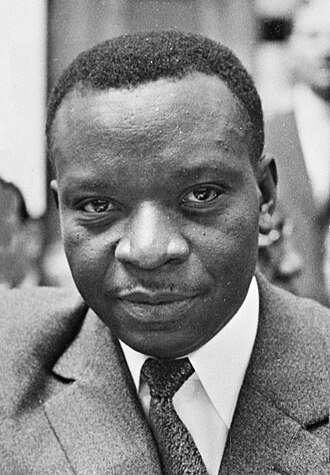
Cyrille Adoula was born in Léopoldville in 1921 — in the colonial capital that sat at the great Pool where the Congo River widened before its descent to the Atlantic, a city of Belgian administration buildings and African cités that was the economic and political nerve centre of the Belgian Congo. His formation was urban and working-class in a sense that distinguished him from the mission-educated rural évolués who produced many of the nationalist generation's intellectuals: he grew up in the cités, among the wage workers of the port and the factories and the railway, and his political consciousness was shaped by the direct experience of labour exploitation rather than by the more abstract encounter with European political philosophy that characterised the formation of a Lumumba or a Kashamura.
The trade union world that Adoula entered in the late 1940s and 1950s was itself a product of specific Cold War politics. The Belgian colonial administration had tolerated African trade unions as a safer outlet for worker discontent than political parties — unions could negotiate wages and conditions without demanding sovereignty. But the international trade union movement was itself divided between the communist-aligned World Federation of Trade Unions and the non-communist International Confederation of Free Trade Unions, and the ICFTU, backed by American AFL-CIO money and Cold War strategy, was actively building non-communist union movements across Africa as part of the broader effort to ensure that African independence, when it came, would not produce governments aligned with the Soviet bloc.
American Attention and the Making of a Moderate Alternative
The CIA's interest in Congolese politics predated independence. American officials had identified the Congo — with its uranium, its copper, its cobalt, its diamonds, its strategic position at the centre of the African continent — as a critical Cold War prize, and had decided well before June 1960 that whatever form Congolese independence took, it must not result in a government that would align with the Soviet Union or nationalise the mineral sector in ways that harmed American economic interests. The identification of Patrice Lumumba as a threat followed naturally from this calculation: Lumumba's non-alignment, his insistence on genuine sovereignty over Congolese resources, and his willingness to accept Soviet assistance when Belgian and American support was denied made him, in the CIA's analysis, unacceptably dangerous.
Adoula became, in this context, the preferred Congolese nationalist alternative — not because he was installed from the beginning as a puppet, but because his political profile satisfied the key criteria: he was genuinely Congolese and genuinely nationalist, he was not associated with the communist or Soviet bloc, he had demonstrated his credentials as a non-communist through his work in the ICFTU-affiliated union movement, and he was pragmatic enough to understand that Congo's economic survival in the short term required continued engagement with Western capital and institutions. He was not a perfect instrument of American policy — he had genuine political commitments and genuine disagreements with American and Belgian positions — but he was an acceptable one, and when the crisis of Lumumba's removal created the need for a new prime minister who could present himself as something other than a coup product, Adoula was available and suitable.
The Lovanium Parliament and the Question of Legitimacy
The parliamentary session convened at the University of Lovanium in August 1961 that produced Adoula's appointment as prime minister was an elaborate exercise in managed democracy. The United Nations facilitated the convening, provided logistical support, and exercised behind-the-scenes influence over which politicians were allowed to participate and which were excluded. American diplomats worked the corridors, building the coalition of parliamentary votes that would produce the necessary majority. The most radical Lumumbist figures — those who were either imprisoned, in exile, or in Stanleyville with Gizenga — were absent. The result was a parliamentary majority that was genuine in the narrow sense that real members of a real parliament had voted for it, and fraudulent in the broader sense that the conditions of the vote had been engineered to produce a predetermined outcome.
Adoula was not unaware of this context. He was a politically sophisticated man who understood that his installation had been managed and that this fact would permanently constrain his ability to claim popular legitimacy. He spent much of his tenure in office attempting to build a political base that was genuinely his own — through the trade union networks, through the gradual development of his Mouvement National Congolais–Adoula faction, through the patriotic capital generated by the ending of the Katanga secession. He never fully succeeded, but the attempt was genuine and the constraints on it were structural rather than personal.
The Katanga Endgame: Congo's Territorial Integrity Restored
The ending of the Katanga secession was Adoula's most significant achievement and his clearest demonstration that he was a genuine Congolese nationalist rather than simply a Western client. From the moment of his installation he pushed the United Nations and the Western powers to move beyond the futile negotiations with Tshombe — who had no intention of voluntarily reintegrating Katanga into a unified Congo that would nationalise the mines — toward the use of UN military force to end the secession. He overcame repeated American reluctance to authorise UN military operations that might damage the Union Minière's copper infrastructure or provoke a diplomatic crisis with Belgium.
The final UN military operation — Operation Grand Slam, launched in December 1962 — used force to end the secession. Tshombe's gendarmerie, reinforced by European mercenaries, was defeated. Katanga's major cities were occupied by UN forces. On 15 January 1963, Tshombe announced the end of the secession and the reintegration of Katanga into the Republic of the Congo. It was the first time since independence that the entire territory of the Congo was nominally under the control of a single national government — a fact that owed more to Adoula's persistence than the historical record has typically credited.
The problem was that territorial reunification did not resolve the political and economic conditions that had made the secession possible and that continued to generate armed opposition. The copper and cobalt of Katanga continued to be extracted by the Union Minière under contracts that returned minimal revenue to the Congolese government. The Congolese National Army remained unreformed, underpaid, and politically unreliable. The suppressed Lumumbist opposition — its cadres imprisoned, exiled, or underground — had not been reconciled but merely contained. The conditions for renewed insurgency were fully present, and Adoula's reformist approach to addressing them was systematically undermined by both the Belgians and Americans who wanted the status quo preserved and the Lumumbists who wanted it transformed.
The Impossible Position: Between Gizenga and Washington
The most revealing episode of Adoula's tenure was his handling of Antoine Gizenga and the Stanleyville government. The national reconciliation formula that dissolved the Stanleyville government was politically necessary for Adoula — the existence of an alternative government in Stanleyville made his own government's claim to represent the Congo permanently contestable — but the manner of Gizenga's subsequent arrest was a political disaster. By agreeing to bring Gizenga into the cabinet and then allowing his arrest, Adoula confirmed for every Lumumbist in Congo that the national unity government was not a genuine coalition but a mechanism for neutralising the opposition.
The episode illustrated the structural impossibility of Adoula's position. To the Lumumbists he was acceptable only if he genuinely shared their programme — the programme of Lumumba, of sovereignty, of economic nationalism. But if he genuinely pursued that programme, he would immediately lose the American and Belgian support that was the precondition of his government's survival. He was caught in a contradiction between the political legitimacy he needed among Congolese people and the external support he needed to maintain governmental function, and the contradiction could not be resolved because the interests it reflected were genuinely irreconcilable.
Replacement, Diplomacy, and the Judgement of History
The American and Belgian decision to replace Adoula with Moise Tshombe in July 1964 was, from the perspective of Western Cold War policy, pragmatic: Tshombe had the mercenaries, the Belgian contacts, and the Katangese gendarmerie that could rapidly rebuild the capacity of the Congolese military. From the perspective of Congolese political history it was catastrophic: installing the man who had presided over Lumumba's murder as prime minister of a national government was an act of such spectacular contempt for Congolese political sentiment that it made the Simba rebellion that immediately followed almost inevitable.
Adoula went to Washington as ambassador, then to Brussels — the capitals of the powers that had managed his installation and his removal, in the roles of post-ministerial diplomacy that African political careers often produced when their principal phase was over. He died in Lausanne in 1978 at fifty-six, a relatively young man, having spent the decade since his prime ministership in the twilight world of diplomatic representation.
His place in Congolese history is genuinely ambiguous, and that ambiguity reflects real complexity rather than moral evasiveness. He was not a hero of the independence struggle in the way that Lumumba was — he did not make the choices that led to martyrdom, did not refuse the compromises that would have cost him everything. But he was not simply a tool of Western power either. He achieved the reunification of Katanga against significant resistance from the Belgian government and the mining interests. He maintained a degree of Congolese political independence within the severe constraints of the Cold War context in which he operated. He was an honest politician who found himself in a position that honest politics could not fully inhabit, and who occupied it with more dignity than most.