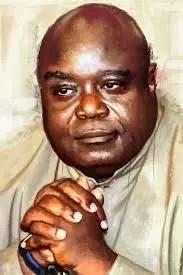
At a Glance
Moba, Katanga, and the Luba World
Laurent-Désiré Kabila was born on 27 November 1939 in Moba, a small port town on the western shore of Lake Tanganyika in Katanga province — the same province whose secession under Moise Tshombe had been the site of Patrice Lumumba's murder and one of the founding traumas of Congolese independence. His family was of Luba origin, from one of the largest and most historically significant ethnic communities of the southern Congo, whose kingdom had been one of the major political formations of the pre-colonial Great Lakes region and whose people had been among the first to experience the full violence of Leopold's rubber terror in the late nineteenth century.
The Luba connection gave Kabila a specific relationship to the Katanga question that ran through the rest of his political life. The Katanga secession that Tshombe had led with Belgian support had been experienced very differently by the Luba of northern Katanga — who were Lumumbist and suffered at the hands of Tshombe's Katangese gendarmerie — and by the Lunda and other southern Katangese communities whose elites had supported the secession. The violence of the 1960–63 period left deep marks on the Katangese political landscape that continued to shape Congolese politics decades later. Kabila's Luba identity and his Lumumbist political commitments were not separate: they emerged from the same experience of what colonial power and its post-colonial successors had done to his community.
The Young Lumumbist: Formation in the Independence Era
Kabila was twenty-one years old when the Congo became independent in June 1960 and twenty-one when Lumumba was murdered in January 1961. He was at an age of maximum political impressionability, and the events of those months — the extraordinary hope of independence, the catastrophic destruction of the Lumumba government, the CIA-backed coup, the transfer of Lumumba to Katanga and his murder there — formed the political consciousness of a generation of Congolese who drew the conclusion that the independence they had received was not the independence the country needed, and that the forces arrayed against genuine Congolese sovereignty were powerful, ruthless, and willing to kill to preserve their interests.
Kabila was one of this generation, and his subsequent three decades in the eastern maquis were, in a real sense, his response to what he had witnessed in 1960–61. The Lumumbist programme — non-alignment, economic sovereignty, a state that served the Congolese people — remained his explicit reference point throughout the long years in Fizi-Baraka. Whether he would have been able to implement it had he been given the time and the political conditions is a question that his presidency, tragically, was not long enough or stable enough to answer.
Che Guevara in the Eastern Congo: A Revolutionary's Critique
The encounter between Kabila and Ernesto Che Guevara in the eastern Congo in 1965 is one of the most written-about episodes in the history of African revolutionary politics, largely because Guevara's account of it — frank, detailed, and deeply critical of Kabila and the Congolese guerrilla commanders — survived and was published. Guevara had come to the eastern Congo at the invitation of the surviving Simba leadership and with the backing of the Cuban government, bringing approximately one hundred Cuban guerrillas with the intention of providing the training and revolutionary discipline that would reignite the rebellion after the fall of Stanleyville.
What he found was not what he had expected. The commanders he was supposed to be working with were frequently absent from the field. Kabila, whom Guevara had been told was one of the most capable of the Congolese leaders, was based primarily in Dar es Salaam rather than in the bush. The fighters were resistant to the military discipline that Guevara was trying to instil, partly because the dawa ritual system — the belief in spiritual invulnerability — made conventional military training seem both unnecessary and alien. The political organisation that should have been sustaining the military effort was absent. The relationship with the civilian population had deteriorated since the peak of the 1964 rebellion.
Guevara's conclusion — that the conditions for a successful guerrilla campaign did not exist in the eastern Congo in 1965 — was correct as a military assessment of that specific moment. His personal judgment of Kabila — that he was unreliable, undisciplined, and more interested in personal comfort than revolutionary struggle — was the judgment of a man who had spent his own revolutionary career in conditions of extreme physical hardship and who had no patience for the compromises that a thirty-year guerrilla leader operating in extreme isolation had found necessary to maintain his organisation's survival. The judgment was not wrong, exactly. But it missed something important about what three decades of endurance in the eastern maquis actually required, and about what kind of man could sustain a political commitment through those decades without either dying or giving up.
The Rwandan Context: How History Created the Opportunity
The campaign that toppled Mobutu in 1997 was made possible by a concatenation of historical events that Kabila could not have planned and did not control, but that he was positioned to exploit with remarkable effectiveness. The Rwandan genocide of April–July 1994, in which Hutu extremists killed approximately 800,000 Tutsi and moderate Hutu in a hundred days, ended with the military victory of the Rwandan Patriotic Front under Paul Kagame. The génocidaire forces — the Interahamwe and former FAR soldiers who had conducted the killing — fled with approximately 1.2 million Hutu refugees into eastern Zaire, establishing themselves in the refugee camps around Goma and Bukavu and using those camps as bases for continuing attacks on Rwanda and on the Tutsi communities of eastern Zaire.
Kagame's government was determined to destroy the génocidaire forces wherever they had established themselves, and eastern Zaire was the primary theatre of that determination. Uganda under Museveni had its own security concerns about anti-Ugandan rebel groups that Mobutu was harbouring in Zaire. The regional consensus among Rwanda and Uganda — and to a lesser extent Burundi, Angola, and Eritrea — was that Mobutu's regime was a security threat that needed to be removed. The AFDL was the vehicle that gave this regional military consensus a Congolese political face: Kabila provided the Congolese leadership, the political programme, and the historical Lumumbist legitimacy; Rwanda and Uganda provided the military capacity that made the campaign work.
Seven Months: The March Across the Continent
The AFDL campaign that began in October 1996 was one of the most remarkable military campaigns in African history — not because of its tactical sophistication, which was variable, but because of its strategic ambition and its outcome. Moving from Uvira and Goma in eastern Kivu, the AFDL and its Rwandan and Ugandan allies swept westward across the continent, covering over two thousand kilometres in seven months through some of the most difficult terrain on earth — the rainforests of the Congo basin, the rivers and swamps of Équateur province, the vast distances that separated the eastern margins from the capital on the western edge of the country.
Mobutu's army — the Forces Armées du Zaïre — had not been a functional military force in any real sense for years. It had been deliberately kept weak by Mobutu, who feared a military coup and had maintained the FAZ as a system of patronage rather than as a fighting force. When the AFDL's advance began, the FAZ disintegrated. Soldiers deserted. Commanders negotiated safe passage for themselves and their troops rather than fight. The towns and cities of the eastern Congo fell without serious resistance. By the time the AFDL reached the approaches to Kinshasa in May 1997, Mobutu — ill with prostate cancer, long since abandoned by his American patrons who had decided that the era of Cold War client dictators was over — had already left the country. Kinshasa fell on 17 May 1997, and Kabila declared himself president of the renamed Democratic Republic of Congo.
The Presidency: Sovereignty, War, and the Limits of Revolution
Kabila's presidency lasted three years and eight months — long enough to demonstrate both the genuine revolutionary commitments that had survived his decades in the eastern maquis and the severe limitations of his capacity to translate those commitments into governance. He moved quickly on some of the symbolic and material dimensions of sovereignty: renaming the country, asserting state claims over the mining sector that Mobutu had effectively surrendered to foreign interests, expelling the UN human rights investigators whose work was documenting massacres committed by AFDL and Rwandan forces during the 1996–97 campaign.
The outbreak of the Second Congo War in August 1998 — triggered by Kabila's rupture with his Rwandan and Ugandan backers, whom he had come to regard as a threat to Congolese sovereignty rather than a guarantee of his power — was the event that defined and ultimately destroyed his presidency. Rwanda and Uganda, which had installed him, now sought to remove him, backing new rebel movements in the east while Angola, Zimbabwe, and Namibia intervened militarily on Kabila's side in a conflict that drew in the armies of nine countries and produced a death toll that ultimately reached into the millions. The war was still ongoing when he was assassinated in January 2001.
Assassination and the Question of Succession
The assassination of Laurent-Désiré Kabila on 16 January 2001 — shot by a bodyguard in his own office in the Palais de Marbre — remains one of the most investigated and least resolved political murders in recent African history. The list of those with motive was extraordinarily long: Rwanda and Uganda, who had been at war with him for two and a half years; Mobutu loyalists who blamed him for their patron's fall; diamond and mineral trading networks whose operations he had disrupted; elements within his own government and military command who had been marginalised or threatened; and foreign intelligence services whose interests his nationalist economic policies had damaged.
No definitive conclusion about who ordered the assassination has been reached. Trials were held in the DRC and convictions obtained, but the proceedings were widely criticised as politically motivated and their findings have not been accepted as the full truth by independent observers. The assassin, Rachidi Kasereka, died at the scene — shot by Kabila's other bodyguards in the immediate aftermath — eliminating the most direct source of information about who had ordered the killing.
Legacy: The Complicated Revolutionary
Laurent-Désiré Kabila's legacy is genuinely complicated in ways that resist the simplifications of both hagiography and dismissal. He was a man who maintained a revolutionary commitment through thirty years of obscurity and isolation in conditions that would have broken most people, and who then demonstrated the organisational and political capacity to seize a historic opportunity when it presented itself. He toppled Africa's most entrenched and most internationally supported dictatorship, an achievement that had seemed impossible to most observers even months before it was accomplished. He restored the Democratic Republic of Congo to its proper name and asserted a degree of national dignity that Mobutu's kleptocracy had destroyed.
He was also a man whose governance was erratic, whose human rights record was poor, whose rupture with his Rwandan and Ugandan backers triggered a war of catastrophic proportions, and whose presidency — three years and eight months, ending in assassination — was far too short and too consumed by war to demonstrate whether the Lumumbist programme he claimed to represent could actually be implemented in the specific conditions of the post-Mobutu Congo. The question of what he would have done with more time and more peace is unanswerable, and that unanswerability is itself part of the tragedy: a life defined by endurance and then by the sudden violent interruption of what the endurance had finally achieved.
He was, in the end, a figure of the Lumumbist tradition — shaped by the assassination of Lumumba, committed to the programme of genuine sovereignty, formed in the eastern maquis where that commitment had been maintained through decades of marginalisation. Whether he would have been able to deliver on that programme is the question that his assassination closed, and that the subsequent two decades of Congolese history — his son's presidency, the ongoing wars in the east, the continued extraction of Congolese mineral wealth under conditions of violence that Lumumba would have recognised — has made more rather than less urgent.