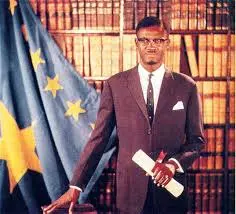
At a Glance
Onalua and the World That Made Him
Patrice Émery Lumumba was born on 2 July 1925 in Onalua, a village in what is now Sankuru district of Kasai-Oriental province — a territory far from the centres of colonial administration, in the forested heartland of the Congo basin where the rubber terror of Leopold's Free State had been most intensively conducted in the late nineteenth and early twentieth centuries. His people, the Tetela, had a particular history with colonial violence: the Tetela soldier mutiny of 1895–1900, in which Force Publique soldiers of Tetela origin revolted against their Belgian officers in response to the murder of Tetela leader Ngongo Leteta, was one of the most significant anti-colonial resistances of the early colonial period. This history was part of the cultural memory that Lumumba grew up within, and it shaped his understanding of the relationship between the Congolese people and colonial power in ways that distinguished him from the more accommodationist évolués of his generation.
His education was in Catholic mission schools — the standard route of colonial social mobility — and he demonstrated from early in his schooling the intellectual abilities that would make him stand out: a facility with language, an analytical intelligence, a memory that could absorb and deploy information with unusual speed and precision. But the mission education that provided these tools also provided its own limiting framework — a framework designed to produce useful colonial subjects rather than people capable of questioning the colonial system's premises. Lumumba absorbed what the mission offered and then moved beyond it, driven by a hunger for knowledge and recognition that the colonial system's limits could not contain.
The Évolué World and Its Contradictions
The category of évolué — the evolved African who had demonstrated sufficient mastery of European education and culture to be admitted to a marginal quasi-citizenship — was one of Belgian colonialism's most revealing inventions. It simultaneously acknowledged that Africans were capable of intellectual and cultural development and insisted that this development could only be measured by European standards — that the African who had evolved sufficiently was the African who had become most like a European. The immatriculation system — through which an African could apply for legal recognition as an évolué, with the attendant privileges of a separate legal status, the right to drink alcohol in European establishments, and a form of recognition as something other than a colonial subject — required passing a test of European cultural assimilation that was as demeaning in its application as it was marginal in its practical benefits.
Lumumba navigated this world with a combination of practical engagement and growing internal resistance. He worked as a postal clerk, wrote for Belgian and Congolese publications, participated in the évolué associations that were the only forms of African social organisation that the colonial administration permitted, and accumulated the credentials and the networks that would later serve his political work. But he was increasingly aware of the contradiction at the heart of the évolué system: that it promised recognition and delivered subordination, that it invited Africans to demonstrate their equality by accepting an institutional framework designed to ensure their permanent inferiority, and that the limit of what the évolué system could offer was incompatible with the dignity that it nominally celebrated.
The All-African People's Conference and the Political Education
The transformation of Lumumba from évolué intellectual to nationalist leader was accelerated by his attendance at the All-African People's Conference in Accra in December 1958 — the gathering of African nationalists and liberation movement representatives that Kwame Nkrumah organised as a demonstration of continental solidarity and a commitment to the mutual support of African independence movements. Lumumba went to Accra as an interested Congolese politician and returned as a transformed one — having encountered the full scope of the African independence movement, having heard the analyses of leaders and thinkers from across the continent, having understood the Congo's independence struggle not as a local negotiation with the Belgian administration but as part of a global revolutionary process in which the stakes were the nature of African sovereignty across an entire continent.
The conference crystallised for Lumumba the political framework that he had been developing through his years of writing and organising. It confirmed his commitment to non-alignment — to the position that the Congo should refuse to be drawn into either the Western or Soviet blocs and should use its independence to pursue genuinely Congolese interests. It deepened his understanding of pan-Africanism as a political programme rather than merely a cultural sentiment. And it connected him to the network of leaders — Nkrumah, Sékou Touré, Félix-Roland Moumié, Antoine Gizenga and others — who would become, in different ways and with different outcomes, the political family of African radical nationalism in the independence decade.
Building the MNC: The Only National Party
The founding of the Mouvement National Congolais in October 1958 was an act of political imagination as well as political organisation. To conceive, in the Belgian Congo of 1958, of a political party whose constituency was the entire Congolese people — Bakongo and Tetela, Luba and Mongo, Lunda and Bashi, the hundreds of communities across the vast territory that Belgian colonialism had lumped together under a single administrative unit without creating any of the institutions that might have made them a nation — required both a specific vision of what the Congo could be and a specific analysis of why the Belgian administration's preference for ethnic and regional fragmentation served colonial interests.
The MNC's programme was explicit and consistent: immediate independence, not the gradual preparation that Belgian paternalism proposed; reunification of the Belgian Congo as a single sovereign state, not the fragmentation into ethnic or regional units that Belgium was beginning to encourage as a way of preventing the emergence of a unified nationalist movement capable of demanding real sovereignty; non-alignment between the Cold War blocs; and the development of Congolese economic resources for Congolese benefit rather than Belgian profit. These were not vague aspirations. They were specific political commitments that, if implemented, would have fundamentally altered the economic and strategic position of the Congo in ways that Belgian and American interests could not tolerate.
Eighty-One Days: The Government That Was Destroyed
The elections of May 1960 gave the MNC the largest share of parliamentary seats — not a majority, but enough to make Lumumba the obvious prime ministerial candidate. After difficult negotiations that produced a coalition government with Kasavubu as head of state, Lumumba became prime minister of the Republic of the Congo on 24 June 1960, six days before independence. He was thirty-four years old. The government he formed was the most significant political achievement in Congolese history and the most important single moment in the history of African decolonisation — not because it succeeded, but because of what its destruction demonstrated about the limits that Western power was willing to enforce on African independence.
The eighty-one days of the Lumumba government were eighty-one days of cascading crisis. The Force Publique mutiny on 5 July 1960 — soldiers demanding Africanisation of the officer corps and better pay — was the first blow, triggering the flight of Belgian civilians and the unilateral re-intervention of Belgian troops. The Katanga secession on 11 July 1960 — Moise Tshombe declaring independence for the most mineral-rich province with Belgian military and financial support — was the second. The deployment of United Nations forces, which Lumumba had requested to expel the Belgian troops and which instead positioned itself as a neutral force that refused to help the elected government against the secessionists, was the third. And throughout this period, the CIA and Belgian intelligence were working actively to identify, fund, and coordinate the Congolese politicians who would be willing to remove Lumumba from power.
The crisis came to its head in September 1960. On 5 September, Kasavubu announced Lumumba's dismissal in a radio broadcast. Lumumba announced Kasavubu's dismissal in return. On 14 September, Colonel Mobutu staged his first coup, announcing that the army was neutralising both leaders. The CIA was the hidden architecture of this outcome — funding Mobutu, coordinating between the various anti-Lumumba factions, providing the intelligence and political support that made the coup viable. Lumumba was placed under nominal UN protection at his residence, which functioned as a house arrest. He escaped in late November, trying to reach Stanleyville and the support of Antoine Gizenga's continuing government. He was captured on 1 December 1960 by Mobutu's troops.
The Murder and Its Mechanics
What happened to Lumumba between his capture on 1 December 1960 and his murder on 17 January 1961 was documented in part by his captors and in fuller detail by subsequent investigations — including the Belgian parliamentary inquiry of 2001 and the ongoing work of historians with access to declassified CIA and Belgian intelligence files. He was held at Camp Hardy in Thysville, beaten repeatedly, and kept in conditions designed to humiliate rather than to process legally. The decision to transfer him to Katanga — to hand him to the man whose secession he had been trying to end, and whose personal hatred for Lumumba was well known — was made by Kasavubu and Mobutu with the knowledge and acquiescence of Belgian officials and CIA officers who understood what the transfer meant.
He arrived in Elisabethville, the Katangese capital, on 17 January 1961, already severely beaten. That evening, he was driven with Maurice Mpolo and Joseph Okito to a forest clearing outside the city. The execution was conducted by Katangese gendarmes under the command of Belgian officers — Captain Julien Gat and Warrant Officer François Son were present, and the involvement of other Belgian officers has been documented. Lumumba, Mpolo, and Okito were shot, one by one. The bodies were buried. Later that night or the following day, Gerard Soete — a Belgian security official — oversaw the exhumation and destruction of the bodies. They were cut into pieces and dissolved in sulphuric acid. Soete kept a tooth and two bullets as trophies, displaying the tooth to a journalist in a 1999 interview.
The Belgian government's complicity in the murder was formally acknowledged — to the degree that governments acknowledge such things — in the 2001 parliamentary inquiry, which concluded that Belgian officials bore moral responsibility for the assassination even if they had not directly ordered the killing. The CIA's role has been documented in declassified files but has never been subject to formal legal accountability. No one has been prosecuted for the murder of Patrice Lumumba. The tooth recovered by Soete was returned to Congo in 2022, sixty-one years after the murder, in a ceremony attended by Congolese and Belgian officials.
Why It Mattered: The Global Significance of a Local Murder
The murder of Lumumba was immediately understood across Africa and in the international left as one of the defining acts of the Cold War's African dimension — a demonstration that Western powers would use assassination to prevent an African government from pursuing genuine economic sovereignty, and that the formal independence which the decolonisation process was delivering to African states was not sufficient to protect elected leaders who took that independence seriously. The reaction across Africa was immediate and intense: riots outside Belgian embassies, denunciations from governments across the continent, the resignation of several African members of the UN Secretariat in protest at what they regarded as the UN's complicity in Lumumba's fate.
In the longer term, the murder shaped the entire political landscape of the 1960s Congolese crisis. Antoine Gizenga's Stanleyville government was explicitly a continuation of the Lumumba government. The CNL's 1964 rebellion was explicitly Lumumbist in its programme. Christophe Gbenye's People's Republic at Stanleyville was proclaimed in Lumumba's name. Laurent-Désiré Kabila, who had been a young Lumumbist at the time of the murder, carried the tradition through thirty years in the eastern maquis to the seizure of power in 1997. The tradition continues to shape Congolese politics today. Lumumba's programme — genuine sovereignty, economic self-determination, the use of Congolese resources for Congolese development — has not been implemented, and its non-implementation is the defining political fact of postcolonial Congolese history.
The Speech That Could Not Be Unsaid
Of all the things that Lumumba said and did in his brief political life, the independence day speech of 30 June 1960 has the most lasting significance — not because it was the most politically effective act of his career, but because it was the most honest. The speech said what African leaders were not supposed to say in the presence of their former colonisers, at the diplomatic ceremony of their own independence, before an international press corps and a watching world: that colonialism had been a system of violence and humiliation, that the independence being celebrated had been won against colonial resistance rather than granted by colonial generosity, and that the Congolese people were entering independence with both the right and the intention to govern themselves for their own benefit rather than for the benefit of the metropolitan power that had extracted their labour and their resources for eight decades.
King Baudouin had praised Leopold II's civilising mission in his own speech on the same platform. Lumumba's response — the testimony of a people who had lived under that civilising mission — was the response that the entire colonial system had spent eight decades trying to prevent anyone from delivering in these terms, in this forum, to this audience. It could not be unsaid. It defined what the independence moment was actually about, in a way that all the diplomatic language of the official ceremonies had been designed to obscure. It was, in its way, an act of liberation as significant as any military victory — the refusal to perform the fiction of grateful subjects receiving the gift of freedom from generous colonisers, replaced by the insistence on the truth of what had happened and what it had cost.
Legacy: The Standard Against Which Everything Since Is Measured
Patrice Lumumba has been dead for more than sixty years, and in those six decades he has become the standard against which Congolese political life is measured and found wanting. Every Congolese government since his murder has had to position itself in relation to the Lumumbist tradition — either claiming to continue it, as Kabila père claimed and as Gizenga explicitly represented; or silently acknowledging it by suppressing it, as Mobutu did for thirty-two years; or negotiating with it in the complex ways that contemporary Congolese politics requires. No Congolese political figure since 1961 has achieved the moral authority that Lumumba's martyrdom conferred on him, and no Congolese political programme has fully engaged with the questions his programme raised: what genuine sovereignty means for a country whose mineral wealth is coveted by the entire world, and how that sovereignty can be maintained against the forces that destroyed his government in 1960.
These questions are not historical. They are present and urgent in a country where the eastern Congo has been at war, on and off, for nearly thirty years; where the minerals that Lumumba's programme proposed to bring under Congolese sovereign control — coltan, gold, cobalt, cassiterite — are extracted in conditions of violence and sold through networks that enrich foreign companies and armed groups while the communities on whose land they are found remain among the poorest on earth; and where the political institutions that formal independence was supposed to create have not produced the state capable of converting natural wealth into human development that the Lumumbist programme demanded.
Lumumba was not a perfect man or a flawless politician. He made errors of judgment, overestimated the support he had and underestimated the forces arrayed against him, handled some of the crisis of 1960 in ways that were tactically counterproductive. But he was a man who understood what genuine independence required, who was willing to say so in the most public forum available to him, and who paid for that understanding and that willingness with his life at thirty-five. The Congo he envisioned — sovereign, dignified, in control of its own resources, governing itself for the benefit of its own people — has not yet come into existence. That is the measure of what his murder cost, and what remains to be achieved.