At a Glance
The Musseques of Luanda and the Formation of a Street-Level Politician
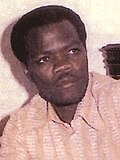
Nito Alves was a product of urban Angola in a way that distinguished him from almost every other significant figure in the MPLA's history. The movement's founding generation had been educated in mission schools, had studied in Portugal, had spent years in exile in Congo-Brazzaville or Lusaka, had fought on guerrilla fronts in the Angolan interior. Their political formation was cosmopolitan, metropolitan, internationalist — shaped by exposure to European leftist politics, to pan-African intellectual currents, to the clandestine organisation cultures of communist parties and liberation movement exile networks. This formation gave the MPLA its distinctive ideological character — sophisticated, non-racial, Marxist in analytical framework, connected to the global left — but it also created a distance between the leadership and the social world of the urban African poor in whose name the movement claimed to speak.
The musseques — the informal settlements of reed and corrugated iron that housed Luanda's African majority outside the ordered colonial city of European buildings and infrastructure — were a world that most of the MPLA's founding leaders knew primarily as an object of literary attention rather than as a lived environment. The Generation of 1950's poetry had celebrated musseque life as an expression of Angolan cultural authenticity, but the poets themselves had generally come from somewhat more advantaged positions within the colonial social structure. Nito Alves came from the musseques themselves — grew up in them, understood their social rhythms from the inside, spoke the Kimbundu-inflected Portuguese of their streets, and could engage with their residents in terms that the more educated and cosmopolitan MPLA leadership could not easily replicate.
This gave him a capacity for mass political mobilisation that was genuinely unusual within the MPLA. He could draw crowds; he could generate the kind of direct emotional identification between a political leader and a popular constituency that most of the MPLA's leadership could not produce. After independence, when the MPLA needed to build popular support in Luanda's informal settlements and to organise the urban African poor into the structures of the new party-state, Nito Alves was the person who could do this work most effectively. His appointment to the Interior Ministry in November 1975 reflected the recognition of this capacity and also — perhaps — the attempt to give him a formal institutional position that would direct his political energy into state-building rather than faction-building.
The Ideological Critique — Race, Class, and the Character of the Revolution
Nito Alves's critique of the MPLA government that emerged after independence in November 1975 was both ideological and racial, and the two dimensions were intertwined in ways that made it simultaneously compelling to his constituency and alarming to the MPLA leadership. At its core, the Nitista critique argued that the independence that had been achieved on 11 November 1975 was not the genuine African revolution that the liberation struggle had promised, because the government that had taken power was dominated by mestiços and white Angolans — people of mixed race or European descent — rather than by the Black Africans who constituted the vast majority of Angola's population and who had borne the greatest burden of Portuguese colonialism.
This critique resonated powerfully in the musseques. The MPLA's leadership — Agostinho Neto, Lúcio Lara, and many of the other prominent figures in the post-independence government — were mestiços or had significant European cultural formation. The professional and technical positions in the new state were disproportionately occupied by white Angolans who had sided with the MPLA against the Portuguese but who were racially and culturally distant from the African majority. Cuban military advisers and Soviet technical experts were visible presences in Luanda. From the perspective of a musseque resident who had grown up under Portuguese colonialism and who had expected independence to produce a fundamental transformation in who held power and who benefited from economic resources, the composition of the new government was a disappointment that demanded explanation and challenge.
Alves provided that explanation and articulated that challenge. His mass meetings in Luanda's popular neighbourhoods drew thousands of people who responded to his populist racial politics with an enthusiasm that the MPLA's more ideologically orthodox communications could not match. He was accusing the MPLA government — in terms that were sometimes explicit and sometimes encoded — of having conducted a liberation struggle in the name of the African poor while delivering power to a multiracial elite that had more in common with the colonial administrative class than with the musseque dwellers it claimed to serve.
The MPLA leadership's response to this critique was to characterise it as racial sectarianism — an attempt to divide the Angolan revolution along racial lines in a way that contradicted the movement's foundational commitment to non-racial Angolan nationalism — and as a Soviet-backed conspiracy against Neto's leadership. Both characterisations had some validity: the explicit racial framing of Nitismo was genuinely at odds with the MPLA's stated ideology, and there is evidence of contacts between Alves's faction and elements of the Soviet and Cuban military presence in Angola that were concerned about the direction of Neto's government. But the characterisations also served to deflect attention from the legitimate grievances that Alves was articulating — grievances about economic inequality, political exclusion, and the gap between the revolution's promises and its post-independence realities that were real and were not resolved by calling their articulator a racist.
27 May 1977 — The Coup, the Killing, and the Silence
The events of 27 May 1977 began in the early morning hours when units of the MPLA's Eighth Brigade, which had been infiltrated or won over by Nitista loyalists, moved against several key locations in Luanda. The Luanda radio station was seized and used to broadcast calls for the population to rise against the Neto government. The São Paulo prison was attacked and political prisoners — including Nitista activists who had been arrested in the preceding months — were freed. Armed civilians associated with the Nitista movement appeared on Luanda's streets.
The coup attempt was badly organised and failed to achieve the rapid seizure of key state institutions that would have been necessary for success. The Ministry of Defence, the Central Committee headquarters, and the presidential palace remained in government hands. Cuban military forces, which were present in Angola in large numbers to support the MPLA against UNITA and South African forces, responded rapidly to requests from Neto's government and played a significant role in suppressing the uprising. By the afternoon of 27 May, the coup had been crushed. Nito Alves and José Van Dúnem were dead — killed in the fighting according to the official account, captured and executed according to alternative accounts that the secrecy of the subsequent investigation has made impossible to definitively confirm or refute.
What followed the coup's suppression was a wave of killing that went far beyond any legitimate response to a failed political uprising. MPLA party and state structures, Cuban military units, and Angolan security forces conducted arrests, interrogations, and executions across Luanda and in other parts of Angola over the weeks and months after 27 May. The targets included identified Nitista activists, but also extended to party members who had expressed sympathy with Alves's critique, to intellectuals and professionals who were suspected of disaffection, and to ordinary citizens denounced by neighbours, rivals, or security officials who were using the purge to settle personal scores. The number of people killed has never been officially established — estimates range from two thousand to thirty thousand, with the higher figures reflecting the accounts of survivors and witnesses rather than government records, which have not been made public.
The MPLA government's response to the killing was to impose a silence that lasted for decades. The 27 May events were not publicly discussed, not investigated, not commemorated, and not acknowledged as a significant episode in Angolan post-independence history. Survivors who tried to speak about their experiences risked renewed persecution. Researchers who attempted to document the events found official sources unavailable and witnesses reluctant to speak. The suppression of the historical record of 27 May was itself a political act — an attempt to erase from public consciousness an event that revealed the MPLA government's capacity for mass political violence against its own constituency.
Rehabilitation, Reckoning, and Continuing Controversy
The partial rehabilitation of 27 May as a subject of public Angolan discourse came slowly, decades after the events, as the political pressures that had enforced silence gradually eased. The post-Santos era — after José Eduardo dos Santos stepped down from the MPLA presidency in 2017 — created somewhat more space for historical discussion of the independence period's darker episodes. Angolan civil society organisations, survivor groups, and academic researchers have pressed for a fuller accounting of the 27 May killing, and there have been official acknowledgments that the events occurred and that people died — though the scale and the character of the killing have not been fully officially acknowledged.
The question of how to assess Nito Alves himself remains genuinely contested. For many Angolans — particularly those from the musseques and from the communities most affected by the post-independence economic inequality that Nitismo had critiqued — he is a martyr: a man who stood up for the African poor against a government that had betrayed the liberation struggle's promises, and who was killed for it. For the MPLA and its supporters, he was a racial demagogue and a factional conspirator whose reckless coup attempt destabilised a fragile new state fighting a devastating civil war, and whose killing was a regrettable but understandable response to an existential political threat.
Neither of these assessments is entirely wrong, and neither is entirely satisfactory. Nito Alves was simultaneously a genuine champion of the urban poor's legitimate grievances and a racial populist whose explicit racial framing of those grievances pointed toward ethnic division rather than class solidarity. He was a political organiser of real talent who chose to challenge the MPLA government through a coup attempt rather than through the internal party mechanisms that, however inadequate, were the legitimate channels for political dissent within the movement's structures. And he was the victim — along with thousands of others whose connection to his politics was marginal or nonexistent — of a state that responded to political challenge with a violence that exceeded any proportionate definition of self-defence.
The thirty-one years of Nito Alves's life contained enough political energy, moral complexity, and historical consequence to have filled a much longer biography. His story is, in compressed and tragic form, the story of the Angolan revolution's contradictions — between its multiracial founding ideology and the racial realities of its post-independence governance, between its stated commitment to the African poor and the actual distribution of power and resources in the post-independence state, and between the political violence of the liberation struggle and the political violence that the new state turned on its own people.