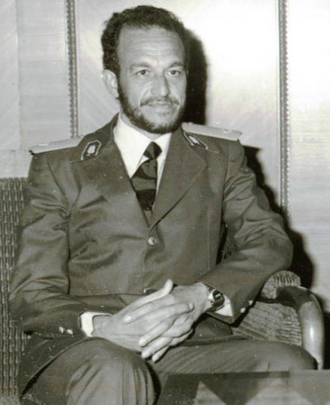
At a Glance
Luanda, Mestiço Formation, and the Path to Military Command
Iko Carreira was born in Luanda in 1938, into the colonial city's mestiço community — the social world of mixed-race Angolans who occupied the intermediate position between the white settler minority and the African majority that Portuguese colonial society had constructed and maintained through decades of deliberate social engineering. The mestiço community of Luanda was not homogeneous: it ranged from individuals almost entirely integrated into Portuguese cultural life and aligned with the colonial administration to others who identified primarily with their African heritage and were committed to anti-colonial politics. The determining factor was typically education, family history, and the specific social networks in which individuals were embedded — and for those who encountered the anti-colonial political currents that were flowing through the educated African and mestiço community of Luanda in the late 1940s and 1950s, the commitment to liberation politics was as natural as breathing.
Carreira's specific path to military command reflected the MPLA's need, as it moved from a clandestine urban political organisation toward a guerrilla movement capable of sustained armed operations, for people with military training and leadership capacity. The movement's founding intellectual generation — Viriato da Cruz, Agostinho Neto, Lúcio Lara — were political thinkers and organisers rather than military commanders. As the decision to launch an armed struggle became inevitable in the early 1960s, the MPLA needed to develop a cadre of military leaders who could direct guerrilla operations with the professional competence that the Portuguese military, whatever its political failings, would bring to the conflict. The Soviet Union and its Warsaw Pact allies were willing to provide this training through the military programmes that they made available to liberation movements aligned with the socialist bloc.
Carreira was among those who received this training — in the Soviet Union and Eastern Europe, studying the military sciences that the Red Army and its allied forces had developed and codified. The training gave him something that most guerrilla commanders lacked: a systematic understanding of military operations at the operational and strategic level, not just the tactical level of the individual ambush or the small-unit action. This capacity for operational-level military thinking became critically important when the MPLA had to fight not merely as a guerrilla force conducting hit-and-run operations against Portuguese colonial troops, but as a conventional military power defending territory against the combined forces of the FNLA, UNITA, Zaire, and South Africa in the 1975 independence war.
The Liberation War — From Guerrilla to Conventional Commander
The MPLA's armed struggle against Portugal was conducted across three main fronts: the northern front in the Dembos and Cabinda regions; the eastern front in Moxico; and sporadic operations in other parts of the country. Carreira commanded forces on the northern front, which was in many ways the most difficult operational environment — the region was densely forested, close to the Congo border through which the FNLA also operated, and subject to intensive Portuguese counter-insurgency operations that made sustained guerrilla presence difficult to maintain. His years of command on this front gave him the battlefield experience to complement his formal military training and established him as the MPLA's most capable field commander.
The relationship between the MPLA's military and political leaderships was never entirely smooth — the tensions between the guerrilla commanders in the field and the exile political leadership in Brazzaville and Lusaka that had fuelled Daniel Chipenda's Eastern Revolt also affected the northern front, though Carreira's political position was more consistently aligned with Neto's leadership than Chipenda's had been. Carreira understood that in the MPLA's structure, military command was ultimately subordinate to political leadership — a principle rooted in the Leninist vanguard party theory that shaped the MPLA's organisational culture — and he operated within this framework even when it created frictions with his own military judgements.
Portugal's Carnation Revolution of April 1974 and the subsequent rapid movement toward decolonisation transformed the strategic situation in ways that required a fundamental shift in the MPLA's military approach. The guerrilla war against Portuguese colonial forces was ending; a different kind of military conflict — for control of the territory and the capital of an independent Angola — was beginning. The MPLA's military preparations for this new conflict were Carreira's primary responsibility through 1974 and 1975, as he worked to build up the movement's conventional military capacity in anticipation of the confrontation with the FNLA and UNITA that was becoming inevitable as the Alvor Agreement's transitional government collapsed.
The Battle for Luanda — The Independence War of 1975
The military situation in Angola through mid-1975 was one of progressive deterioration for all attempts at peaceful transition. The Alvor Agreement's transitional government, which had included all three movements, collapsed under the weight of military clashes that each movement blamed on the others. By August 1975, when the MPLA succeeded in expelling the FNLA from Luanda in fighting that killed hundreds of people and drove thousands of FNLA supporters from the capital, the country was effectively in a state of civil war, with each movement controlling different territory and each receiving accelerating external military support from its Cold War patrons.
The critical military question for the independence date of 11 November 1975 was which movement would control Luanda — the capital, and therefore the seat of the government that would be recognised internationally as the legitimate authority of the new state. The MPLA held Luanda after the August fighting, but its hold was threatened from two directions: the FNLA, advancing southward from the north with Zairean army support and CIA-provided weapons, was approaching Luanda from the north; and the South African Defence Force, which had entered Angola from Namibia in October 1975, was advancing northward with a combined SADF-UNITA column that came within two hundred kilometres of Luanda.
Carreira directed the military response to both threats in coordination with the Cuban military mission that began arriving in significant numbers in November 1975. The Battle of Quifangondo on 10 November — the day before independence — was the decisive engagement against the FNLA's northern advance. MPLA and Cuban forces, equipped with Soviet BM-21 multiple-rocket launchers that dramatically outranged the FNLA's weapons, destroyed the FNLA and Zairean column that was attempting to enter Luanda. The engagement was militarily lopsided — the BM-21, firing in massed salvoes, was a weapon that the FNLA had no means of countering — but its political consequences were enormous: the FNLA's defeat at Quifangondo meant that no challenge to the MPLA's control of Luanda was possible on independence day, and the international recognition that flowed to the government controlling the capital on that date decisively shaped the subsequent trajectory of Angolan politics.
Against the South African advance from the south, Carreira coordinated with the Cuban forces that were being rapidly deployed in a pattern that South African military intelligence had not anticipated. Operation Carlota — the Cuban military intervention named after a Cuban slave who had led a rebellion in the nineteenth century — airlifted Cuban troops and equipment into Angola in a logistical operation of extraordinary speed and complexity. The Cuban forces, equipped with Soviet T-34 and T-54 tanks and with artillery that the South African column lacked, halted the South African advance and began a counter-offensive that drove the SADF out of Angola by early 1976. South Africa's withdrawal — which it had not expected to make — was a military and political defeat that reverberated through the subsequent history of Southern Africa and contributed to the internal political dynamics that eventually brought apartheid to an end.
Building FAPLA — The Post-Independence Military Challenge
Appointed Angola's first Minister of National Defence immediately after independence, Carreira faced a military challenge of daunting complexity. The FAPLA that he was tasked with building was not a military force that could be constructed from scratch — it had to be assembled from the diverse guerrilla contingents that the MPLA's three liberation war fronts had produced, supplemented by fighters who had served with the FNLA and UNITA and who were being integrated into the new national army, and organised under a unified command structure that had not previously existed. The fighters who formed FAPLA's initial cadres had been trained in different locations, had used different weapons, had operated under different command cultures, and had in some cases fought against each other during the independence war's intra-Angolan fighting. Creating a coherent army from this material, in the midst of an ongoing civil war against UNITA and with the continued threat of South African military intervention, was among the most difficult institutional tasks that any newly independent African state had faced.
The Cuban military presence was both indispensable and complicated in this context. Cuban forces — which numbered in the tens of thousands by the late 1970s — provided the military capacity that FAPLA alone could not yet supply, filling gaps in air defence, armour, and conventional infantry capability that the nascent Angolan army was not yet able to cover. But the relationship between FAPLA and the Cuban forces raised questions of command authority and Angolan sovereignty that were sources of genuine tension even within an alliance of shared political commitment. Carreira managed these tensions with the pragmatism of a professional soldier who understood that the alternative to Cuban military support was FAPLA's defeat, while also working to build Angolan military capacity that would over time reduce the dependence on Cuban forces.
The 27 May 1977 coup attempt and its suppression created additional challenges for FAPLA's development as an institution. The infiltration of MPLA military units by Nitista sympathisers — the Eighth Brigade's participation in the coup — demonstrated that the political reliability of the army's structures could not be assumed, and the purge that followed the coup's suppression removed significant numbers of officers and soldiers from FAPLA's ranks at a time when trained military personnel were already scarce. Carreira had to rebuild the army's command structure in the aftermath of the coup while simultaneously managing the civil war's military demands — a challenge that tested the institutional resilience of an organisation that was barely two years old.
Later Years and the Soldier's Legacy
Iko Carreira held the Defence Ministry portfolio until around 1980, when he transitioned to other senior positions within the Angolan state and MPLA party structures. His post-ministerial career was respectable but less publicly prominent — the pattern of the founding generation's gradual transition from executive responsibility to advisory and honorary roles as a younger cohort of MPLA politicians and military officers took the operational reins. He remained associated with the MPLA's military establishment and with the veterans' networks of the liberation struggle, and he participated in the public life of the post-independence state without the controversies that had characterised some of his contemporaries' later careers.
He died in Luanda in March 2000, at sixty-two — younger than many of his founding-generation contemporaries would prove to be, and at a moment when the civil war he had spent his adult life fighting was entering what would prove to be its final phase, though no one could know that at the time. His death was acknowledged by the MPLA government with the respect due to a military founder of the state, and Angolan armed forces institutions bear his name in recognition of his contribution to the country's military history.
The legacy of Iko Carreira is the legacy of the professional soldier in a revolutionary movement — a figure whose contribution is essential and whose specific skills make possible outcomes that the movement's political and intellectual leaders could not achieve without him, but whose work is less easily commemorated in the hagiographic language of liberation because it involved the direction of lethal force rather than the articulation of political vision. The MPLA could not have held Luanda on 11 November 1975 without the military decisions that Carreira made and the Cuban coordination that he managed. The FAPLA that fought the civil war for a quarter century after independence would not have existed without the institutional building he undertook as Defence Minister. These contributions are as real and as significant as any that the liberation generation made — and they deserve a prominence in the historical record that the typical silence around military figures in civilian-dominated political historiography has too often denied them.