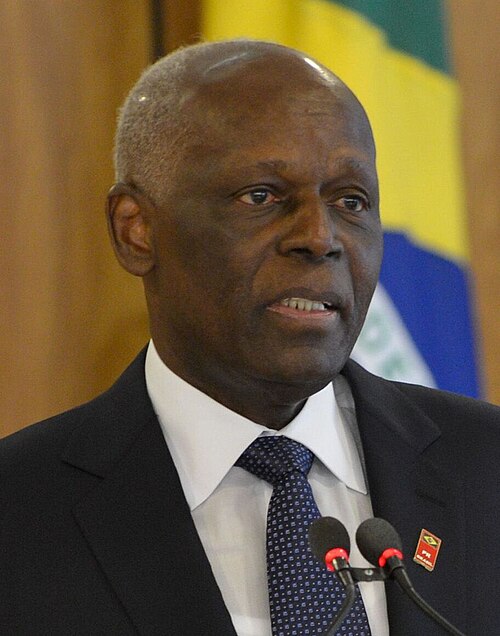
At a Glance
Sambizanga, the Musseque World, and the Making of a Party Man
José Eduardo dos Santos was born in 1942 in Sambizanga — not the romanticised Sambizanga of Sarah Maldoror's later film, but the lived Sambizanga of colonial Luanda's African poor: a densely populated informal settlement of reed and corrugated iron dwellings without running water or reliable sanitation, whose residents were the domestic workers, dock labourers, informal traders, and urban poor who formed the African majority of the colonial capital. Growing up in Sambizanga in the 1940s and 1950s meant growing up with an immediate, daily experience of the colonial racial order's material consequences — the difference between the life lived in the musseque and the life lived in the white settler city that the musseque surrounded was visible, constant, and impossible to explain as anything other than the product of a racial hierarchy that had nothing to do with the individual merits of those it disadvantaged.
He joined the MPLA's youth structures in 1961, at eighteen — precisely the moment when the armed struggle was beginning and when the MPLA was engaged in the kind of rapid recruitment that the outbreak of open conflict made both necessary and possible. His selection for the Soviet educational programme that sent him to Baku to study petroleum engineering reflected the MPLA's understanding, from its earliest years, that an independent Angola would need technically educated cadres capable of managing the country's economic resources — including its oil sector, which Portuguese exploration had already begun to develop by the late 1950s. The choice of petroleum engineering was prescient: Angola's offshore oil would become the dominant fact of its post-independence economic life, and the technical knowledge that dos Santos acquired in Baku gave him a genuine expertise in the sector that his subsequent career would centre on.
His years in the Soviet Union — in Baku, the oil city of the Caspian that had been the foundation of the Russian oil industry since the nineteenth century — gave him something more important than a technical degree. They gave him a thorough immersion in the Soviet political and institutional culture that shaped his understanding of how a ruling party organised and maintained power. The Soviet system's combination of single-party political control, command economy management, and KGB-style security apparatus was not a template that dos Santos would import wholesale into Angola, but its fundamental logic — that the party's control of economic resources was the foundation of its political dominance, and that the security apparatus's penetration of all significant institutions was the guarantee of that control — was a lesson he absorbed and applied with considerable effectiveness over the subsequent four decades.
The MPLA Career and the Unexpected Succession
Dos Santos returned from the Soviet Union and built his career within the MPLA's structures during the most demanding period of the liberation struggle and the independence transition. He served in various capacities within the movement's political and technical structures, developing a reputation as a competent and politically reliable party man rather than as a charismatic or ideologically distinctive figure. His appointment as Foreign Minister in Agostinho Neto's government after independence in 1975 gave him executive experience and international exposure, managing Angola's diplomatic relations during a period when the new state was navigating the Cold War's demands — maintaining the Soviet and Cuban alliance that had made independence possible while also attempting to secure Western recognition and economic engagement that Angola's oil sector required.
When Agostinho Neto died in Moscow in September 1979, the MPLA faced its first succession — a moment of genuine institutional uncertainty for a movement that had never transferred leadership except through the crises and splits that had characterised its liberation period history. The choice of dos Santos as Neto's successor reflected the calculations of a party leadership that wanted stability and continuity rather than the elevation of a dominant figure who might use the presidency to pursue an agenda that threatened existing factional balances. He was not the most prominent or most powerful figure in the MPLA's post-independence leadership — several others had stronger personal followings and more established political positions — but he was acceptable to the broadest coalition, and in the mathematics of internal party politics, acceptability to the broadest coalition is often more valuable than individual prominence.
The expectation that he would be transitional proved entirely wrong. Dos Santos proved to be one of the most effective consolidators of personal political power in modern African history — not through the charismatic authority of a Nkrumah or a Nyerere, and not through the revolutionary violence of an Amin or a Mengistu, but through the patient, systematic use of the instruments of appointment, patronage, and selective repression that the oil state placed at his disposal. Over three decades he gradually replaced potential rivals with loyalists in every significant position of the state and party, built a security apparatus whose penetration of civil society was comprehensive enough to deter organised opposition, and used the oil revenues that flowed through Sonangol to sustain a patronage system that gave regime supporters sufficient material incentives to maintain their loyalty.
Managing the Civil War — Negotiations, Defeats, and the Long Wait for Savimbi's Death
The civil war that dos Santos inherited from Agostinho Neto's brief presidency was the defining challenge and the defining context of his thirty-eight years in power. The war was not simply a military problem — it was a political, economic, and international relations challenge of extraordinary complexity, whose management required simultaneous attention to military operations, diplomatic negotiations, Cold War alliance maintenance, and the domestic political demands of a population that had been promised peace and liberation and was living through something quite different.
The 1984 Lusaka Accord — a ceasefire agreement between Angola and South Africa that was supposed to end South African military intervention in exchange for the MPLA's cessation of support for SWAPO — lasted less than two years before South African forces were back in Angola. The 1988 New York Accords, negotiated with American and Soviet involvement, produced a more durable arrangement: South Africa would withdraw from Angola and grant Namibian independence in exchange for the phased withdrawal of Cuban forces. This agreement removed the South African military factor from the Angolan civil war, but it also removed the Cuban military force that had been the MPLA government's most effective guarantee against UNITA and left FAPLA to fight the civil war with Soviet weapons and without Cuban manpower.
The Bicesse Accords of 1991 and the 1992 elections represented the most serious attempt to end the war through a negotiated political settlement. Dos Santos won the first round of the presidential election with 49.6% of the vote against Savimbi's 40.1% — a result that required a second round but that independent international observers regarded as free and fair. Savimbi's rejection of the results and his return to war produced the most devastating period of the entire civil war: the fighting of 1992–94 killed an estimated 300,000 people and destroyed much of what remained of Angola's physical infrastructure. The Lusaka Protocol of 1994 produced another ceasefire, another transitional government arrangement, and another collapse — Savimbi's UNITA never fully implemented the demobilisation that the Protocol required, and by 1998 full-scale war had resumed.
The war's final end in February 2002, with Savimbi's death in combat in Moxico province, was not the outcome of any diplomatic strategy that dos Santos had pursued — it was the product of a military operation that located Savimbi through communications intelligence and killed him in the field. But the management of the post-Savimbi peace — the Luena Memorandum of Understanding signed with UNITA's remaining leadership in April 2002, the integration of UNITA fighters into the FAPLA and the Angolan national police, the political accommodation of UNITA as a legal opposition party — was handled by dos Santos's government with a competence and a degree of magnanimity that surprised observers who had expected a victorious MPLA to seek revenge rather than reconciliation. The peace has held, which is an achievement of genuine significance in a country that had known almost nothing but war since 1961.
The Oil Boom, the Reconstruction, and the Inequality That Did Not Move
The years after 2002 were, by the most visible metrics, a period of extraordinary transformation for Angola. The peace allowed the oil sector's offshore production to expand dramatically, as international oil companies that had maintained operations through the war were joined by new entrants attracted by the security that peace provided. By the late 2000s Angola was producing over 1.8 million barrels per day and earning revenues that funded a reconstruction boom visible in every direction from Luanda's rapidly changing skyline: new highways, new bridges, new government buildings, new luxury apartment towers, new shopping malls. Luanda became one of the most expensive cities on earth for expatriates — a distinction that reflected not prosperity but the combination of oil-funded construction demand with an infrastructure and governance capacity entirely inadequate to serve a city whose population had grown from 500,000 in 1975 to over six million by 2010.
What the reconstruction did not do — despite the oil revenues, despite the construction boom, despite the international investment — was meaningfully reduce the poverty and underdevelopment in which the majority of Angolans continued to live. Angola in the late 2000s had one of the highest infant mortality rates in the world, despite having one of the highest per-capita oil revenues. It had some of the worst child malnutrition statistics on earth, despite its government building luxury towers in Luanda. It had minimal functional healthcare or education infrastructure outside the capital, despite the billions of dollars flowing through Sonangol. The explanation for this paradox was not primarily a lack of resources — it was a governance system in which resources flowed upward into the hands of the political elite rather than downward into the public services that ordinary Angolans needed.
The centre of this system was Sonangol, the state oil company that dos Santos had used from early in his presidency as the primary instrument of both economic management and political patronage. Sonangol under dos Santos was not merely an oil company — it was a parallel state, operating schools, hospitals, and infrastructure in ways that substituted for the functions that the formal government ministries were supposed to perform but largely did not. It was also the primary vehicle through which oil revenues were channelled into the hands of the political elite, through a system of contracts, concessions, and joint ventures that gave preferential access to businesses connected to the dos Santos family and the MPLA's inner circle.
Isabel dos Santos and the Architecture of Family Kleptocracy
The most widely publicised aspect of dos Santos's governance was the extraordinary wealth accumulated by his eldest daughter, Isabel dos Santos, who became in the 2000s and 2010s the wealthiest woman in Africa — with a personal fortune estimated at the peak of her wealth at approximately three billion dollars. The mechanisms through which this fortune was assembled were not secret in their broad outlines, even when their specific details were obscured: her father appointed her to chair Sonangol, Angola's state oil company, in 2016 — a position that gave her direct control over the most important financial institution in the country. Before that appointment, she had accumulated stakes in Angolan telecommunications, banking, cement, and retail businesses, in each case through transactions that involved preferential access to state contracts, below-market valuations of state assets, and regulatory decisions that benefited her businesses at the expense of competitors.
The Luanda Leaks — the 2020 investigation by the International Consortium of Investigative Journalists based on approximately 715,000 documents leaked from Isabel dos Santos's business empire — documented these mechanisms in specific, transaction-by-transaction detail. The investigation demonstrated that her wealth had been built not through exceptional business acumen but through systematic use of her father's position to access resources that belonged to the Angolan state and therefore to the Angolan people. The international auditing firms, law firms, and financial advisers who had facilitated these transactions — many of them based in Western Europe and the United States — were shown to have provided professional cover for a system of extraction that they had chosen not to scrutinise too carefully.
Isabel dos Santos was not the only beneficiary of the dos Santos family's governance. His son José Filomeno was appointed head of Angola's sovereign wealth fund — the Fundo Soberano de Angola — and was subsequently convicted by Angolan courts of having transferred $500 million from the fund to a foreign account in an operation that the court found to be fraudulent. Other family members and close associates occupied positions throughout the Angolan state and economy that gave them access to the oil revenues and state contracts that were the primary sources of significant private wealth in an economy structured as tightly around political connections as Angola's was.
The 2017 Succession, the Lourenço Era, and the Reckoning
Dos Santos announced in 2016 that he would not seek re-election in the 2017 elections — Angola's electoral system, which makes the president of the party that wins parliamentary elections the head of state, meant that the MPLA's presidential candidate would become president — and designated João Lourenço, a former Defence Minister with no personal connection to the dos Santos family's business networks, as the MPLA's candidate. Lourenço won the 2017 elections and became president, in what was technically Angola's first peaceful transfer of presidential power.
What followed surprised observers who had expected Lourenço to maintain the patronage system that had sustained the MPLA's political dominance. Instead, within months of taking office, Lourenço launched an anti-corruption campaign that targeted, with notable directness, the dos Santos family itself. Isabel dos Santos was removed from Sonangol's chairmanship, her assets were frozen by Angolan courts, and criminal investigations were launched against her and her business associates. José Filomeno was prosecuted, convicted, and sentenced to prison. The investigation of the dos Santos family's financial dealings that the Lourenço government enabled — and the international investigations, including the Luanda Leaks, that followed — produced the most detailed public accounting of a ruling family's kleptocratic governance that Angola or most of Africa had seen.
Dos Santos himself was not prosecuted during his lifetime — he died in Barcelona in July 2022, having spent his final years partly in Spain receiving medical treatment, before any criminal case was brought against him personally. His death at seventy-nine prompted the official mourning that was due to a head of state who had ruled for thirty-eight years, combined with public debate in Angola about the nature of his legacy that would have been impossible during his presidency. The war ended on his watch. Peace has held since 2002. The reconstruction of the post-war period was real, even if its benefits were grotesquely unequally distributed. And the system of governance he built — in which the MPLA's control of the oil state was the foundation of its political monopoly, and in which the accumulation of private wealth by the ruling family and its associates was the primary purpose of that control — represented the most complete betrayal of what the liberation generation had fought for that Angola's history contains.
The Liberation Promise and the Governance Reality
Any honest assessment of José Eduardo dos Santos must hold together truths that resist easy synthesis. He inherited a country at war, kept it together through thirty-eight years of that war's continuation and eventual resolution, and managed a succession that — whatever its limitations — did not produce the political violence or institutional collapse that transitions from long-ruling leaders in comparable states had sometimes produced. These are real achievements, and they are not diminished by the simultaneous acknowledgment of everything else.
What else: he presided over a system of governance that produced some of the worst development outcomes in the world despite some of the largest natural resource revenues in Africa. He built a family kleptocracy of extraordinary scale and brazenness, using the state that the liberation generation had fought for as a personal and familial wealth-extraction mechanism. He suppressed political opposition, restricted press freedom, imprisoned journalists and activists, and maintained the MPLA's political monopoly through a combination of patronage and coercion that left Angola nominally a multiparty democracy but functionally a single-party state. He did all of this while invoking the names and the legacies of the liberation generation — of Agostinho Neto and the MPLA's founders — in service of a political project that had essentially nothing in common with what those founders had imagined.
The Angolans who grew up in Sambizanga — the musseque of his birth — in the 2000s and 2010s, under the rule of a man who had grown up there himself, were still living without reliable clean water, without adequate schools, without functioning healthcare, in a city whose oil wealth was visible from their windows in the towers and luxury developments that rose on the other side of the invisible line separating the musseque from the oil economy's beneficiaries. This is the biographical fact that most precisely captures the historical meaning of José Eduardo dos Santos's thirty-eight years in power.