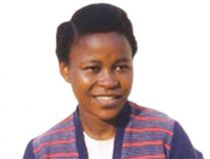
At a Glance
The Methodist Mission World and the Making of an Activist
Deolinda Rodrigues was a product of one of the most distinctive institutions in Angolan colonial society: the Protestant mission network that had established itself in the Mbundu-speaking regions of northern and central Angola from the late nineteenth century. The Methodist, Baptist, and Congregationalist missions that operated in Angola had, over several generations, created a small educated African community that was literate in Portuguese, connected to international Protestant networks, and possessed of a critical consciousness about the colonial system that the mission education simultaneously reinforced and complicated. The missions taught European literacy and Christian values — both of which could be and were used to challenge colonialism — while also transmitting European cultural assumptions and maintaining their own hierarchies of power. For the African students who passed through them, mission education was a double-edged inheritance: it gave them the tools to articulate their own oppression in a language the colonial power understood, while also embedding in them assumptions about civilisation, gender, and social order that they would spend their political lives working to unravel.
Rodrigues's father was a Methodist preacher and teacher — a position that placed the family within the tiny minority of Angolan Africans who had access to formal education and who participated in the institutional life of the mission world. Growing up in this environment meant growing up with books, with the expectation of intellectual achievement, and with a daily confrontation with the contradiction between the Christian universalism that the missions preached and the racial hierarchy that Portuguese colonialism enforced. For a woman, the contradiction was even sharper: the missions provided some education to African girls, but the colonial system offered African women almost no legitimate role beyond domestic labour. The possibility that an educated African woman might aspire to a public political life was not part of the colonial order's imagined future.
Rodrigues's intellectual gifts brought her to the attention of the Methodist church's scholarship programme, which in the late 1950s was awarding a small number of places at American church colleges to exceptional African students from Portuguese territories. She was selected in 1958 and travelled to Scarritt College in Nashville, Tennessee — an institution that trained Methodist missionaries and social workers and that had begun to admit African and Asian students as part of the church's post-war engagement with decolonisation. Her years at Scarritt would prove formative in ways that went far beyond the formal curriculum.
Nashville, the Civil Rights Movement, and a Political Education
Deolinda Rodrigues arrived in Nashville in 1958 — the same year that the city's black student community, organised through the local colleges and churches, was beginning the preparations for what would become the Nashville sit-in campaign of 1960. Nashville was a city of enforced racial segregation: its lunch counters, buses, theatres, and public facilities were divided by colour in ways that an educated African woman from Angola would have found immediately familiar in their essential logic, however different the specific forms. The American South's racial order and Portuguese Angola's colonial order were not identical — they differed in history, legal structure, and social texture — but they rested on the same premise of African inferiority and enforced it with the same combination of law, custom, and violence.
The Nashville movement — organised by figures including Diane Nash, James Lawson, and John Lewis, and trained in the discipline of Gandhian non-violent direct action — was conducting its sit-in campaigns at Woolworth's and other downtown Nashville lunch counters in 1960, precisely during the years of Rodrigues's studies at Scarritt. Whether she participated directly in the Nashville sit-ins is not established in the historical record, but her letters from this period make clear that she was deeply engaged with the civil rights movement as a political phenomenon and that she understood the connection between black American freedom and Angolan liberation as more than metaphorical. She was watching a colonised people develop the organisational forms, the ideological vocabulary, and the personal courage to challenge their oppression through direct action — and she was drawing conclusions about what was possible in Angola.
The encounter with American racism also deepened her political consciousness in another direction. Scarritt College was a Methodist institution with a genuine commitment to racial equality as a Christian principle, but Nashville's social world enforced the colour line in daily life regardless of what the college's official values proclaimed. Living this contradiction — between the professed universalism of a Christian institution and the racial reality of a segregated city — was itself a political education. It gave her a clearer understanding of the gap between ideological professions and social reality, and it steeled her against the tendency to accept the formal commitments of institutions — whether the Methodist church, the MPLA, or later the independent Angolan state — as substitutes for their substantive implementation.
Return to Africa, the MPLA, and the Founding of the OMA
Rodrigues returned to Africa in the early 1960s, joining the MPLA in its Congolese exile structures in Léopoldville and Brazzaville. The MPLA in this period was a movement in the early stages of building its guerrilla capacity while simultaneously managing the internal tensions — between its Luanda-based intellectuals, its exile leadership, and its various ideological tendencies — that would periodically threaten to fracture it over the next decade. For a woman of Rodrigues's education and political formation, joining the MPLA was both a natural choice — the MPLA's non-racial, Marxist-influenced nationalism was the closest approximation among the Angolan movements to the universalist political values she had developed — and a complicated one, because the MPLA's theoretical commitment to women's equality coexisted uneasily with the patriarchal assumptions of its male leadership.
Her most significant institutional contribution was to the founding of the Organização da Mulher Angolana — the Organisation of Angolan Women (OMA) — in 1962. The OMA was established as the MPLA's women's organisation, intended to mobilise Angolan women into the liberation struggle and to give women a specific institutional space within the broader movement. Its founding reflected the influence of both the international communist women's movement — which had a strong tradition of organising women's auxiliary organisations alongside communist parties — and the specific insistence of figures like Rodrigues that women's liberation was not an afterthought to national liberation but an integral dimension of it.
The OMA's founding was a significant moment in Angolan women's history, but it was also a contested one. The dominant tendency within the MPLA — and within most African liberation movements of the period — was to regard women's political participation as instrumentally valuable for the liberation struggle without fully endorsing the autonomy of women's political organisation or the prioritisation of specifically feminist demands. Women were needed as fighters, nurses, intelligence operatives, and political educators; their specific experiences of patriarchal oppression — forced marriage, lack of property rights, sexual violence, exclusion from education — were less easily accommodated within a liberation movement's political agenda that was primarily focused on expelling the Portuguese. Rodrigues navigated this tension with the skill of someone who understood that the immediate priority of anti-colonial struggle had to be combined with, not substituted for, the longer project of women's emancipation.
Teacher, Poet, Organiser — the Many Roles of Langidila
Within the MPLA's exile structures, Rodrigues worked as a teacher — educating the children of Angolan refugees and militants in the Congolese camps and communities where the movement was concentrated — and as a political organiser, building the OMA's networks and conducting the consciousness-raising work that was the movement's primary tool for mobilising women who had no prior experience of formal political organisation. Her nom de guerre, "Langidila" — "she who wakes others" in Kimbundu — captured the essence of this work: patient, painstaking, relational, directed at transforming individual women's understanding of their own situation into collective political consciousness.
She also wrote poetry — verses that circulated within the MPLA's exile community and that addressed the experience of displacement, the longing for Angola, the burden and the dignity of the liberation struggle, and the specific situation of women in a world that had not yet decided whether their liberation was as important as anyone else's. Her poetry was not produced for publication in the first instance; it was the writing of a person who needed to make sense of her experience and who found in verse a form adequate to the complexity of what she was living through. The poems that have survived and been published posthumously are valuable precisely because they were not written for an audience — they have the intimacy and the unguardedness of private expression that public political writing rarely achieves.
Her letters from the United States, preserved by her family and subsequently published, provide the most vivid documentary record of her inner life and political formation. They describe her encounter with American racism with a precision and an irony that suggests a mind both acutely observant and entirely unintimidated by the prestige of the culture she was observing. She was not naive about America — she did not mistake the formal language of Methodist universalism for the social reality of a segregated city — but she was genuinely moved by the courage and the organisational intelligence of the black American freedom movement, and her letters communicate that admiration with the warmth of someone who recognises in a different struggle the same human impulses that animated her own.
The 1967 Mission, Capture, and Execution
By early 1967, Rodrigues had been working within the MPLA's exile structures for several years and had established herself as one of the movement's most capable and trusted political cadres. The decision to volunteer for the infiltration mission into northern Angola in early 1967 — a mission that required crossing FNLA-controlled territory to establish MPLA networks in regions where the movement had little presence — was consistent with everything that is known about her character: she was not someone who accepted a gap between her political commitments and her willingness to take personal risks in pursuit of them.
The group she led — fifty-three militants in total, of whom a number were women — entered Angola from the Congo through the northern corridor in late February or early March 1967. The route took them through territory where the FNLA had strong networks and where local communities had reason to be suspicious of MPLA infiltrators. The group was detected, reported to the FNLA, and captured near Nambuangongo — a town in the Uíge province of northern Angola that had been one of the centres of the 1961 uprising and that remained an FNLA stronghold.
The FNLA's treatment of the prisoners reflected the bitter inter-movement rivalry that had characterised relations between the MPLA and FNLA from the beginning and that had resulted in violence between the two organisations on multiple previous occasions. The prisoners were held for several weeks — reports suggest they were kept in poor conditions, subjected to interrogation, and in some cases tortured — before being executed. The date of execution is not precisely documented; it occurred sometime in April 1967. Rodrigues was twenty-seven years old.
The news of her death reached the MPLA's exile community and eventually the international solidarity networks that supported the Angolan liberation cause. The response was one of genuine grief and political outrage — not only at the FNLA for executing the prisoners, but at the broader situation that had made such inter-movement violence possible and that had claimed the life of one of the liberation struggle's most gifted participants. The FNLA's responsibility for her death was a permanent stain on Holden Roberto's movement in the eyes of the MPLA and its supporters, and it deepened the hostility between the two organisations that would eventually contribute to the civil war's dimensions.
Symbol, Legacy, and the Long Reach of a Short Life
Deolinda Rodrigues died at twenty-seven, having spent fewer than a decade as a political activist. The body of work she left behind — the poetry, the letters, the organisational contributions to the OMA — is modest in volume if not in quality. Yet her legacy in Angolan political culture is disproportionate to the brevity of her life and the quantity of her documented work, because she died at the right moment and in the right way to become a symbol rather than simply a person.
Angola observes 2 March — the date of her capture — as Angolan Women's Day. The OMA, which she helped found, became one of the most significant women's organisations in post-independence Angola, providing the institutional framework within which Angolan women organised their political participation in the MPLA state. Schools, streets, and public institutions across Angola bear her name. Her image appears in the visual iconography of Angolan nationalism alongside those of Agostinho Neto and other founding figures, though she is usually positioned as a female counterpart to the male leadership rather than as a political figure in her own right — a form of commemoration that partially replicates the gender dynamics she spent her political life challenging.
The more honest legacy of Deolinda Rodrigues is the one she lived rather than the one attributed to her posthumously. She was a woman who refused to accept that her gender limited the risks she could take or the roles she could play in the liberation of her country. She made herself, through education, political commitment, and personal courage, into one of the most capable organisers in a movement that was not always sure it wanted women to be as capable or as autonomous as she was. She wrote poetry in the interstices of political work because the writing of poetry was, for her, also a form of political work — an insistence on the interior life of a person that colonial society was determined to reduce to a category. And she died doing what she had chosen to do, which was to carry the liberation struggle into the territory that the enemy controlled, refusing to let the risk of capture persuade her to remain safely in exile while others took the danger.
Angola's liberation generation produced many heroes. Very few of them were women, and almost none of them were women who have received the sustained critical attention that their contributions warrant. Deolinda Rodrigues is the exception — the Angolan liberation movement's most celebrated female martyr, whose death gave her a visibility in the historical record that most of her female contemporaries were denied. Whether the Angola that emerged from independence has honoured the vision she died for — a country in which women's liberation was understood as an integral dimension of national liberation rather than a deferred aspiration — is a question that Angolan women continue to press, invoking her name as they do.