Origins: Cattle Country and Early Radicalism
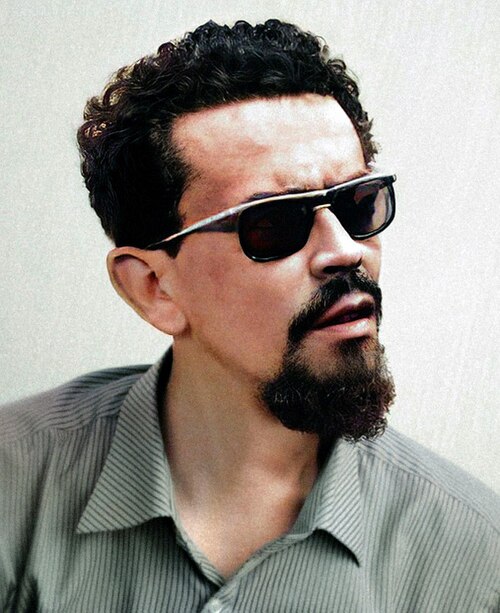
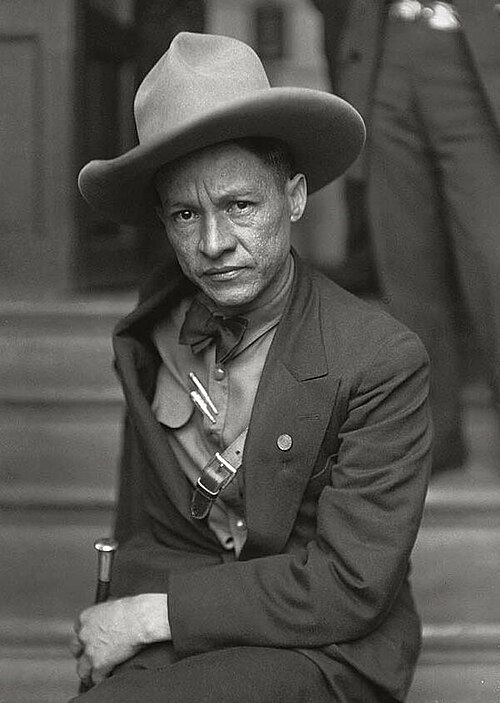
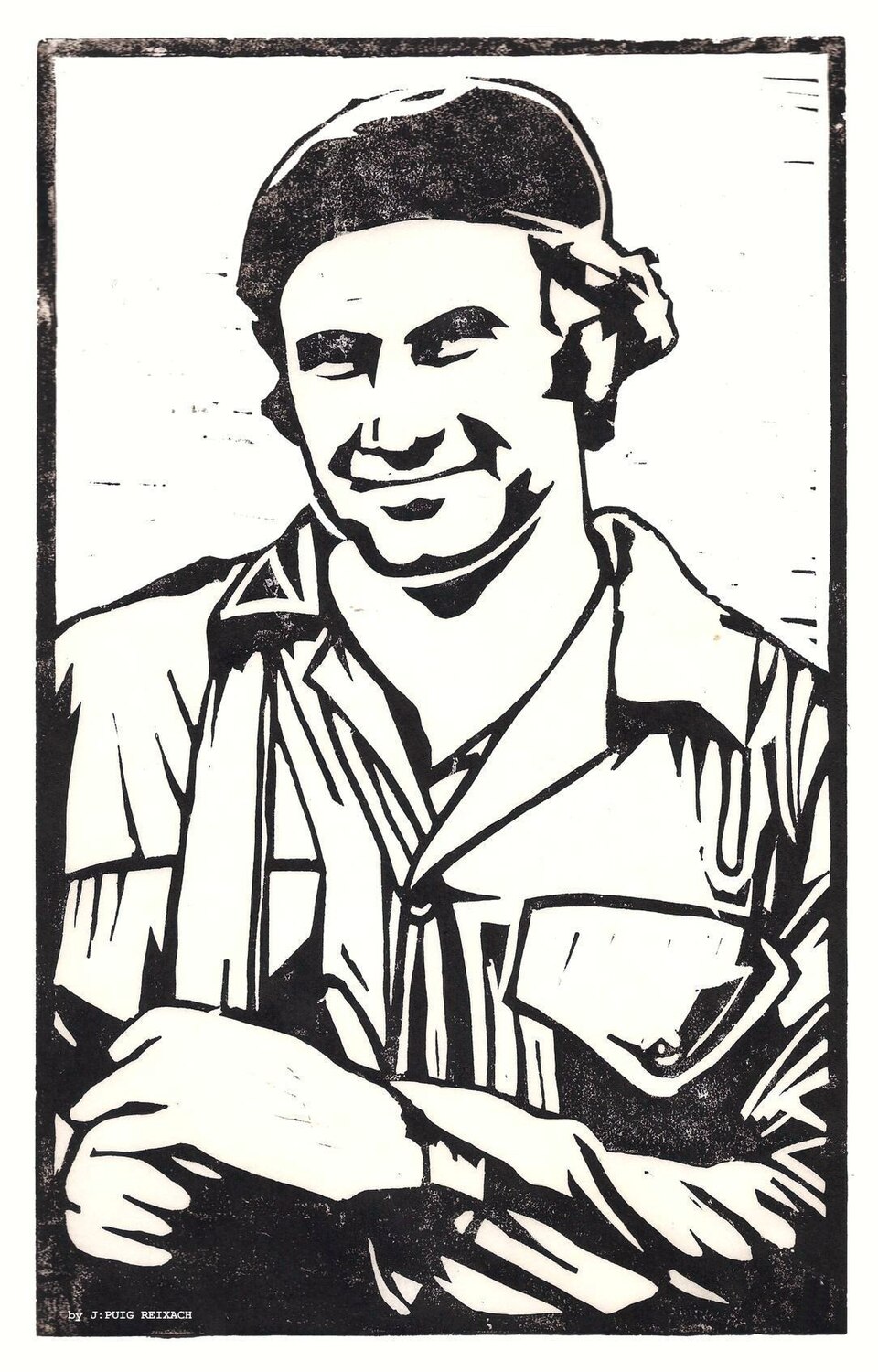
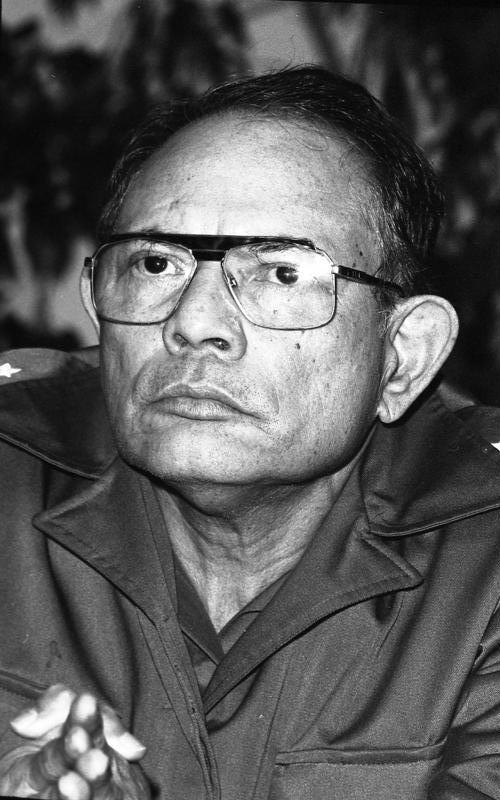
Edén Pastora Gómez was born on 22 January 1937 in Dario, a cattle-farming town in the Matagalpa department of Nicaragua — the same department where Carlos Fonseca had been born the previous year. His father was killed when Pastora was a child — allegedly by Somoza National Guard forces, though the circumstances are disputed — and the loss shaped his hostility to the Somoza regime as a personal as well as political matter. He studied at various points in Nicaragua, Costa Rica, and Mexico, trained briefly as a medical student, and became involved in anti-Somoza political activities as a young man, making contact with various opposition networks before eventually joining the FSLN's Tercerista tendency — the insurrectional wing led by the Ortega brothers that favoured rapid mass uprising over the prolonged people's war doctrine of Cayetano Carpio's FPL.
Pastora was not primarily a theorist or an organiser in the mould of Fonseca or Carpio. He was a military commander — bold to the point of recklessness, charismatic in the way that men who take extraordinary physical risks in front of other people tend to be, and capable of inspiring fierce personal loyalty among the fighters he led. He conducted guerrilla operations in the mountains of Nicaragua through the mid-1970s and built a reputation within the FSLN as one of its most effective and audacious military operators. What he lacked in ideological sophistication he more than compensated for in personal courage and tactical imagination. Both qualities were on full display in August 1978.
The National Palace: 22 August 1978
On the morning of 22 August 1978, Pastora led a force of twenty-five FSLN fighters — dressed in National Guard uniforms — into the Palacio Nacional in Managua, the seat of the Nicaraguan Congress. Within minutes they had seized the building and its approximately 1,500 occupants, including several members of Somoza's family and two of his closest political associates. The operation was one of the most audacious guerrilla actions in Central American history: a tiny force had captured the symbolic centre of state power and held it with a precision and discipline that demonstrated the FSLN's operational capability to the world.
Pastora's demands were clear: the release of dozens of political prisoners, a substantial cash ransom, the publication of FSLN manifestos in Nicaraguan media, and safe passage to Panama for the raiders and the freed prisoners. Somoza negotiated. Within 48 hours, the political prisoners were released — including several FSLN commanders who would play important roles in the revolution's final phase — the ransom was paid, and Pastora's force flew to Panama where they were received by President Omar Torrijos. The entire operation had lasted less than two days and had been accomplished without a single FSLN casualty. It was a propaganda coup of the first order: a demonstration that Somoza was not invincible, that his symbols of power could be seized and held, and that the FSLN was capable of operations that made international headlines.
"We are the inheritors of Sandino. We are not afraid of Somoza. We are not afraid of anybody."
— Edén Pastora, Comandante Cero, 22 August 1978Revolution and Power: 1979–1981
When the Sandinista revolution finally triumphed on 19 July 1979, Pastora entered Managua as one of the revolution's most celebrated heroes. His nom de guerre — Comandante Cero, Commander Zero — had become internationally known through the National Palace operation, and his combination of military achievement and physical charisma made him a figure of genuine popular appeal. He was appointed Deputy Minister of the Interior in the new revolutionary government, with responsibility for internal security — a role that placed him at the centre of the Sandinista state's most sensitive operations.
The transition from guerrilla commander to government official was not, however, a comfortable one for Pastora. He was fundamentally a man of action rather than administration — more at ease leading a raid than managing a bureaucracy — and his relationship with the FSLN's nine-member National Directorate, which exercised collective leadership of the revolution, was increasingly tense. Pastora was part of the Tercerista tendency, which had been the most militarily successful wing of the FSLN in the final insurrection, but the National Directorate included representatives of all three tendencies and operated by consensus in a way that left little room for individual authority. Pastora found himself with prestige but limited power, a figure whom everyone knew but who was increasingly peripheral to the decisions that mattered.
The Break: 1981 and the Southern Front
In 1981, Pastora resigned from his government position and disappeared. He resurfaced in 1982 with an announcement that shocked the revolutionary movement across Central America: he had broken with the FSLN and was forming a new armed force, the Alianza Revolucionaria Democrática (ARDE), to fight the Sandinista government from bases in Costa Rica along Nicaragua's southern border. His stated reasons were a combination of personal grievances and political objections — he accused the FSLN leadership of betraying the revolution's democratic promises, of subordinating Nicaragua to Cuban and Soviet influence, and of excluding him from meaningful decision-making. He presented himself not as a Contra fighting to restore the Somoza order but as an authentic Sandinista fighting to recover the revolution from its betrayers.
The distinction was difficult to maintain in practice. ARDE received CIA funding — a fact that Pastora initially denied and later acknowledged — and operated in coordination with the other Contra forces fighting the Sandinista government from Honduras in the north. Whatever Pastora's personal ideological position, his military operations were objectively part of the Reagan administration's programme of destabilising the Nicaraguan revolution through armed pressure. His southern front never achieved military significance comparable to the northern Contra forces, and his attempt to position himself as a "third way" between Somocismo and Sandinismo satisfied neither his CIA funders nor his potential Nicaraguan supporters.
The La Penca Bombing: 1984
On 30 May 1984, a bomb exploded at a press conference Pastora was giving at La Penca, a remote jungle location on the San Juan River near the Costa Rican border. Eight people were killed — several of them journalists — and Pastora was seriously wounded. He survived, but the bombing effectively ended his military career. ARDE fragmented in its aftermath. The investigation into who had planted the bomb produced years of competing allegations — the CIA, the Sandinistas, right-wing Contras who found Pastora ideologically unreliable — without ever producing a definitive conclusion. The case became one of the most extensively investigated and least conclusively resolved political crimes in Central American history.
After La Penca, Pastora's political career was effectively over. He spent periods in Costa Rica, Cuba, and Nicaragua, gave interviews, wrote memoirs, fished — literally, working as a commercial fisherman on the San Juan River for many years. In 2005 he was appointed to manage Nicaragua's dredging operations on the San Juan River by President Daniel Ortega — the same Sandinista leader he had once fought against. The appointment was characteristic of his late-career trajectory: contradictory, pragmatic, impossible to place within any consistent ideological framework.
Legacy: The Hero Who Defied Category
Edén Pastora died on 16 June 2023, aged eighty-six, in Managua. He had outlived most of his contemporaries, survived a bombing that killed eight people around him, fought on both sides of the Nicaraguan revolution, and spent his last decades in a country governed by the party he had once both championed and fought. His legacy resists the simple categories that political biography usually requires.
The National Palace operation of August 1978 was one of the most brilliantly executed guerrilla actions in the history of Central American revolution — a tactically precise, politically sophisticated, and personally courageous operation that freed political prisoners, humiliated Somoza on the world stage, and demonstrated the FSLN's capability at a crucial moment in the revolution's development. On the strength of that operation alone, Pastora deserves his place in the history of Nicaraguan liberation. What he did afterward — the break with the FSLN, the CIA connection, the southern Contra front — complicates that place without erasing it. He was a man of genuine revolutionary courage who, when the revolution won and asked him to govern rather than fight, found himself unable or unwilling to make the transition that governing requires. Whether what followed was betrayal, disillusionment, personal wounded pride, or genuine ideological conviction is a question that he himself answered differently at different points in his life, and that history has not definitively resolved.
What is certain is that he was, in the summer of 1978, Comandante Cero — the man who walked into the National Palace with twenty-four fighters and walked out having changed the course of the Nicaraguan revolution. That moment belongs to the history of Central American liberation, whatever came after it.