Origins: Law, Privilege, and a Hidden Commitment
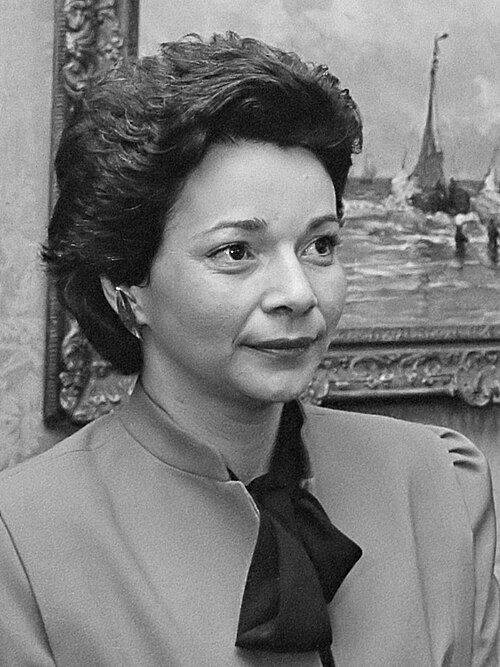
Nora Astorga Gadea was born on 11 December 1948 in Managua, Nicaragua, into a middle-class family that gave her access to education and professional training that the vast majority of Nicaraguans could not have imagined. She studied law at the Universidad Centroamericana in Managua and subsequently worked as a corporate lawyer for an American construction company — a position that placed her within the professional and social world of Managua's establishment, maintaining connections with businesspeople, government officials, and military figures who had no idea that she was simultaneously an active member of the underground FSLN network.
The combination of professional respectability and revolutionary commitment was not accidental. The FSLN had learned, through bitter experience, that open political activism invited immediate repression, and that its most effective operators were those who could move in establishment social circles while maintaining their clandestine connections. Astorga's position gave her access to people and information that a more obviously radical profile would have denied her. She maintained this double life for years — attending social functions where National Guard officers and Somoza regime officials were present, gathering information, maintaining contacts, waiting for an opportunity to strike a blow that only her particular position made possible.
The Operation Against Pérez Vega: March 1978
Reynaldo Pérez Vega — known throughout Nicaragua as "Perro Paguagua," a nickname that evoked his reputation for ferocity — was one of the most feared officers in Somoza's National Guard. He was the deputy chief of the Guard and a man directly implicated in the torture and killing of political prisoners, including FSLN members. He was also, by multiple accounts, a man susceptible to the attentions of attractive women — and he had made his interest in Nora Astorga clear through the social circuits in which both moved.
On the night of 8 March 1978 — International Women's Day — Astorga lured Pérez Vega to her home in Managua under the pretence of a romantic encounter. When he arrived, FSLN fighters who had been concealed in the house emerged. In the struggle that followed, Pérez Vega was killed. Astorga's cover was blown immediately and irreversibly: she had to flee and go underground, abandoning her professional life and everything that had made the operation possible. But the operation had achieved its objective. One of the regime's most feared and brutal officers was dead, killed inside the capital, in a private home, by a woman he had underestimated catastrophically. The message was precise and deliberate: the FSLN could reach anyone, anywhere, and the regime's most confident enforcers were not safe even in the domestic spaces they assumed were theirs.
"I did what I had to do. I would do it again."
— Nora Astorga, on the operation against Pérez VegaUnderground and the Final Offensive
After the March 1978 operation, Astorga joined the FSLN's active military structures and participated in the guerrilla campaign that was building toward the final offensive of 1979. She could no longer operate as an infiltrator within establishment circles — her role was now public and her face was known to the regime's security services — but the skills of organisation, political analysis, and strategic thinking that she had developed were valuable in the FSLN's military command structures. She served as a guerrilla commander during the insurrection, taking on roles that required exactly the combination of legal and political intelligence and personal courage that her entire previous life had developed.
The revolution triumphed on 19 July 1979. Astorga entered the post-revolutionary period with a record that gave her both the moral authority of a proven fighter and the professional skills of a trained lawyer — a combination that made her immediately valuable to a government that was trying to build functioning institutions from the wreckage of a dictatorship. She served as Deputy Attorney General of Nicaragua in the early years of the Sandinista government, bringing her legal training to the construction of the new state's prosecutorial apparatus at a moment when establishing the rule of law — distinguishing the Sandinista revolution from the arbitrary violence of the regime it had replaced — was both a practical and a political priority.
Deputy Foreign Minister and the Diplomatic Front
Astorga's intelligence, her linguistic skills, and her political sophistication made her a natural fit for the Sandinista government's diplomatic work — the effort to build international support for the revolution against the sustained political and military pressure of the Reagan administration. She served as Deputy Foreign Minister under Miguel D'Escoto Brockman, working on the legal and political dimensions of Nicaragua's case before international bodies and its relationships with sympathetic governments in Europe, Latin America, and beyond.
The Reagan administration's policy toward Nicaraguawas one of comprehensive destabilisation: funding the Contra forces from Honduras, imposing a trade embargo, working to exclude Nicaragua from international financial institutions, and using every available diplomatic mechanism to isolate the Sandinista government. Nicaragua's response was to engage the legal and political mechanisms of international law — the International Court of Justice, the United Nations, the Non-Aligned Movement — as counterweights to American military and economic pressure. Astorga was one of the principal architects of this legal-diplomatic strategy, developing Nicaragua's arguments before international tribunals with the precision of a trained lawyer and the conviction of someone who had fought for the government she was representing.
UN Ambassador: The Nomination Washington Refused
In 1986, the Sandinista government nominated Nora Astorga as Nicaragua's Ambassador to the United Nations in New York. The Reagan administration refused to grant her an entry visa. The stated reason was her role in the 1978 killing of Pérez Vega — the United States government characterised the operation as an assassination and Astorga as a terrorist. The actual political dynamic was more straightforward: Astorga was a brilliant and effective advocate for the Sandinista government, and the Reagan administration had no interest in facilitating her access to the UN's diplomatic forums at a moment when it was fighting the Sandinistas on every available front.
The refusal was itself a significant political own-goal for Washington. It drew international attention to the case, generated sympathy for Astorga among governments and publics that found the United States' position transparently political rather than principled, and gave Nicaragua a cause that it exploited effectively in international forums. The UN General Assembly, where Nicaragua maintained significant support, was a venue in which the United States could not dictate terms. After eighteen months of diplomatic wrangling, during which Astorga conducted much of her ambassadorial work by traveling to other UN member state capitals and representing Nicaragua from outside the United States, the Reagan administration finally relented and granted the visa. She took up her post at the United Nations in New York.
Death in Service: 1988
Nora Astorga died of cervical cancer on 14 February 1988 in New York, while still serving as Nicaragua's Ambassador to the United Nations. She was thirty-nine years old. She had been diagnosed with cancer during the period when the United States was refusing her the visa to take up her post — a period during which she continued to represent Nicaragua from wherever she could reach — and had continued working through her illness with a determination that those who worked with her found extraordinary.
Her death prompted an outpouring of tributes from governments and international organisations that had worked with her at the United Nations. Even some of her American diplomatic adversaries acknowledged her skill and the dignity with which she had conducted herself in the face of the Reagan administration's systematic obstruction. She was mourned in Nicaragua as one of the revolution's most complete figures — a woman who had served it as an underground operative, a military commander, a prosecutor, a diplomat, and an ambassador, and who had died in its service before she was forty years old.
Legacy: The Many Lives of a Revolutionary Woman
Nora Astorga's life was remarkable for the range of roles she occupied within a single revolutionary commitment. She was a corporate lawyer who used her professional position as cover for underground work. She was a guerrilla operative who planned and executed one of the revolution's most significant individual actions. She was a post-victory government official who brought legal training to the construction of a new state. She was a diplomat who fought for her country's case before international institutions against the most powerful government on earth. And she was a patient woman who conducted her ambassadorship for eighteen months from outside the country where the UN was located because the United States, having failed to defeat the Nicaraguan revolution militarily, was trying to diminish it diplomatically one visa denial at a time.
Her story belongs in the first rank of the Nicaraguan revolutionary experience — not because the operation against Pérez Vega was her most important contribution (though it was her most dramatic), but because the entirety of her life from law school to the UN represents a completeness of commitment that few revolutionary figures achieve. She gave everything she had, in every form that was useful, until there was nothing left to give. Nicaragua named a hospital in Managua after her. The United States, which had spent two years trying to keep her out of New York, eventually had to acknowledge that the woman they had refused to let in was doing her job with distinction. That, in its way, was a kind of victory too.