Origins: Asturias and the Call to Mission
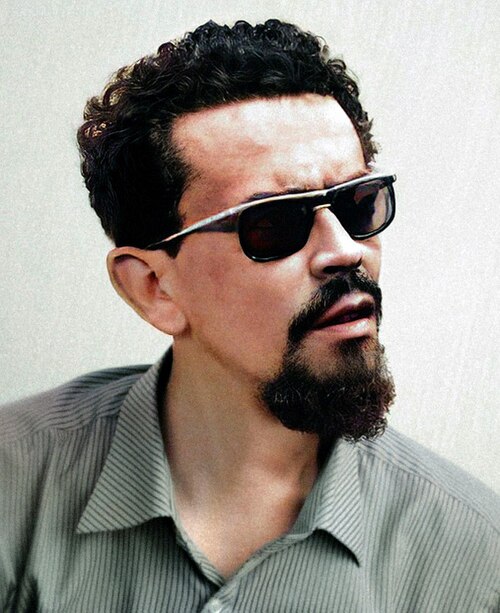
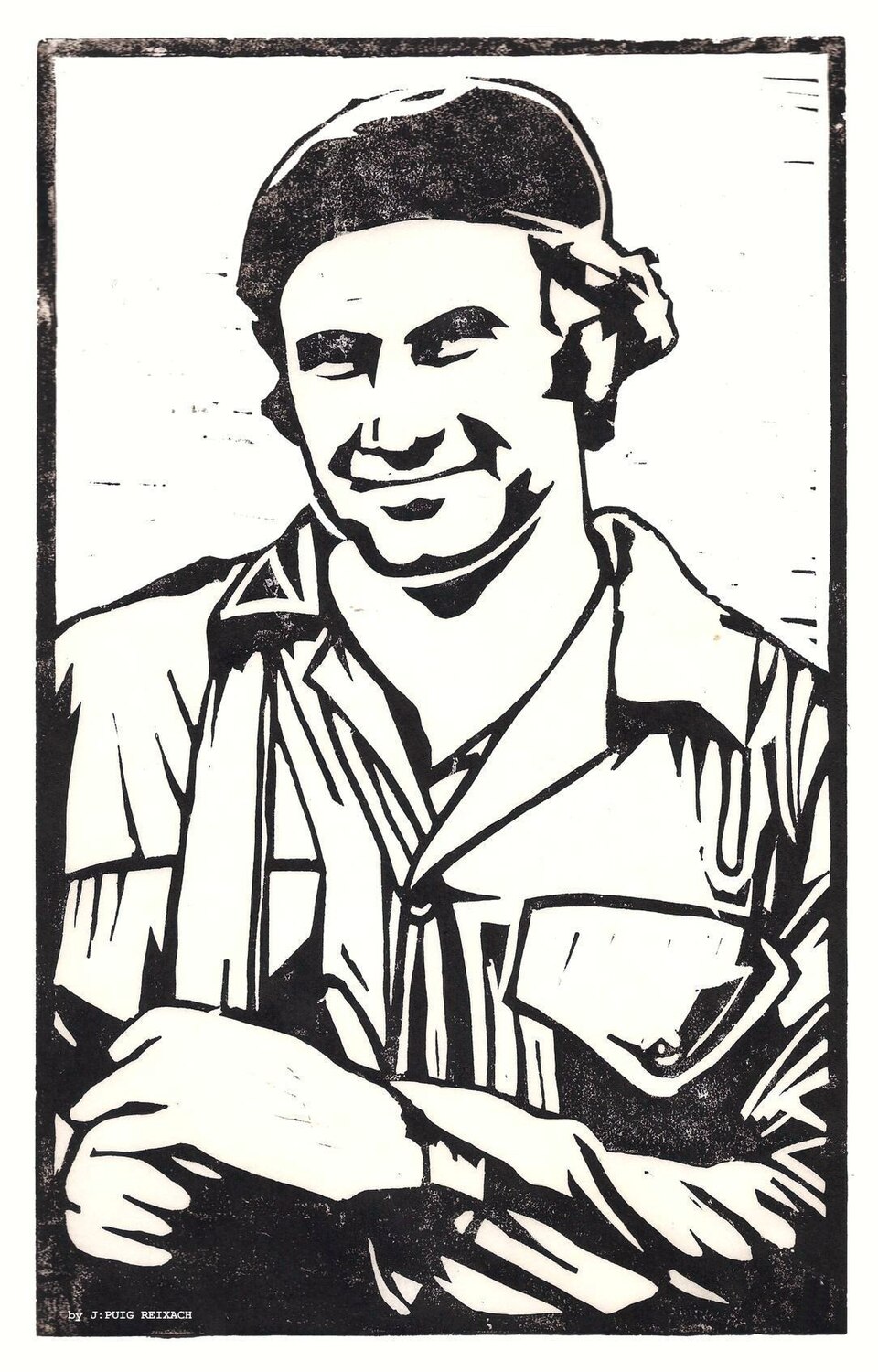
Gaspar García Laviana was born on 9 July 1941 in Caborana, a mining village in Asturias, in northern Spain — a region with a long tradition of labour militancy and working-class consciousness. His father was a coal miner. He grew up in the poverty and social discipline of post-Civil War Franquist Spain, received his education in religious schools, and entered the Congregation of the Sacred Heart of Jesus — the Dehonians — a Catholic missionary order with a strong commitment to social work among the poor. He was ordained as a priest and in 1969, at the age of twenty-eight, was sent to Nicaragua as a missionary.
He was assigned to the parish of Tola, a remote rural municipality on Nicaragua's Pacific coast in the department of Rivas — a region of cotton and sugar plantations, seasonal agricultural labour, and grinding poverty. The community he arrived in had almost no medical care, inadequate schools, and an economic structure that kept its people permanently indebted to the landowners and export crop companies for whom they laboured. García Laviana spent the following decade doing what a committed Catholic missionary was supposed to do: he built a clinic, organised cooperatives, pushed for schools, learned the problems of his parishioners with the intimacy that only years of presence can produce, and tried to improve their material conditions through the institutional resources available to him as a priest.
A Decade of Parish Work: The Education of a Revolutionary
The decade García Laviana spent in Tola was the education that made his eventual decision comprehensible — and, to those who knew the situation, almost inevitable. The structural conditions of rural Nicaragua under the Somoza dictatorship were not problems that could be solved by building a clinic or starting a cooperative. The landowners who controlled Rivas's agricultural economy were politically connected to the Somoza regime. The National Guard enforced their labour discipline with violence. The legal system protected their property and their prerogatives. When García Laviana's cooperatives began to give his parishioners a degree of economic independence, the response from local landowners and their National Guard allies was not accommodation but pressure, harassment, and threats.
García Laviana was reading liberation theology — the theological movement that had emerged from the Latin American bishops' conferences of Medellín (1968) and was spreading rapidly through the Catholic Church in Central America. Liberation theology argued, in its various formulations, that the Church's preferential option for the poor required not merely charitable service but structural transformation — that the systems producing poverty were themselves sinful and that opposing them was a Christian obligation. Figures like Gustavo Gutiérrez in Peru and Jon Sobrino in El Salvador were working out the theological framework. The Nicaraguan Church contained priests, including the Cardenal brothers, who were developing these ideas in direct engagement with the Sandinista revolution. García Laviana was not operating in an intellectual vacuum: he was part of a generation of Latin American priests who were asking, with increasing urgency, what fidelity to the Gospel required in the specific conditions of structural injustice they were living.
"I have taken up arms because the Nicaraguan people cannot continue to live like animals, because Christ himself would do it."
— Gaspar García Laviana, letter explaining his decision to join the FSLN, 1977The Decision: Joining the FSLN
In 1977, García Laviana made the decision that would define his legacy and end his life within a year. He left his parish in Tola, contacted the FSLN, and joined the guerrilla movement. He wrote a letter — addressed to his religious superiors, his parishioners, and the wider public — explaining his decision with theological and political precision. He argued that he had spent a decade trying to work within the system to improve the lives of the poor and had concluded that the system itself was the problem. He argued that the Somoza dictatorship was a system of organised violence against the poor, maintained by armed force, and that opposing it with armed force was not a contradiction of Christian faith but an expression of it. He invoked Christ's table-turning in the Temple, the preferential option for the poor, and the theology of liberation that had been developing across Latin America. He was not the first priest in Central America to take up arms — Camilo Torres Restrepo in Colombia had made the same decision eleven years earlier and been killed in his first combat action — but he was the most theologically articulate, and his letter remains one of the most carefully reasoned documents in the entire tradition of revolutionary Christianity.
His religious superiors in the Sacred Heart congregation responded by suspending him from his priestly functions — he could not celebrate Mass or administer the sacraments. His parishioners in Tola, many of whom he had served for nearly a decade, responded differently: many of them understood exactly what he was doing and why, and some of them joined the revolutionary movement themselves. The distinction between the institutional Church's response and the popular response was itself a commentary on the distance between official Catholicism and the lived experience of the Nicaraguan poor.
Guerrilla Commander on the Southern Front
García Laviana joined the FSLN's southern front — the same front where Edén Pastora was building his reputation as Comandante Cero. He operated in the rural areas of Rivas department — territory he knew intimately from a decade of parish work — leading small guerrilla units in operations against National Guard posts and infrastructure. His knowledge of the terrain, the communities, and the local population made him an effective guerrilla commander. His presence in the FSLN also served a political function: a Spanish priest with decade-long roots in the community he was fighting for was a powerful symbol of the revolution's character — not an alien communist movement imposed from outside but a response to local conditions by people who had lived those conditions.
He fought for approximately a year. On 11 December 1978 — seven months before the final Sandinista victory — García Laviana was killed in combat near the town of Sapoá in Rivas department. He was thirty-seven years old. He had been a guerrilla for approximately fourteen months. The revolution he died for came to power on 19 July 1979, less than a year after his death.
Liberation Theology and the Revolutionary Church
García Laviana's story belongs to the broader history of liberation theology's engagement with revolutionary politics in Central America — a history that produced some of the most morally serious figures in the tradition of Christian social thought. In Nicaragua specifically, the revolutionary period brought clergy into the heart of the Sandinista government: Ernesto Cardenal served as Minister of Culture, his brother Fernando Cardenal as Minister of Education, Miguel D'Escoto Brockman as Foreign Minister. The Vatican under John Paul II was hostile to this integration of Christian commitment and revolutionary politics, and the Pope's public rebuke of Ernesto Cardenal at Managua airport in 1983 — pointing a finger at the kneeling Cardenal and ordering him to "regularise his situation with the Church" — was one of the defining images of the tension between institutional Catholicism and the revolutionary Church of the poor.
García Laviana represents the most complete and irreversible version of that commitment: not a priest who joined a revolutionary government but a priest who took up arms, accepted the consequences of that decision in full, and died in combat before seeing the victory. His theological reasoning — carefully laid out in the letter he wrote before joining — has been studied and debated in liberation theology circles ever since. Whether it was correct, whether the Gospel requires or permits armed struggle in conditions of structural violence, is a question that theologians and activists continue to argue. What is beyond argument is that García Laviana lived the question with complete personal integrity, making his choice in full knowledge of what it would cost.
Legacy: The Priest Who Chose
García Laviana is remembered in Nicaragua as a martyr of the revolution — his face appears on murals in Rivas department, and the municipality of Tola where he served has monuments to his memory. In Spain, where he was born and trained, his legacy is claimed both by those within the Church who see in him a witness to the Gospel's social demands and by those in the secular left who see in him evidence that religious conviction and revolutionary commitment are not incompatible. His congregation, the Dehonians, has undertaken studies of his life that stop short of formal beatification but treat his death as something close to martyrdom in the theological sense.
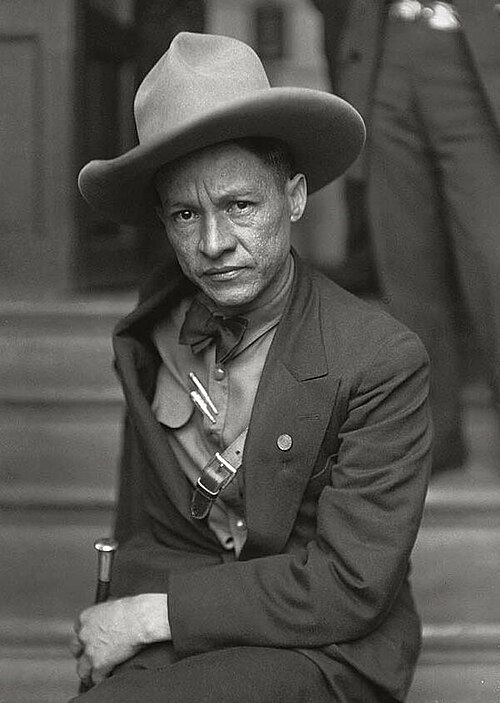
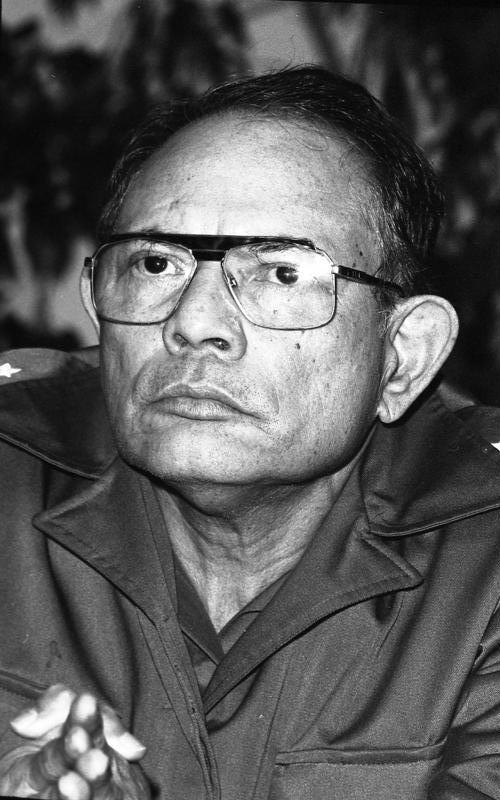
His significance in the broader history of Central American liberation lies in the completeness of his witness. Farabundo Martí was a communist who was executed before his uprising. Carlos Fonseca was a Marxist who was killed before his revolution. García Laviana was a Catholic priest who concluded, after a decade of pastoral work among the poor, that the Gospel of Jesus Christ required him to take up arms against a dictatorship — and who died in combat, with a rifle in his hands, within sight of the land he had served as a priest. The question of whether he was right is a question that each reader must answer for themselves. The question of whether he was sincere admits of no doubt.