At a Glance
The First Woman Lawyer: What That Achievement Required
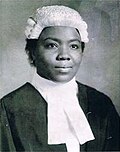
The achievement of becoming the first woman to qualify as a lawyer in colonial Nyasaland deserves its recognition not as a biographical curiosity but as an expression of the specific kind of determination and capability that the double barrier of race and gender required of any African woman seeking professional advancement in the colonial system. The barriers were real and structural, not merely cultural. The colonial legal system that Vera Chirwa was seeking to enter was a system designed and administered by European men, that had never previously admitted an African woman to its ranks, and that had no particular interest in creating the conditions under which such admission might become easier.
The educational pathway to legal qualification required access to institutions that were not equally accessible to Africans, to women, or to those without financial resources. Mission school education provided the foundation; secondary school education of sufficient quality to qualify for the Bar examinations was less widely available; and the Bar qualification itself required passing examinations that assumed a substantial breadth of prior legal education. The determination required to navigate this system successfully — as an African woman in a colonial society that presented obstacles at every stage — was itself the expression of exceptional personal qualities that her subsequent career would confirm and build on.
Her qualification established a precedent that was significant beyond its immediate professional significance. The first person in any category to cross a barrier changes the social understanding of what is possible — makes visible that the barrier was contingent rather than natural, that it could be crossed by those with the capability and determination to do so. Vera Chirwa's qualification as the first woman lawyer in Nyasaland was this kind of precedent: an opening of possibility whose significance extended well beyond her own career to the professional and social landscape within which subsequent Malawian women could imagine and pursue their own ambitions.
Nationalist Politics: The Independence Organiser
Vera Chirwa's involvement in the Malawi Congress Party and the independence movement was genuine and active, not merely the participation of a supportive spouse. Her legal training gave the movement capabilities it needed — the ability to engage with the formal legal structures of colonial governance, to advise on the constitutional and legal dimensions of political organisation, to defend party members prosecuted by the colonial authorities. And her own political commitment to the independence cause was independent and substantive: she understood what was at stake in the independence struggle and engaged with it from the same moral and political conviction that drove Orton and the other members of the independence movement's inner circle.
The specific roles she played in the independence period — the political organising work, the legal advocacy, the participation in the MCP's internal governance — are less well documented than the role that subsequent events gave her international profile, because the history of the independence movement has tended to be written around the most visible male figures and to undercount the contributions of women whose participation was less publicly prominent. What is clear is that she was part of the movement's inner circle, that her legal skills were used by the movement, and that her subsequent treatment by the Banda government — the abduction, the trial, the decade of imprisonment — reflected the government's assessment that she was a significant political figure rather than merely a spouse who happened to be present.
Her participation in the independence movement placed her in the company of people who would, after independence, take sharply different paths: some becoming senior figures in the Banda government, some going into exile and opposition, some being imprisoned or killed. Her own path — exile, kidnapping, imprisonment, release, advocacy — was among the more extreme of the available trajectories, and the extremity of what happened to her became the foundation for the international profile and the subsequent advocacy work that gave her later life its particular significance.
Exile and the Decision That Led to Abduction
The decision to go into exile — first to Tanzania and subsequently to Zambia — reflected the Chirwas' assessment that continued political activity in Malawi was impossible under the Banda government's political conditions. The specific forms that their exile political activity took — the advocacy for Malawian democratic rights, the maintenance of contact with international human rights organisations, the attempts to keep the question of Malawian political repression alive in the international arena — were the activities that the Banda government treated as treasonous and that eventually motivated the decision to abduct them.
Zambia — where they were living at the time of the abduction — had been chosen partly for practical reasons related to the ease of connections to other political networks and to international organisations, and partly because the Zambian government's own history of political independence and its hosting of liberation movements from across the region gave the exile community there a degree of protection and political legitimacy that was useful. The abduction was a violation of the protection that Zambia's sovereignty was supposed to provide, and the Zambian government's protest at the operation reflected both the genuine violation of its sovereignty and the political awkwardness of having allowed Malawian security operations to proceed on its territory.
The December 1981 abduction was the moment that transformed Vera Chirwa from a relatively obscure exile political activist into a figure of international human rights significance. The operation's audacity — crossing an international border to abduct two citizens of another country — was the kind of egregious violation of international norms that generated attention beyond the specialist human rights community. And the subsequent treatment of the Chirwas — the traditional court trial, the death sentences, the decade of imprisonment — provided sustained material for the international human rights campaign that Amnesty International led and that made her name known in human rights circles around the world.
Twelve Years in Zomba: Survival as an Act of Resistance
The twelve years that Vera Chirwa spent in Zomba Prison were years of extraordinary physical and psychological challenge. The conditions of detention — documented by Amnesty International and by the accounts she gave after her release — were inadequate by any reasonable standard of treatment for political prisoners: insufficient food, inadequate medical care, restricted access to family members, the psychological burden of imprisonment under a death sentence that was commuted but not resolved, and the specific anguish of sharing the prison with her husband while watching his health decline and being unable to provide the care that his deteriorating condition required.
The death of Orton in October 1992 — twelve years after their joint abduction, in the prison they had shared — was the most painful dimension of her detention. She survived it, as she had survived everything else — with a psychological resilience that drew on her faith, her sense of the political significance of what was being done to them, and the determination that the story of what the Banda government had done would eventually be told and would matter. Her release came three months later, in January 1993, as the political changes that were reshaping Malawi's landscape were beginning to make the continued imprisonment of high-profile political prisoners politically untenable for the Banda government.
The survival itself — the physical capacity to live through twelve years of detention that killed her husband — was an act of resistance in a context where the government may have hoped that the detention's conditions would prove lethal. That she lived, that she was released, that she went on to spend twenty-six more years as one of Africa's most prominent human rights voices, was itself a form of vindication — the demonstration that the system's attempts to eliminate through imprisonment had failed, that the person it had sought to silence was alive and speaking and would continue to speak.
After Release: The Human Rights Advocate
Vera Chirwa's release in January 1993 was the beginning of the final and in some ways most consequential chapter of her life — the chapter in which she converted her experience of political victimisation into sustained advocacy for the human rights principles that her imprisonment had violated. The Malawi Legal Aid Bureau that she founded was the most direct institutional expression of this conversion: an organisation that provided free legal services to poor Malawians who could not afford legal representation, giving concrete form to the principle that access to justice should not be a privilege reserved for those with financial resources.
Her international advocacy work — the testimony before the United Nations and other international bodies, the lectures at universities and human rights institutions around the world, the participation in the growing body of international documentation of Malawi's human rights record — was equally important. She was a witness who could speak from direct personal experience about what the Banda government's political repression had involved — not as an abstract human rights analysis but as the account of someone who had been in the traditional court dock when the death sentence was pronounced, who had been in the prison when it was commuted, who had been there when Orton died, and who had survived to tell the story. This kind of first-person testimony has a power that documentary evidence and external analysis cannot replicate, and Vera Chirwa's willingness to continue providing it — for more than two decades after her release, through her seventies and into her eighties — was a sustained act of public service as significant as any of her earlier contributions.
The international recognition she received — the honorary degrees, the human rights prizes, the invitations to address international bodies — reflected the global human rights community's recognition of both what she had endured and what she had done with what she had endured. These honours were deserved, and they were also, in a significant sense, testimony against the Banda government's calculation that imprisoning figures like Vera Chirwa would remove them from the political landscape. She had been imprisoned; she had survived; and she had emerged as a more internationally significant figure than she had been before the imprisonment. The calculation had failed in the most visible possible way.
The Witness Who Would Not Be Silenced
Vera Chirwa died in 2019, at eighty-six years old — twenty-six years after her release from Zomba Prison, thirty-eight years after her abduction from Zambia, and more than a quarter century into what had been a final chapter of extraordinary public contribution. She had outlasted the Banda state, outlasted most of the political figures of the independence era, and outlasted many of the international advocates who had campaigned for her release. She had spent those twenty-six years of freedom ensuring, with a consistency and determination that reflected the same personal qualities that had sustained her through twelve years of detention, that the crimes of the Banda state were documented, remembered, and understood.
The story of Vera Chirwa's life is, ultimately, the story of what happens when the authoritarian state attempts to eliminate those it fears — and what happens when those it attempts to eliminate refuse to be eliminated. The Banda government imprisoned her, sentenced her to death, kept her in conditions designed to break her, and watched her husband die in the prison they shared. And then she walked out, resumed her career, spoke to international audiences, built an institution, received honorary degrees, and continued speaking for the rest of her life about what had been done to her and why it mattered.
She was the first woman lawyer in colonial Nyasaland. She was a political prisoner under sentence of death. She was a human rights advocate of international significance. She was the witness who would not be silenced. All of these are the same person, and the full account of who she was and what she contributed requires holding all of them in view simultaneously — because each dimension of her life informs and enriches the others, and because the complete picture is more extraordinary than any one of its parts.