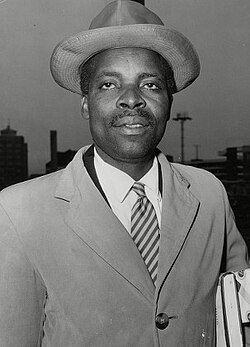
At a Glance
The Northern Region, Livingstonia, and the Formation of a Nationalist Lawyer
Orton Chirwa was born in 1919 in the Northern Region of Nyasaland — the area whose educational tradition, shaped by the Livingstonia Mission of the Free Church of Scotland, had produced a disproportionate share of the territory's educated class. The Livingstonia Mission had been established in the 1870s near the northern tip of Lake Malawi and had developed, over several generations, a network of schools that provided education to a high standard, producing teachers, ministers, medical workers, and administrators who spread across the territory and beyond. The northern communities' long association with this educational tradition gave them both a specific intellectual character — the combination of Protestant moral seriousness, educational emphasis, and public vocation — and a practical advantage in the competition for educational and professional opportunities that the colonial system provided.
Chirwa's legal training in England — his qualification as a barrister through one of the Inns of Court — was the fullest expression of this northern educational tradition and one of the most unusual achievements available to a Malawian of his generation. The small number of Africans from Nyasaland who qualified as lawyers before independence can be counted on one hand, and their legal qualifications gave them a specific kind of authority and capability that the independence movement needed alongside the political organisation and mass communication skills that other figures provided. The lawyer's ability to engage with the formal structures of colonial governance — to argue constitutional cases, to defend political prisoners, to draft constitutional documents — was essential to the independence project's credibility and effectiveness.
His involvement in the founding of the Malawi Congress Party brought these legal skills to bear on the organisational tasks of the independence movement. The drafting of the party constitution, the articulation of its legal position, the formal documentation of its political programme — these were tasks that required someone with legal training, and Chirwa's involvement in them established him as part of the inner circle of the independence movement from its inception. His subsequent appointment as Attorney General of the new Malawian state was the logical culmination of this role: the man who had helped give the independence movement its legal form was now responsible for giving the independent state its legal framework.
Attorney General: Building the Legal Architecture of Independence
The role of Attorney General in a newly independent state is one of the most demanding and consequential in government. The Attorney General is simultaneously the government's chief legal adviser, the head of the state's prosecution system, the guardian of the legal framework that governs all governmental action, and the officer responsible for ensuring that the government's actions are consistent with the constitution and the law. In a newly independent state, this role also involves the substantial task of adapting and developing the inherited colonial legal system into something appropriate for an independent African country — a task that requires both legal expertise and political judgment about which aspects of the colonial legal inheritance to preserve, which to modify, and which to replace entirely.
Chirwa's performance as Attorney General in the first years of independence was, by the accounts available, competent and serious. He brought to the role the legal training and the institutional commitment that the position required, and he engaged with the constitutional and legal questions of the independence period with the same rigor he had brought to the independence movement's legal work. The specific challenges of the early independence period — the constitutional arrangements of the new state, the relationship between customary law and the inherited common law system, the legal framework for the new government's authority — were questions that demanded exactly the combination of legal expertise and political understanding that Chirwa possessed.
But the relationship between the government's legal framework and the government's political direction — the question of whether the rule of law was a genuine constraint on executive power or merely a formal covering for decisions made on other grounds — was one that became increasingly difficult to maintain as Hastings Banda's governance moved in the authoritarian direction that the September 1964 cabinet crisis had signalled. An Attorney General who takes seriously the rule of law is, in a government that does not, a potential source of constraint on executive power that the government may eventually find inconvenient. Chirwa's departure from the government and eventual exile reflected the fundamental incompatibility between his commitment to legal governance and the direction that the Banda state was taking.
Exile: The Politics of Distance
The decision to go into exile — to leave Malawi and continue the political struggle from outside — was one that many of the independence generation's most committed figures eventually faced. In a state like Banda's Malawi, where political opposition was treated as treason and where the instruments of political repression were comprehensive, exile was sometimes the only option that allowed continued political activity without immediate imprisonment or death. For figures like Chirwa, whose standing in the independence movement gave them both political authority and political vulnerability, the choice between silence within Malawi and activity from outside was real and consequential.
His exile — initially in Tanzania and subsequently in Zambia — placed him within the networks of Malawian political exiles who maintained pressure on the Banda government from outside the country's borders. These exile movements were a feature of many post-colonial African states with authoritarian governments, and their effectiveness varied considerably: some succeeded in maintaining international attention and eventually contributing to political change at home; others dispersed into ineffectiveness without ever seriously threatening the governments they opposed.
The Malawian exile movement operated under significant practical constraints. Banda's government maintained an extensive intelligence network that penetrated exile communities — using informers, agents provocateurs, and the leverage of family members who remained in Malawi to monitor and disrupt the activities of those who had left. The exile movement's effectiveness was therefore limited not only by the usual difficulties of operating from a distance but by the specific penetration of its structures by the government it was opposing. In this context, the specific political activities that Chirwa engaged in from exile — the advocacy, the political organising, the maintenance of contact with international human rights organisations — were conducted in awareness that they were being monitored and that the monitoring created risks for himself and for those with whom he associated.
December 1981: The Abduction
The operation that abducted Orton and Vera Chirwa from Zambia in December 1981 was among the most audacious and most illegal of the Banda government's many violations of the rights of its citizens. The Chirwas were in Zambia — a sovereign foreign country whose government had not authorised any Malawian security operation on its territory — when Malawian agents intercepted, subdued, and transported them across the border into Malawi. The operation violated Zambian sovereignty, Zambian law, international law governing the treatment of political refugees, and every norm of diplomatic conduct between neighbouring states.
The precise circumstances of the abduction have been described differently by different sources. The Zambian government's official position was that the operation was conducted without its knowledge or consent and that it protested the violation of its sovereignty. There were questions, never definitively answered, about whether elements of the Zambian security apparatus had cooperated with or at least failed to prevent the Malawian operation — questions that, if true, would have reflected the complex intelligence relationships between neighbouring states in the southern African political landscape of the early 1980s. The Malawian government's official position was that the Chirwas had voluntarily entered Malawi, a claim that was universally disbelieved.
The international response was immediate and significant. Amnesty International, which had been monitoring the situation of Malawian political prisoners, immediately took up the Chirwas' case. Governments across the world — the United States, Britain, various European countries — expressed concern through diplomatic channels. The abduction from a neighbouring country was the kind of flagrant violation of international norms that generated attention beyond the specialist human rights community, and the Banda government found itself under more sustained international pressure than it typically experienced for its domestic political repression.
The Traditional Court Trial and the Death Sentences
The Chirwas were not tried in Malawi's High Court — the regular judicial body that, whatever its limitations under the Banda government's political direction, was at least formally bound by the procedural rules of a legal system with some claim to legitimacy. They were tried by a traditional court — a body whose specific mandate was the adjudication of customary law disputes in rural communities, and whose deployment in a treason case against a qualified barrister and his wife was a deliberate choice to use a forum that was not bound by the procedural protections of the regular judiciary.
The charges were treason — the accusation that the Chirwas had been plotting against the Malawian government from their exile base in Zambia. The evidence presented was, by the accounts of those who observed or reviewed the proceedings, inadequate to support the charges by the standards of any regular judicial process. But the traditional court was not a regular judicial process, and the verdict — guilty, for both Orton and Vera — was essentially predetermined by the political decision that had driven the abduction. The sentences imposed were death.
The death sentences were the moment that transformed what had been a serious international concern into a global humanitarian campaign. Amnesty International mobilised its network of activists across dozens of countries to write letters, organise demonstrations, petition governments, and maintain sustained pressure on the Malawian government. Individual governments made diplomatic representations. The United Nations Human Rights Commission addressed the case. And the combination of this pressure, sustained over more than two years, eventually produced the commutation of the death sentences to life imprisonment in 1984.
The commutation was significant — it meant that the Chirwas would not be killed on a scheduled date — but it was not release. The Banda government had calculated that it could absorb the international pressure well enough to keep the Chirwas imprisoned, and this calculation proved correct through the remainder of Orton's life. He spent the years from 1981 to 1992 in Zomba Prison, his health declining, the international campaign for his release failing to achieve the result it sought before his body gave out.
The Decade of Imprisonment and the Failure to Win Release
The ten years that Orton Chirwa spent in Zomba Prison were years of progressive physical deterioration in conditions that Amnesty International and other human rights organisations documented as inadequate for a man of his age and health. He received insufficient medical attention for conditions that, with proper care, would have been manageable but that, untreated or undertreated in prison conditions, became life-threatening. His access to family members — including Vera Chirwa, who was imprisoned in the same facility — was restricted. The conditions of his imprisonment were not designed to kill him quickly but they were not designed to preserve him either.
The international campaign for his release — led primarily by Amnesty International but joined by governments, bar associations, church organisations, and individual advocates around the world — was one of the most sustained campaigns of its kind in the Banda years. Its specific focus on the procedural illegality of the abduction, the unfairness of the traditional court trial, the inadequacy of the medical care, and the advanced age and deteriorating health of the prisoner created a coherent and emotionally compelling argument for release that engaged both legal and humanitarian sensibilities. But the Banda government absorbed this pressure for more than a decade without conceding.
Why did the international campaign fail to win Orton's release before his death? The answer has several components. The Banda government had calculated that the economic and diplomatic costs of maintaining the imprisonment were bearable — that Malawi's bilateral relationships with its most important partners were sufficiently stable to absorb the human rights pressure without strategic damage. The Cold War context gave governments that might otherwise have pressed harder a reason for restraint: Banda's anti-communist orientation made him a useful partner in a regional context shaped partly by the Cold War dynamics of southern African liberation politics. And the internal political dynamics of the Banda state — the calculation that releasing a figure of Chirwa's standing would be seen as weakness and would encourage further opposition — made the government resistant to concession regardless of external pressure.
Death on 15 October 1992
Orton Chirwa died in Zomba Prison on 15 October 1992 — one year before the June 1993 referendum that would produce the vote for multiparty democracy and two years before the May 1994 elections that would end Banda's rule. He was seventy-three years old. He had been imprisoned for ten years and ten months. He had spent a decade waiting for the release that did not come.
The timing of his death — so close to the democratic transition that would eventually have freed him — has the quality of a historical bitter irony. One more year, and the referendum result that opened Malawi's political system might have produced sufficient pressure to win his release. Two more years, and the elections that ended Banda's rule would have freed him definitively. Instead, he died in the prison where he had been kept since the abduction of 1981, in conditions that had not been adequate to preserve his health, at an age when adequate care might have allowed him several more years of life.
His death was mourned internationally by the organisations and individuals who had campaigned for his release, and domestically by Malawians who recognised in his story the fullest expression of what the Banda state had done to its own founding generation. Vera Chirwa, released after the democratic transition and following Amnesty International's continued advocacy, became a prominent human rights voice in Malawi in the subsequent decades — carrying forward the commitment to justice that she and Orton had both embodied, and ensuring that the memory of what had happened to them was not allowed to fade into the comfortable forgetting that political reconciliation sometimes encourages.
The Moral of Orton Chirwa's Story
The story of Orton Chirwa's life and death makes several things visible about the independence era and about the specific character of the Banda state that they deserve to be stated plainly. First: that the independence movement contained people of genuine legal and constitutional seriousness who understood what a rule-of-law state required and who attempted to build one; that the failure to build one was not the inevitable consequence of independence but the deliberate choice of a particular leader's particular governing style. Second: that the Banda state's treatment of its political prisoners was not an incidental feature of its governance but a systematic and calculated instrument of political control — the deliberate use of the state's coercive power to eliminate those whose standing and capabilities made them potentially threatening to the Life President's authority. Third: that international human rights advocacy — the patient, sustained work of organisations like Amnesty International — can succeed in winning specific concessions, like the commutation of death sentences, while failing to achieve the full result it seeks; and that this partial success, while not enough, is not nothing.
And fourth: that the people who paid the highest price for what the independence era became were often those who had contributed most to making it possible — the founders and builders whose commitment to the independence project was most complete and whose subsequent political standing made them most threatening to the authoritarian governance that succeeded it. Orton Chirwa was among the most significant of these figures in Malawian history, and his death in Zomba Prison in 1992 is among the most significant of the independence era's failures to be remembered clearly, fully, and without flinching.