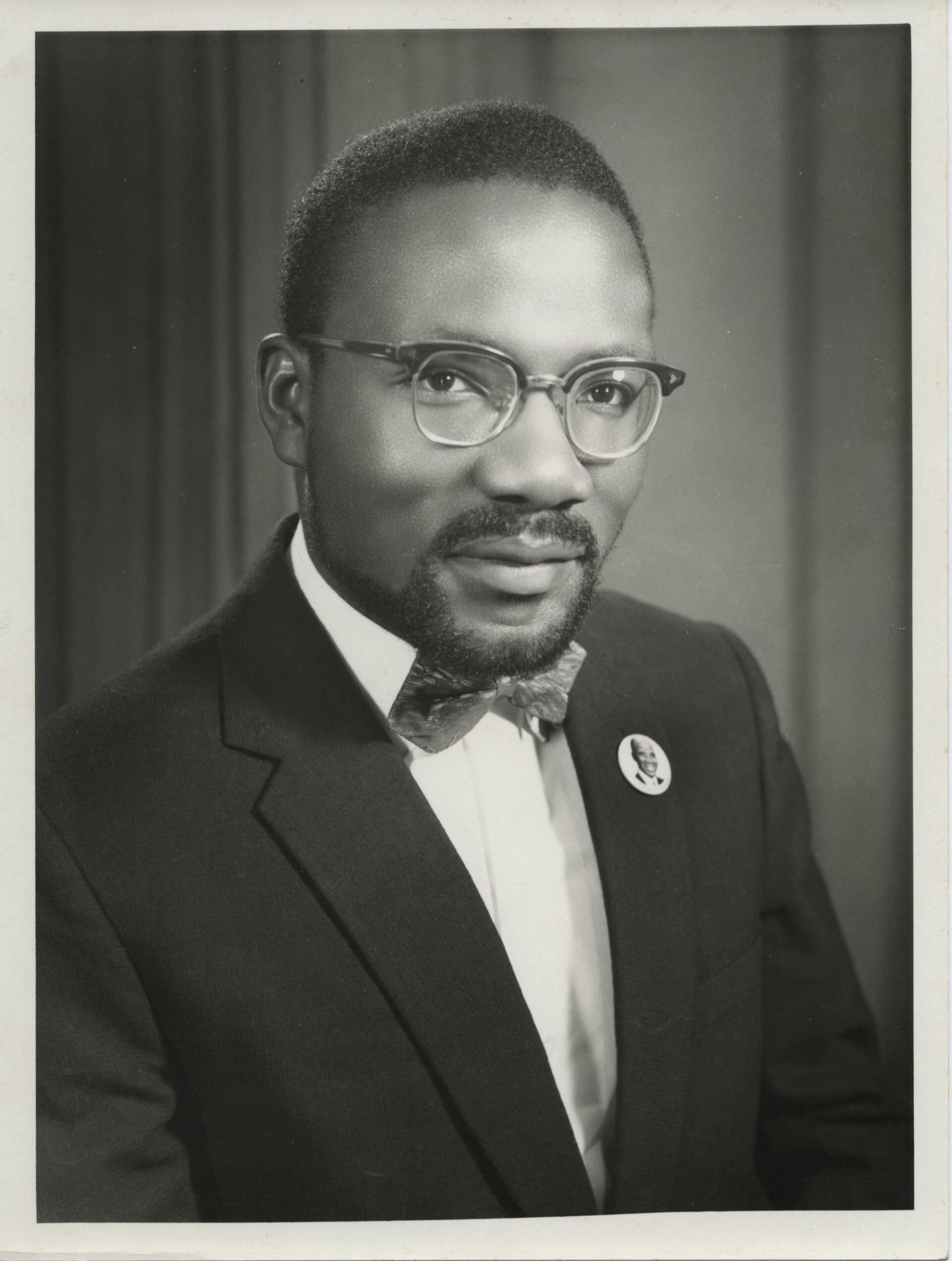
At a Glance
The Livingstonia Mission and the Northern Intellectual Tradition
The Northern Region of Nyasaland had, by the early twentieth century, developed an educational tradition that distinguished it from much of the rest of Central Africa. The Livingstonia Mission, established by the Free Church of Scotland in the 1870s in honour of David Livingstone, had made education central to its programme from its inception, establishing schools at multiple levels and producing, over several generations, a community of literate, educated Africans whose influence extended well beyond the northern region of Nyasaland itself. Teachers and ministers trained at Livingstonia went to Southern Rhodesia, to Nyasaland's southern and central regions, to South Africa, spreading the educational ethos of the mission and the networks of northern Malawian professional life across the region.
Dunduzu Chisiza grew up in this tradition. The Tumbuka-speaking peoples of the northern region had been early participants in the Livingstonia educational system, and the combination of literacy, analytical training, and Christian moral formation that the mission schools provided gave the northern educated class a character that combined intellectual seriousness with ethical commitment. Dunduzu's subsequent intellectual development — the breadth of his reading, the analytical rigour of his economic thinking, the moral seriousness of his political writing — all reflected this formation.
His self-education extended well beyond the formal curriculum of the mission schools. He read widely in economics and political philosophy, engaging with the debates about development, planning, and the role of the state in economic transformation that were central to the intellectual world of the 1950s. Nyasaland was not a place where this kind of independent intellectual work was easy — the libraries were limited, the intellectual community small, the opportunities for sustained study constrained by the demands of political organising. But Dunduzu pursued it with the discipline and the intellectual curiosity that characterised his engagement with every question he took seriously.
The Political Economy of Colonial Nyasaland
The economic analysis that Dunduzu Chisiza developed was grounded in a careful observation of Nyasaland's specific colonial political economy — its structural disadvantages, its human capital, and its potential development paths. Nyasaland was, in the standard colonial categorisation, a labour reserve rather than a settler colony or a resource extraction territory. It had no significant mineral wealth. Its agricultural land, while fertile in the Shire Highlands and the lakeshore, was limited relative to its population. Its primary colonial economic function was to supply labour — to the tea and tobacco plantations within the territory, to the mines of South Africa, to the farms and businesses of Southern Rhodesia, and to the construction projects and domestic employment of the more economically developed territories of the region.
This export of labour — the thangata system in its various forms, the migration to the south that took hundreds of thousands of young Nyasaland men away from their home communities for periods of months or years at a time — was both a response to Nyasaland's limited economic opportunities and a structural constraint on its development. A territory that exports its most economically active citizens is a territory that cannot fully utilise its human capital for its own development; the skills, the energy, the accumulated savings of the migrants were deployed in South Africa and Rhodesia's economic development rather than in Nyasaland's.
Dunduzu's economic thinking addressed this structural problem directly. His analysis of what development would require for an independent Malawi began from the recognition that the territory's primary asset was human rather than natural — that the quality of its educational tradition, the organisational capacity of its people, and the potential productivity of its agricultural sector were the foundations on which economic development would have to be built. This meant that investment in education, in health, in the institutional capacity of the state, and in agricultural productivity was not peripheral to development strategy but central to it — more important, in the Malawian context, than the infrastructure investment or industrial development that dominated the development economics of the period.
Africa — What Lies Ahead: The Analytical Achievement
The essay published in 1961 under the title Africa — What Lies Ahead was, by any measure, an extraordinary intellectual achievement for a man of thirty-one who had not had access to the formal postgraduate education that most comparable analytical works in political economy emerged from. Its argument was both more rigorous and more honest about the challenges of African independence than most of the political writing of the period — which tended either toward the optimistic celebration of independence as the solution to all problems or toward the externally imposed pessimism that denied African states the capacity for development without continued European guidance.
Dunduzu argued for neither position. His essay acknowledged the genuine achievements of the independence movement and the real significance of political self-determination for African peoples, while insisting that political independence was not sufficient — that the economic and institutional transformations required for genuine development were demanding, complex, and not guaranteed by the transfer of political authority from colonial to African governments. He was, in this sense, ahead of the trajectory of African political economy: the debates about structural adjustment, about the relationship between political institutions and economic development, about the specific challenges of landlocked, resource-poor, labour-exporting economies that would preoccupy African development economics for decades were debates that he was engaging with, in embryonic form, in 1961.
The essay's treatment of African cultural traditions was also distinctive. Rather than dismissing African social institutions as pre-modern obstacles to development — the position of much mainstream development economics of the period — or romanticising them as superior alternatives to Western economic organisation, Dunduzu tried to think seriously about which aspects of African social and cultural tradition were assets for development, which were constraints, and how the development process should engage with this complexity. The communal traditions of African social organisation, the networks of mutual obligation and collective support, the institutions of traditional governance — these were not simply to be overcome in the name of modernisation but to be engaged with thoughtfully, adapted where adaptation was appropriate, and preserved where they served development purposes that market institutions could not.
This approach — taking African cultural institutions seriously as development resources rather than as obstacles — anticipated the thinking that would eventually produce the concept of social capital in development economics, and that has informed some of the more sophisticated approaches to African development in subsequent decades. That Dunduzu arrived at it through his own analytical reasoning, without the benefit of the subsequent decades of scholarship that would give it formal theoretical status, is a measure of his intellectual quality.
The Central African Federation and Political Organising
Dunduzu Chisiza's intellectual work was not conducted in isolation from political action. He was an active participant in the Nyasaland independence movement — a member and eventually a significant figure in the Malawi Congress Party — and his analytical work was explicitly oriented toward the practical political project of winning independence and building the institutions of a functioning state. The Central African Federation that dominated Nyasaland politics in the late 1950s and early 1960s was both the immediate political target of his organising work and a case study in the kind of external political imposition that his economic analysis was partly designed to equip Africans to resist.
The Federation — the political union of Northern Rhodesia, Southern Rhodesia, and Nyasaland imposed by Britain in 1953 — was premised on the idea that a multi-racial Central African state could be built under settler leadership that would eventually evolve toward majority African rule while maintaining the economic advantages that European expertise and capital had created. African political leaders in all three territories rejected this vision, understanding it as a mechanism for extending Southern Rhodesian settler domination over the federation's other territories rather than as a genuine path toward multiracial partnership.
The campaign against the Federation — the mass mobilisation of Nyasaland Africans behind the demand for dissolution and separate independence — was one of the most significant political achievements of the independence era in Central Africa. Dunduzu participated in this campaign, was imprisoned by the colonial government during the State of Emergency declared in March 1959, and used his imprisonment as an opportunity for the kind of sustained reading and writing that the pressures of political life had not otherwise permitted. His subsequent release and rehabilitation placed him in the parliamentary secretary role that gave him direct experience of governance, and his continuing intellectual work in this period produced the 1961 essay that was his most significant published contribution.
September 1962: Death and Its Unanswered Questions
The circumstances of Dunduzu Chisiza's death on 2 September 1962 were never definitively established. He was killed when the vehicle he was travelling in near Mwanza, in the southern region of Nyasaland, left the road. The official investigation concluded that it was a road accident; a substantial body of contemporary and subsequent opinion suspected that it was an assassination staged to look like a road accident — that Dunduzu had powerful enemies, and that his death was too convenient for those enemies to be entirely accidental.
The circumstantial case for suspecting assassination was real: Dunduzu was a figure of growing political significance and intellectual authority who had the capacity to become an independent political voice rather than a subordinate in someone else's political project; he was operating in a political environment where violence against political figures was not unknown; and the timing — just as independence was approaching and the question of who would shape the new country's direction was becoming urgent — was one that gave potential assassins both motive and opportunity. The case for genuine accident was also real: road conditions in Nyasaland were poor, the risks of road travel were genuine, and accidents did happen.
The uncertainty itself is part of the historical record — a measure of the political environment in which Dunduzu was operating and in which his death took place. Whether he was killed by political violence or by the ordinary dangers of travel in colonial Nyasaland, he was thirty-two years old, and the country he had been helping to build lost him two years before it became independent.
The Intellectual Void He Left
The question of what Dunduzu Chisiza would have contributed to independent Malawi — had he survived to see independence and to participate in the project of building a functioning state — is genuinely unanswerable but genuinely important. The Malawi that emerged under Hastings Banda's leadership was a country whose intellectual and analytical resources were systematically suppressed or destroyed: independent thinkers were imprisoned, the university was kept weak, the press was controlled, and the culture of political debate that a serious intellectual tradition requires was eliminated in the name of the Life President's absolute authority.
Dunduzu's survival would not, of course, have guaranteed a different outcome — his analytical gifts might have been imprisoned along with everyone else's, or he might have accommodated himself to Banda's system in ways that sacrificed their independence, or he might have been killed again, later, more unambiguously. But the intellectual framework he was developing — the serious economic analysis of what development required, the engagement with African cultural traditions as development resources, the insistence that independence needed to be measured against genuine improvements in the lives of ordinary Malawians rather than merely against the transfer of political authority — was precisely the framework that Malawi needed and that Banda's government systematically suppressed.
The contrast between the intellectual and analytical quality of Dunduzu's vision for Malawi and the direction that Malawi actually took under Banda — the personalised authoritarianism, the suppression of analytical intelligence, the development approach that privileged the Life President's authority over the country's actual development needs — is not incidental. It reflects the fact that the independence moment contained multiple possible futures, and that the one that was realised was chosen against alternatives that were genuinely present and that people like Dunduzu Chisiza were working to make possible. His death removed one of the most important advocates for the better futures, and Malawi is poorer for it.