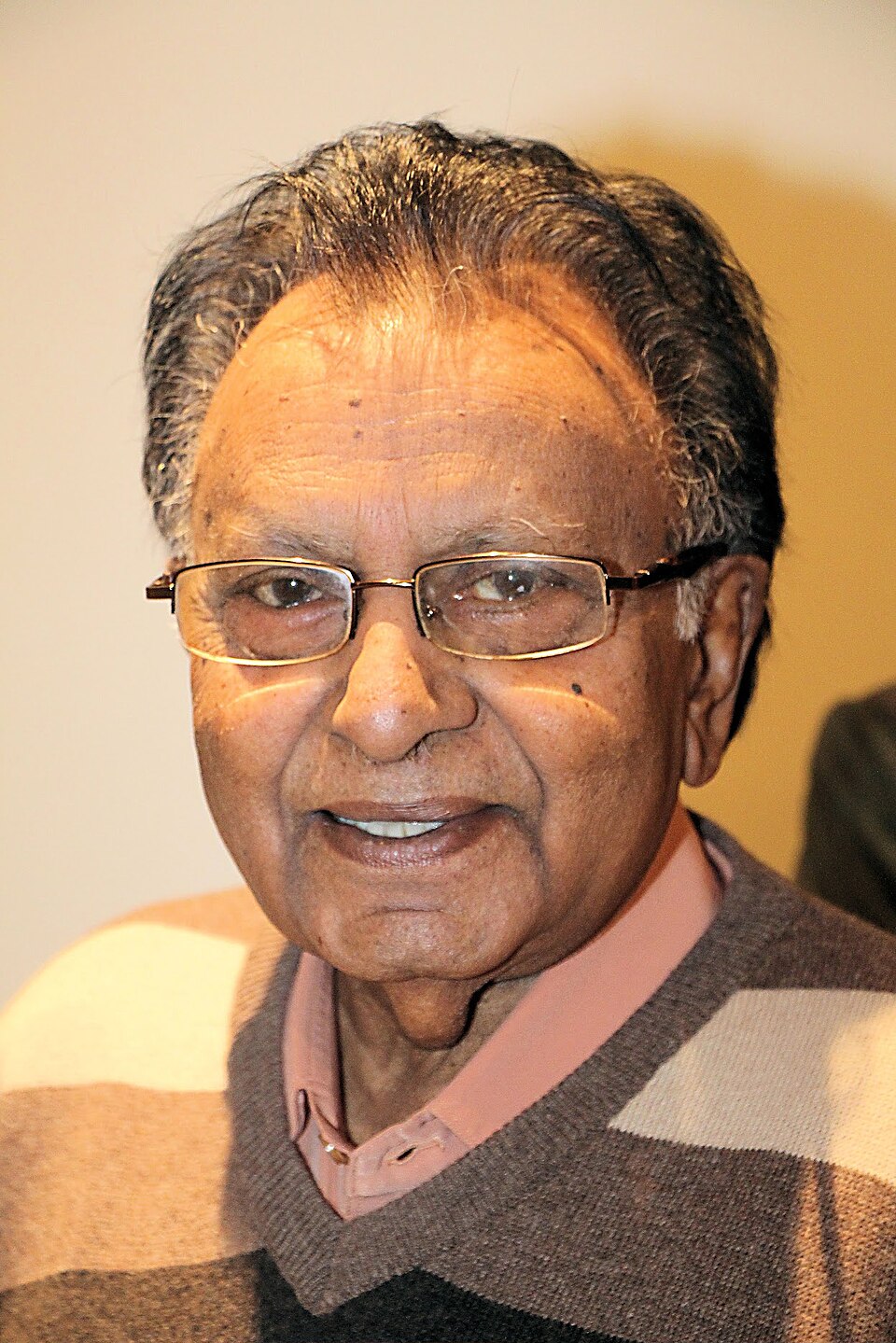
At a Glance
Durban and the Weight of the Indian Congress Tradition
Mewa Ramgobin was born in Durban in 1932, in the city that was the heart of South Africa's Indian community and the home of the Natal Indian Congress — the organisation that Gandhi had helped found in 1894 and that had conducted some of the most important campaigns of resistance in the history of South African politics. The NIC's tradition ran from Gandhi's early satyagraha campaigns against the colonial government's restrictions on Indian immigration and political rights, through the passive resistance campaign of 1946–1948 against the Ghetto Act that restricted Indian land ownership, through the joint ANC-Indian Congress campaigns of the late 1940s and the Congress Alliance's formation in the early 1950s.
This was the political inheritance that Mewa Ramgobin received — not abstractly, as a matter of historical knowledge, but concretely, through family and community connection. His marriage into the Naicker family connected him directly to one of the NIC's most important leaders, and the world of the Durban Indian Congress community in which he moved was a world in which the history and the politics of the Congress Alliance were living traditions rather than memories. He grew up knowing not just the names and the dates of the struggle but the people who had made it — and that knowledge, and the sense of personal responsibility it created, shaped his understanding of what he owed to the tradition he had inherited.
The Natal Indian Congress in the 1950s was one of the most politically sophisticated organisations in South Africa — more experienced in mass campaigns, more intellectually developed, and in some respects more strategically clear than the ANC itself, which was still transforming from an educated elite petition organisation into the mass movement that the Programme of Action of 1949 had pointed toward. The NIC's contribution to the Congress Alliance — its participation in the Defiance Campaign, its role in producing the Freedom Charter, its consistent advocacy for the non-racial politics that the Alliance embodied — was disproportionate to the community's numerical size, and Ramgobin was heir to that tradition of organisational seriousness and political principle.
The Dormant Years and the Revival
The combination of the Suppression of Communism Act, the Sharpeville massacre, and the general repression of the early 1960s had reduced the NIC to near-dormancy — the organisation existed formally but had ceased to function as an effective political vehicle. The people who had led it in its most active period were banned, had gone into exile, or had been consumed by the legal proceedings of the Treason Trial. The apartheid state had achieved a significant part of its objective: the Congress Alliance's organised structures were suppressed, its leadership neutralised, and its ability to coordinate mass action substantially destroyed.
The revival of the NIC in the 1970s was part of a broader renewal of the Congress Alliance tradition that accompanied the growth of the Black Consciousness movement and the township uprisings of the mid-1970s. The Soweto uprising of June 1976 demonstrated that the resistance had not been suppressed permanently — that a new generation had grown up under apartheid and was prepared to challenge it with a directness and a militancy that the earlier generation's caution had sometimes avoided. The Congress Alliance tradition needed to respond to this new energy, to find ways to connect the younger generation's resistance to the organisational tradition that had been built in the 1950s and that offered a political framework more developed than the Black Consciousness movement's philosophical challenge to white supremacy.
Mewa Ramgobin was one of the central figures of the NIC revival, bringing to it the political experience, the personal connections, and the commitment to the Congress Alliance's non-racial tradition that the rebuilt organisation needed. The revived NIC was explicitly aligned with the ANC — a position that made it a target of the security apparatus but that gave it the political coherence and the strategic framework that purely civic or community organisations lacked. It was also, through its connections to the Transvaal Indian Congress and to the ANC underground, part of the broader network that was rebuilding the Congress Alliance's internal presence in the years between Soweto and the UDF's founding.
The United Democratic Front: Bringing the Traditions Together
The founding of the United Democratic Front on 20 August 1983 in Mitchell's Plain, Cape Town, was one of the most significant political events in South Africa since the Sharpeville massacre. The UDF brought together more than four hundred organisations — civic associations, student organisations, women's groups, trade unions, youth movements, church groups, professional associations, the NIC, the TIC, and dozens of other bodies — in a coalition that declared itself aligned with the Freedom Charter and committed to the defeat of the tricameral parliament and the apartheid system it sustained.
The UDF's founding was possible because of the organisational work that had been done in the years since Soweto — the rebuilding of civic organisations in the townships, the growth of the independent trade union movement, the revival of the Indian congresses, and the development of a new generation of political leaders who were prepared to take public positions that exposed them to the security apparatus's attention. Mewa Ramgobin was one of the figures who had done that organisational work and who was present at the UDF's founding as a representative of the NIC tradition.
His role in the UDF was as one of its senior figures in the Natal region — where the NIC's organisational strength and the trade union movement's growing power combined to make the UDF particularly strong — and as one of the voices that argued consistently for the Freedom Charter framework that the UDF's founding principles embodied. The argument for non-racialism — for the position that the ANC's Freedom Charter was the right political framework for South Africa's liberation rather than the Black Consciousness movement's racial identity politics or the PAC's Africanism — was an argument that Ramgobin made with the authority of someone who had been committed to it for decades.
The Treason Trial and the Price of Leadership
The UDF's effectiveness in organising the resistance of 1984 and 1985 — the township uprisings, the consumer boycotts, the school boycotts, the rent boycotts, the mass funerals that became political demonstrations — provoked the apartheid government into the same response it had used against the Congress Alliance in the 1950s: the treason prosecution of the leadership. The Delmas Treason Trial, as it became known, charged a group of UDF leaders with high treason, alleging that their leadership of the UDF constituted participation in an ANC conspiracy to overthrow the state.
The prosecution was the government's attempt to use the judicial system to destroy the UDF as an organisation by removing its most prominent leaders from political circulation. The trial was a marathon proceeding that involved lengthy pre-trial detention for many of the accused and a courtroom process that dragged on for years. Several accused were convicted and received lengthy sentences, though appeals processes subsequently modified some outcomes.
Mewa Ramgobin's involvement in the UDF Treason Trial placed him among the most visible targets of the state's attempt to destroy the mass democratic movement's leadership. His presence among the accused reflected his prominence in the UDF and the NIC, and the charges against him — like the charges against the other accused — were a measure of how seriously the apartheid government regarded the threat that organised non-violent resistance posed to its continued authority.
The Congress Alliance Argument: Non-Racialism Against the Alternatives
Throughout his career, Mewa Ramgobin was one of the most consistent and most articulate advocates for the non-racial politics of the Congress Alliance — the position, expressed most clearly in the Freedom Charter, that South Africa belonged to all who lived in it and that its liberation required the solidarity of all its people rather than the racial separatism of any of the alternative traditions within the opposition movement. This was not a comfortable position in every phase of the liberation struggle. In the late 1970s, when Black Consciousness was the most dynamic current in township politics, the Congress Alliance tradition's inclusion of Indian and white activists was sometimes challenged as a compromise of African liberation's authenticity. Ramgobin argued against this position with the patient consistency of someone who understood both the political and the moral case for non-racialism.
The UDF's founding on Freedom Charter principles was, in retrospect, a vindication of the position he had been arguing. The mass democratic movement that the UDF represented was multi-racial in its composition — it included African, Indian, Coloured, and white organisations and activists — and its effectiveness in the 1980s demonstrated that the non-racial framework was not a political weakness but an organisational strength, allowing the UDF to draw on the broadest possible coalition of opposition to the apartheid system.
Legacy: The Continuity That Made the Transition Possible
Mewa Ramgobin's legacy is the legacy of continuity — of the person who carries a political tradition across the phases of a struggle that spans decades, maintaining its core commitments while adapting its expression to the different conditions of different periods. He received the Congress Alliance tradition from his generation's leadership — from Monty Naicker, from the NIC's history, from the political culture of the Durban Indian community — and he carried it forward through the dormant years of the 1960s, the revival of the 1970s, and the mass democratic movement of the 1980s.
The continuity he provided was not merely organisational — it was intellectual and moral. The argument for non-racialism, for the Freedom Charter framework, for the Congress Alliance's vision of a South Africa that belonged to all who lived in it: this argument needed to be maintained and defended across the decades, in the face of the alternative traditions that periodically challenged it, and its ultimate expression in the 1996 Constitution and the democratic dispensation that emerged from the transition was in part the product of the sustained advocacy of figures like Ramgobin who never abandoned it.
He was detained, banned, tried for treason, and harassed by a government that understood his effectiveness. He persisted through all of it. The South Africa that emerged from the transition — constitutional, non-racial, built on the Freedom Charter's principles — is the South Africa he and the Congress Alliance tradition he carried had been working toward. That it was achieved, against everything the apartheid state could bring to bear against it, is the measure of the tradition's strength and of the people who maintained it.